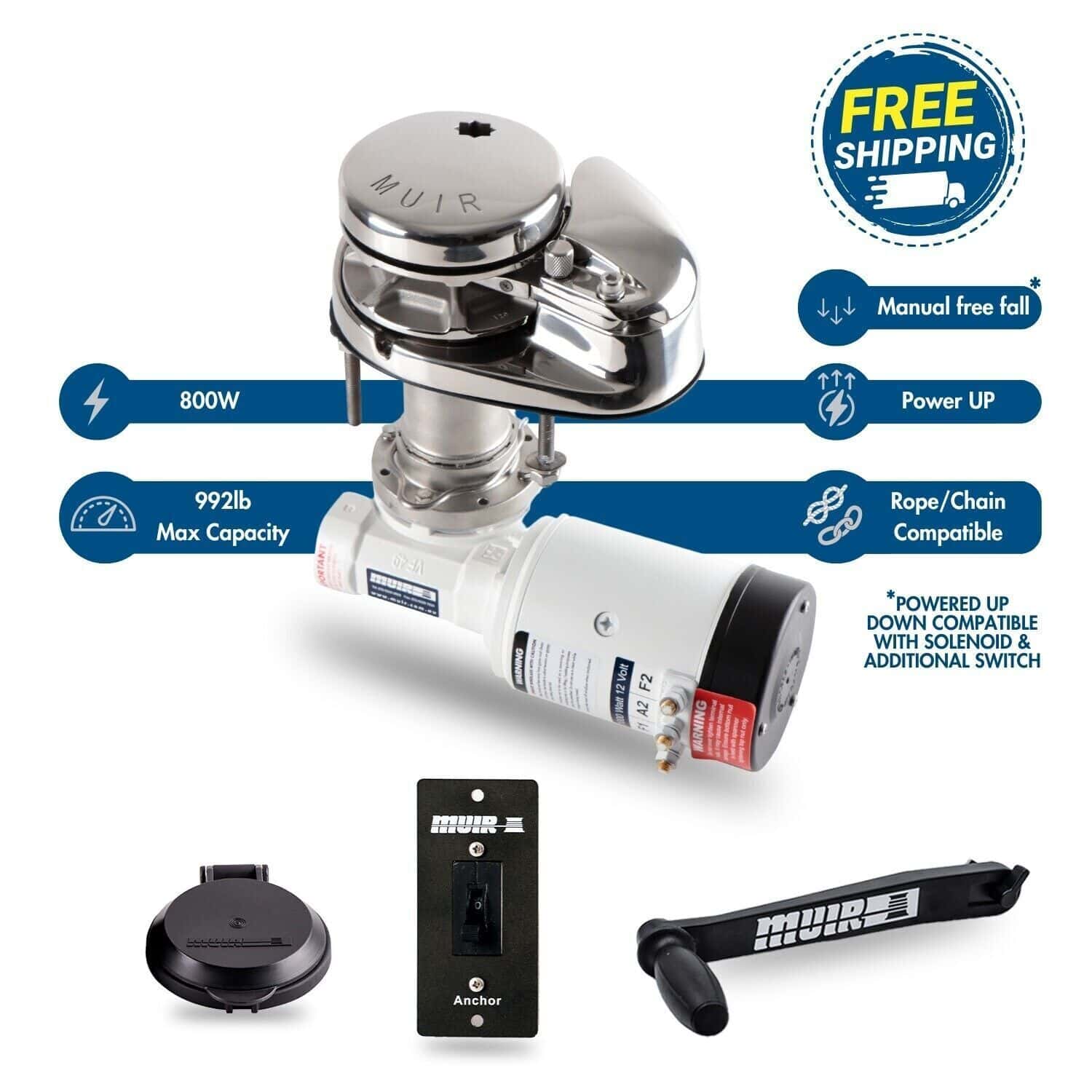
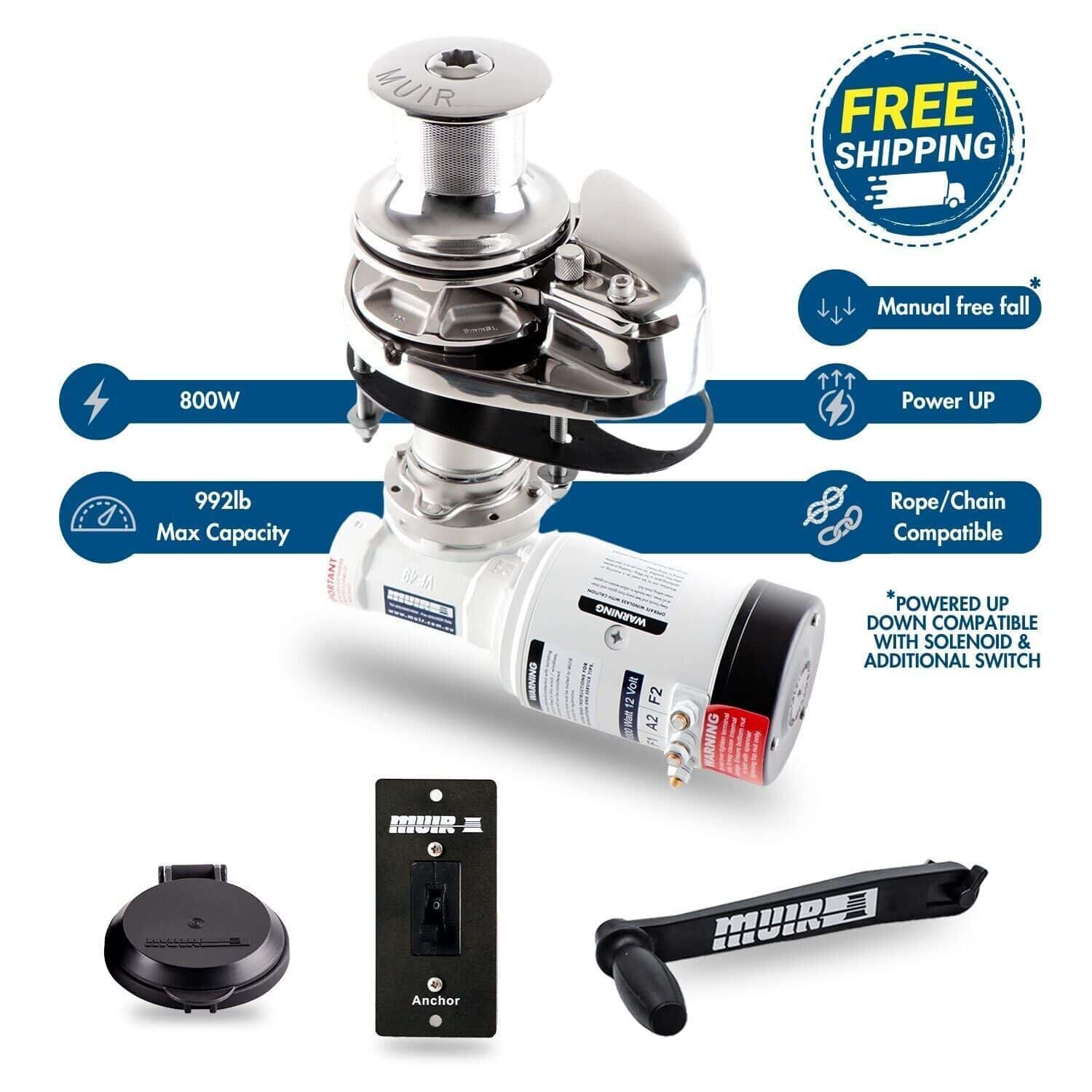
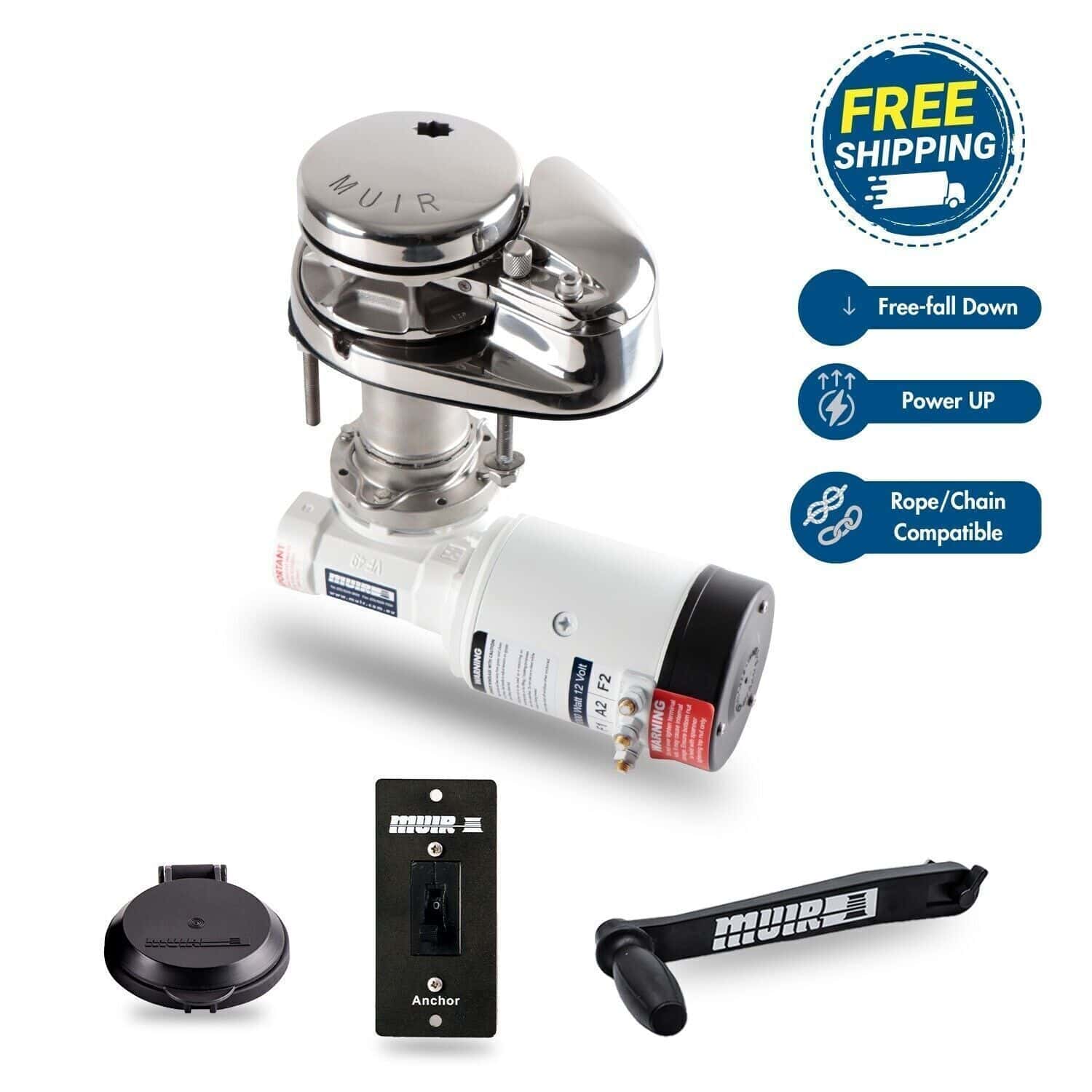
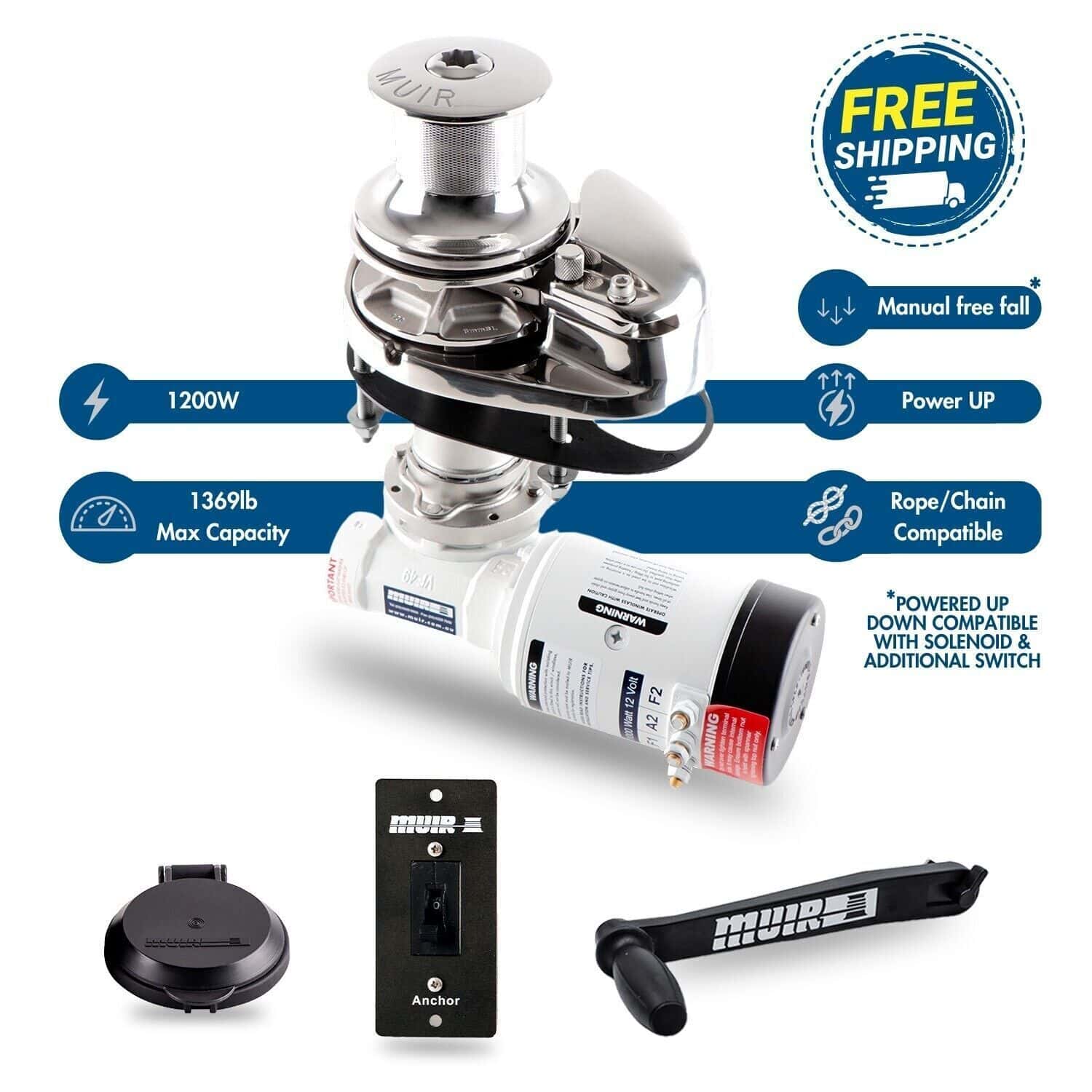




















How to Install a Windlass: What to Check Before You Drill
How to Install a Windlass
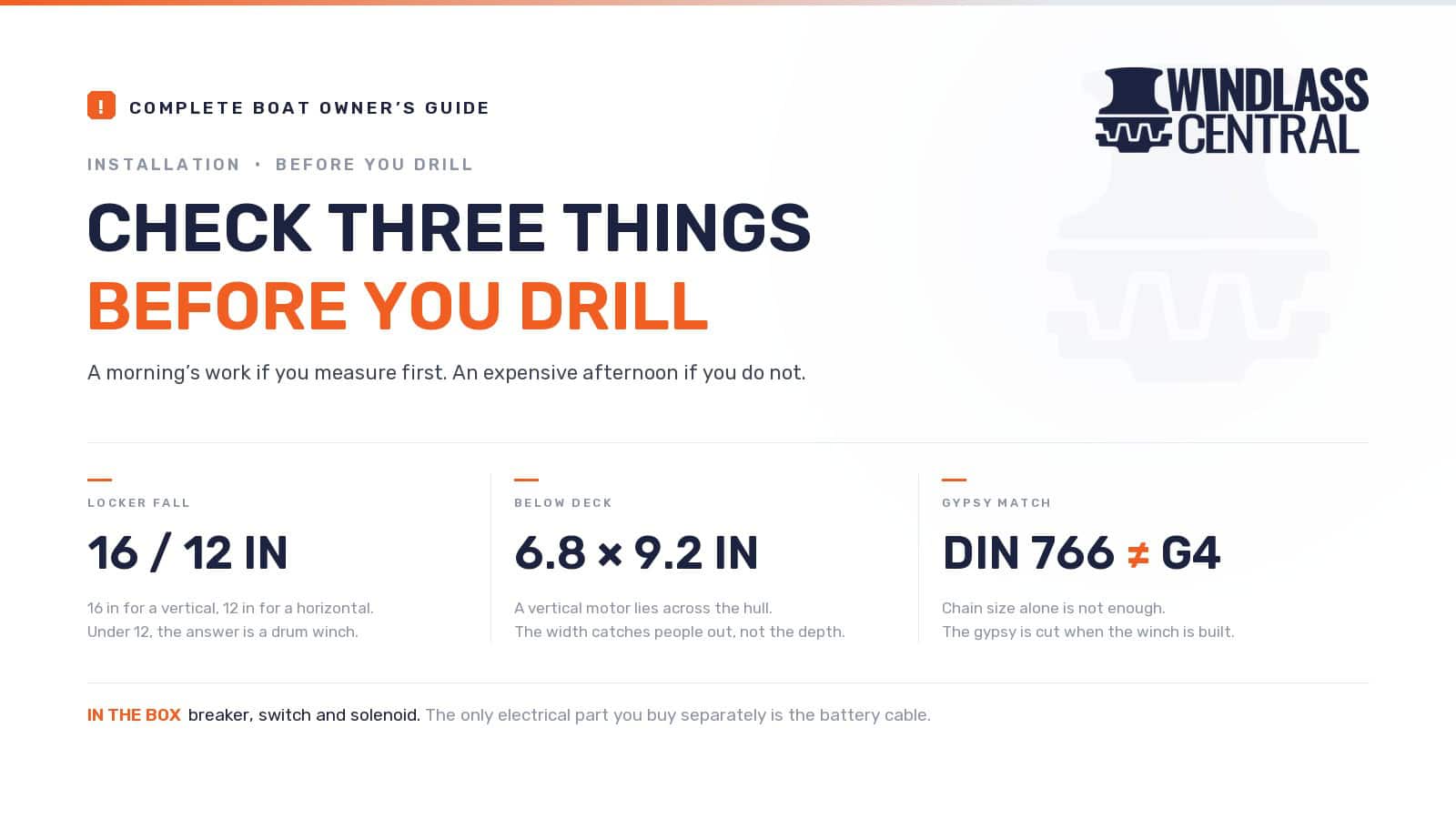
A windlass install is a morning’s work if you check three things before you drill, and a very expensive afternoon if you do not.
Check firstLocker fall16 / 12 in
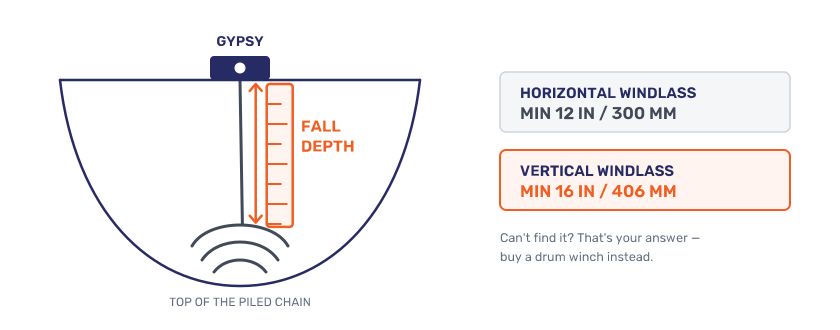
16 in (406 mm) for a vertical, 12 in (300 mm) for a horizontal. Measure it before you buy, not before you cut.
Check firstBelow deck6.8 × 9.2 in
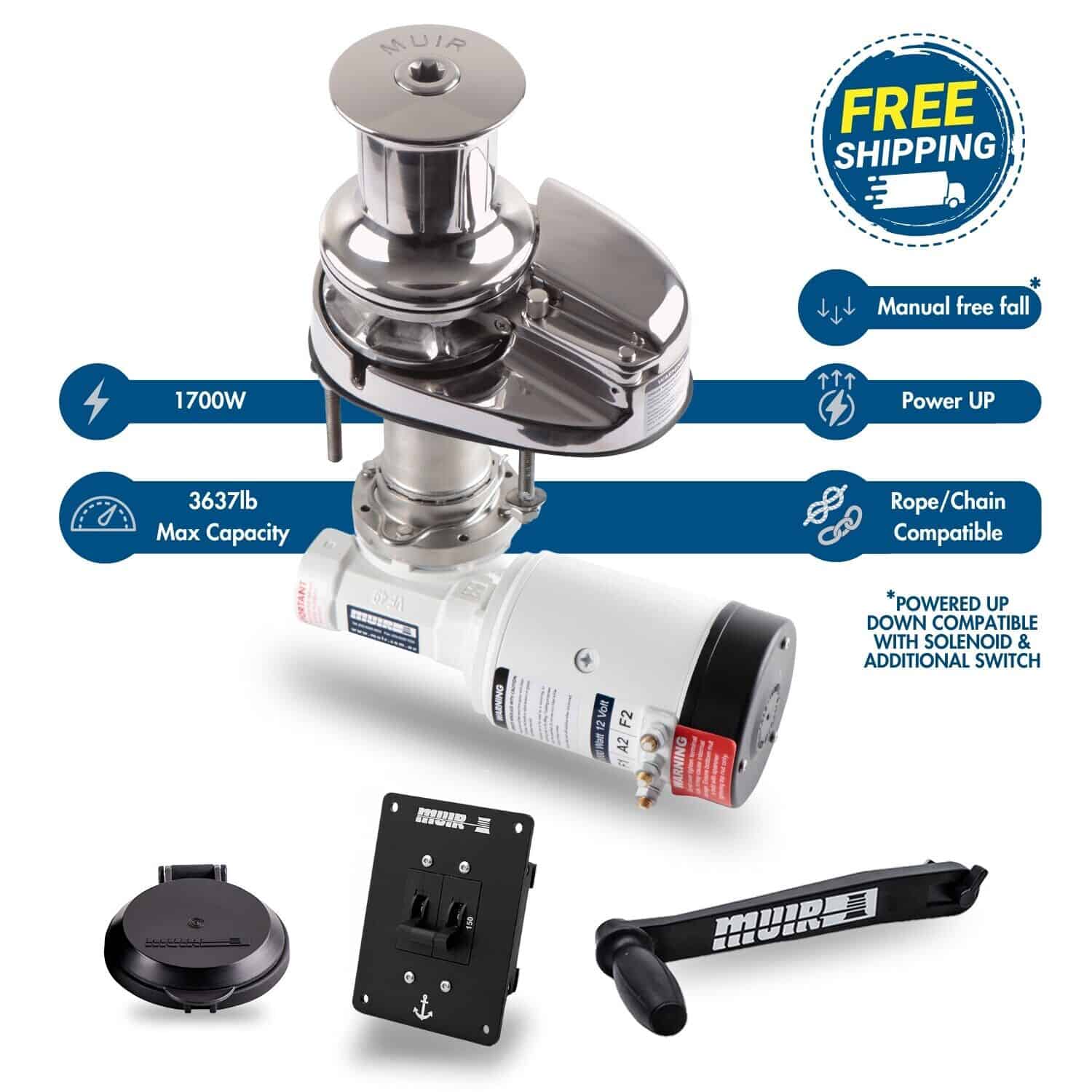
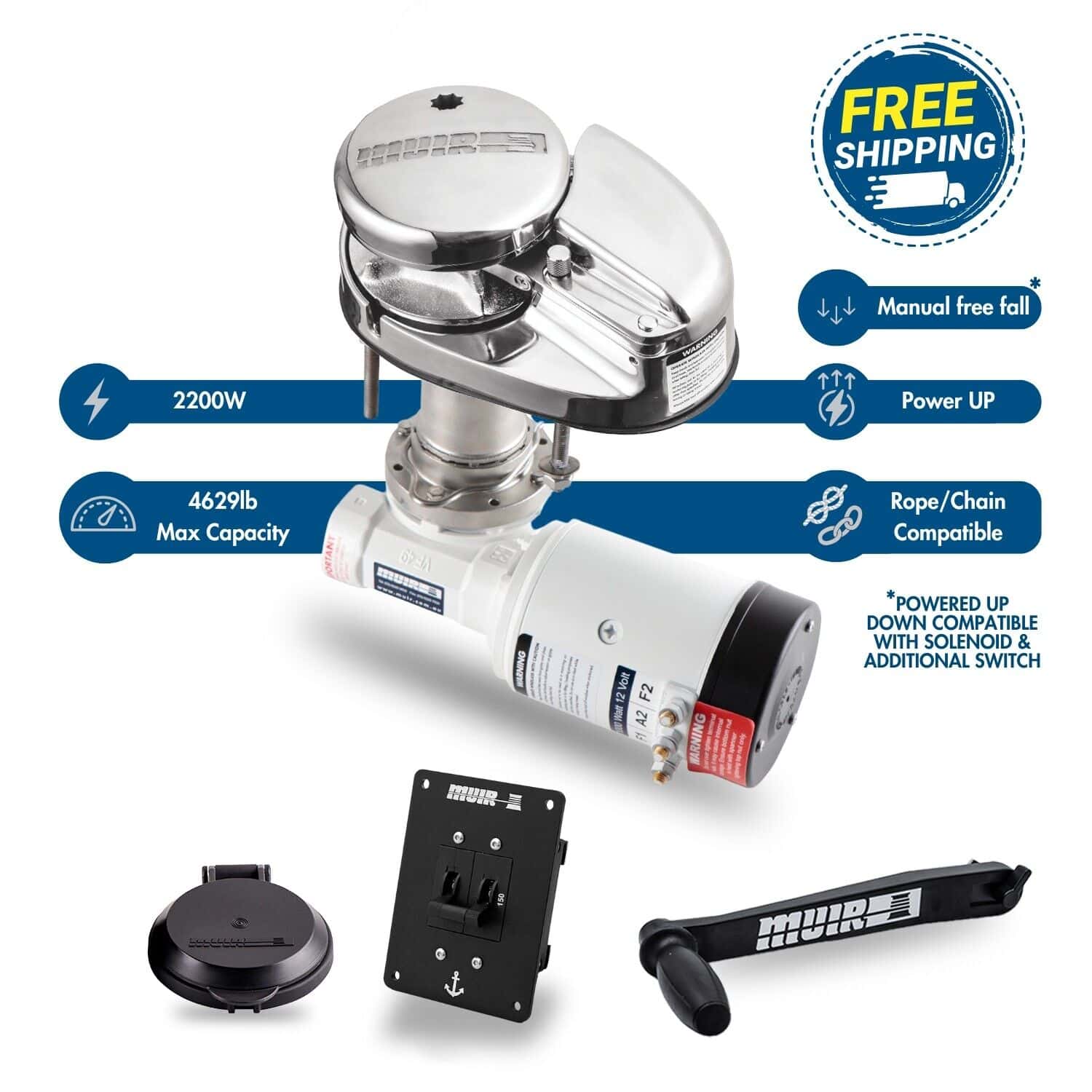
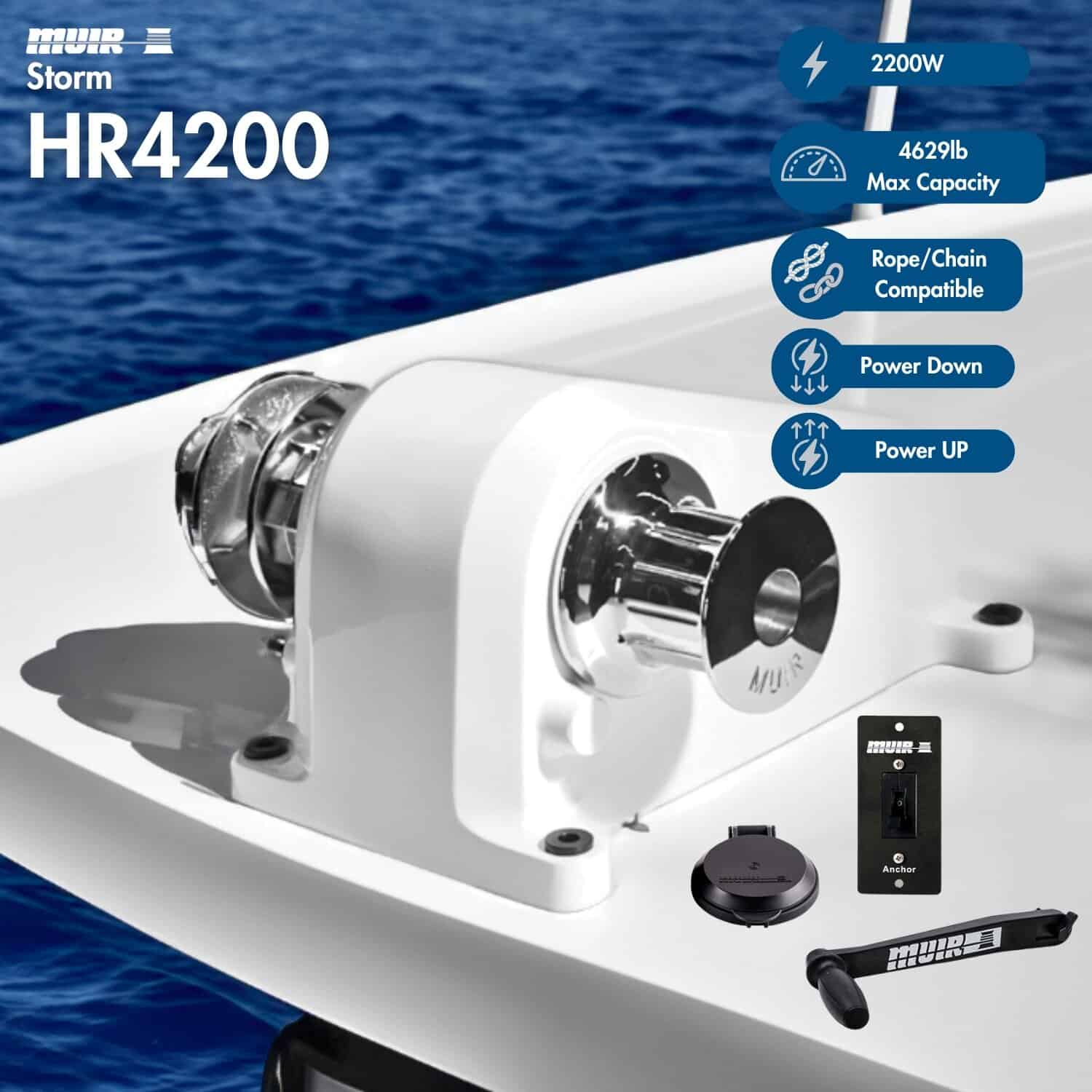
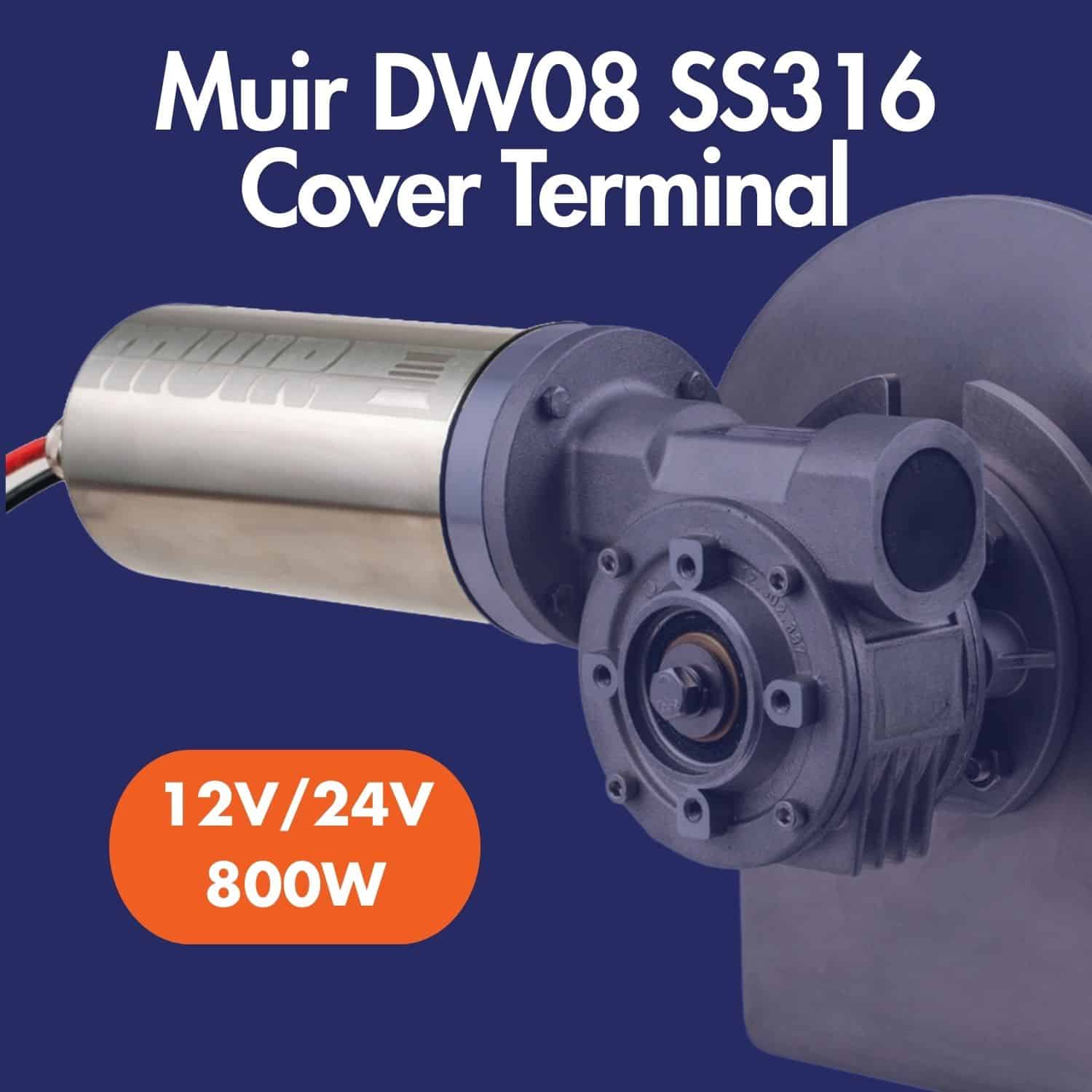
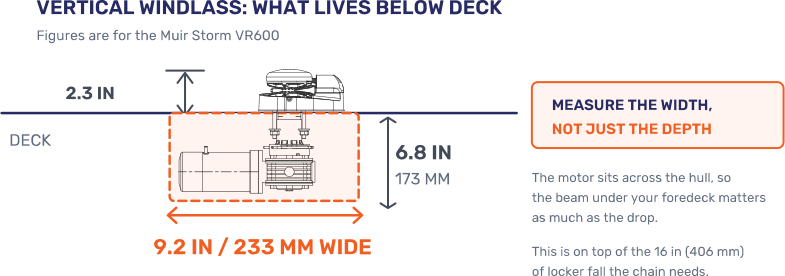
A vertical’s motor lies across the hull. The Storm VR600 needs 6.8 in of depth and 9.2 in of width. Every other model is tabulated in will it fit.
Check firstGypsy matchBefore shipping
Tell us your chain standard when you order. A gypsy cut for DIN 766 will skip on US G4.
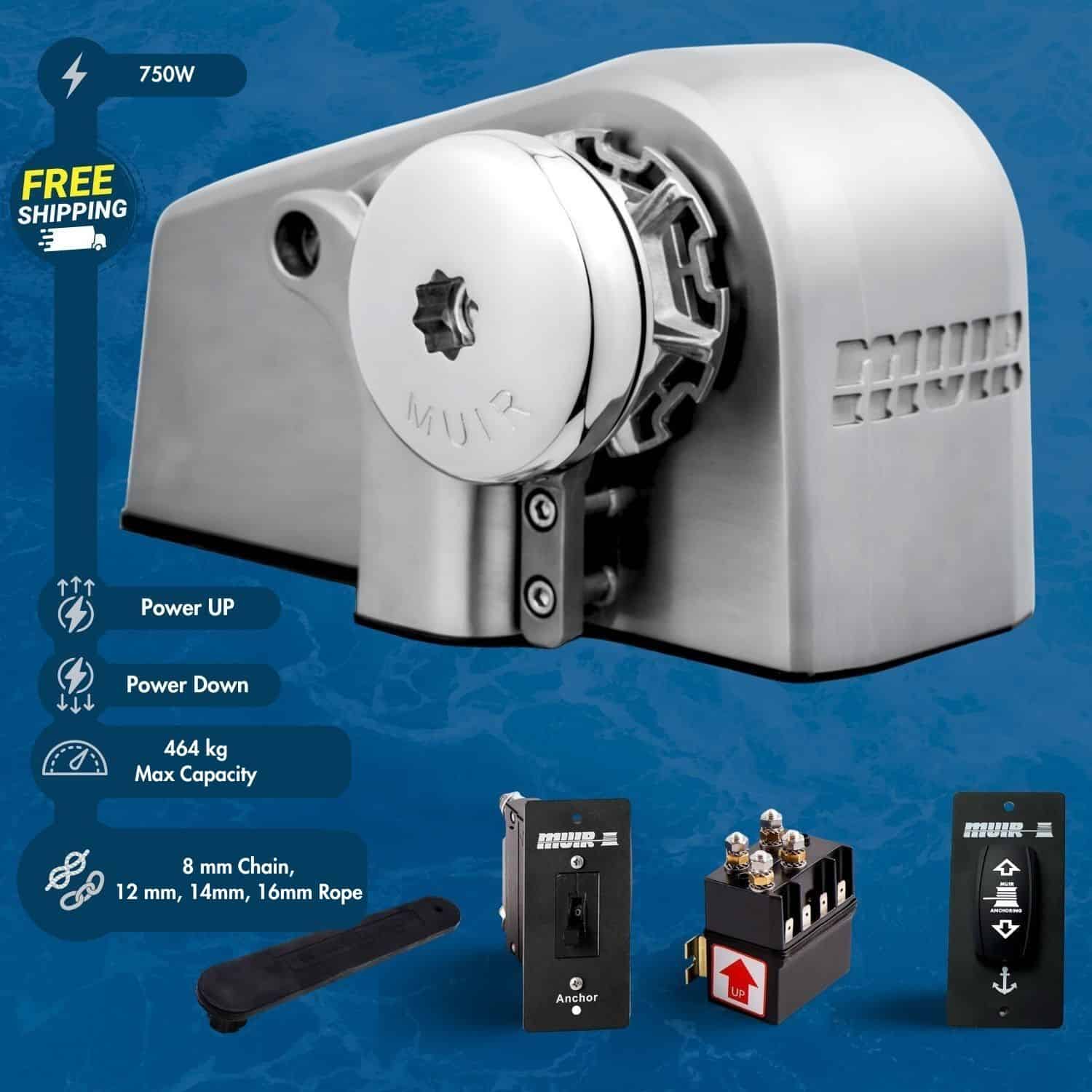
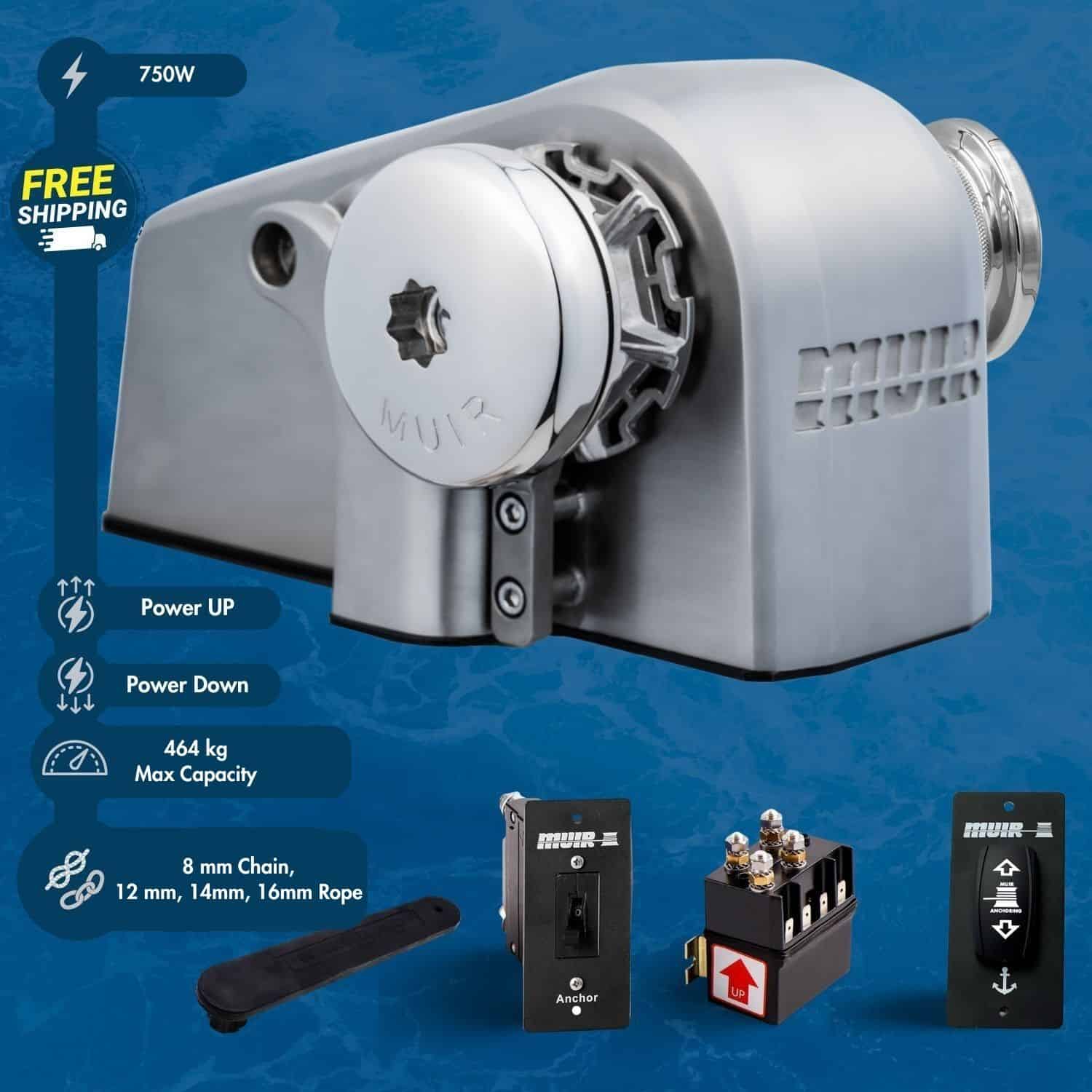
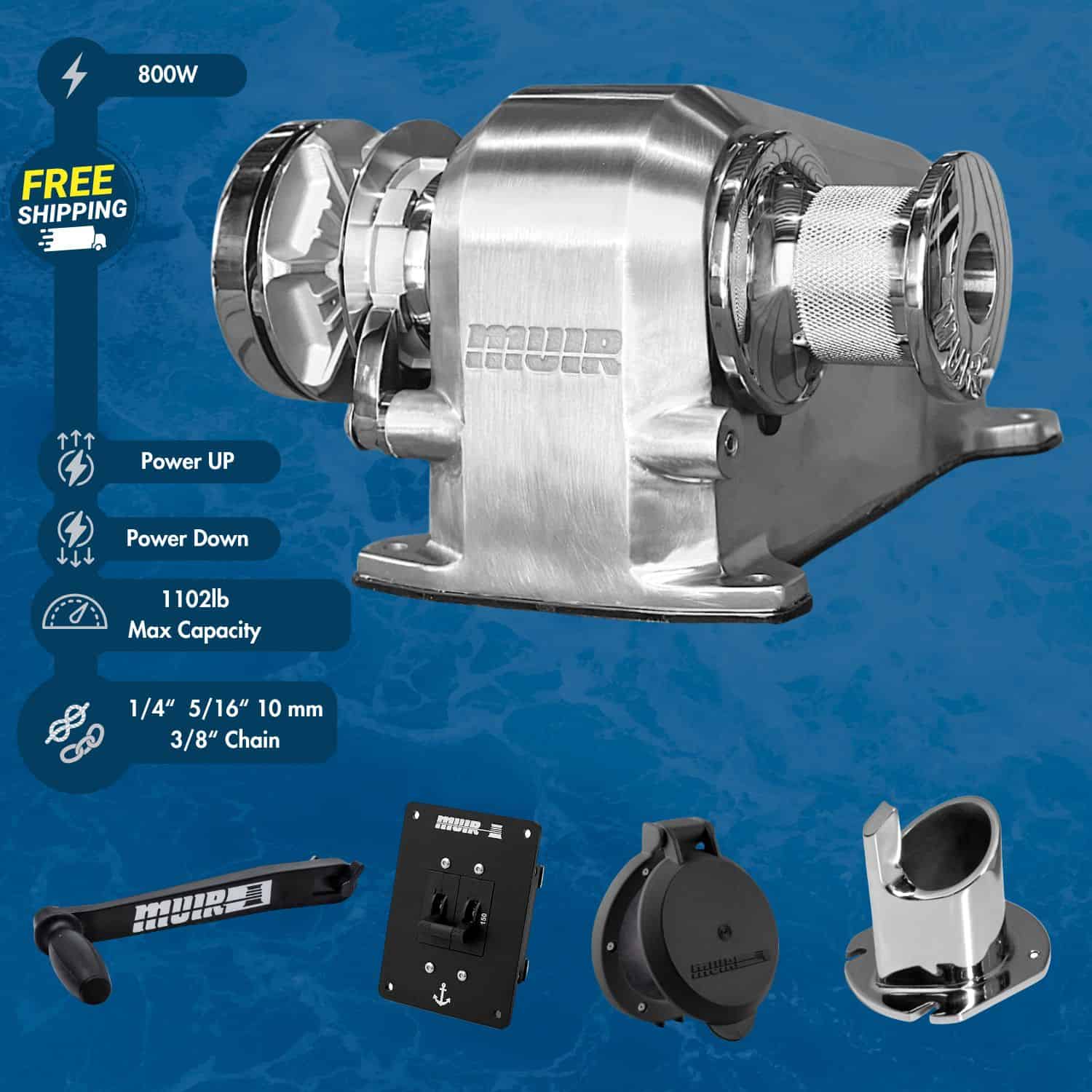
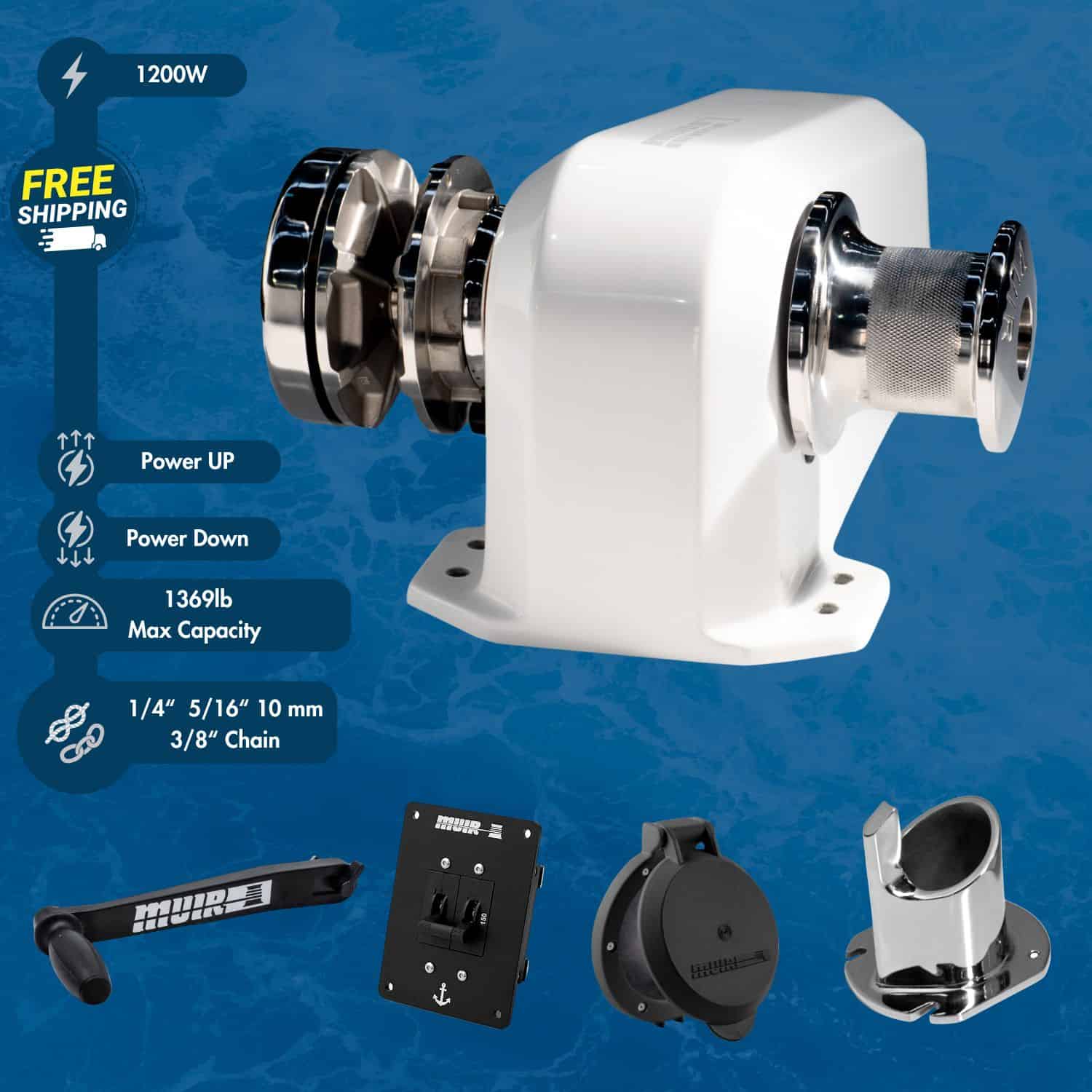
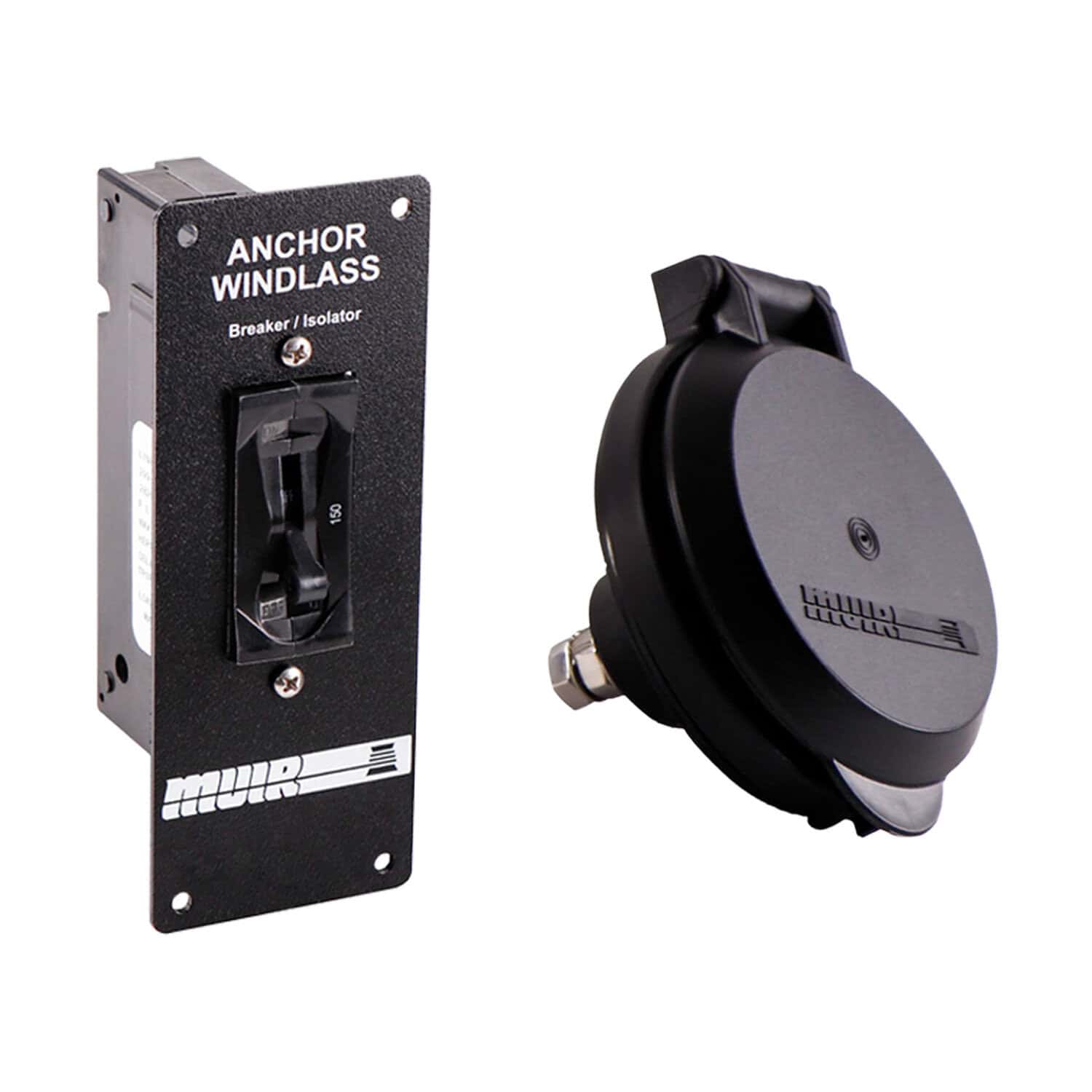
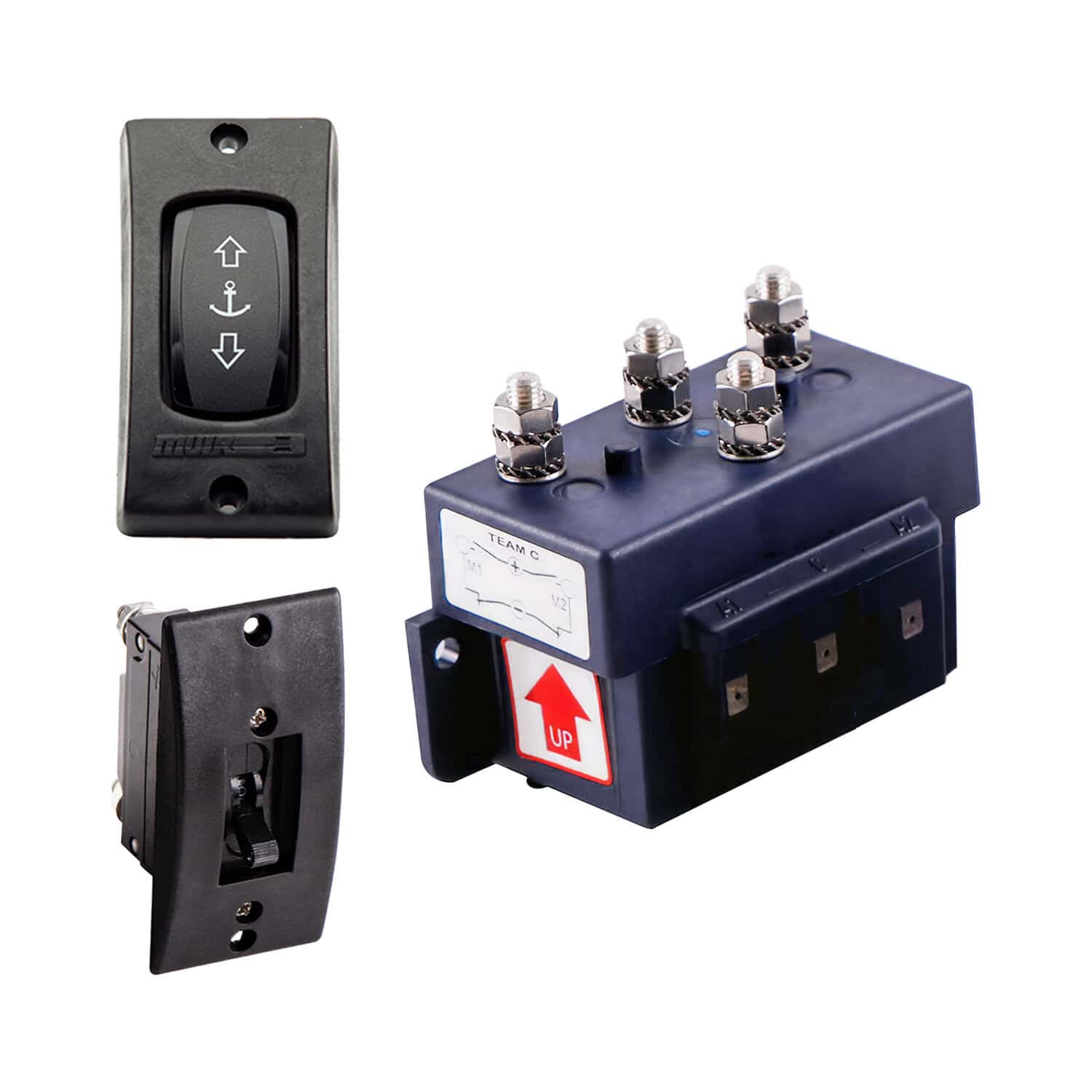
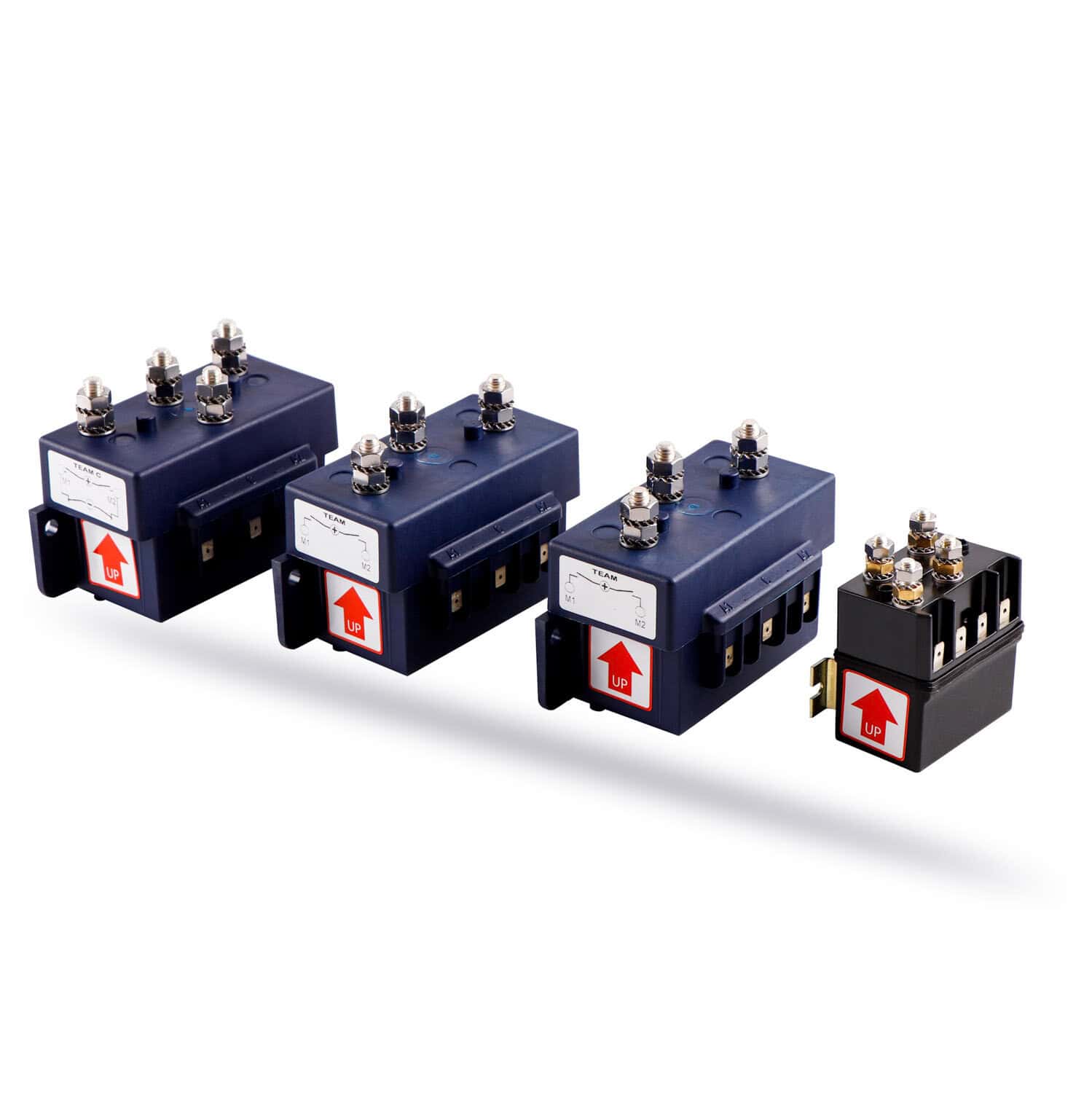
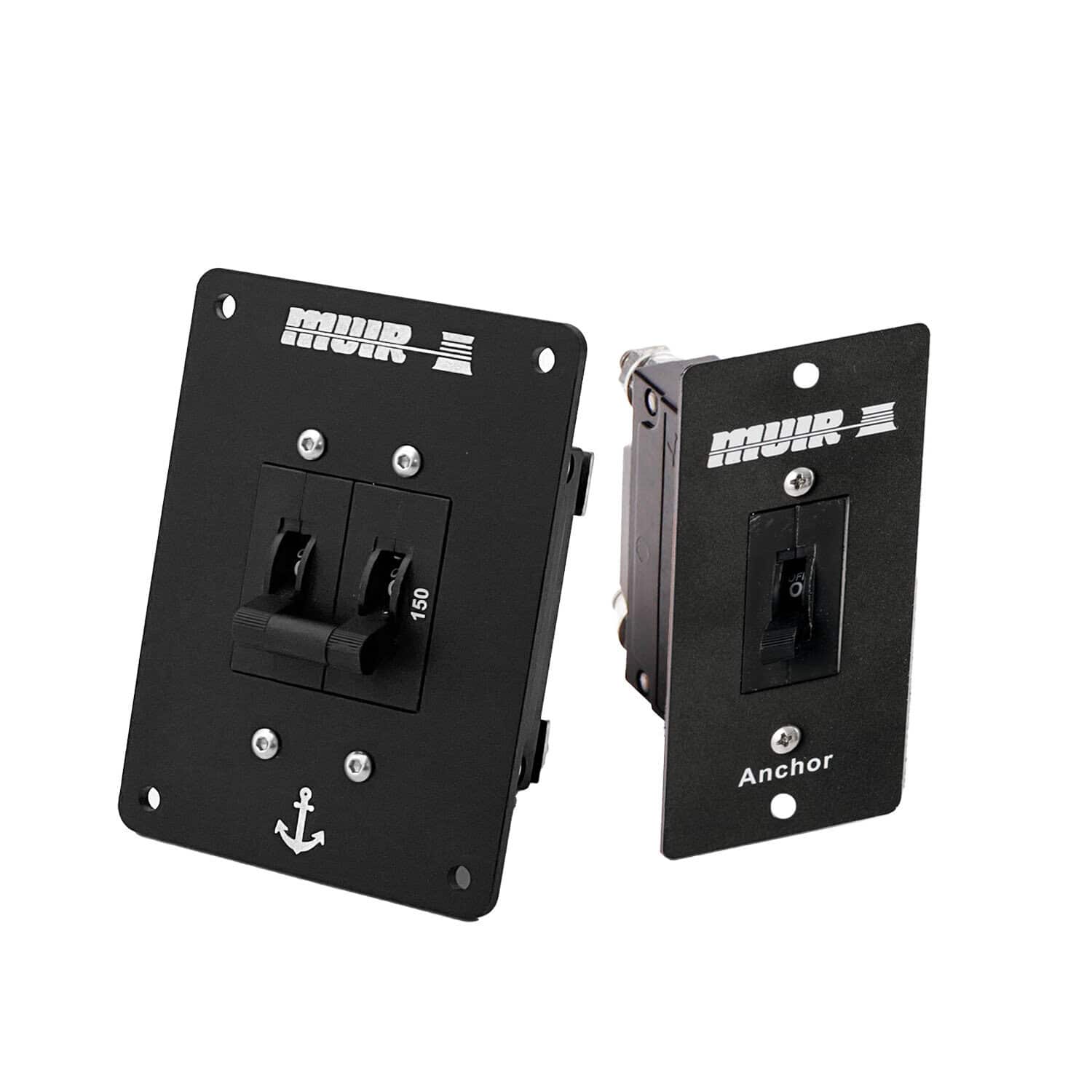
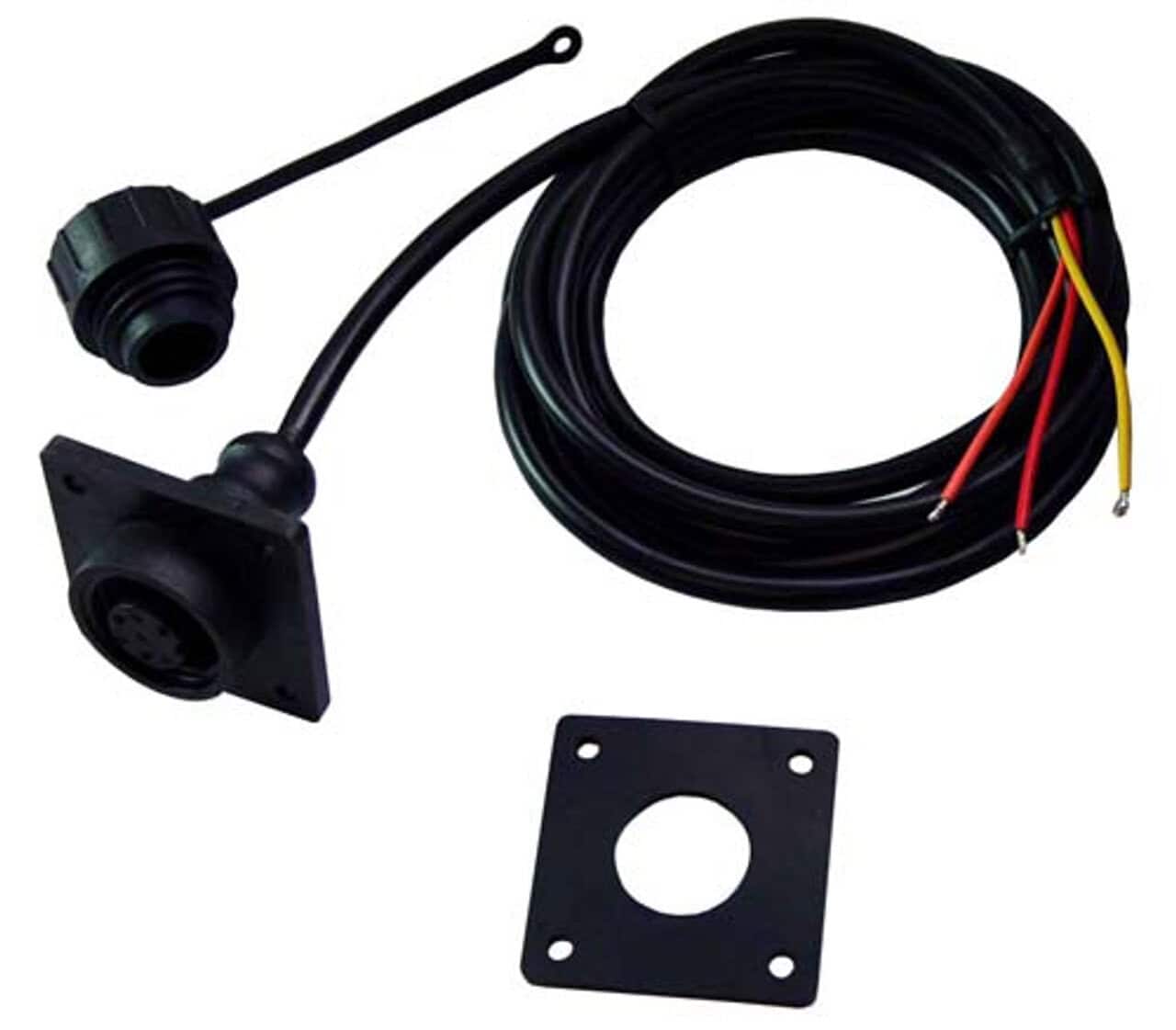
The good news: the breaker, switch and solenoid are all in the box. The only electrical part you buy separately is the battery cable.
Before you drill: three checks
Nearly every failed windlass install traces back to a measurement nobody took. The machine is rarely the problem. The hole is.
1. Locker fall
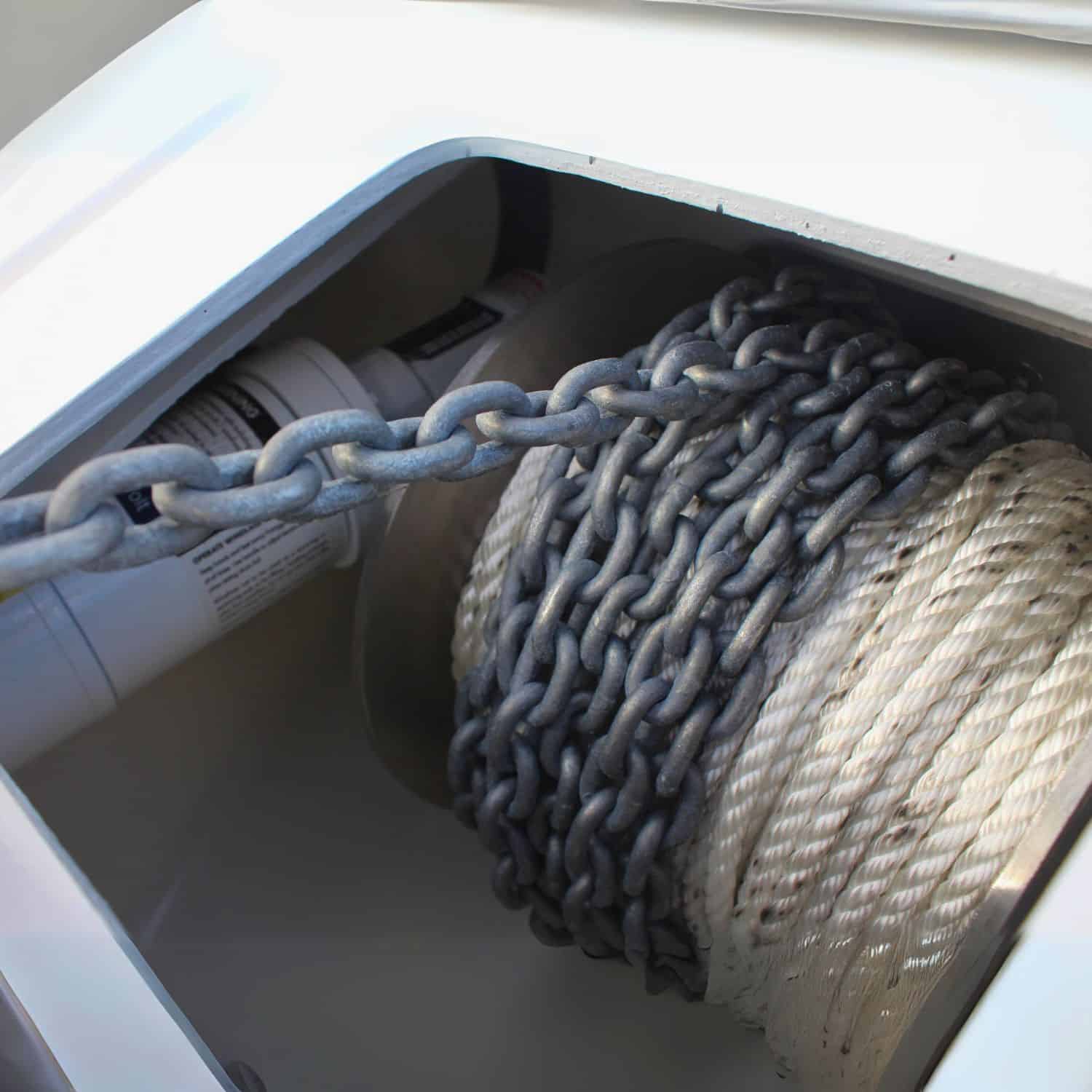
Fall is the drop from the underside of the gypsy to the top of the chain once it piles up. Too little and the chain cones up, reaches the gypsy and jams.
2. Below-deck clearance, for a vertical
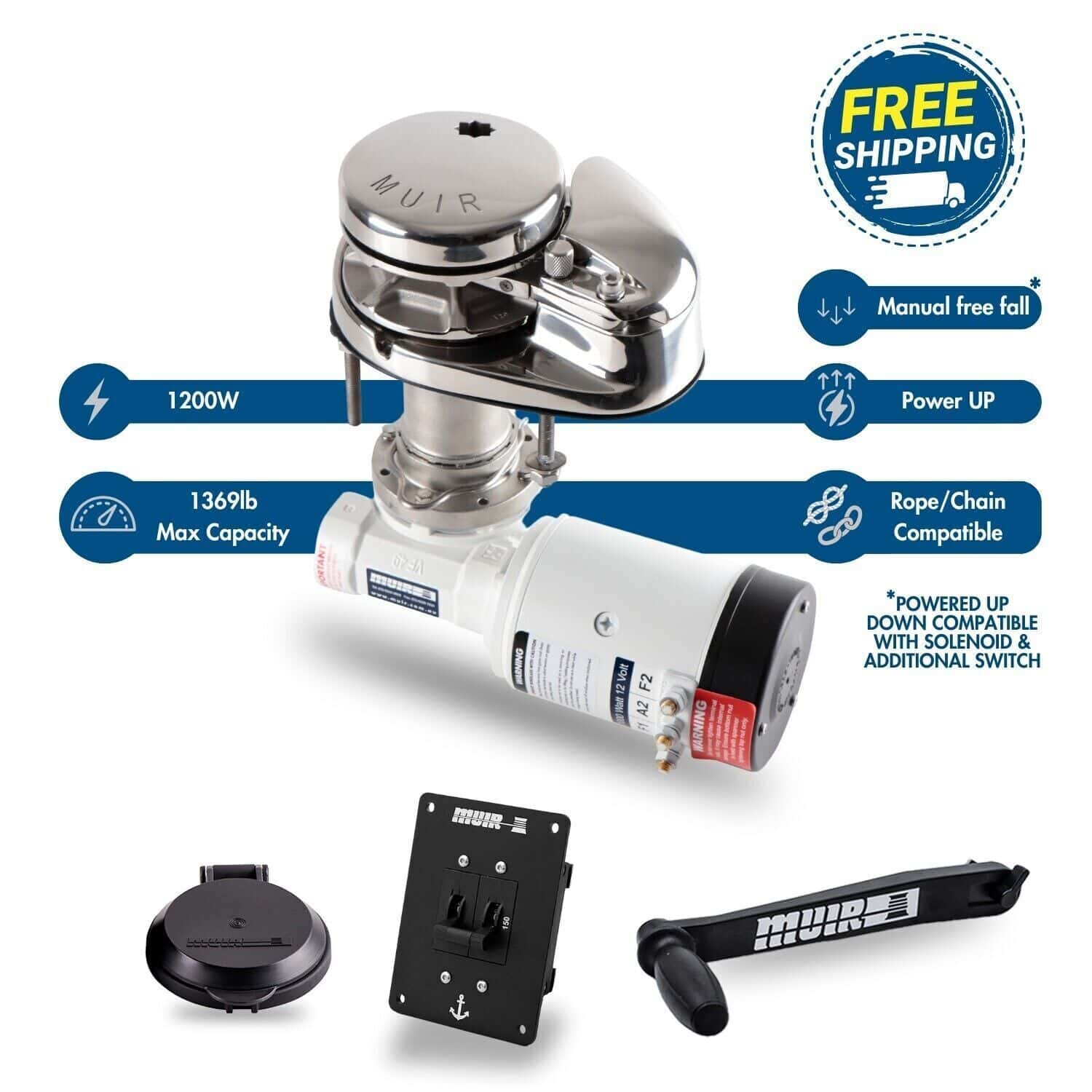
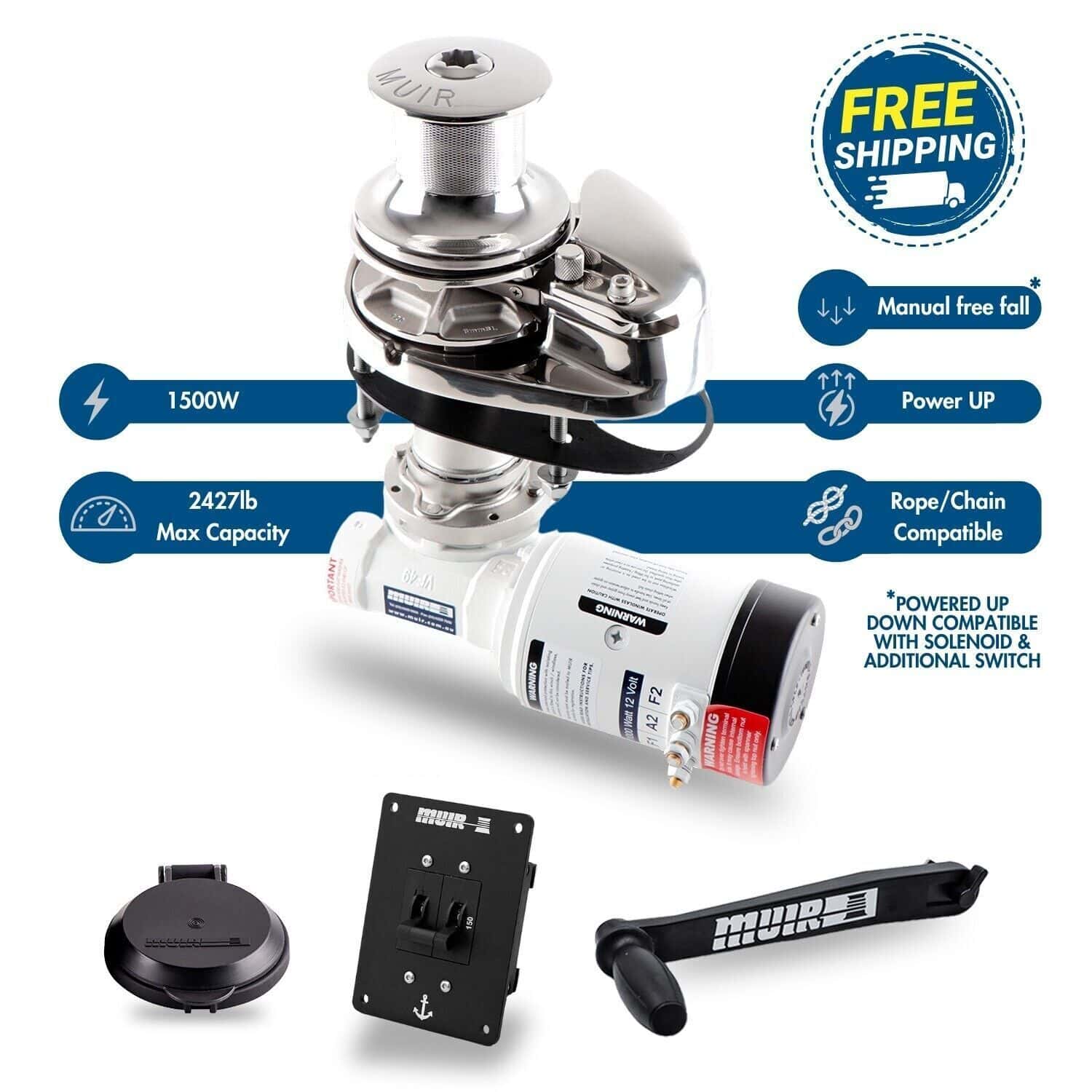
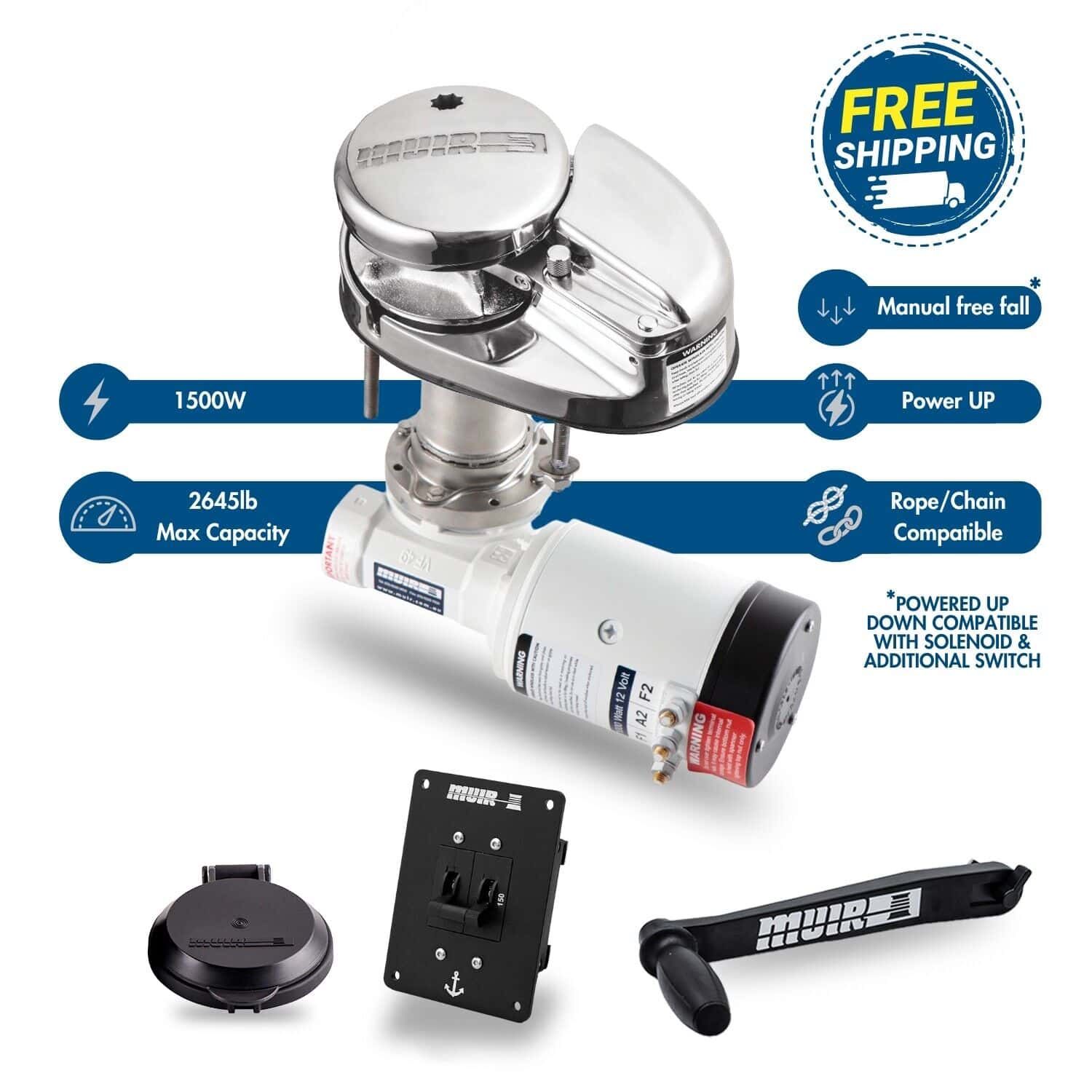
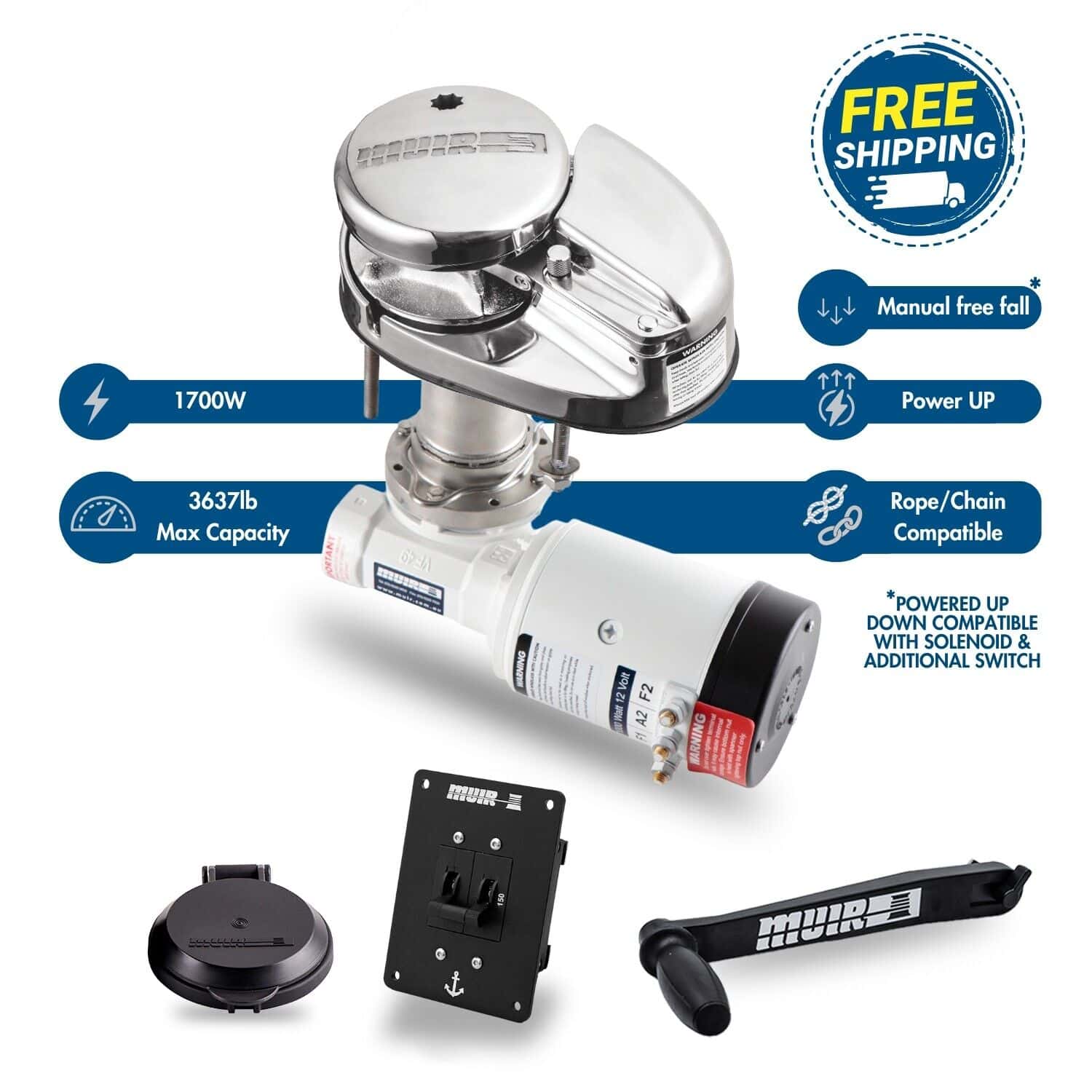
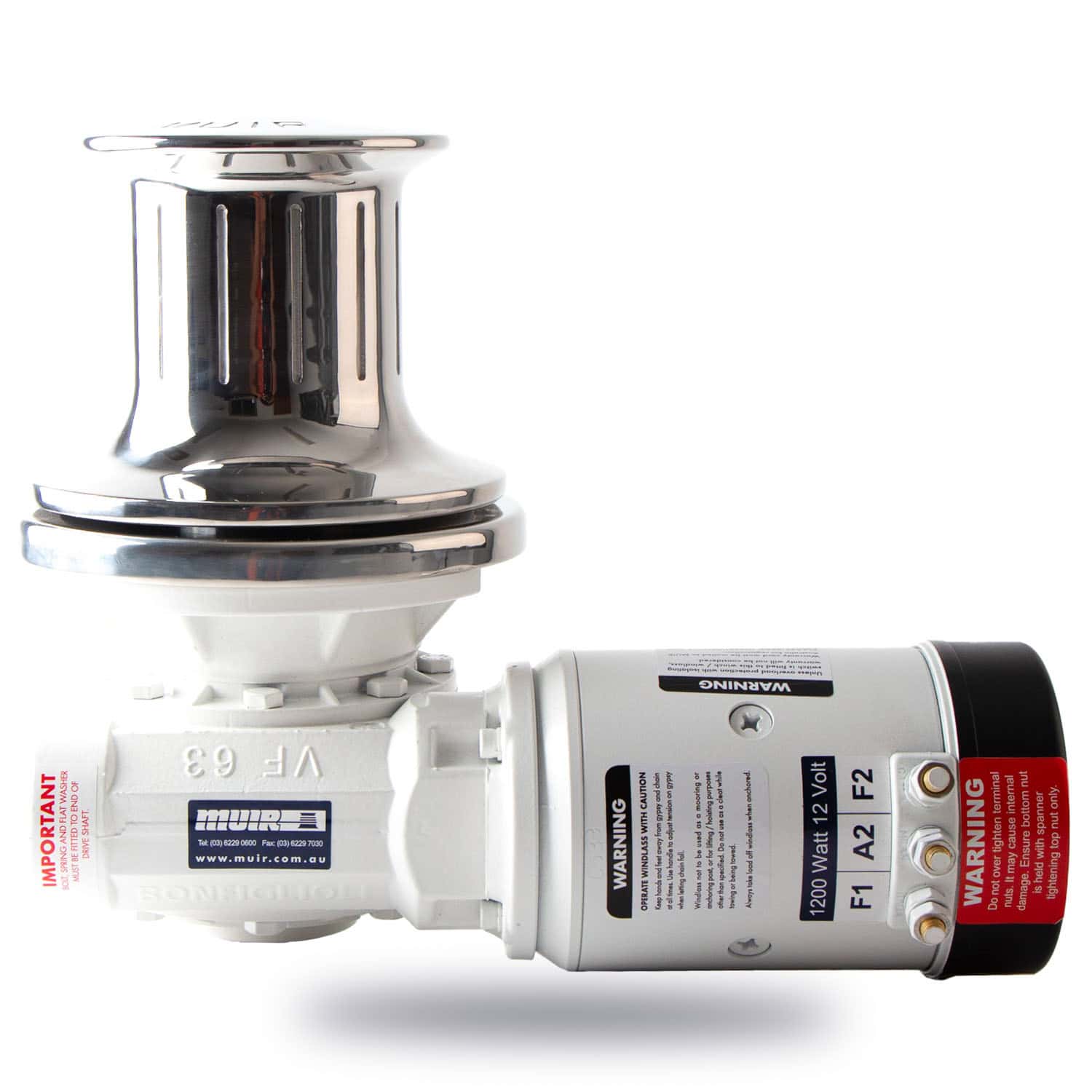
A vertical windlass puts its motor and gearbox under the foredeck. Depth is the obvious dimension. Width is the one that catches people, because the motor lies across the hull where the boat is narrowing.
3. Gypsy and chain
This one is settled before the box ships, not during the install. Chain size alone is not enough, because metric DIN 766 and US G4 high-test differ in pitch and a gypsy cut for one will skip on the other. Tell us which chain you own when you order and the matching gypsy goes in the box. On a drum winch the question does not arise, since there is no gypsy.
What is in the box, and what is not
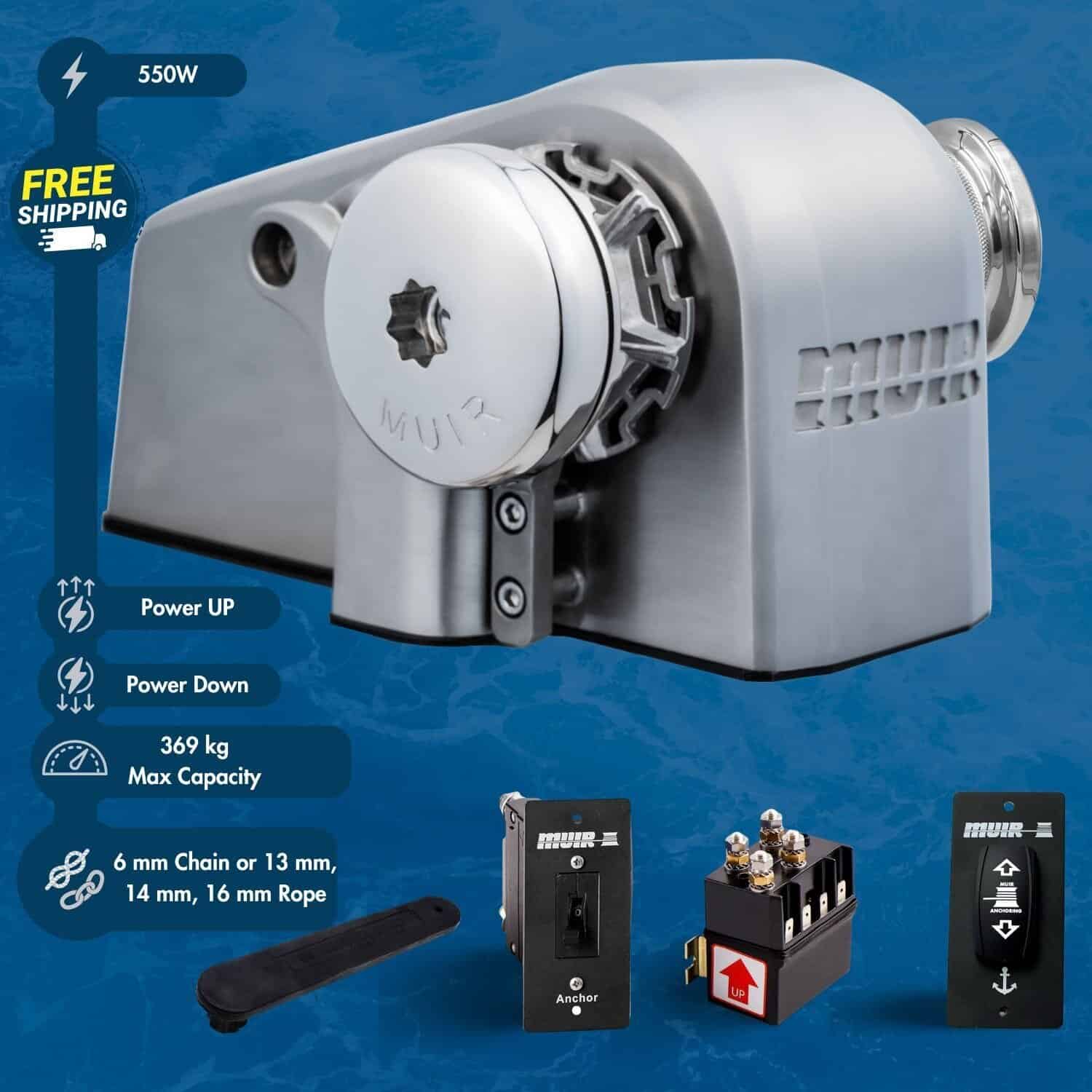
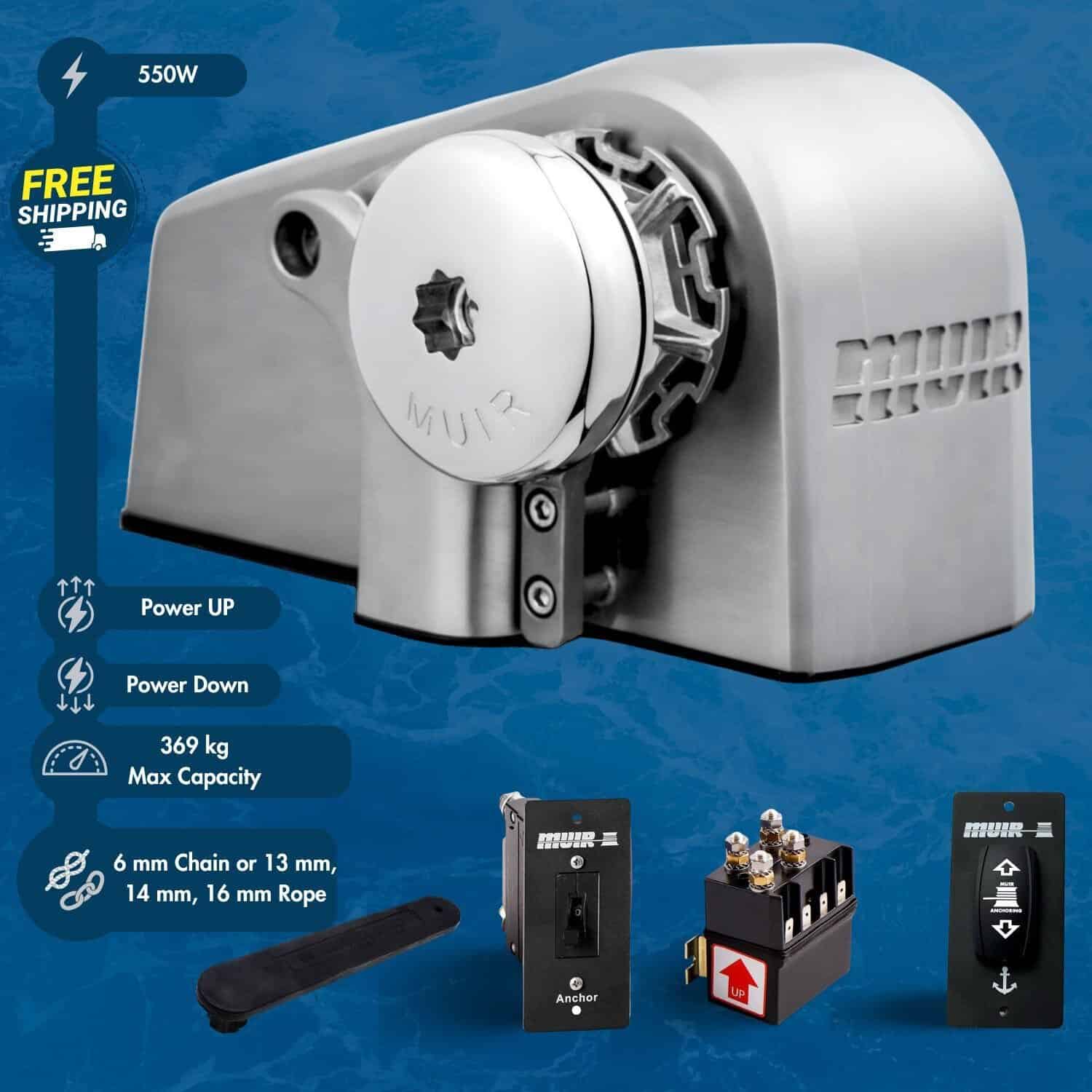
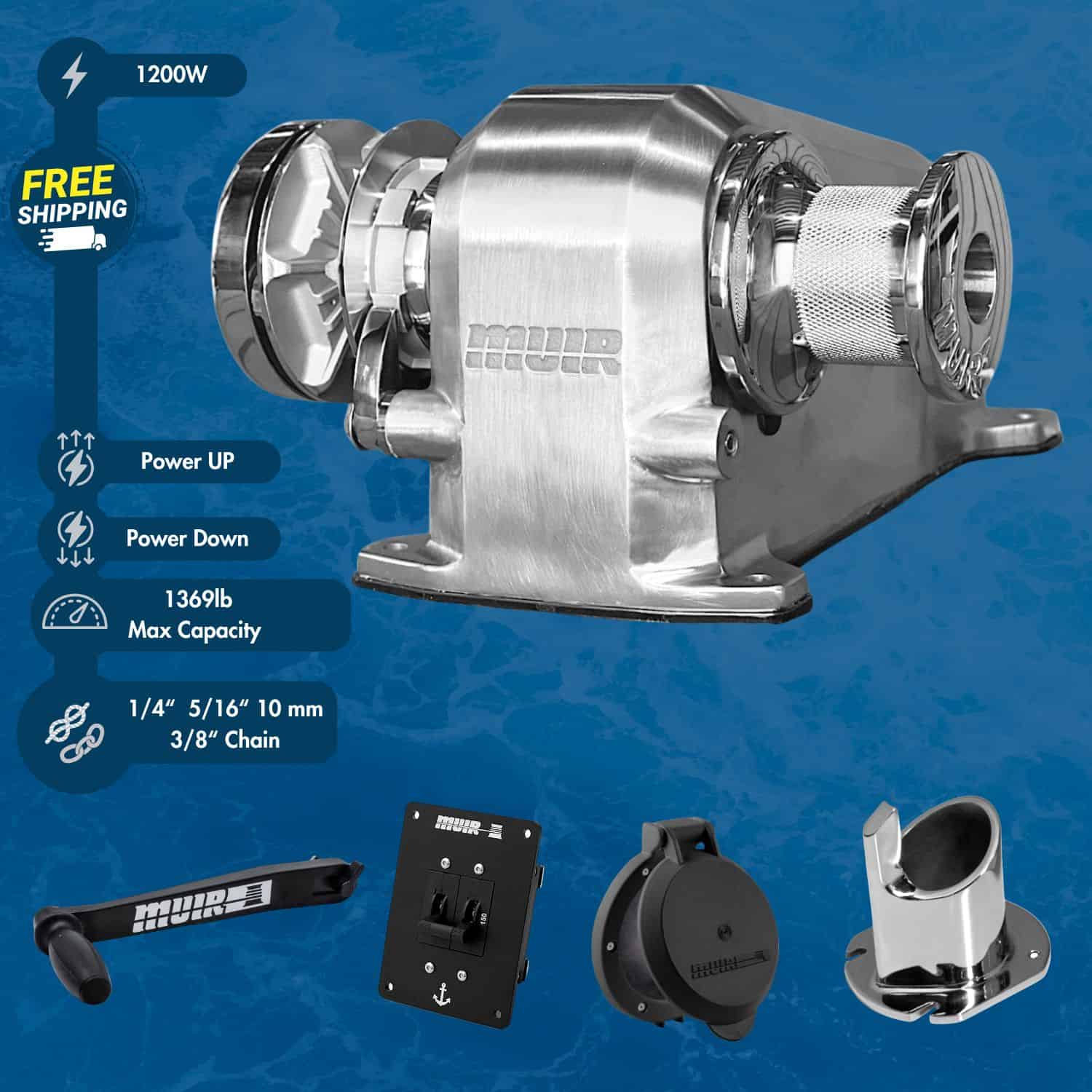
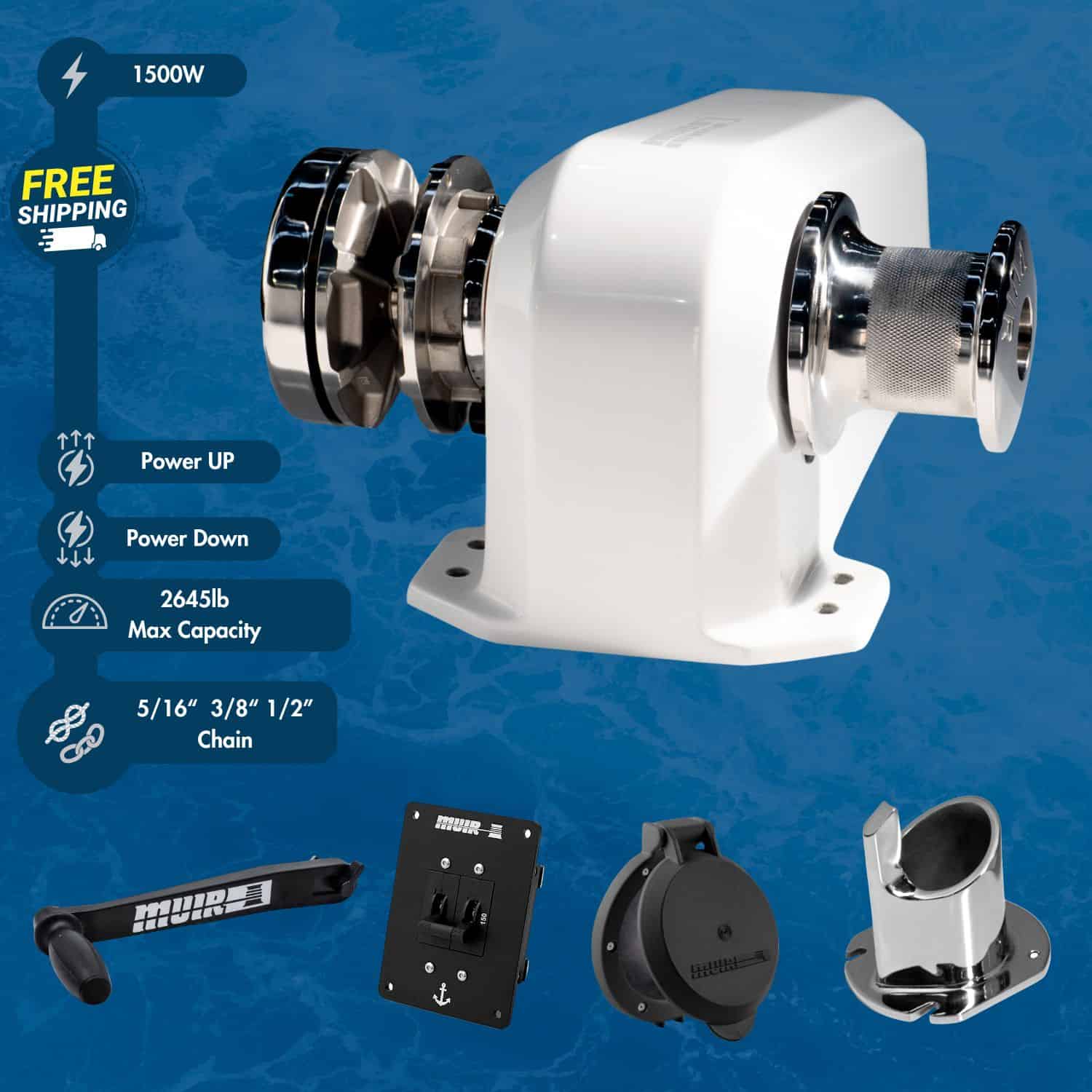
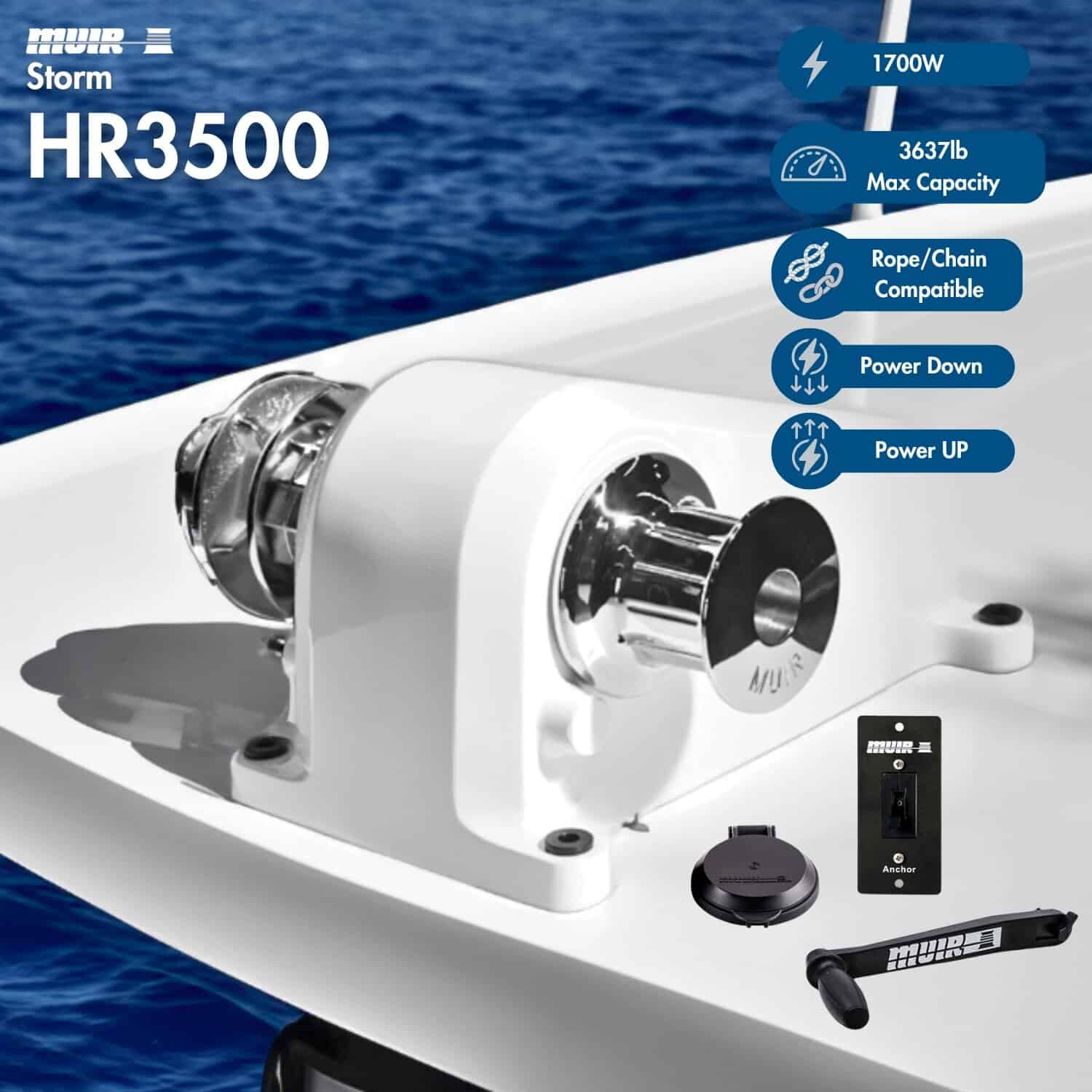
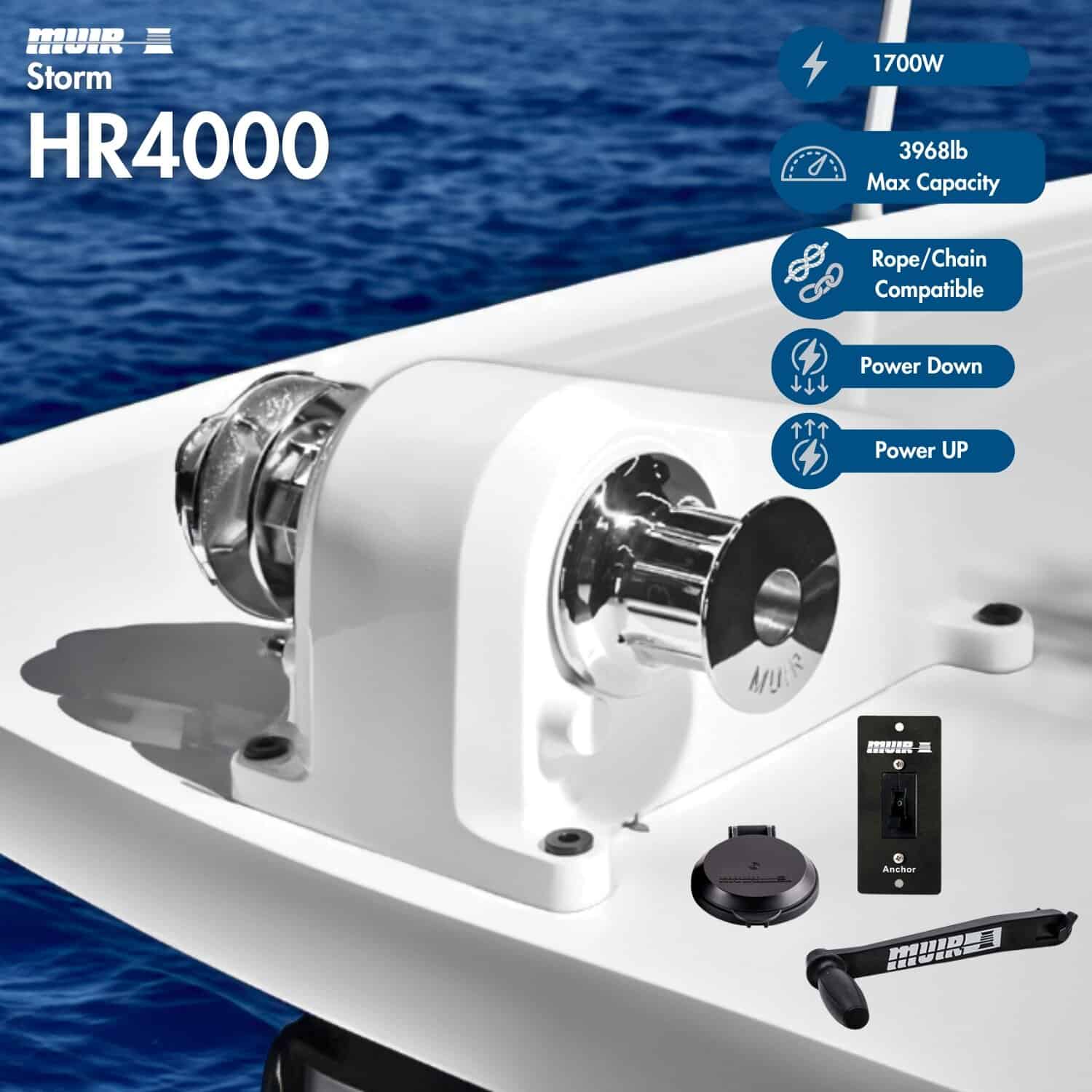
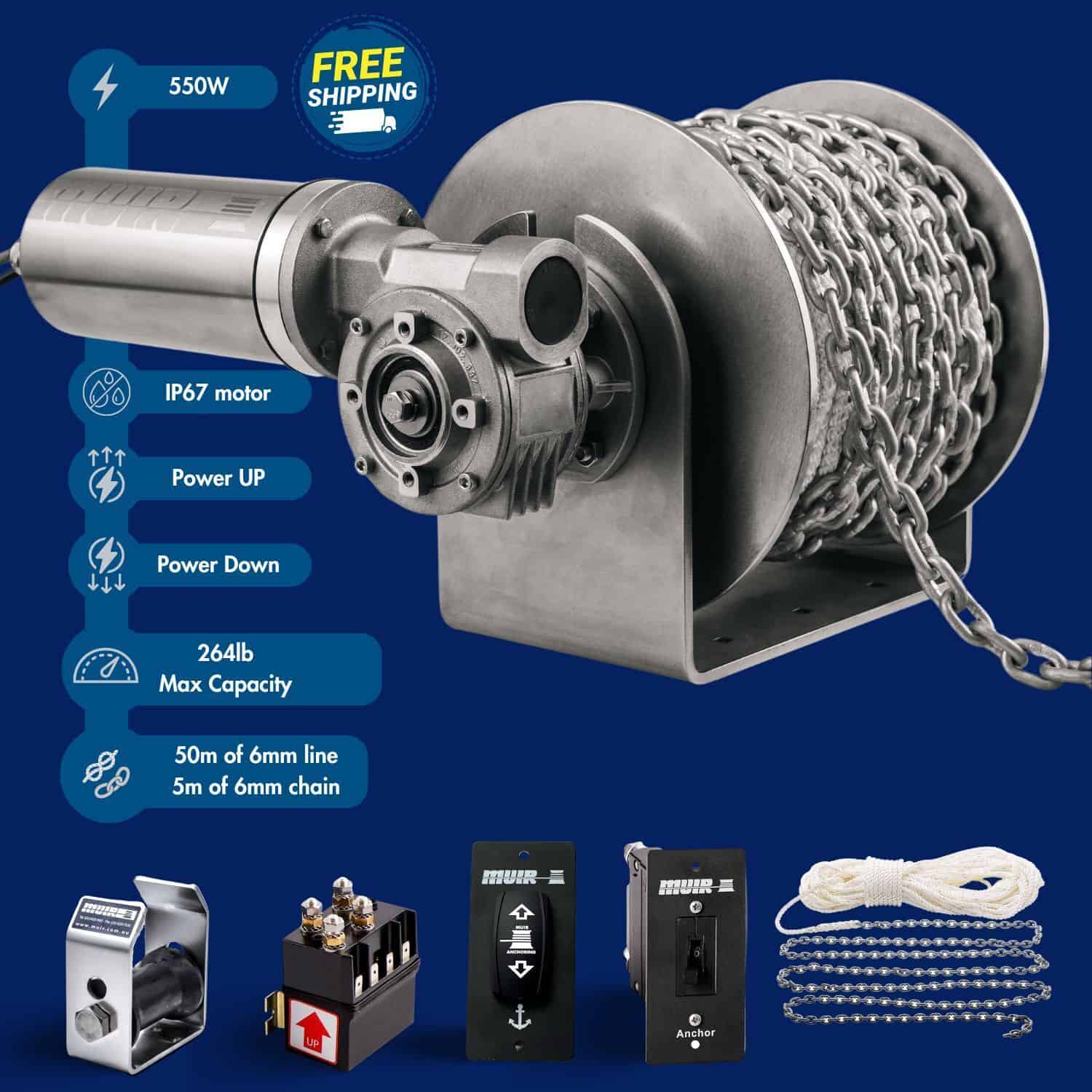
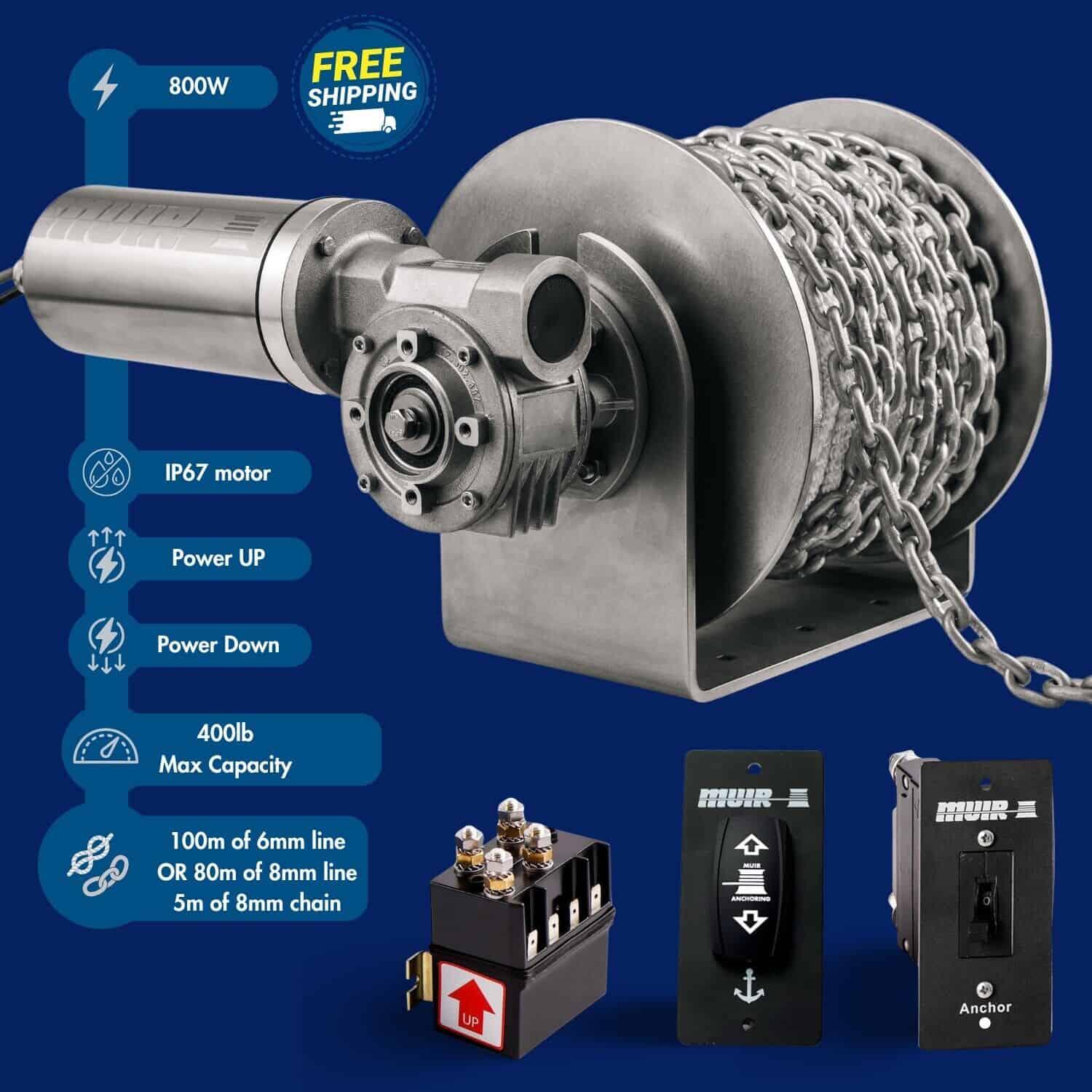
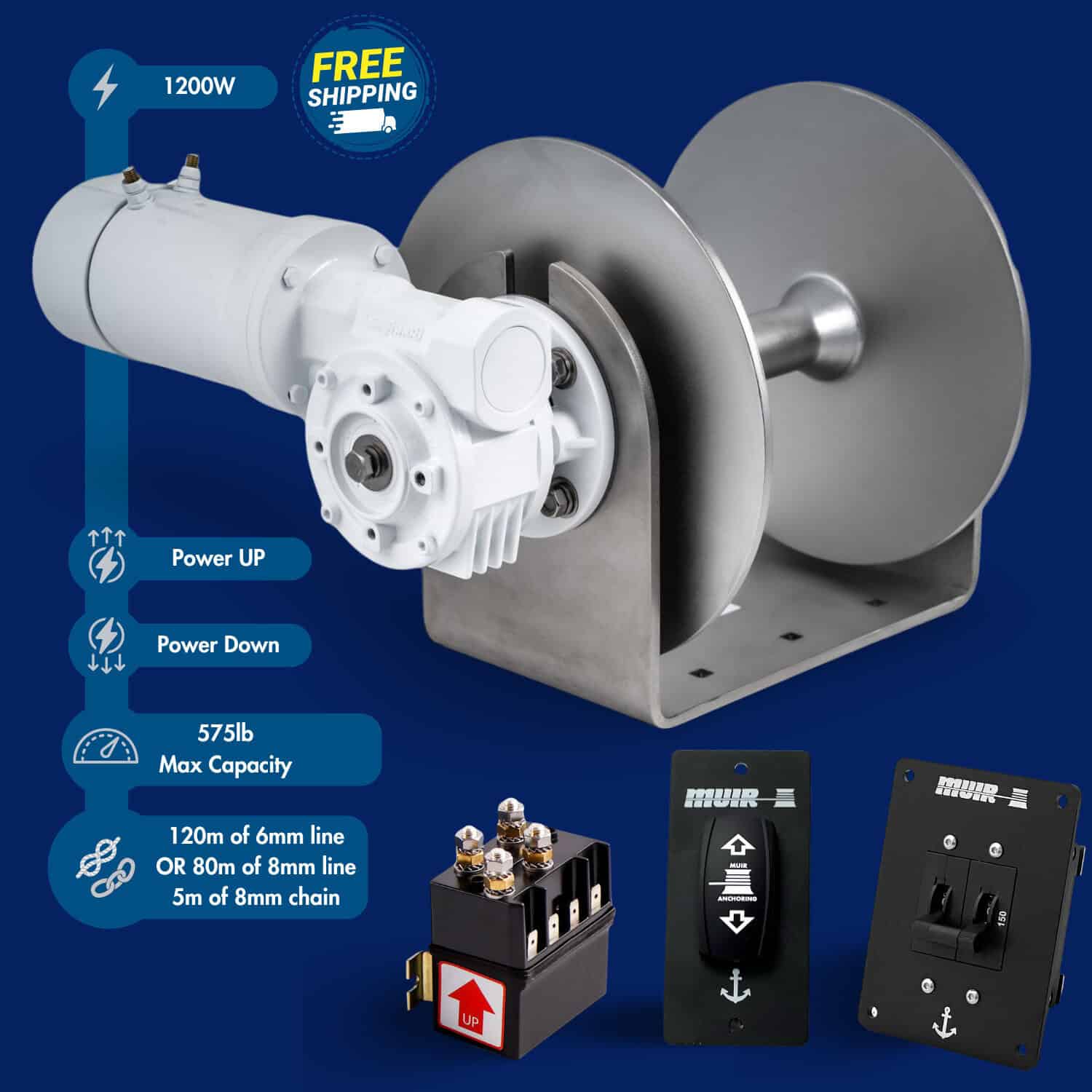
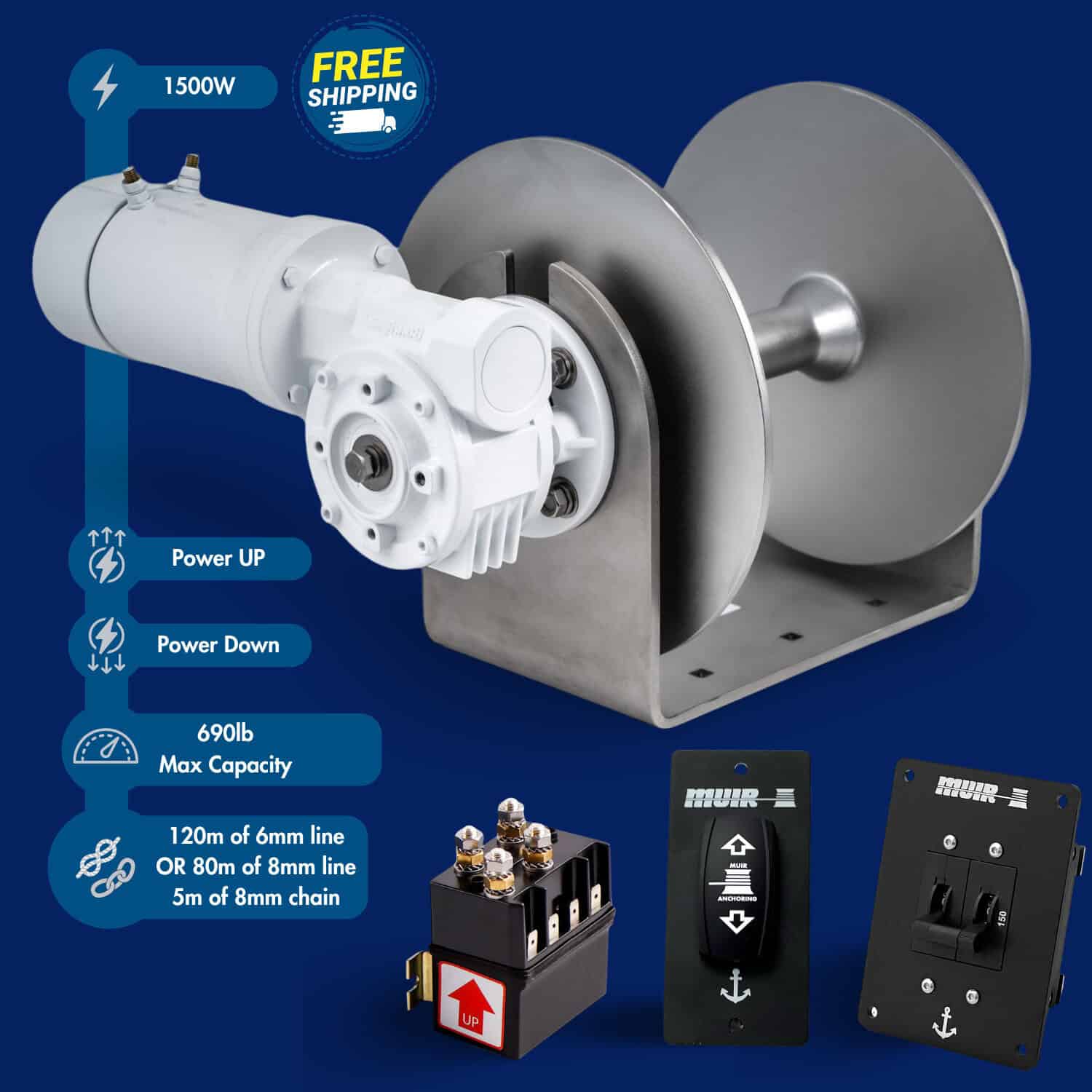
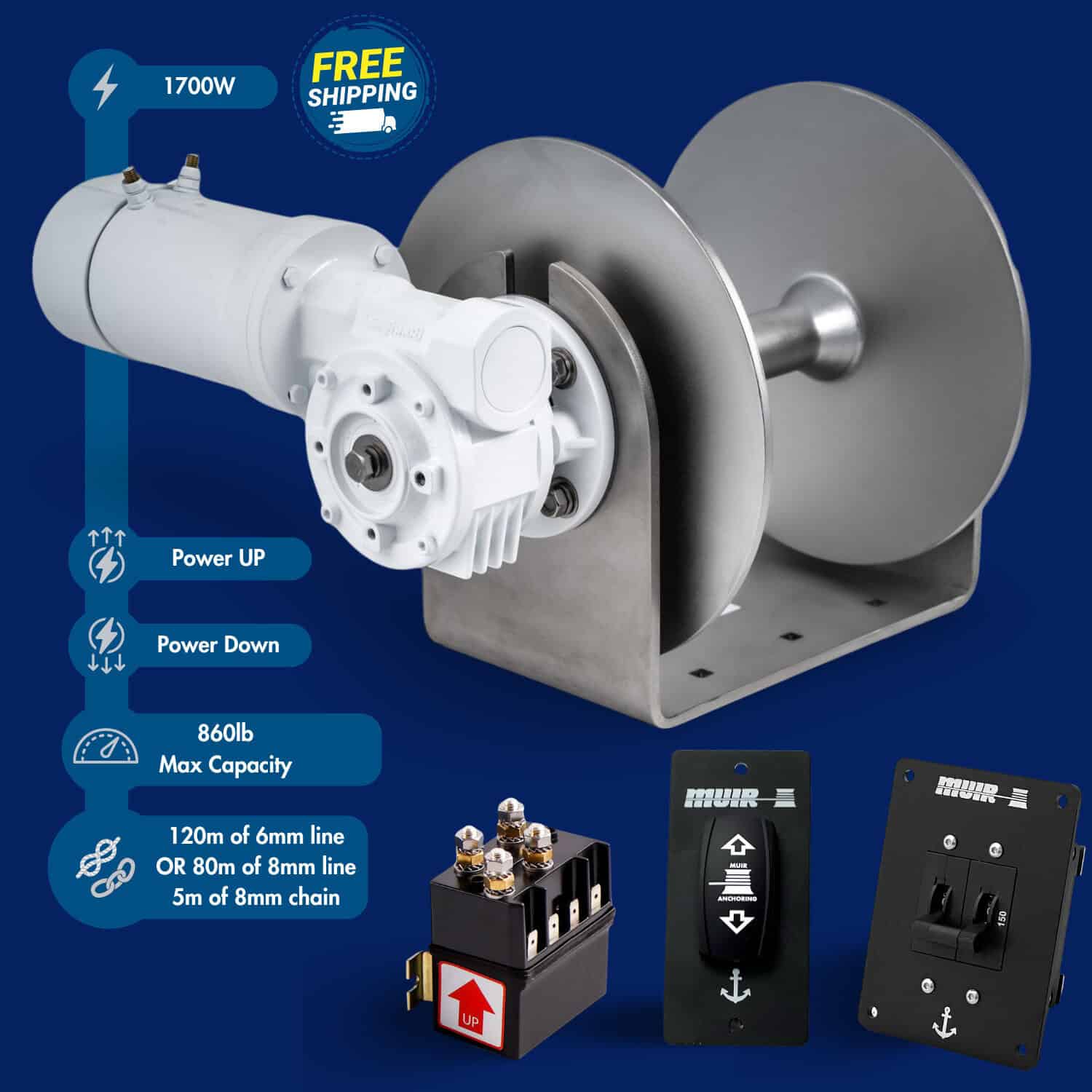
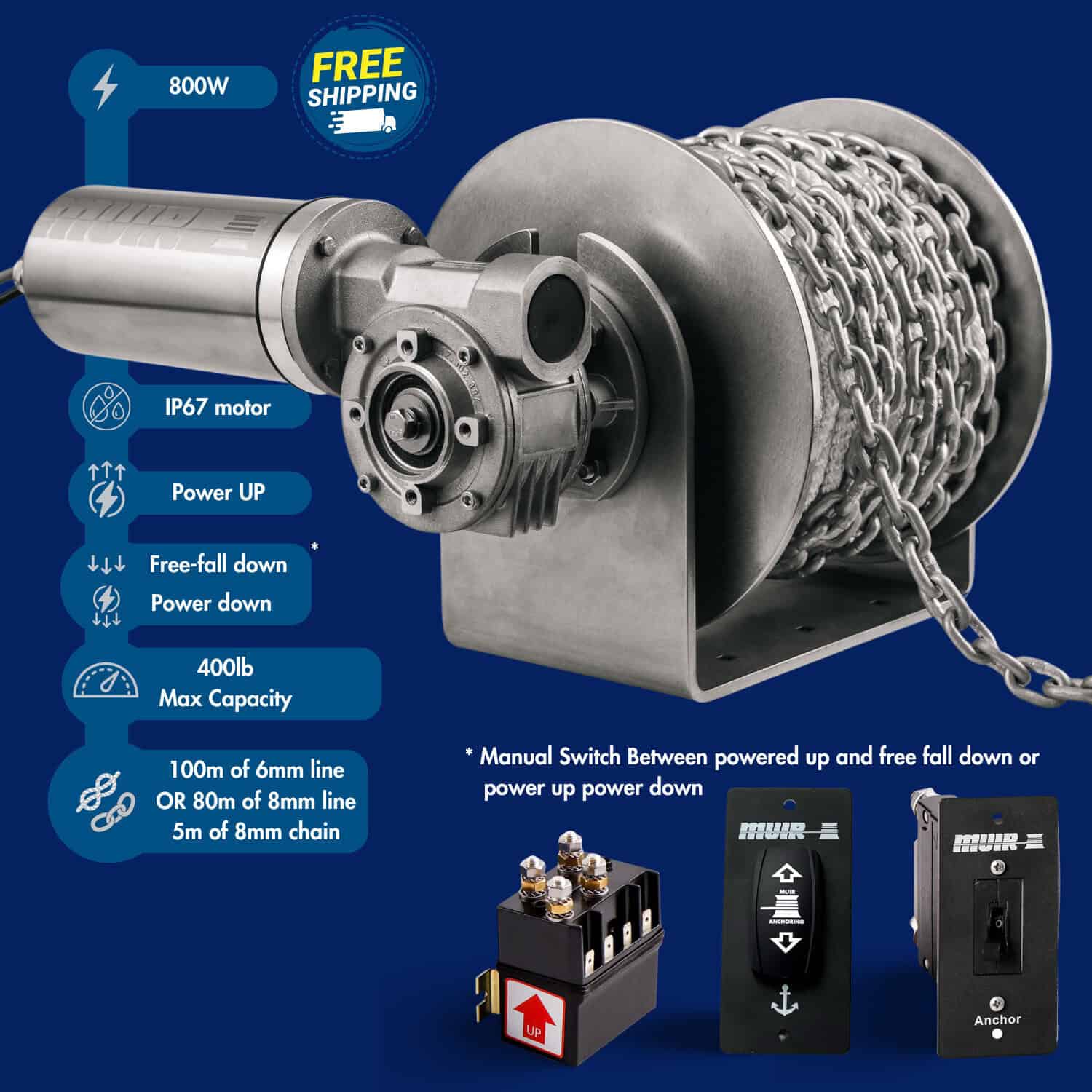
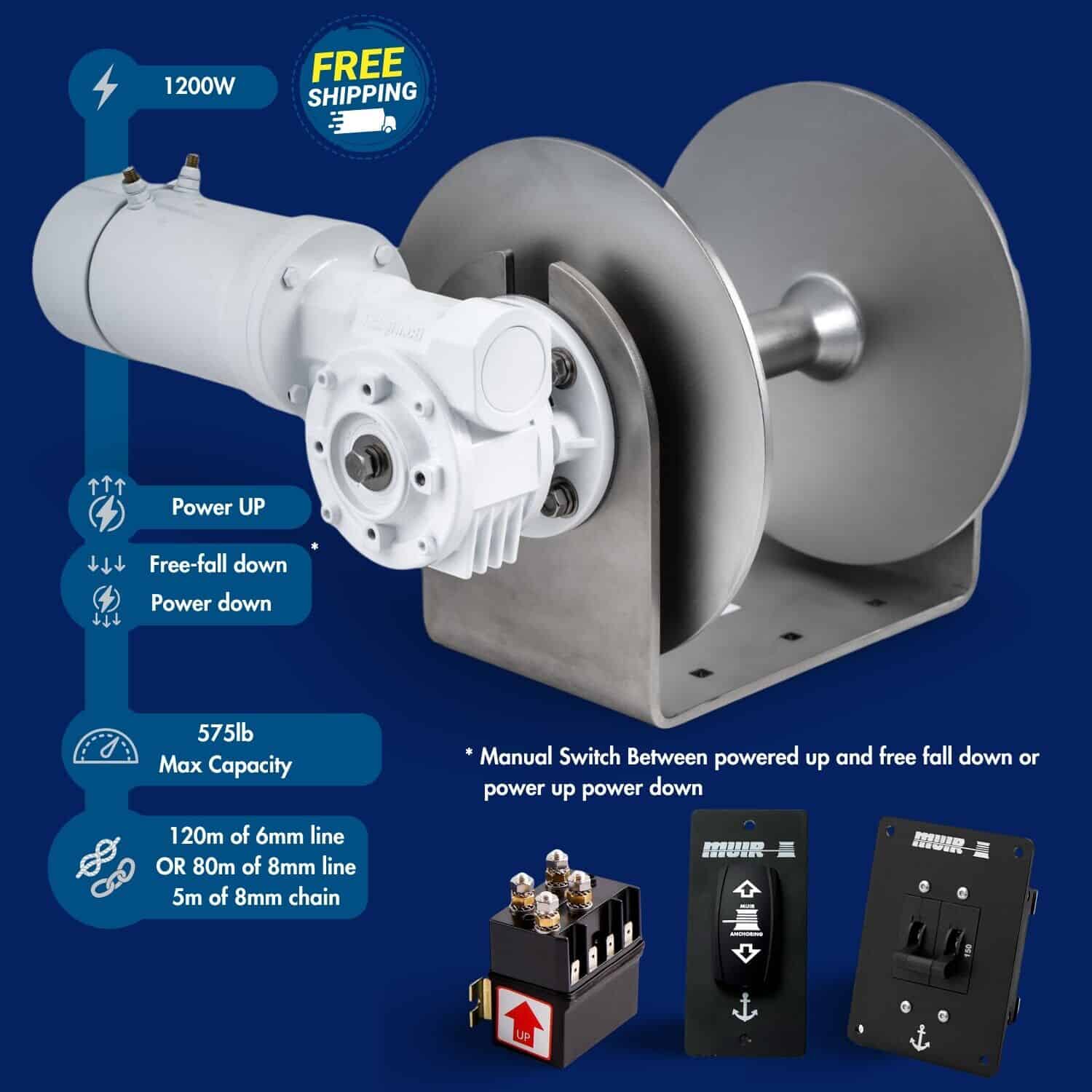
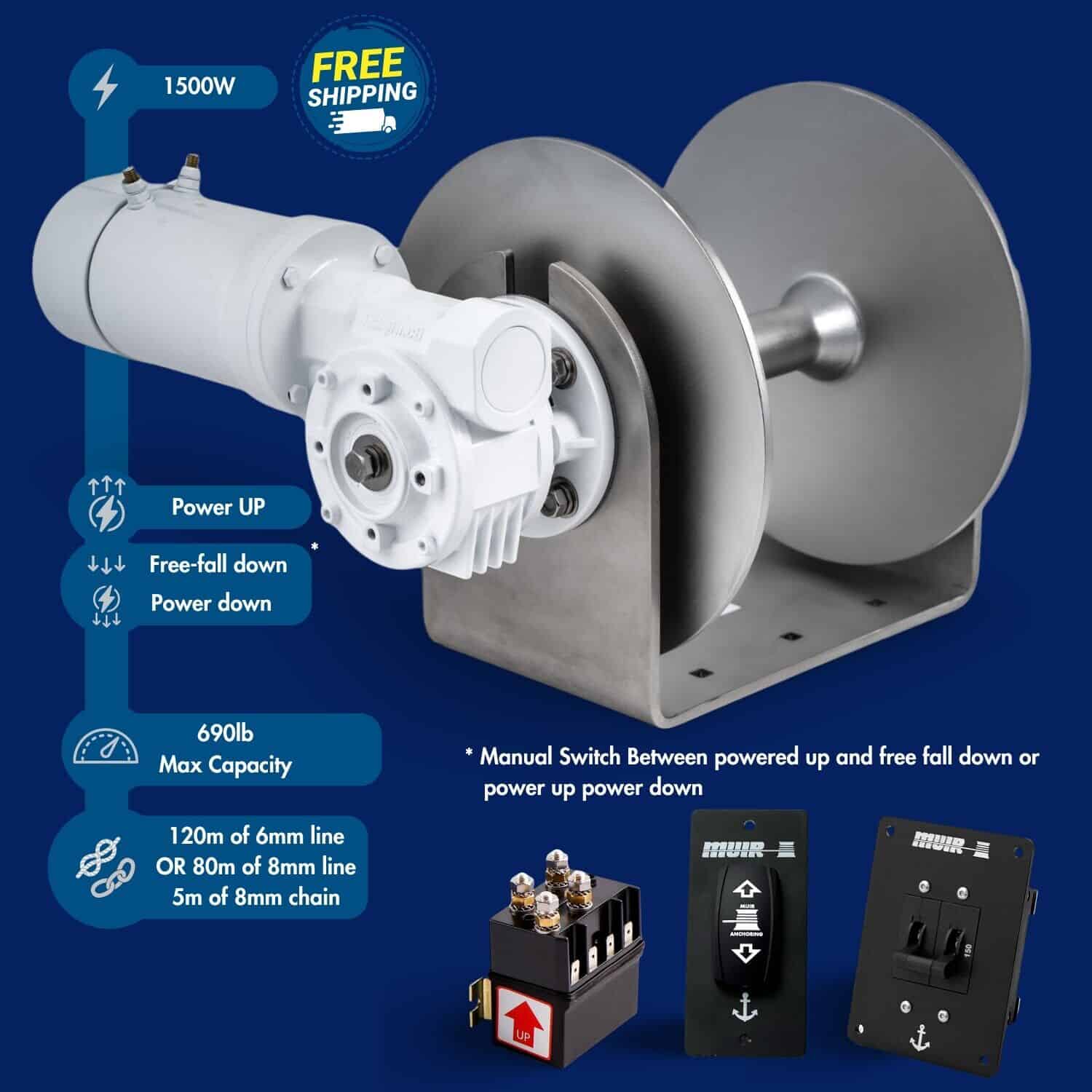
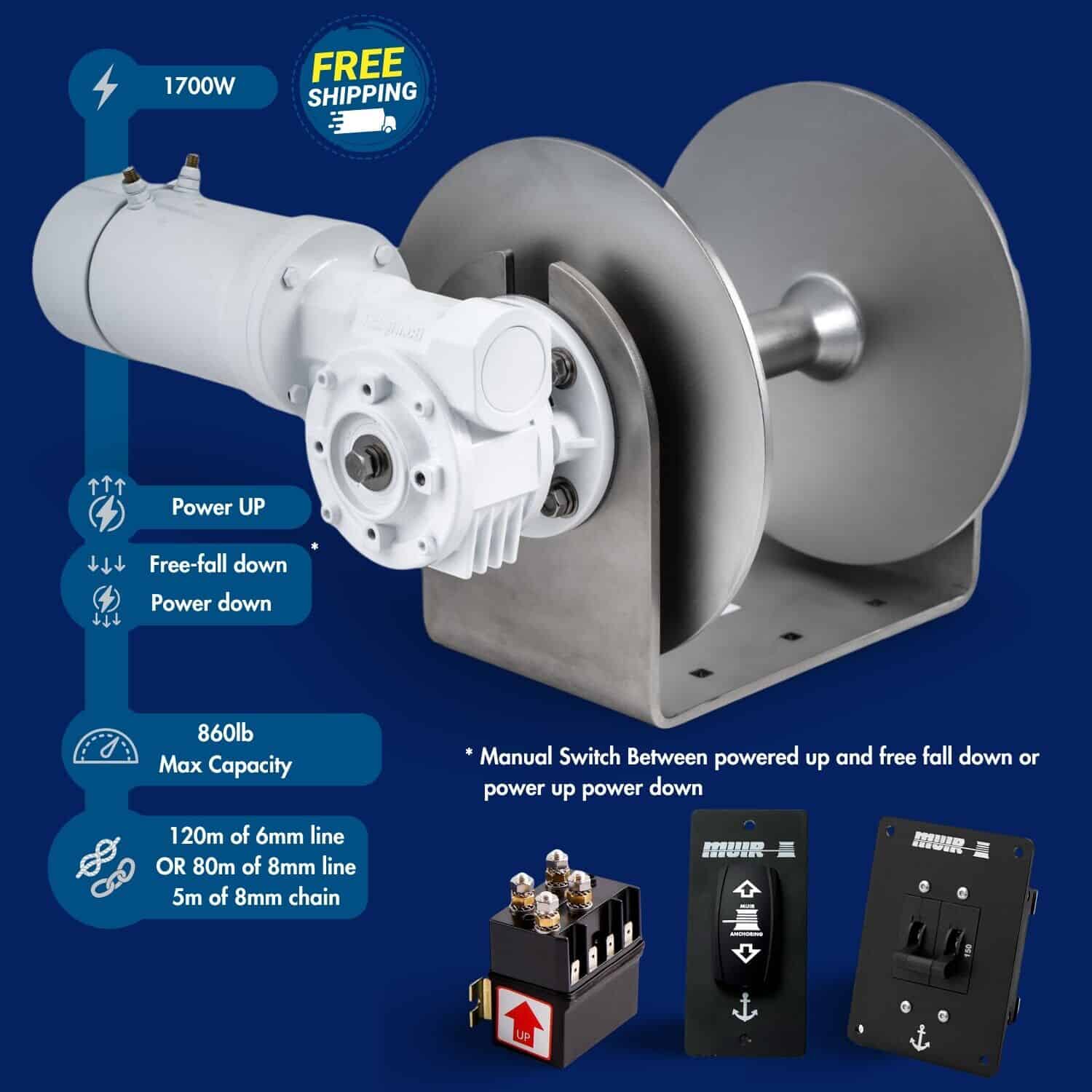
This is the part most install guides get wrong, usually by staying vague. Every Muir windlass and drum winch we sell arrives with:
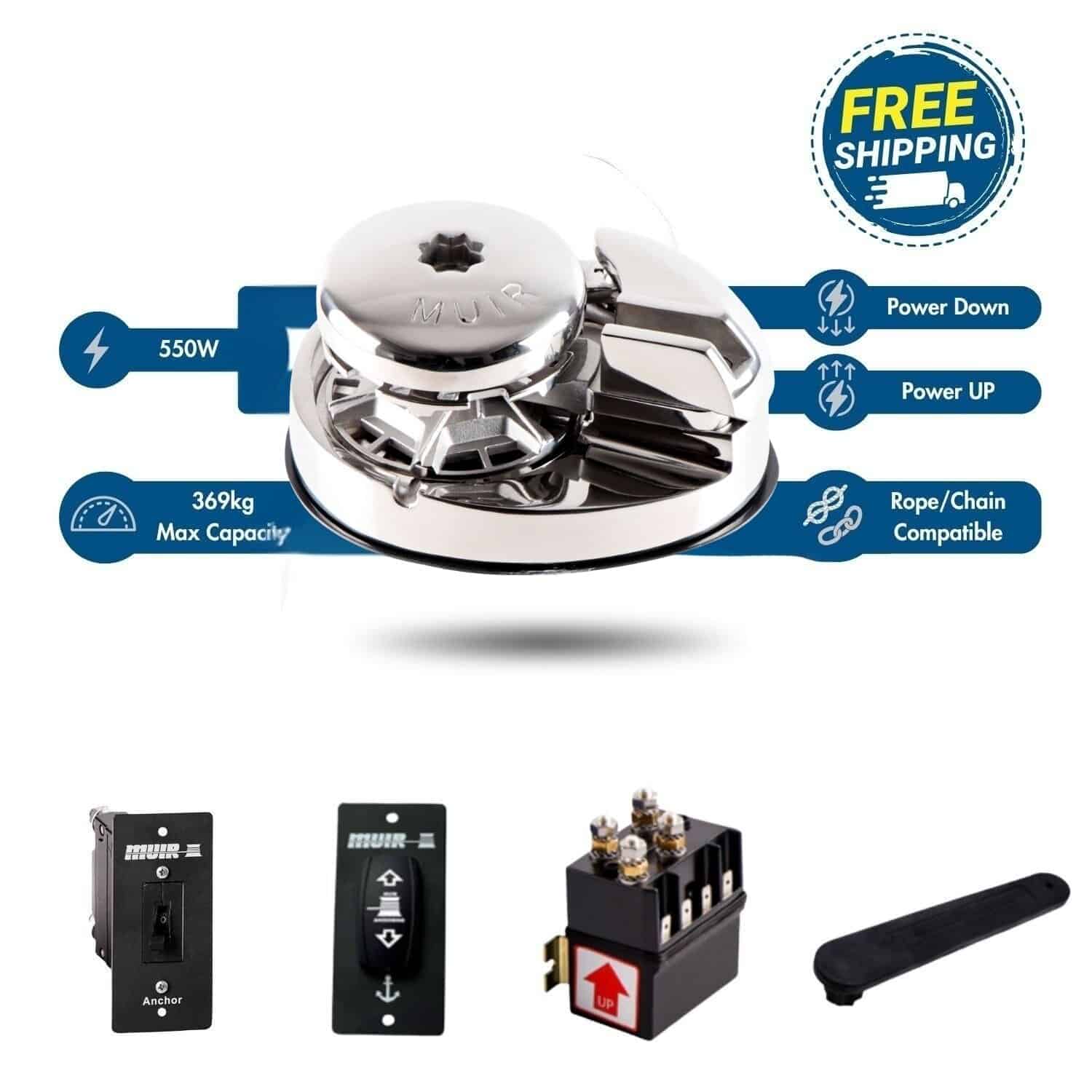
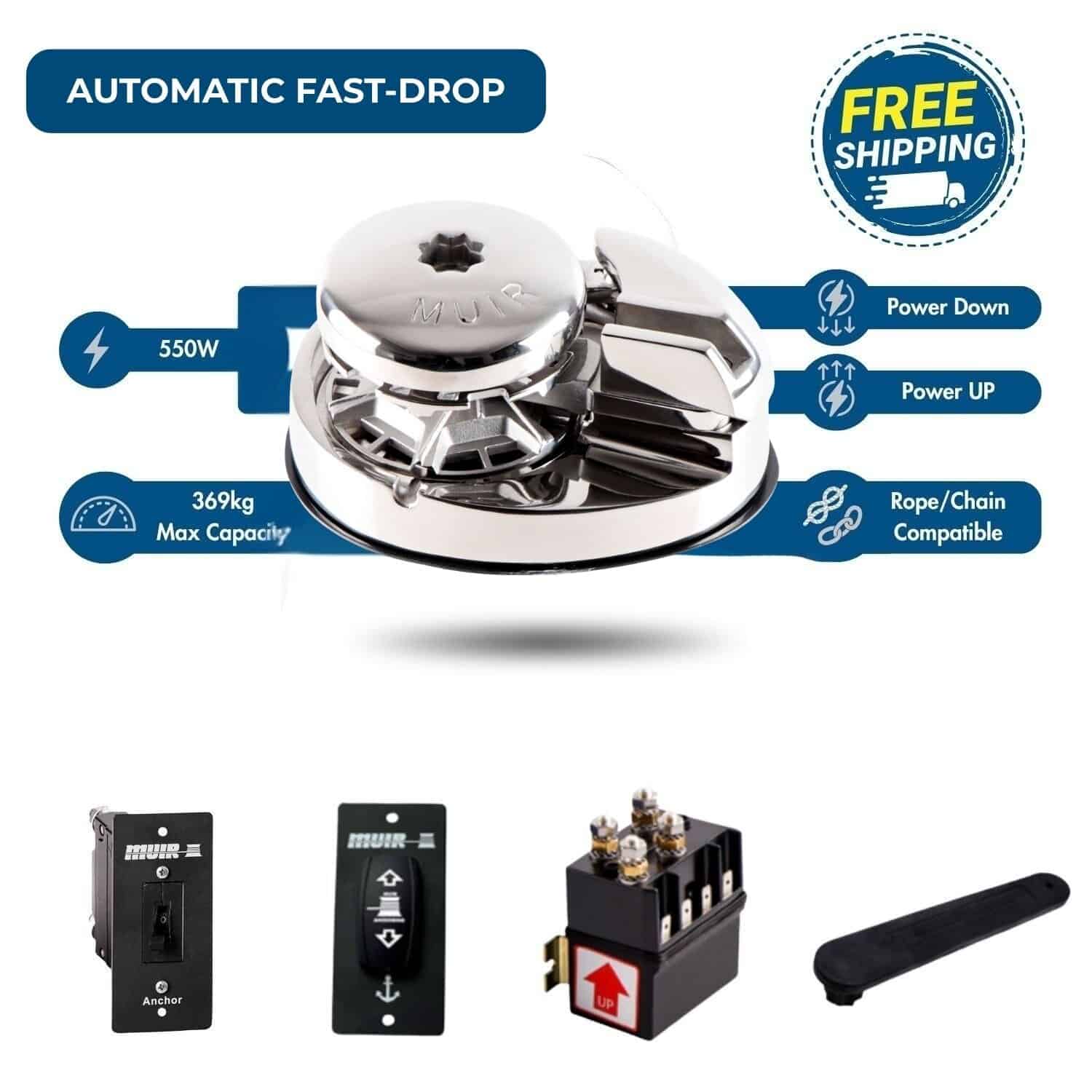
- Circuit breaker and mounting panel
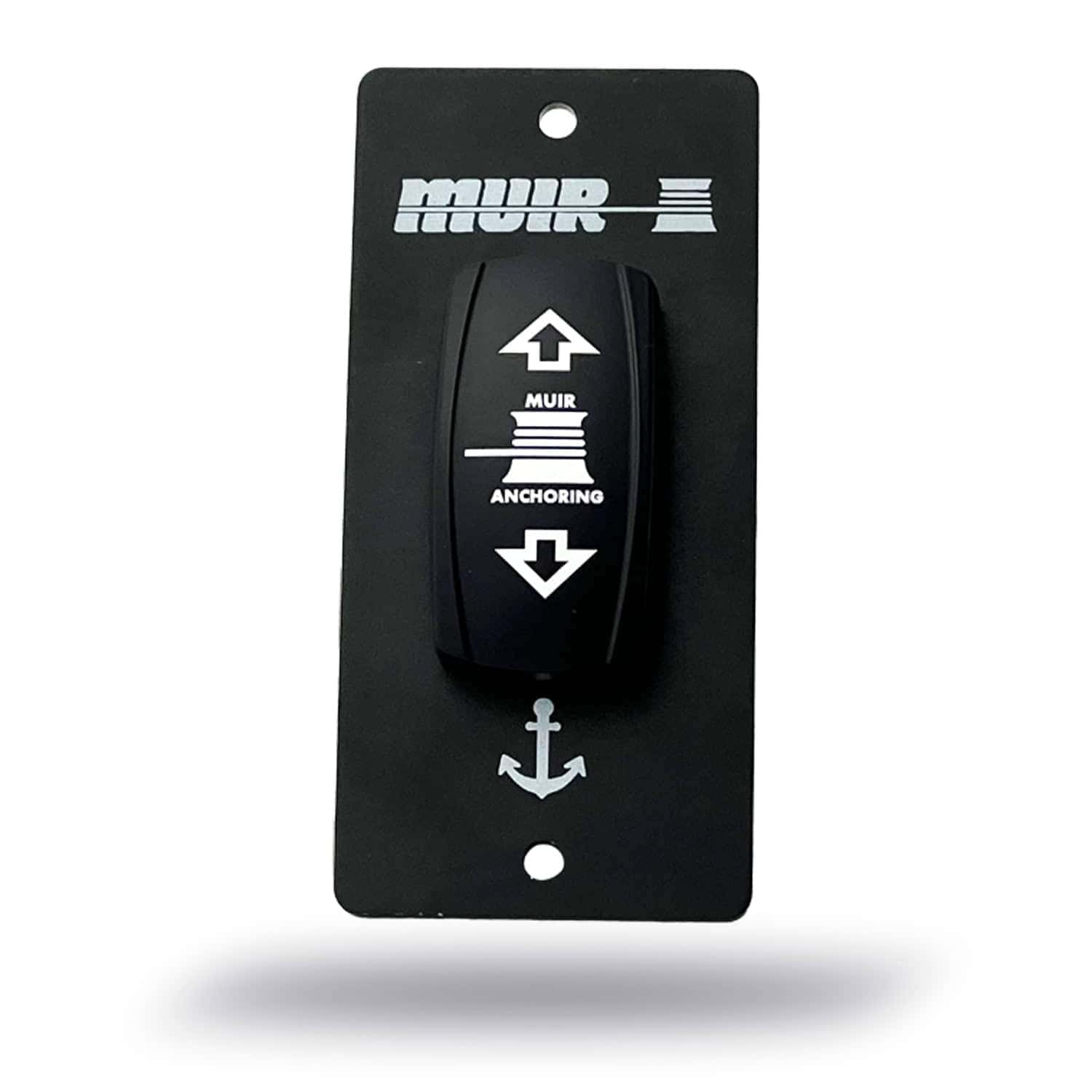
- Rocker switch or deck switch, depending on model
- Reversing solenoid kit
- Deck mounting studs and fasteners
- Installation and operation booklet, plus a printable deck template
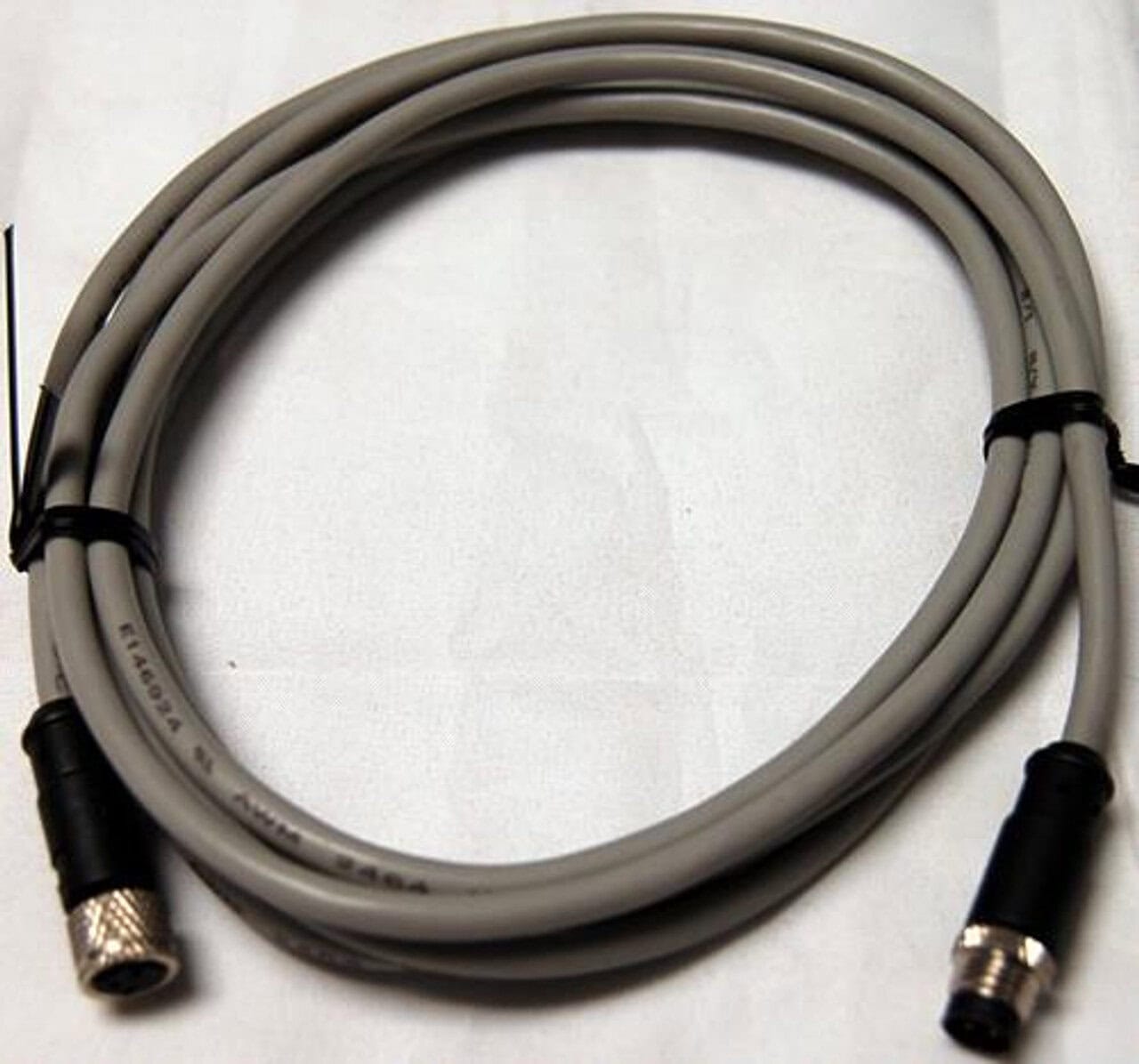
What is not included is the battery cable, because the right gauge depends on how far your battery sits from the bow. That is boat-specific and no manufacturer can put it in a carton. Muir publishes the sizes by model and run length, and we have set them out in the windlass wiring guide.
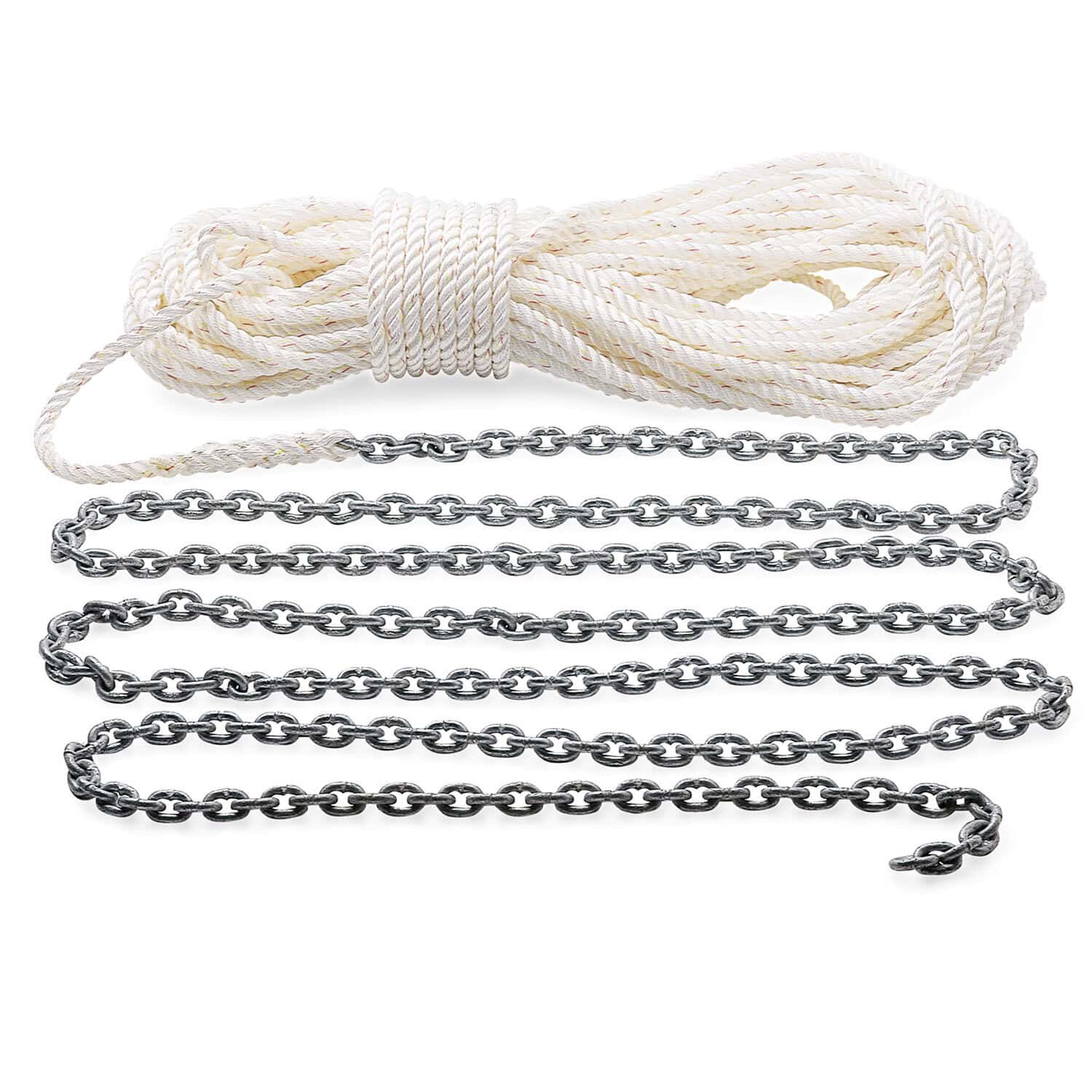
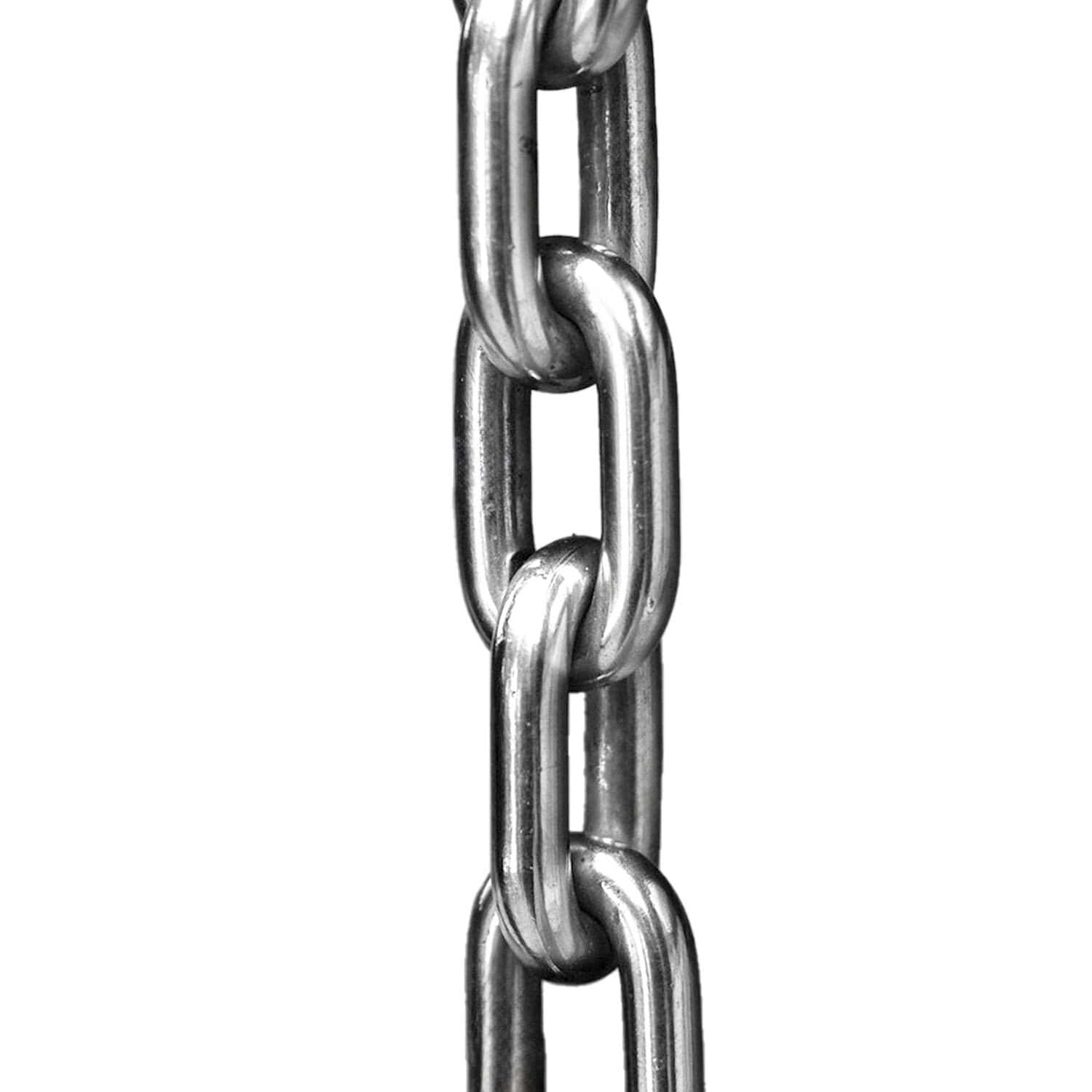
Rope and chain are also separate unless you buy a Combo package. See the drum winch rope-chain kits or the windlass rope-chain kits.
Tools
- Drill, bits, and a hole saw sized for the chain pipe
- Jigsaw if the deck cutout is not round
- Wrench set and screwdrivers
- Marine sealant, and epoxy if you are sealing a cored deck
- Crimpers and heat-shrink terminals rated for the cable size
- Multimeter, for checking voltage at the motor under load
The install, step by step
Step 1: Position it against the bow roller
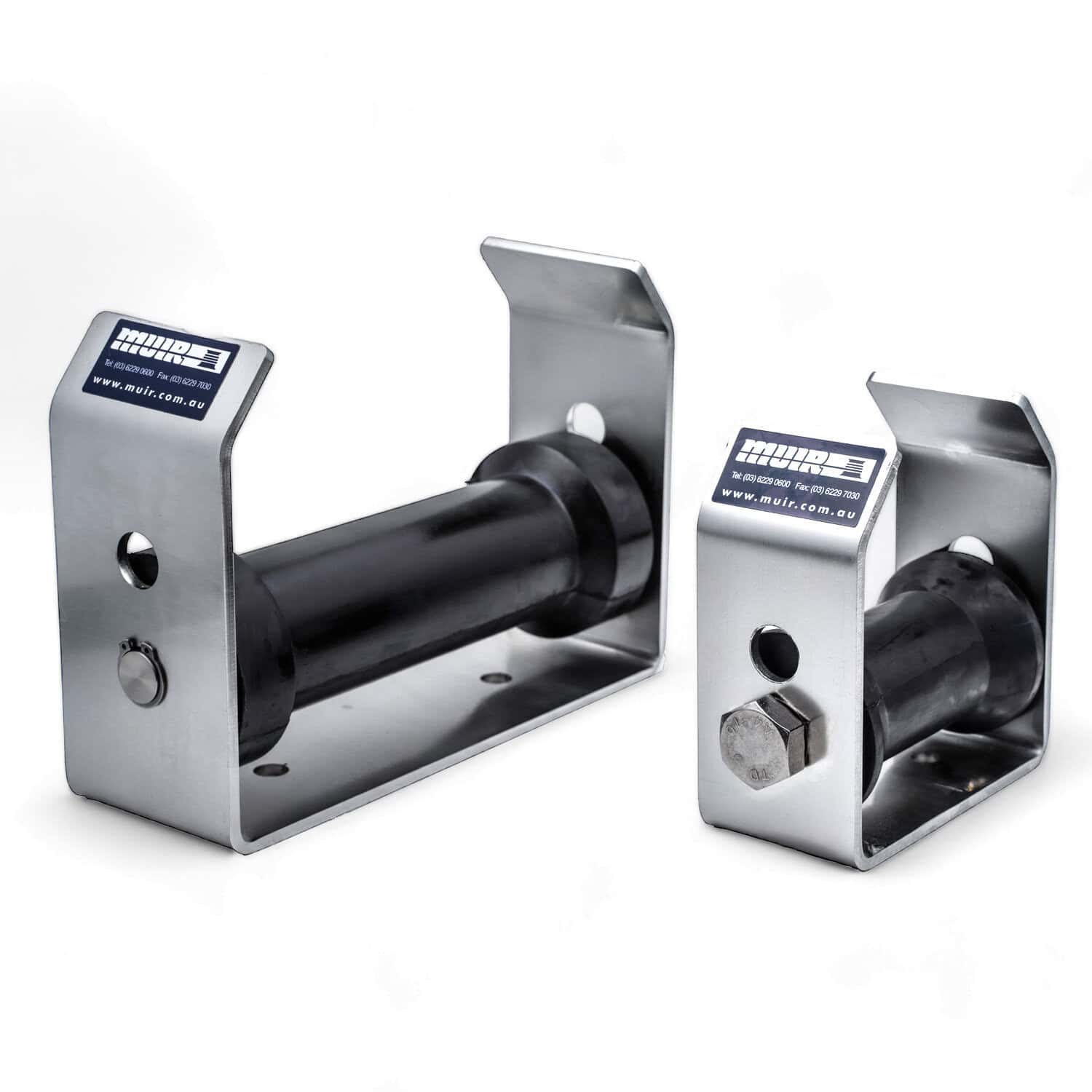
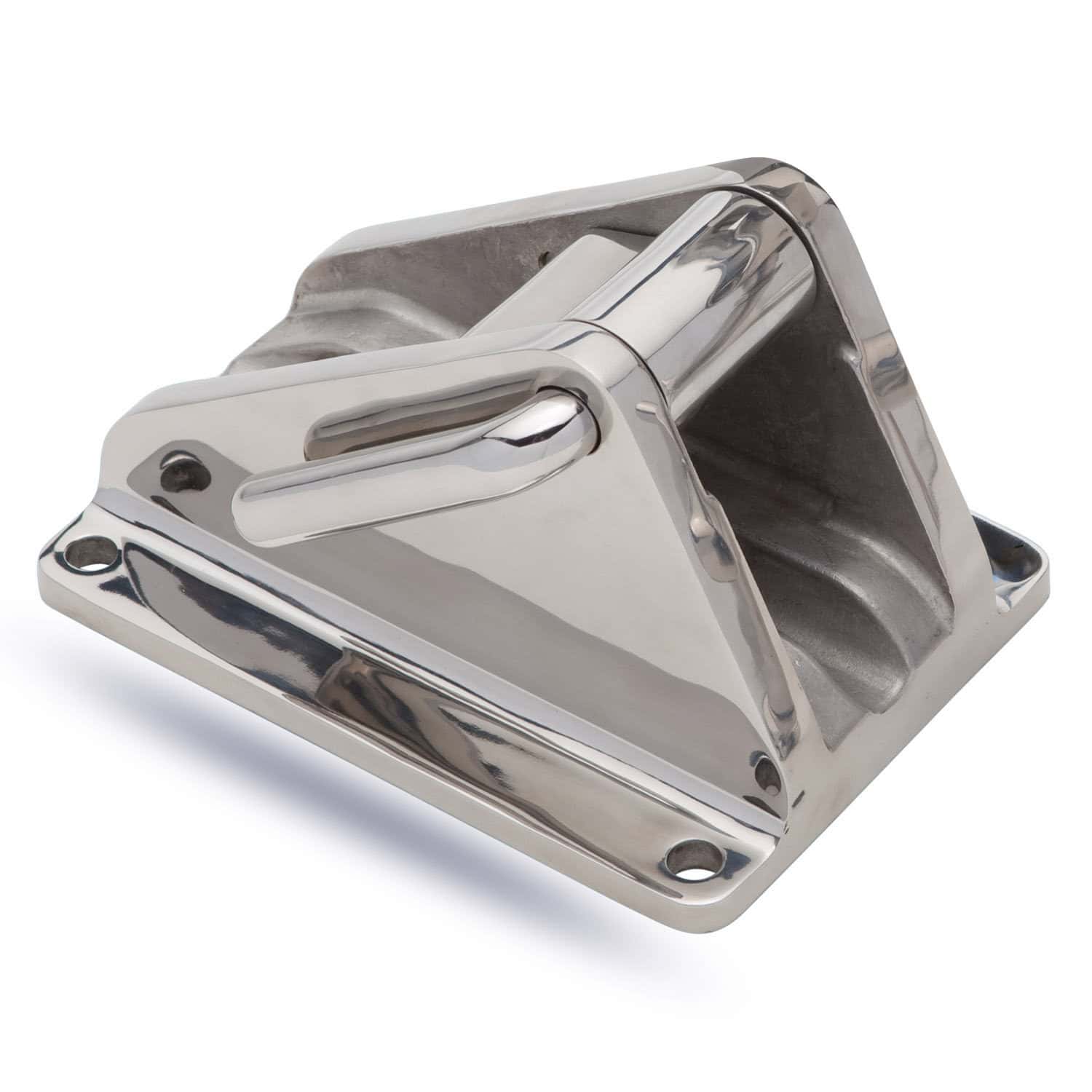
The rode has to lead straight off the roller into the gypsy. A horizontal windlass has to line up accurately; a vertical tolerates a wider feed angle and can serve twin rollers. Sit the template in place and pull a length of chain across it before you mark anything.
Step 2: Check what is under the deck
Go below and look at the actual underside: wiring, bulkheads, the locker moulding, and whether the deck is cored. A cored deck needs the core sealed at every penetration or it will take on water and delaminate.
Step 3: Mark and cut
Mark the bolt holes and the chain pipe from the template. Drill a small pilot through one hole first and confirm below that it lands where you expect. Cut the chain pipe opening last, since it is the one you cannot undo.
Step 4: Fit a backing plate
A windlass under load tries to lift the deck. A backing plate in aluminium or thick marine ply spreads that load across a wider area. This is not optional on a cored deck, and it is cheap insurance on a solid one.
Step 5: Bed and bolt
Seal every penetration, including the bolt holes and the chain pipe. Bed the unit on sealant, fit the supplied studs and fasteners, and tighten evenly rather than one bolt at a time.
Step 6: Wire it
See the section below. Do not cut cable to length until you have measured the full run.
Step 7: Test before you trust it
Run the anchor down and up on a mooring first, watching the chain feed and listening for the gypsy skipping. Check the chain piles and falls away cleanly rather than coning. Then check voltage at the motor while it is pulling: if it sags well below battery voltage, your cable is undersized.
Wiring, properly
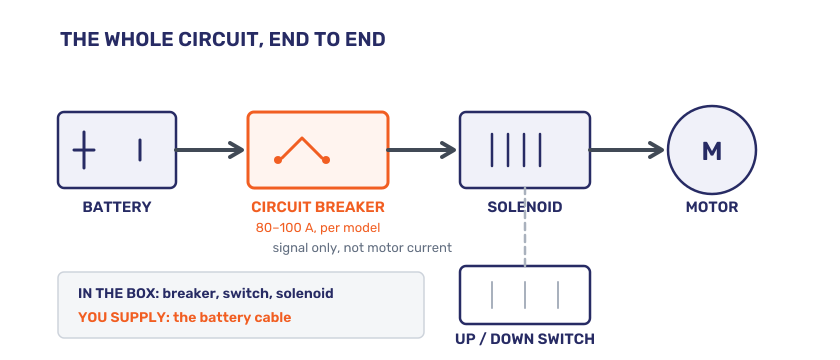
Breaker sizes are set by the model, and the kit that ships with your winch already matches it:
| Model | Motor | Supplied breaker | Minimum breaker (12 V / 24 V) |
|---|---|---|---|
| DW 06 | 400 W | 80 A | 50 A |
| DW 08 / DFF 08 | 600 W | 80 A | 60 A / 35 A |
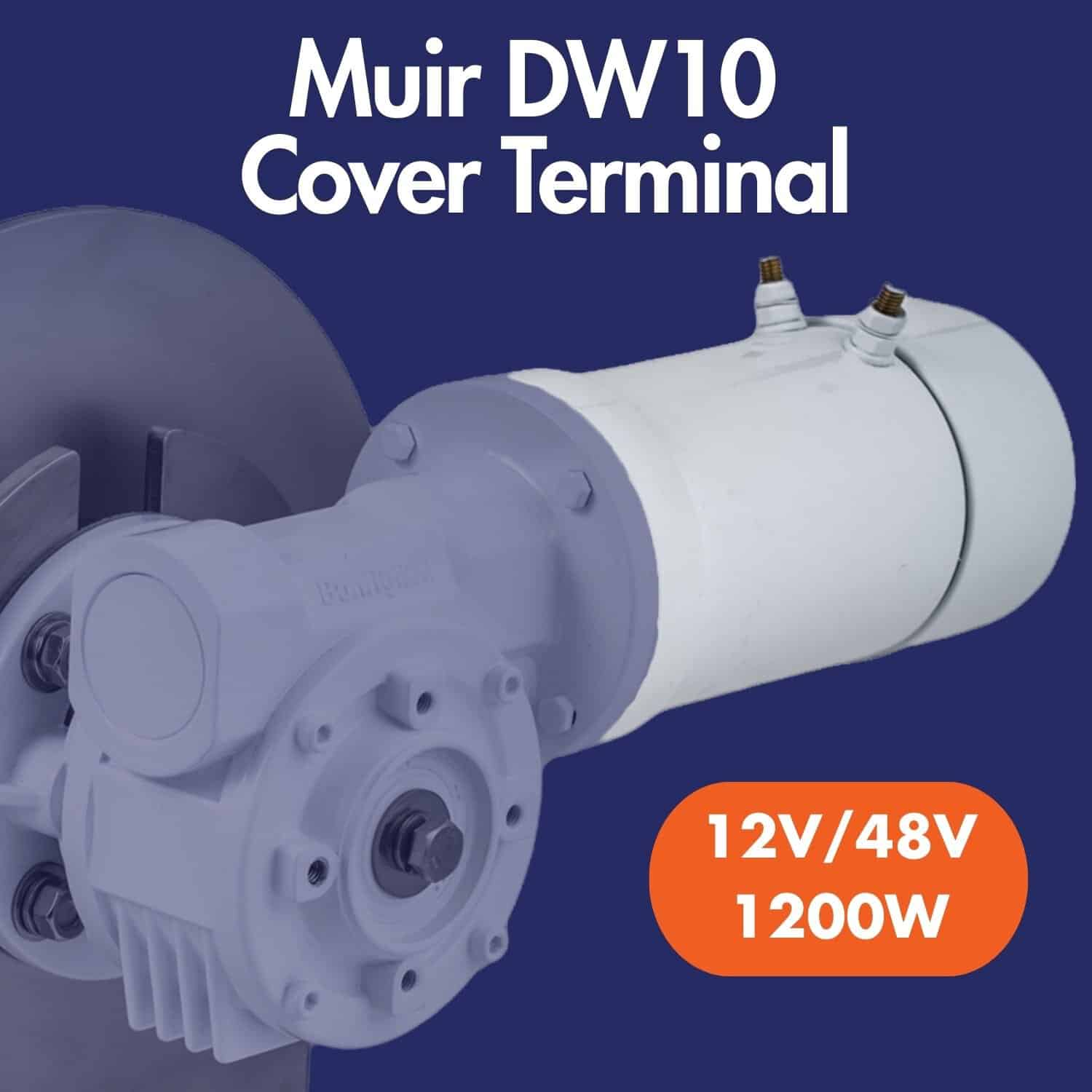
| DW 10 | 1000 W | 100 A / 80 A | 100 A / 60 A |
| Storm VR600 / VFF600 | 600 W | 80 A | 60 A / 35 A |
| Storm VR850 | 600 W | 80 A | 60 A / 35 A |
| Storm VR1250 | 1000 W | 100 A / 80 A | 100 A / 60 A |
| HR650 Lynx | 400 W | 80 A | 50 A |
| HR1600 Cougar | 1000 W | 100 A / 80 A | 100 A / 60 A |
Supplied breaker is the Muir kit that ships with the winch. Minimum breaker is the calculated figure for the motor draw. Fit the supplied one unless your installer has a reason not to.
Size the cable for the round trip
The mistake people make is measuring from the battery to the bow and sizing for that. Current goes up the positive and back down the negative, so the length that matters is both runs added together. On a 40-footer with the batteries aft, that is easily 60 ft of cable, not 30.
Undersized cable drops voltage. The motor compensates by drawing more current, it runs hotter, it pulls slower, and in time it fails. Your model’s manual carries the cable table for your run length; it is on the product page under Downloads.
Keeping it alive
- Rinse after salt. Fresh water over the whole unit, every time.
- Never leave the load on it. Once anchored, transfer to a chain stopper or a snubber. The gearbox lifts, it does not hold.
- Isolate the breaker underway. A knocked switch at speed runs the anchor out.
- Check the gearbox oil. The Storm 600 range holds 75 mL. The manual gives the interval.
- Watch the terminals. Green corrosion on a connection is voltage drop waiting to happen.
Frequently asked questions
Is a windlass a DIY job?
The mechanical side is within reach of a competent owner: measure, template, cut, bed, bolt. The wiring is where people get into trouble, because the currents are large enough that undersized cable is a fire risk rather than an inconvenience. If you are not confident sizing cable and terminating it properly, have that part done.
How long does it take?
A morning for the deck work if the measurements check out and the deck is solid. Longer on a cored deck, because every penetration has to be sealed properly. The cable run is usually what stretches the job, not the winch.
Do I need a wiring kit?
No. The breaker, panel, rocker switch and reversing solenoid all ship with the winch. You buy the battery cable and the terminals. If you want a spare set or a second helm station, the circuit breaker and deck switch kits are sold separately.
Can I fit a windlass to a boat that never had one?
Usually, yes, but the anchor locker decides. Measure the fall first. If there is not enough, a drum winch mounts entirely above deck and removes the problem, which is why they are standard on trailer boats.
Do I need a backing plate?
Yes. The load is trying to lift the fitting out of the deck, and bolts alone concentrate that on a few square inches of laminate. On a cored deck it is mandatory unless you want water in the core.
12 V or 24 V?
Match your boat, and choose at the point of order. These are built to order, so it is not a switch you flip later. The DW 06 is 12 V only; most other models are built either way.
What if the gypsy skips on my chain?
Nearly always a mismatch between the chain standard and the gypsy, not a fault. Check the stamp on the gypsy against the certificate for your chain. If they differ, replacing the chain is usually cheaper and faster than replacing the gypsy.
Related guides
Stay Updated
Get the latest guides, tips, and product updates delivered to your inbox.