

















Windlass Wiring Guide: Cable Size, Breakers and Solenoids Explained
Windlass Wiring Guide
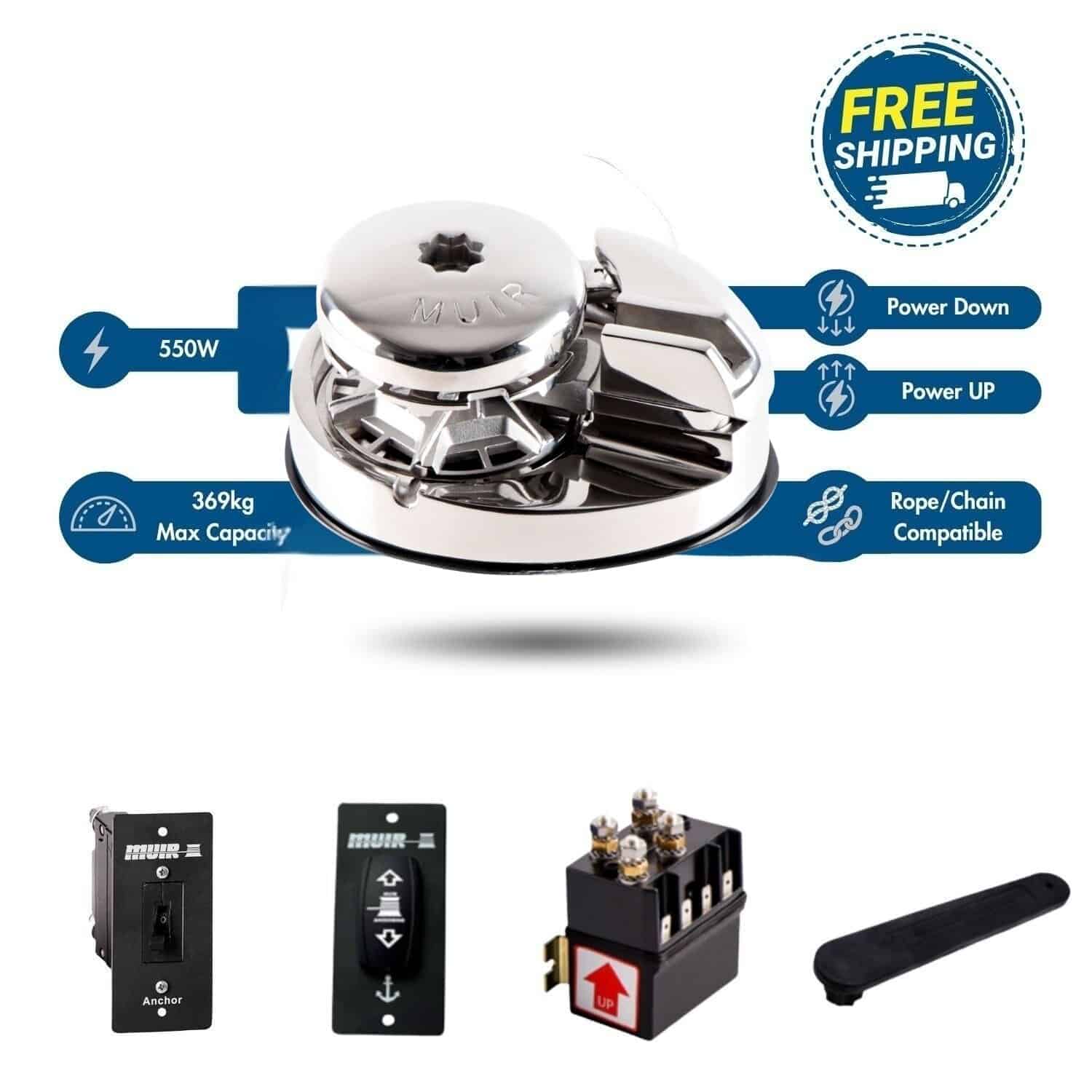
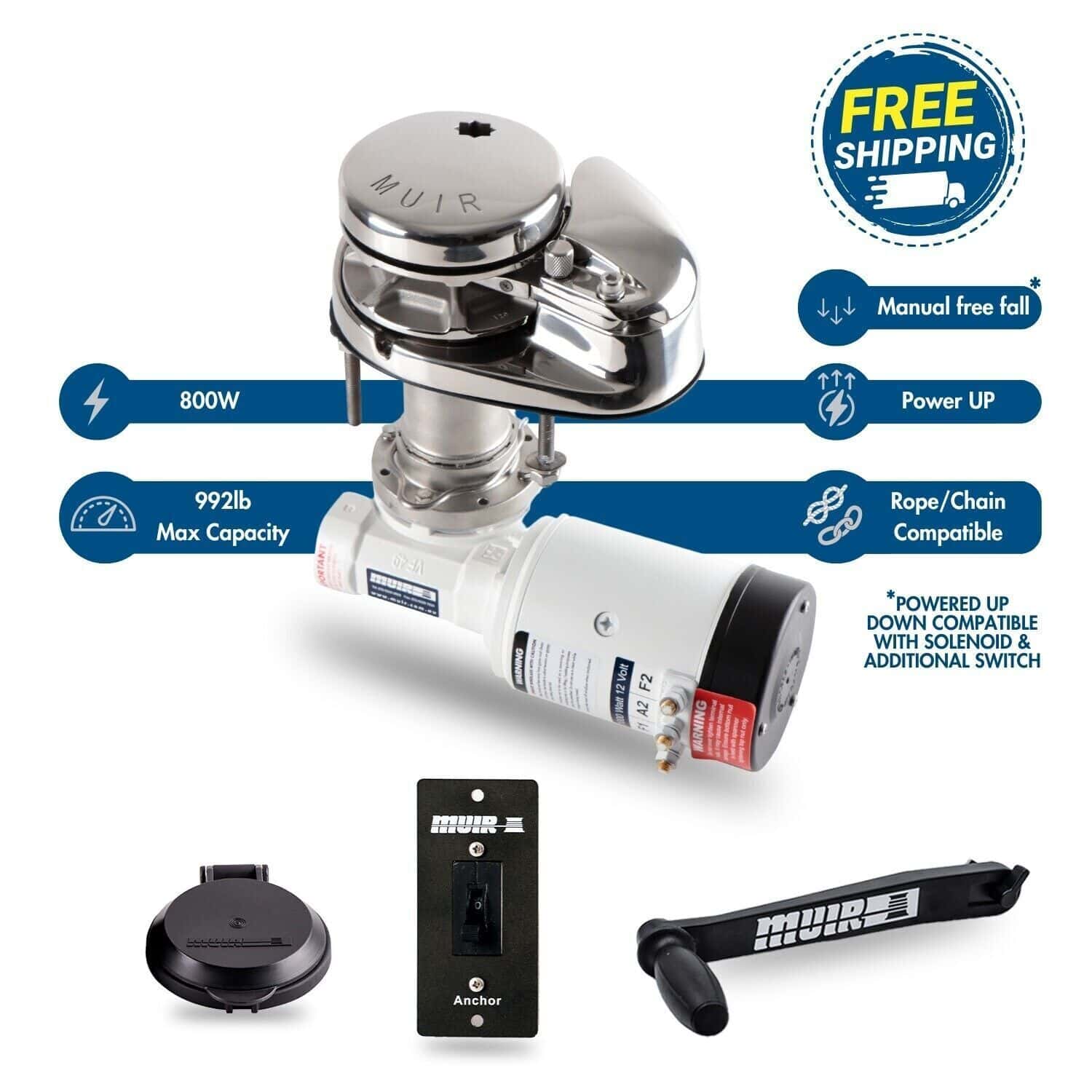
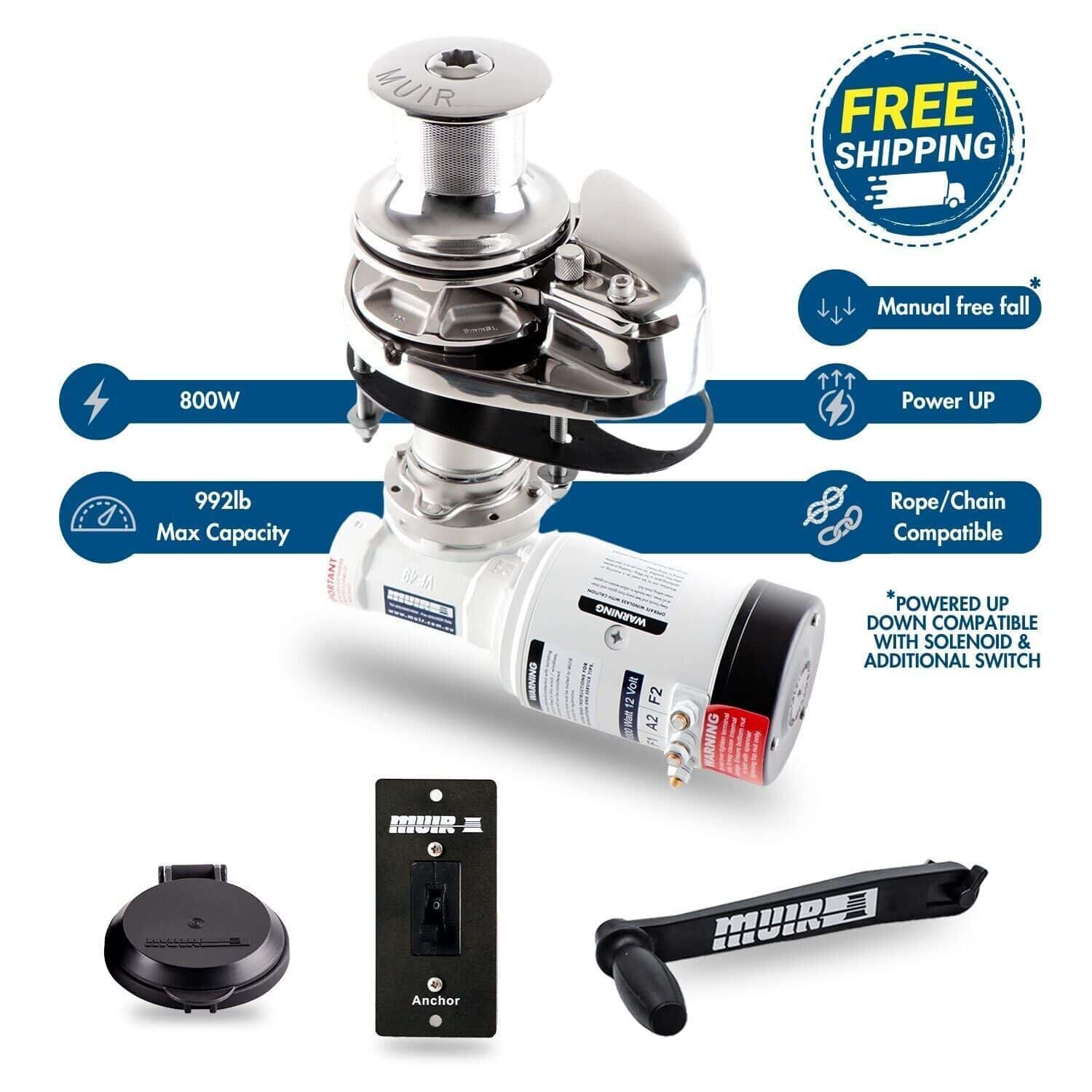
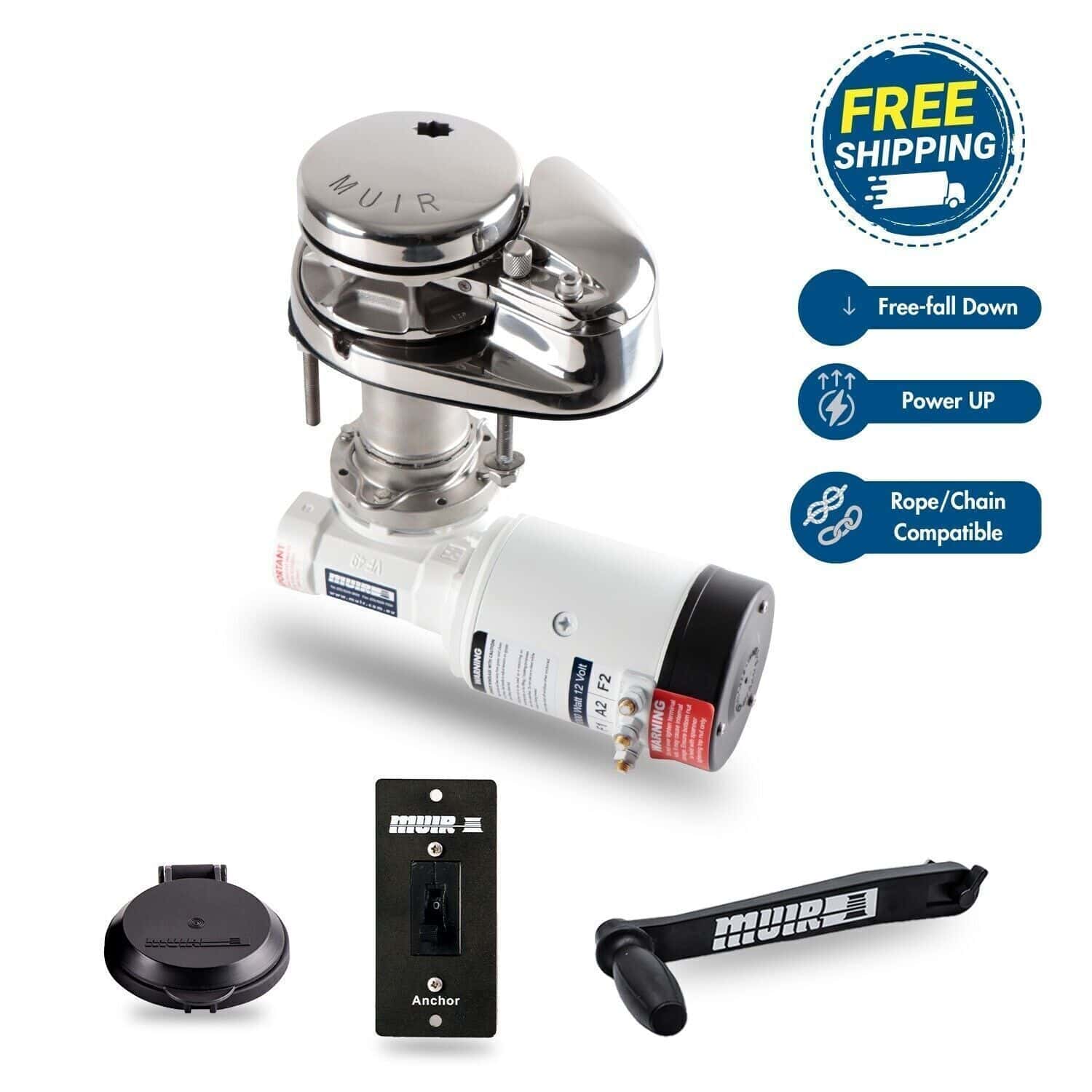
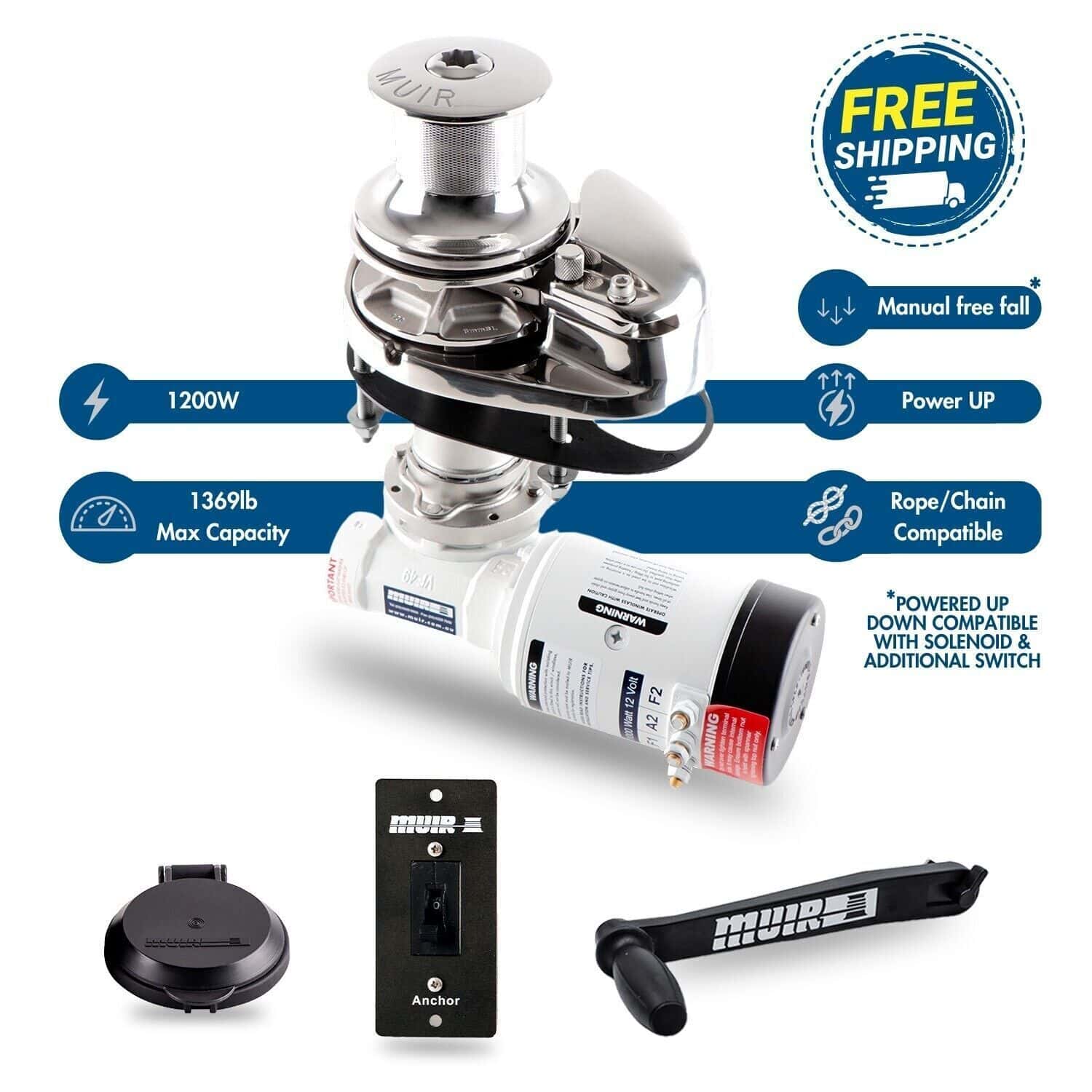
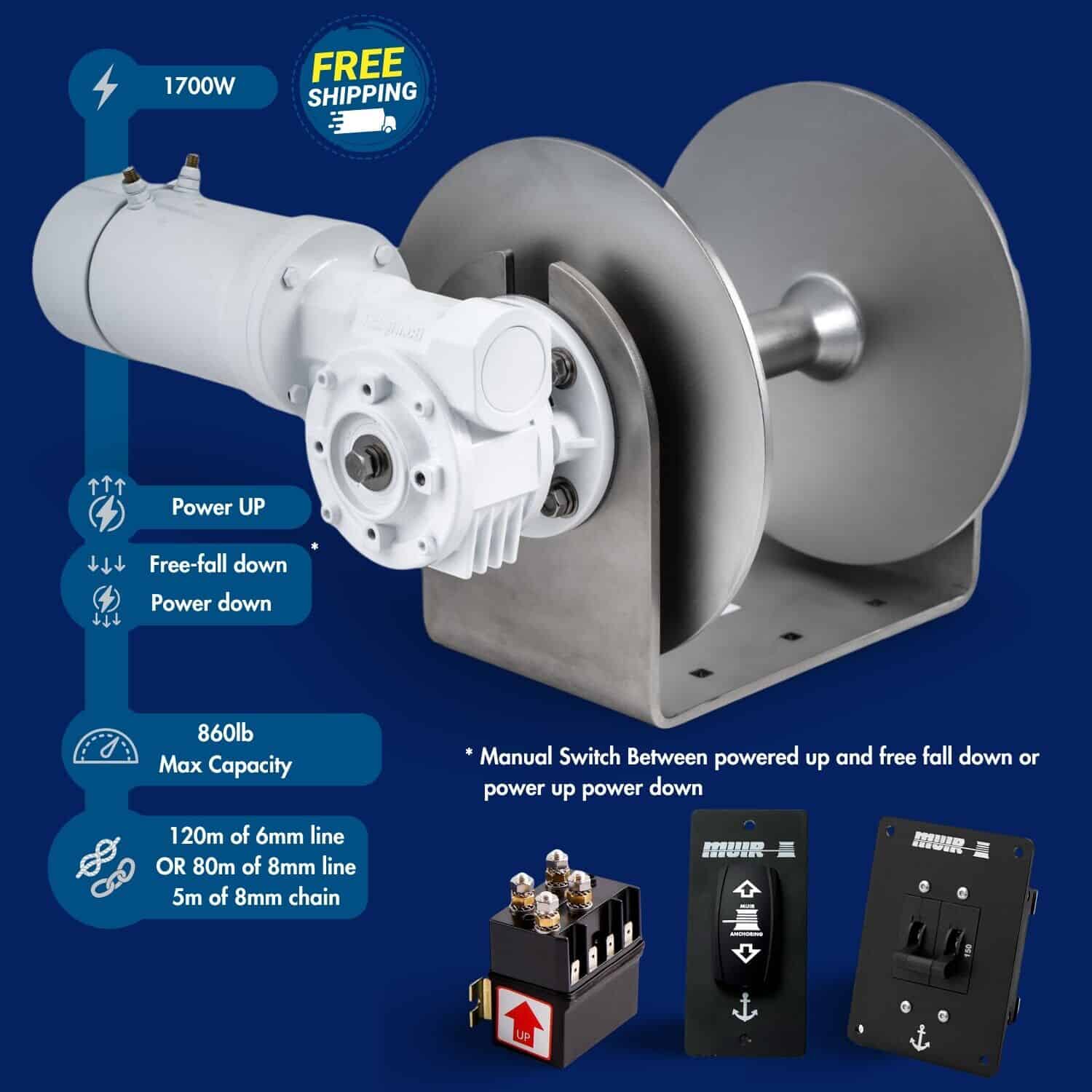
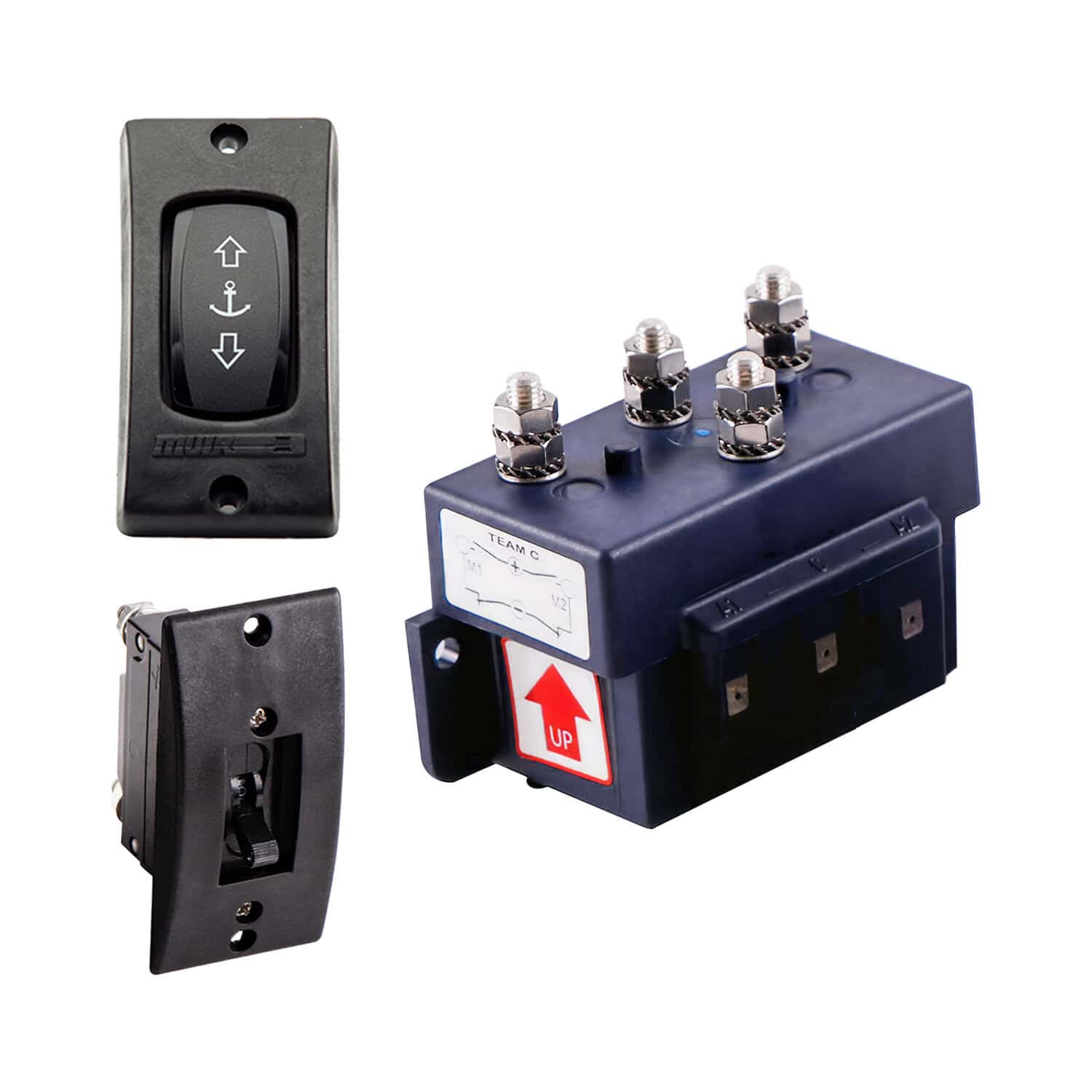
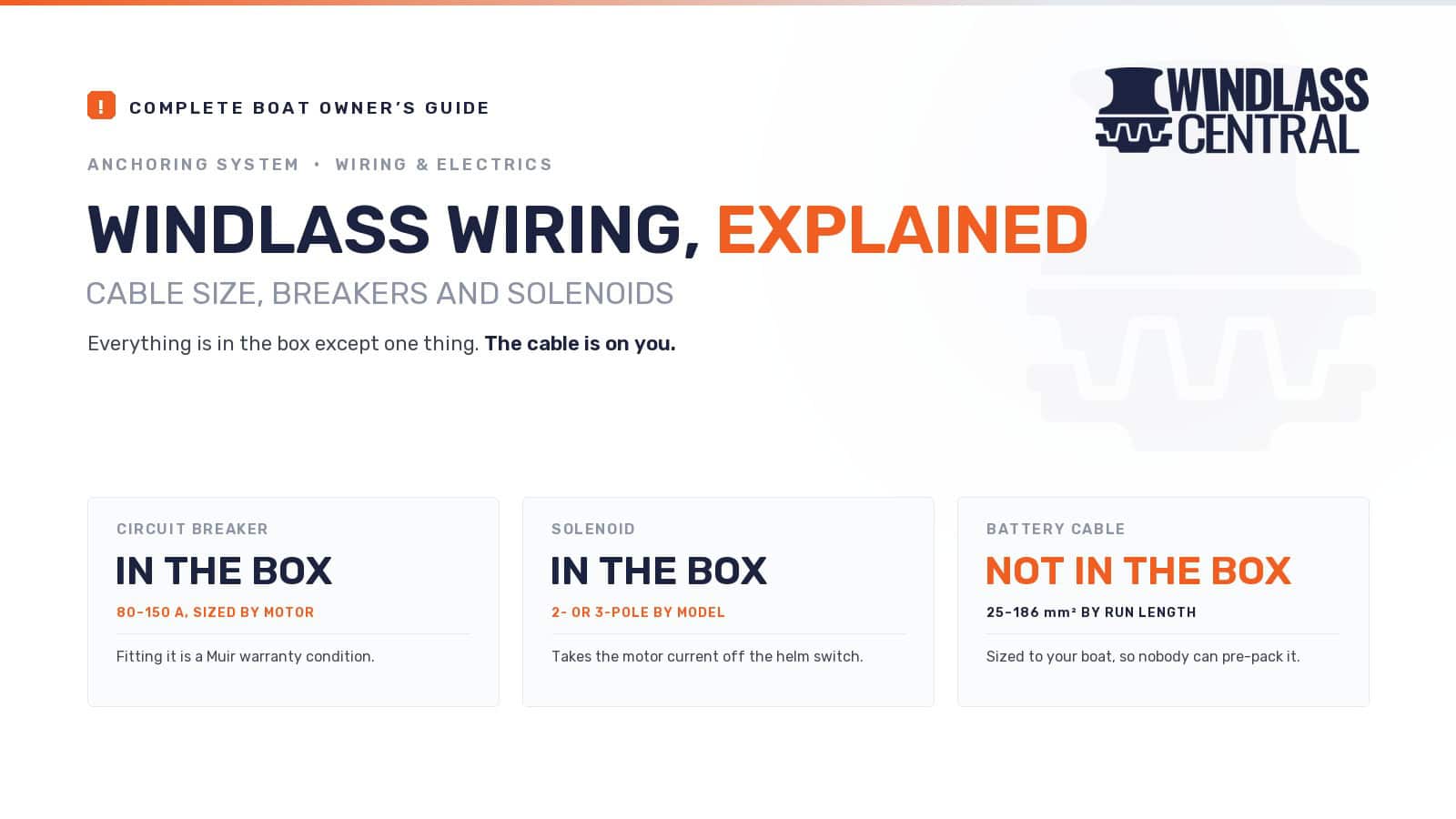
A windlass circuit has five parts and only one of them is your problem. Muir ships the breaker, the switch and the solenoid with every machine. You supply the battery cable, because its size depends on how far your battery sits from your bow.
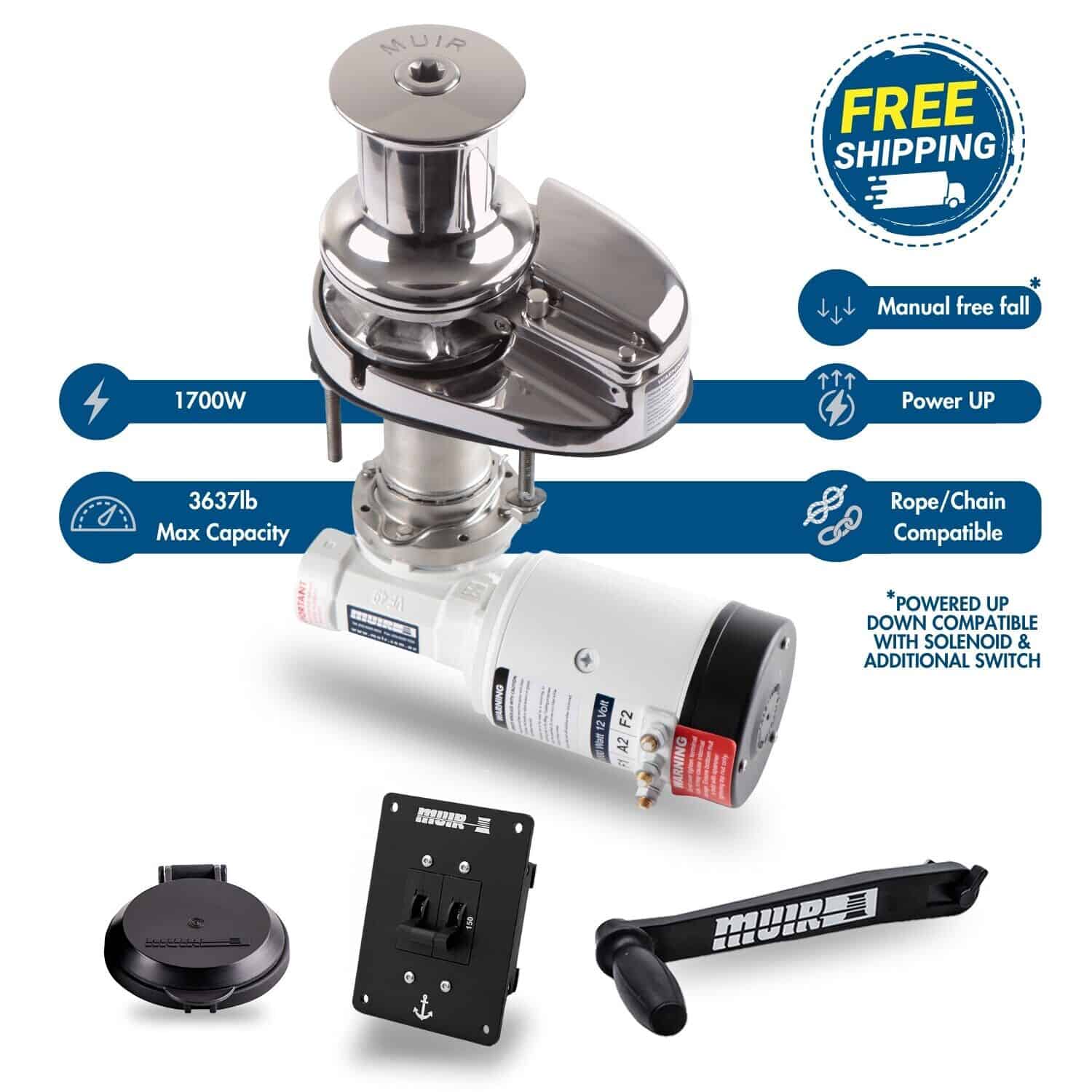
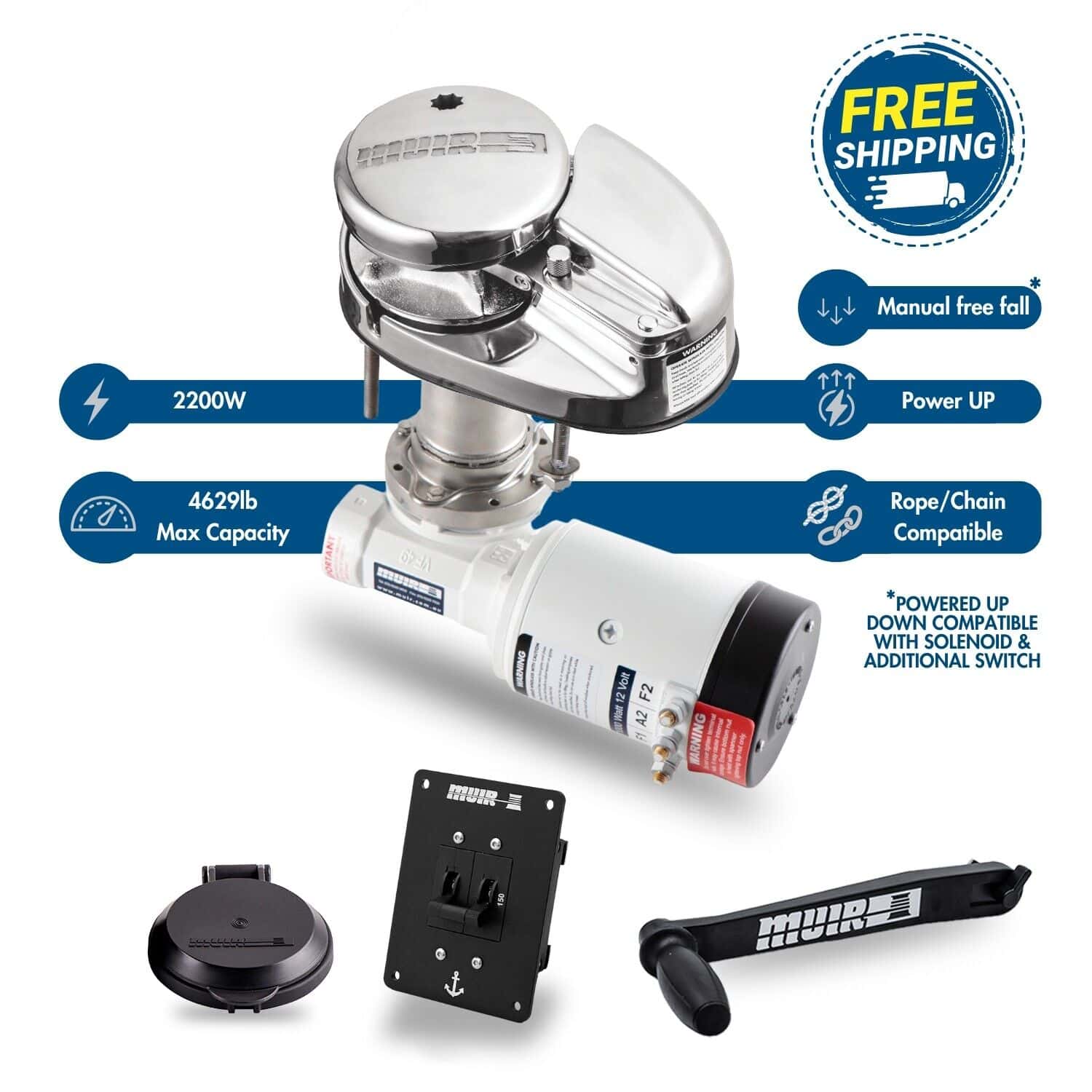
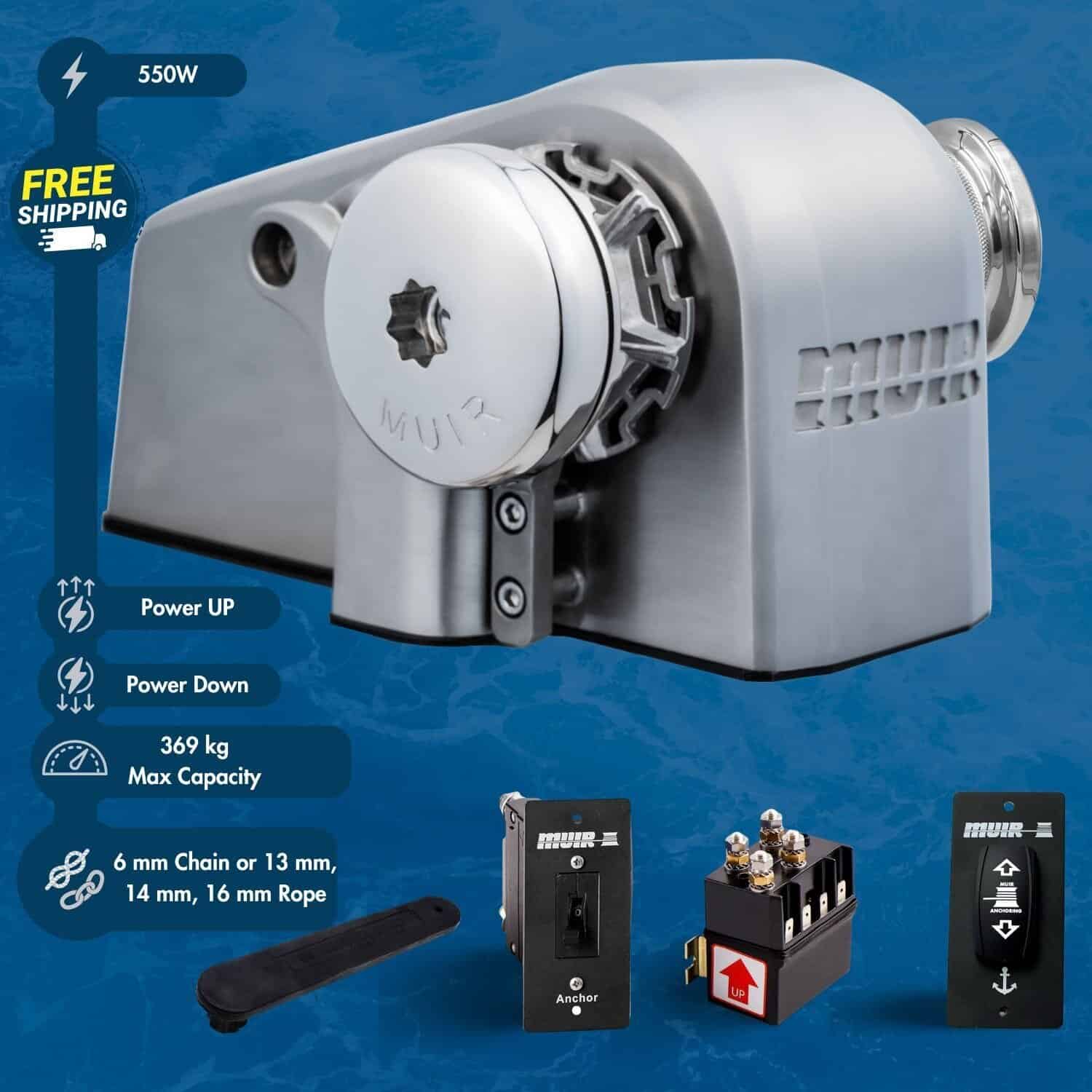
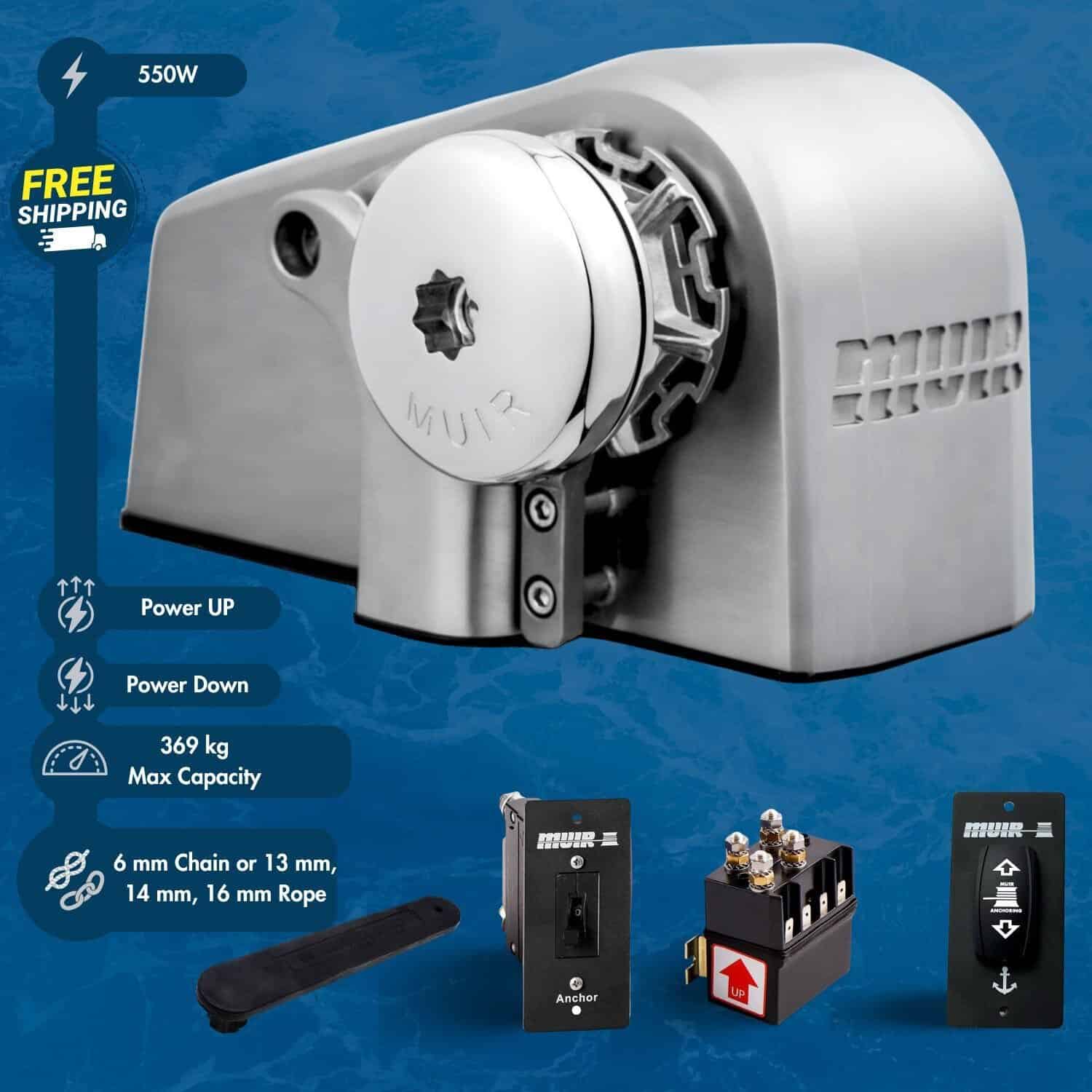
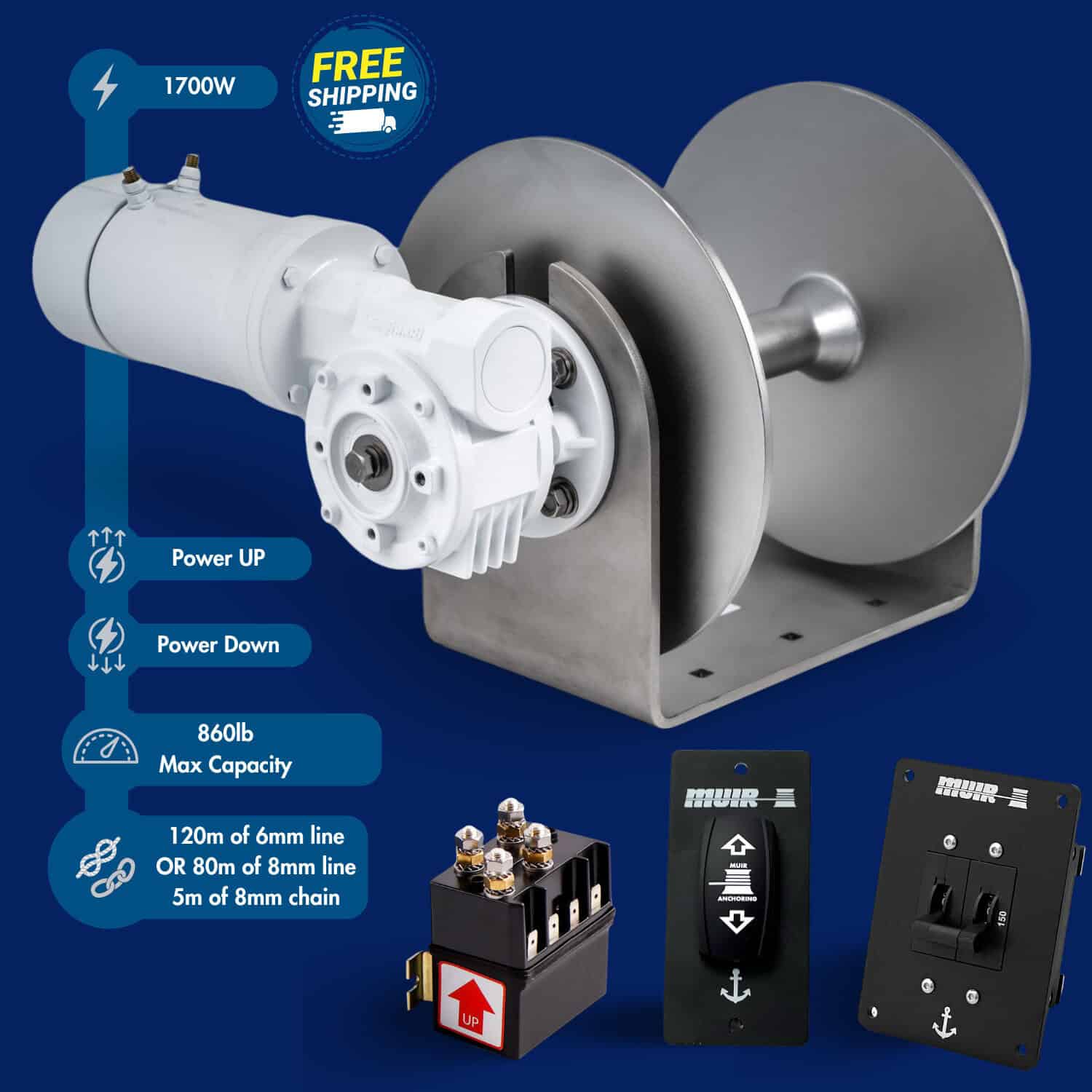
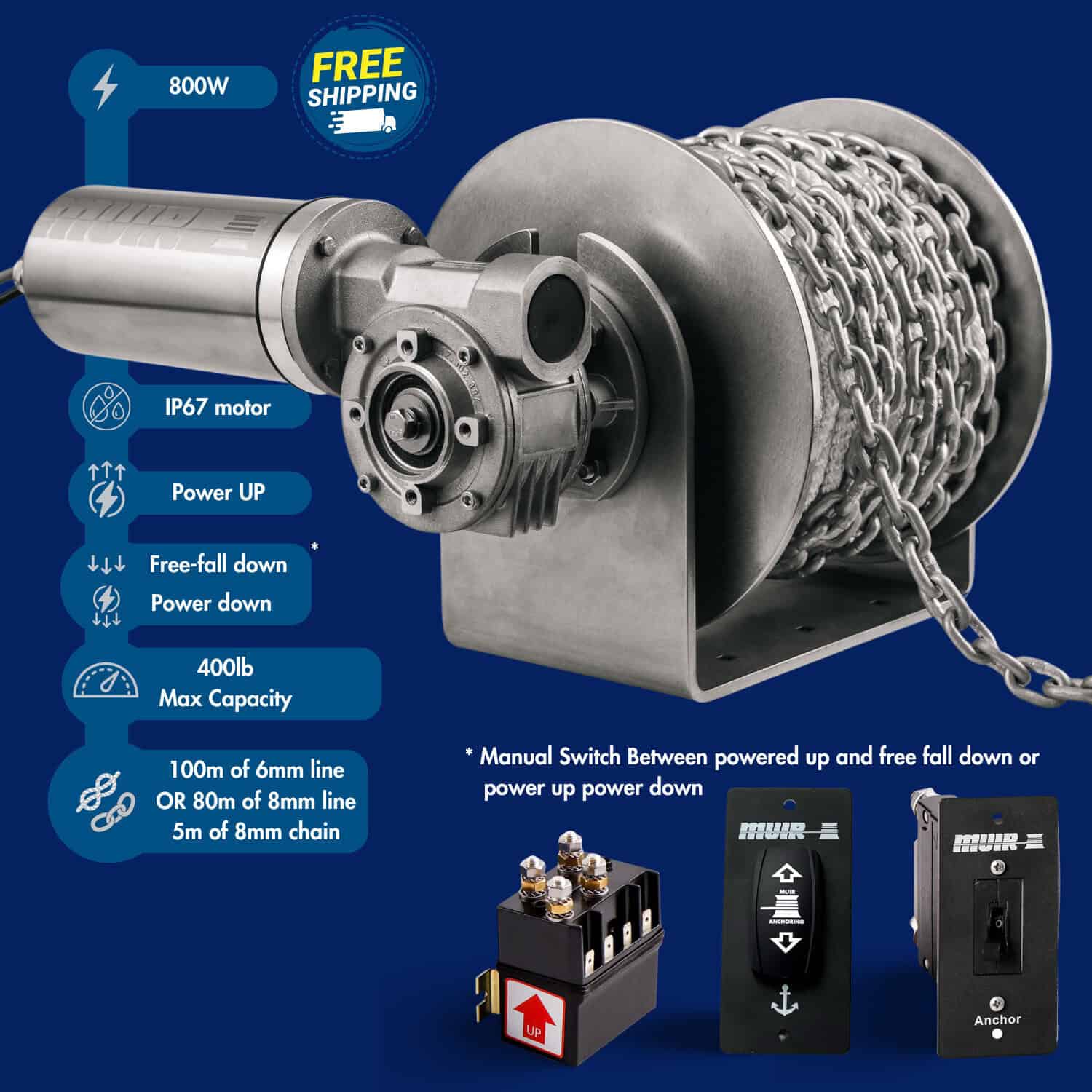
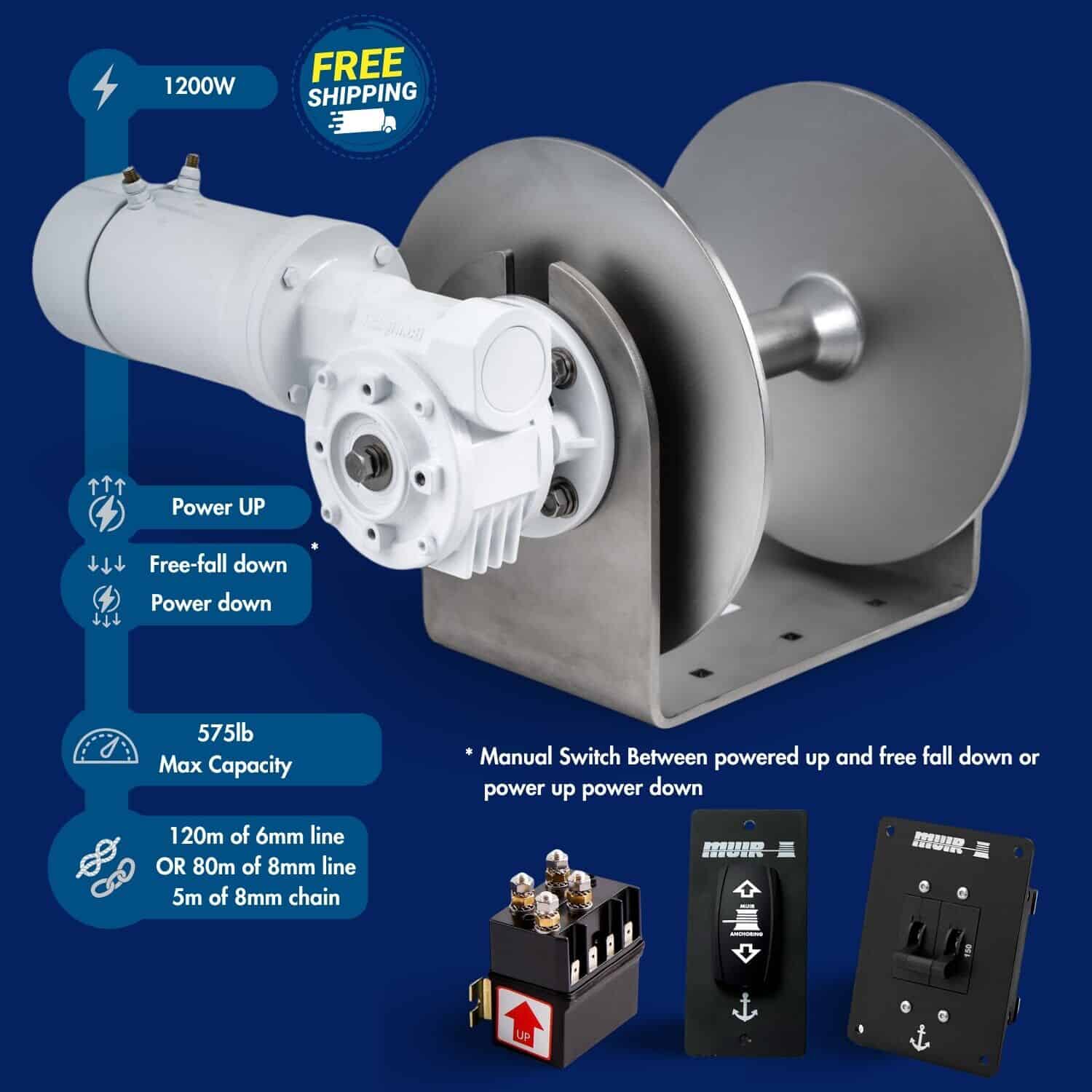
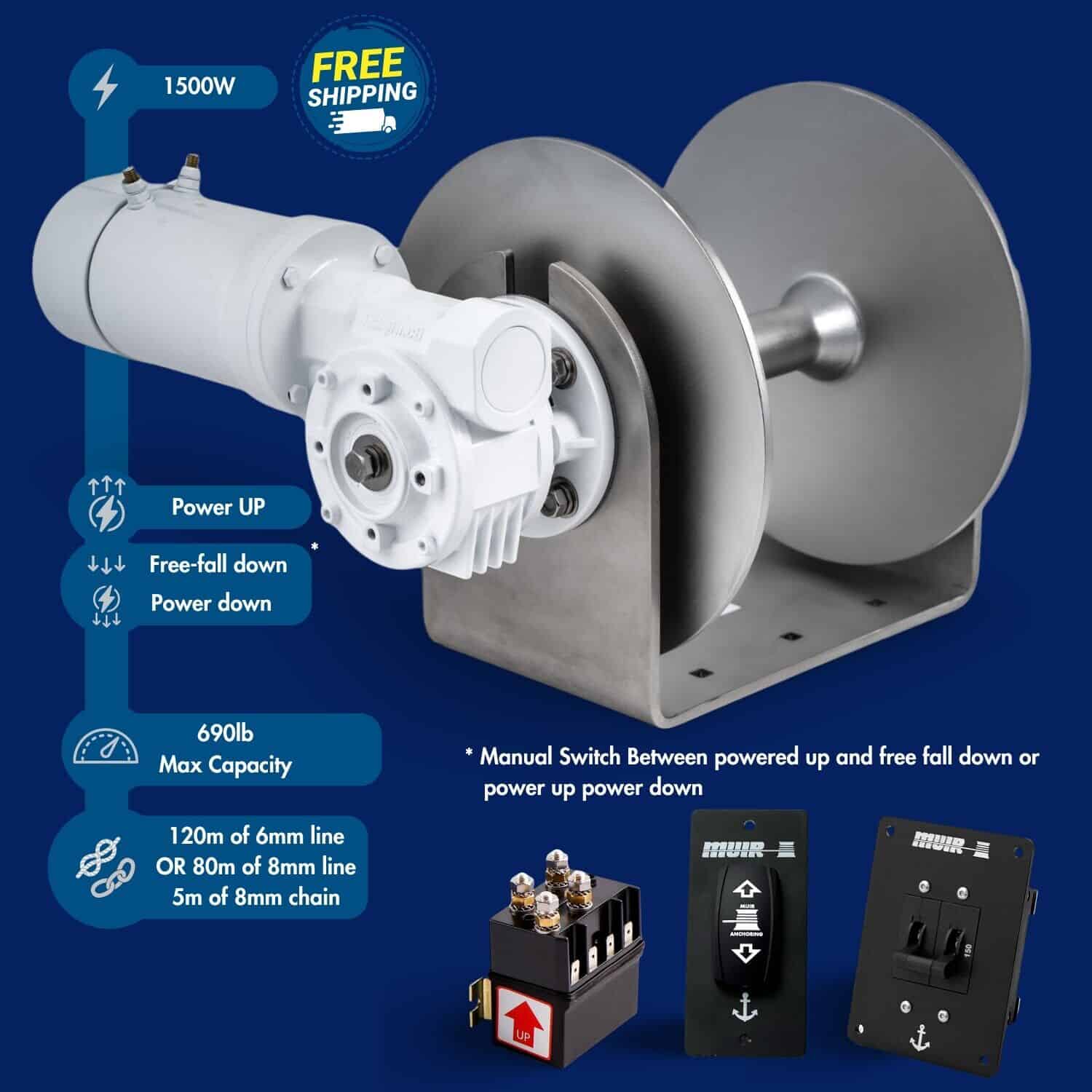
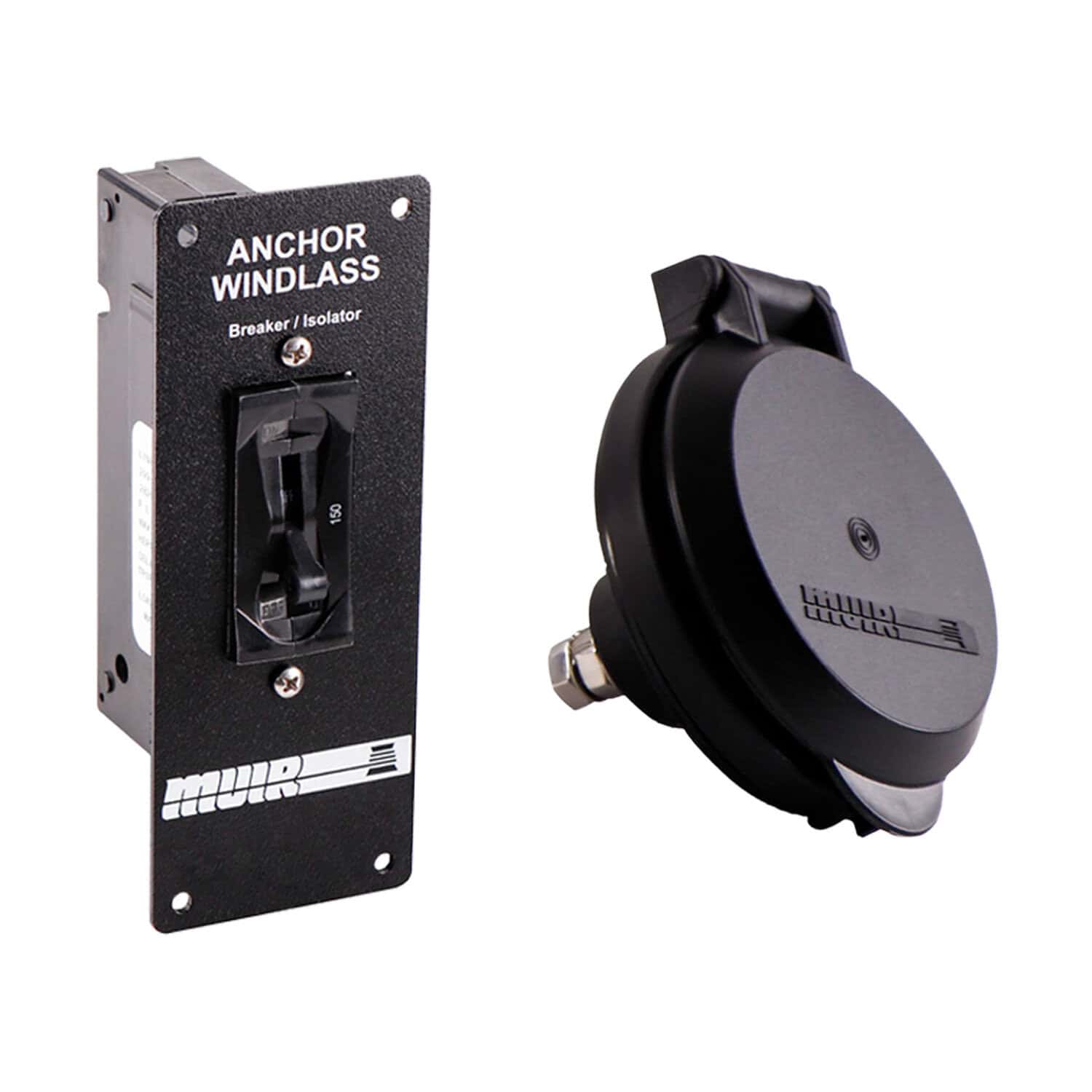
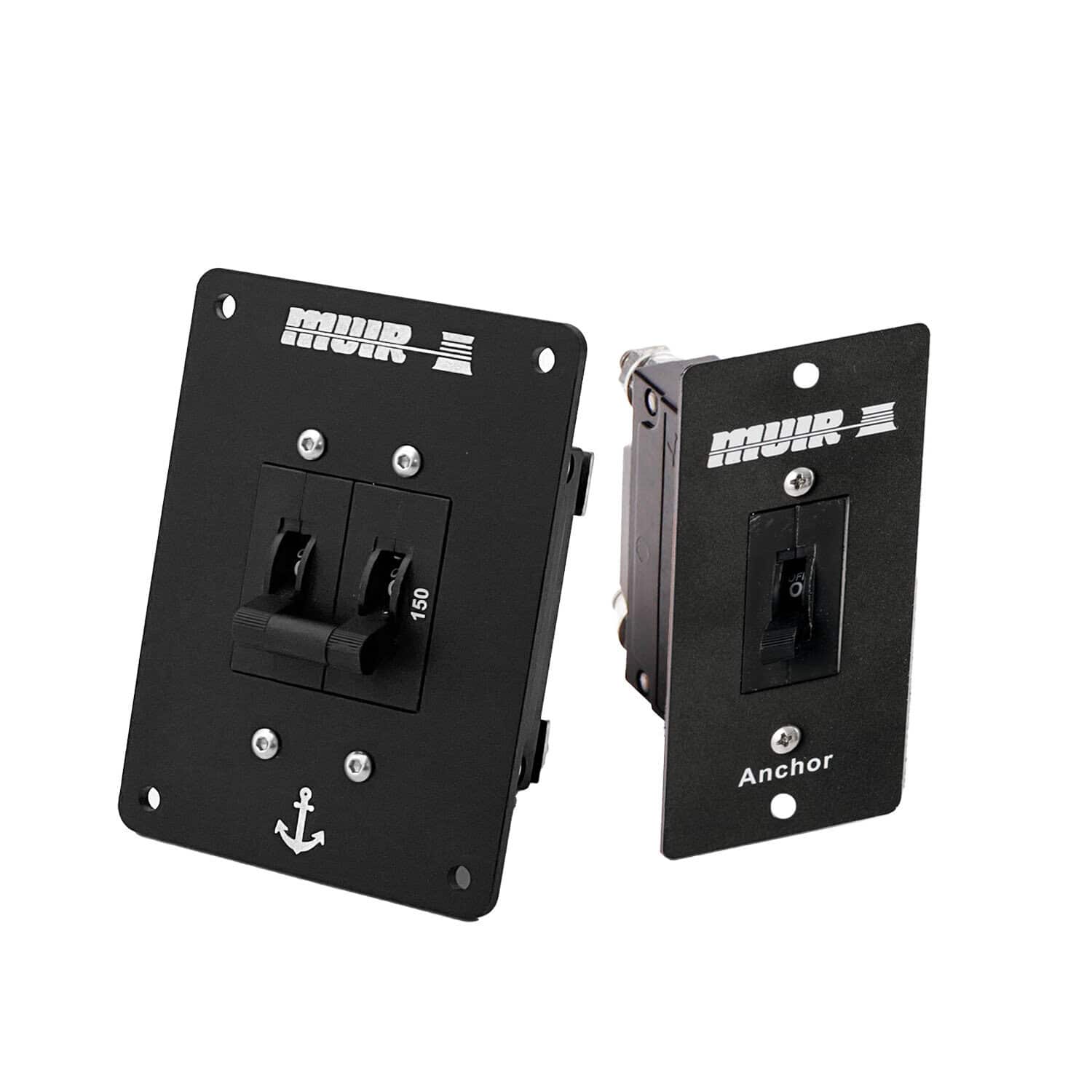
- Breaker. 80 A to 150 A depending on the motor, and it comes in the box. Muir’s manuals make fitting it a condition of the warranty.
- Solenoid. Two-pole on smaller machines, three-pole from 1000 W up. Also in the box.
- Cable. 25 mm² to 186 mm² depending on model and run length. Not in the box, and nobody can pre-pack it.
The circuit, end to end
Every powered windlass, whatever the brand, is the same five things in a line.
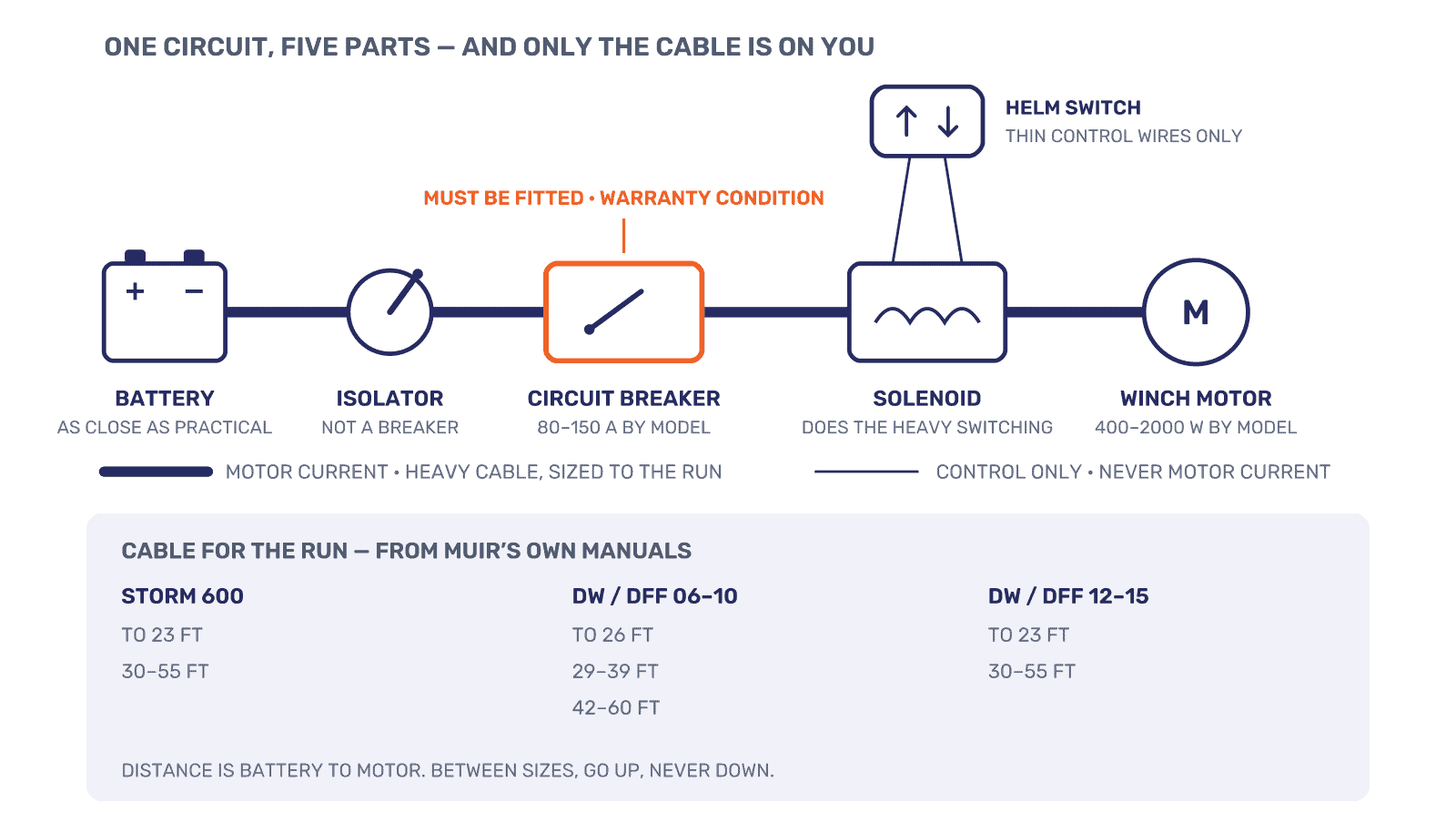
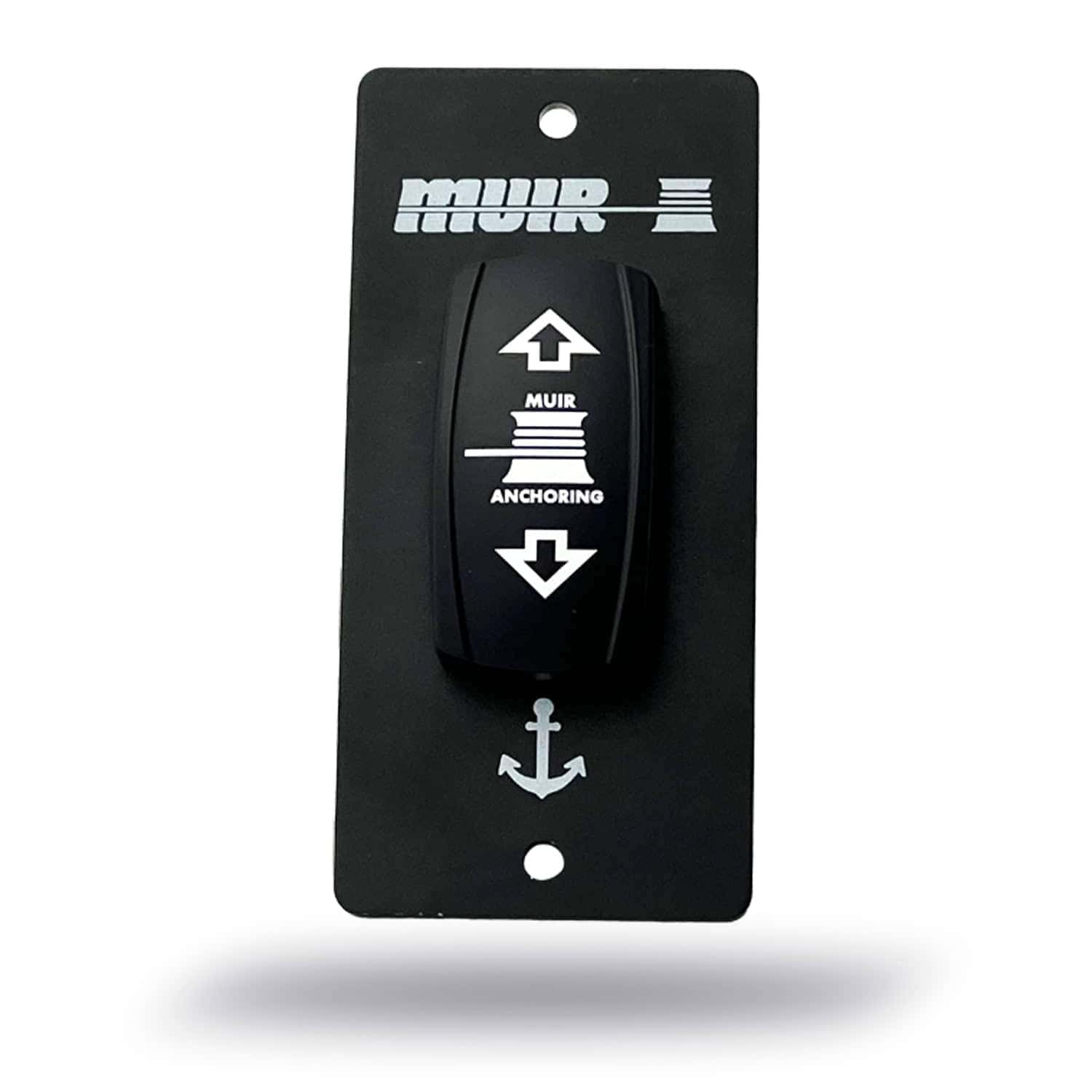
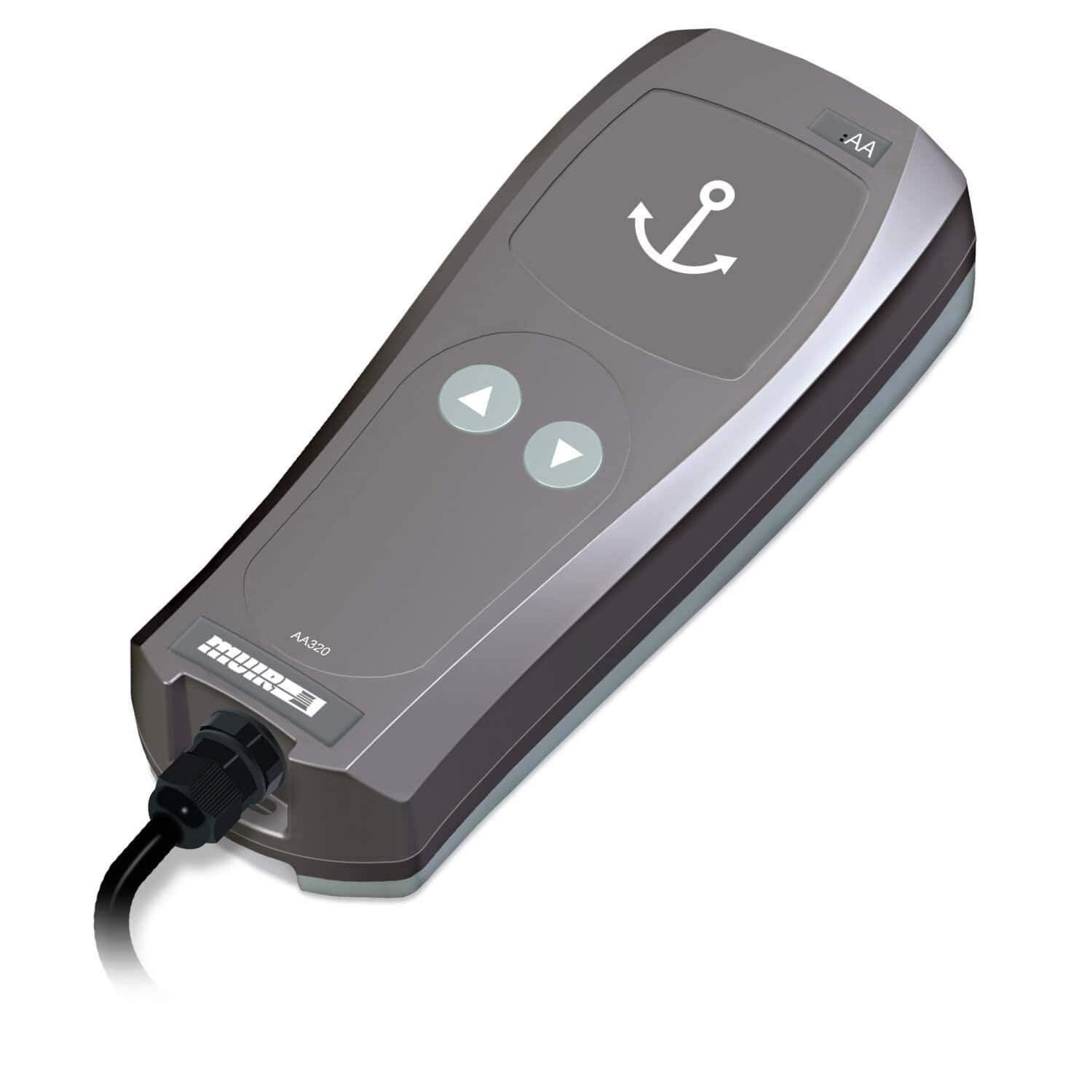
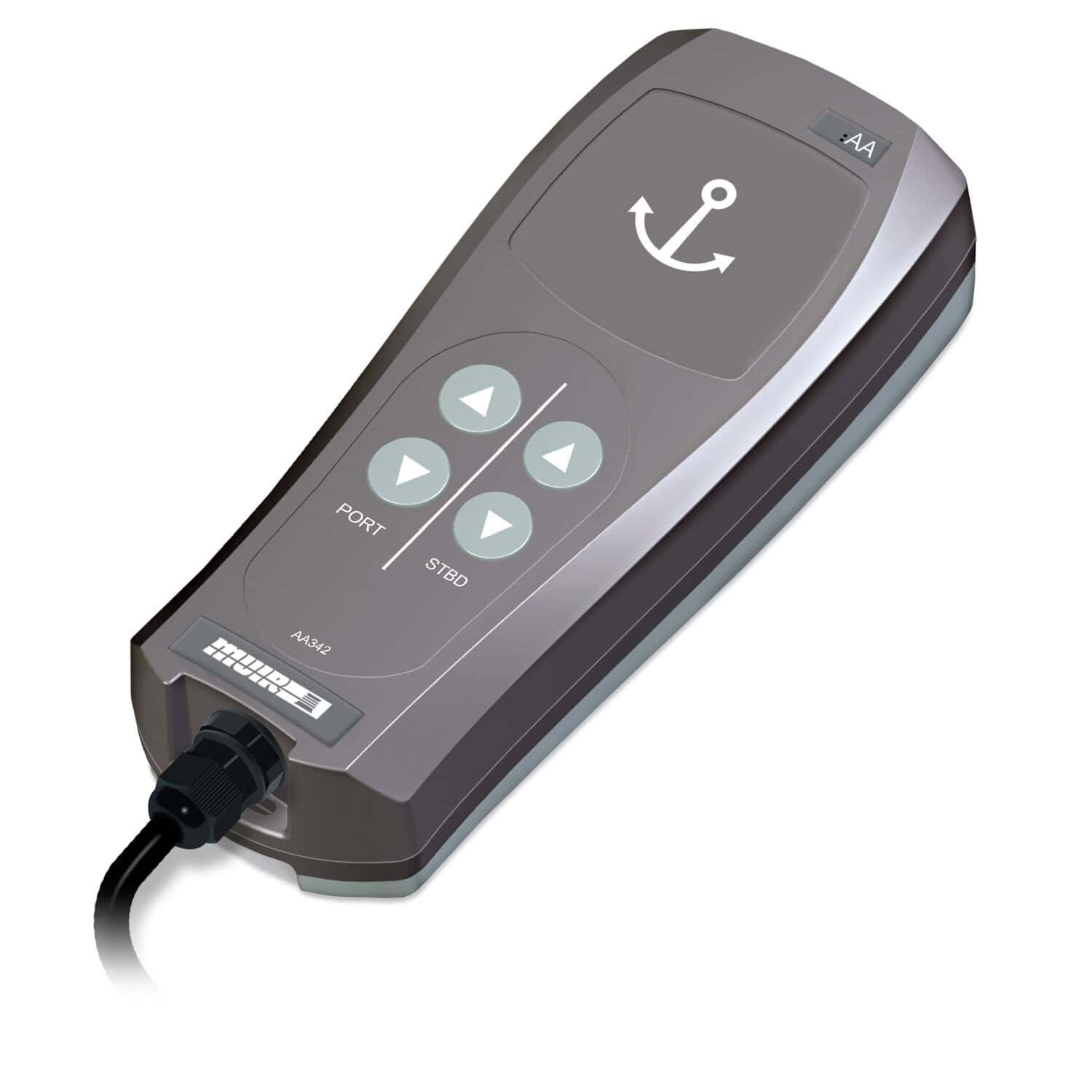
That distinction is the one worth understanding before anything else. When you press the up button you are not sending 100 amps through a switch on your dashboard. You are sending a small signal to the solenoid, and the solenoid closes the heavy circuit near the motor. It is the reason a windlass can be operated from a switch the size of a light switch.
The breaker: sized by watts, not by model
The breaker is the part people leave out, and it is the part Muir is least relaxed about. Both manuals we checked carry the same parenthesis: circuit breaker (must be fitted to ensure warranty).
Its job is to protect the cable and the motor if the winch stalls or the anchor snags. It is not an isolator and should not be used as one, which the manuals also say in as many words.
The useful thing is that breaker size does not track the model name. It tracks the motor.
| Motor | Breaker, 12 V | Breaker, 24 V | Models |
|---|---|---|---|
| 400 W | 80 A | 80 A | DW 06 (12 V only), HR650, HC650 |
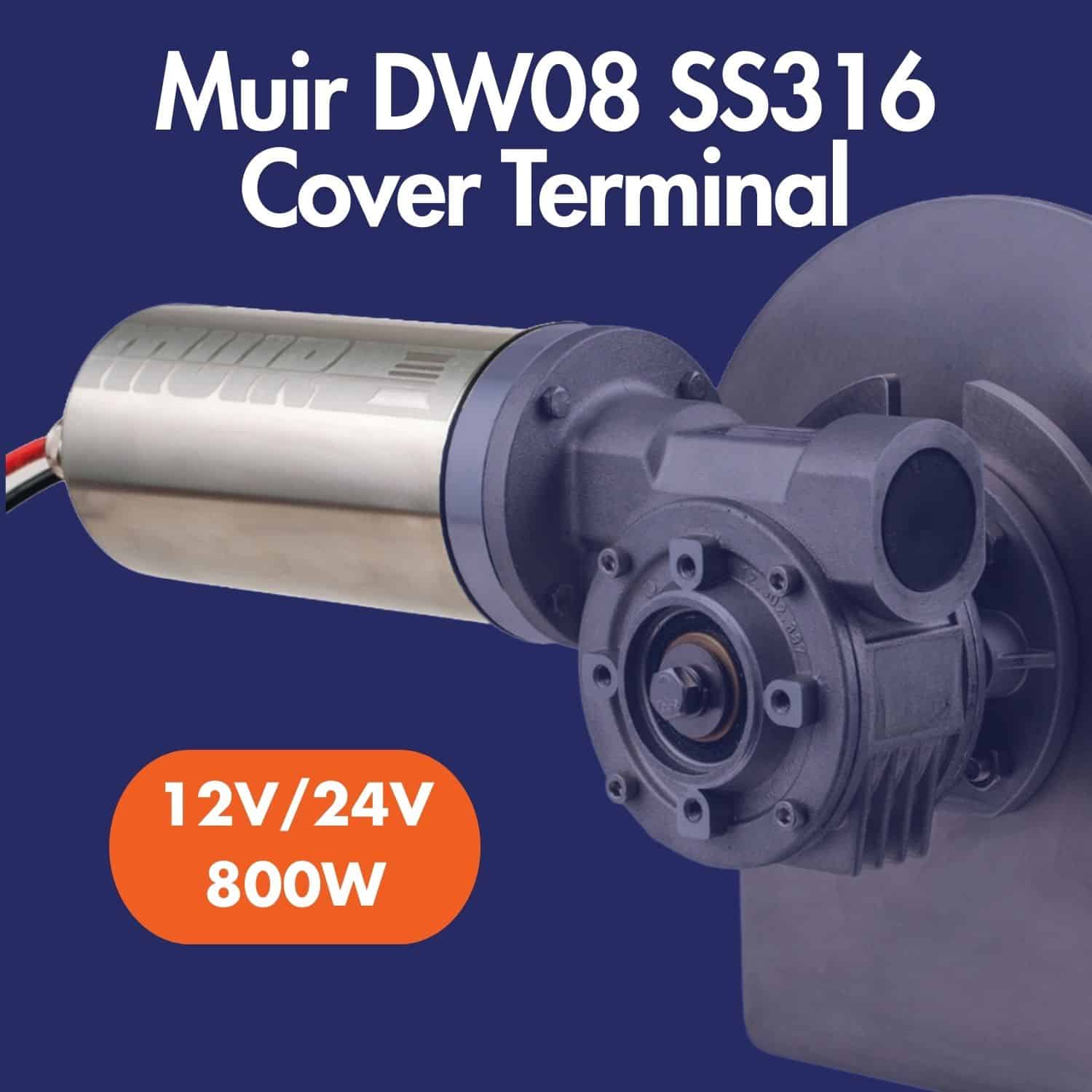
| 600 W | 80 A | 80 A | DW 08, DFF 08, Storm VR600, VFF600, Storm VR850 |
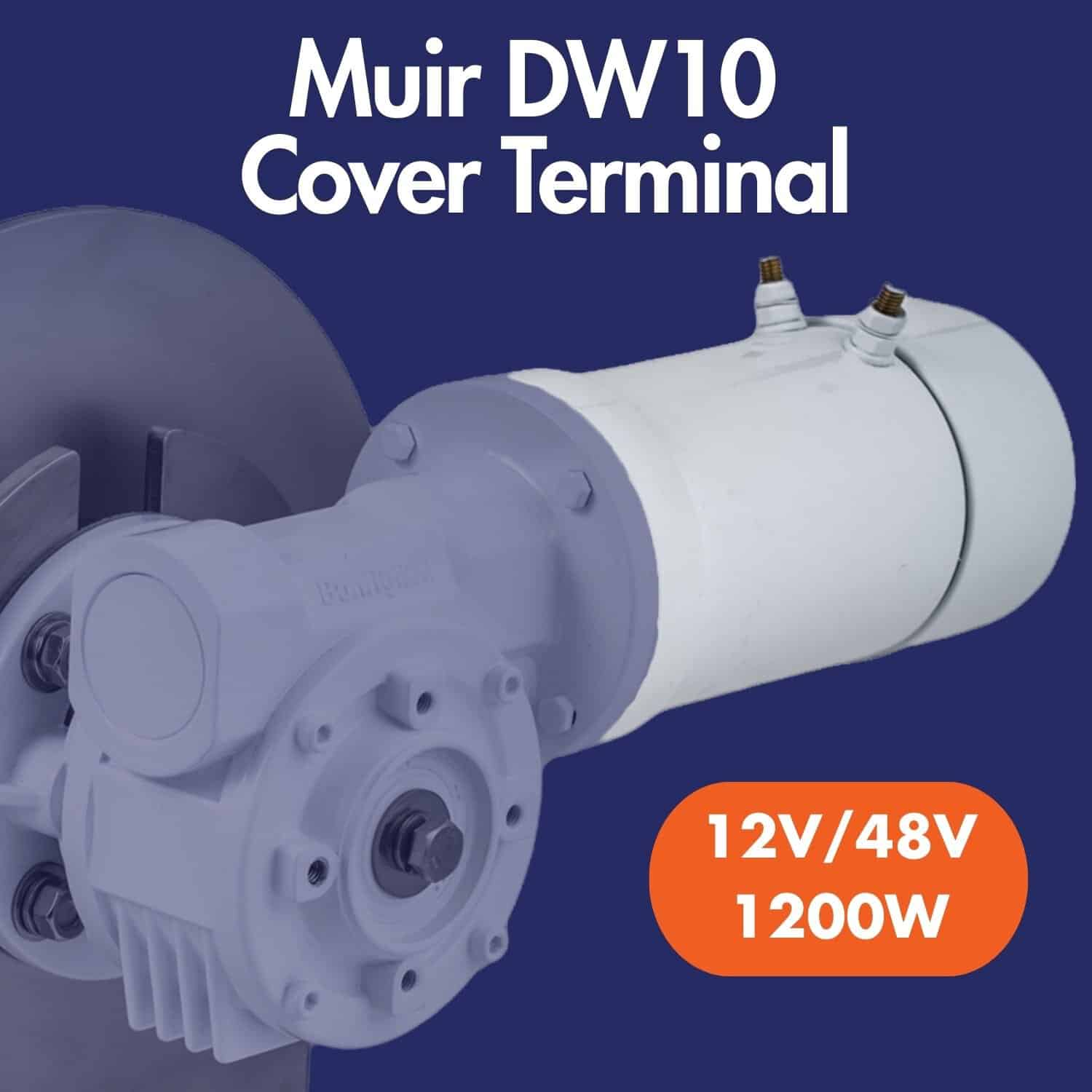
| 1000 W | 100 A | 80 A | DW 10, DFF 10, Storm VR1250, HR1600 |
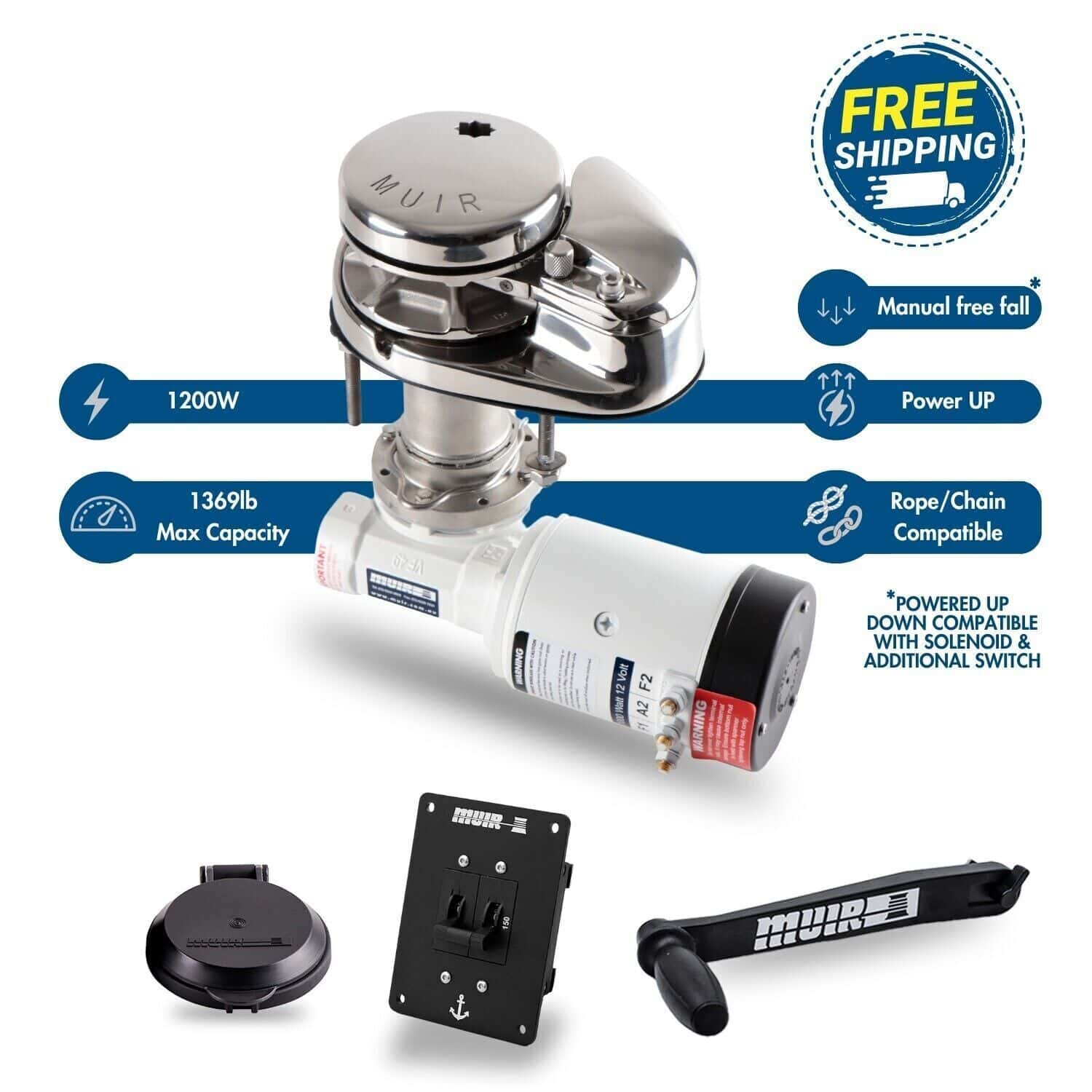
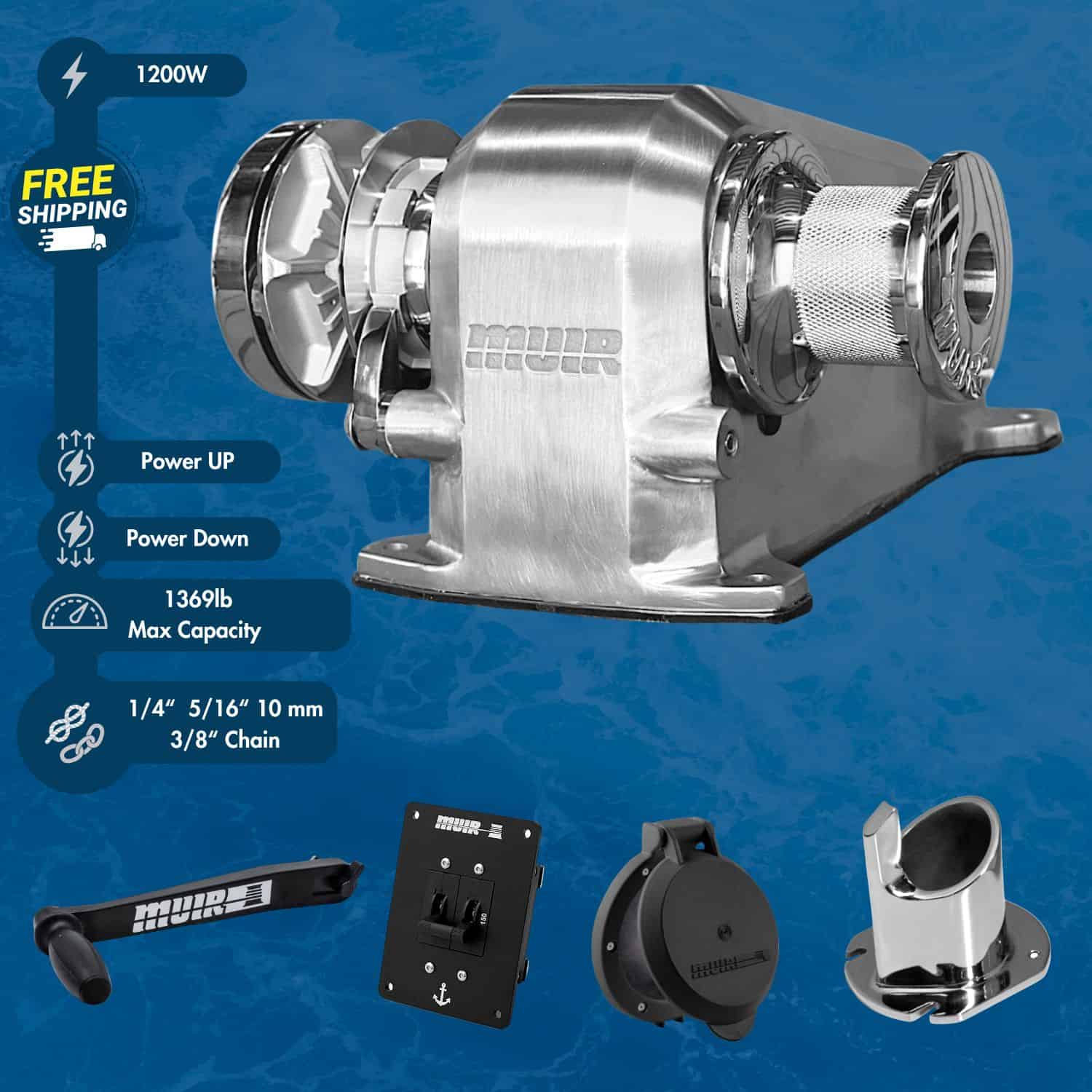
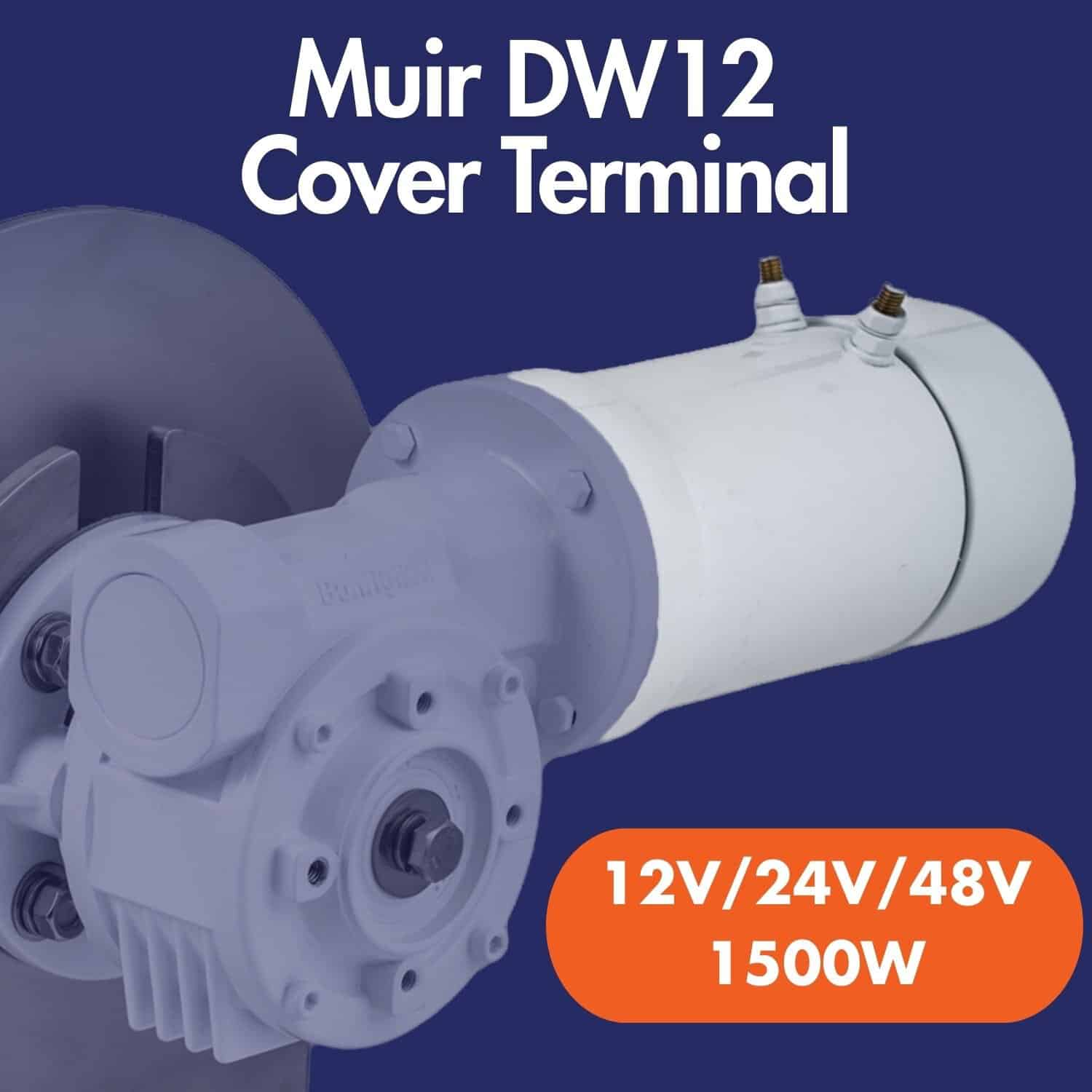
| 1200 W | 150 A | 100 A | DW 12, Storm VR2200, Storm VR2500, HR2500 |
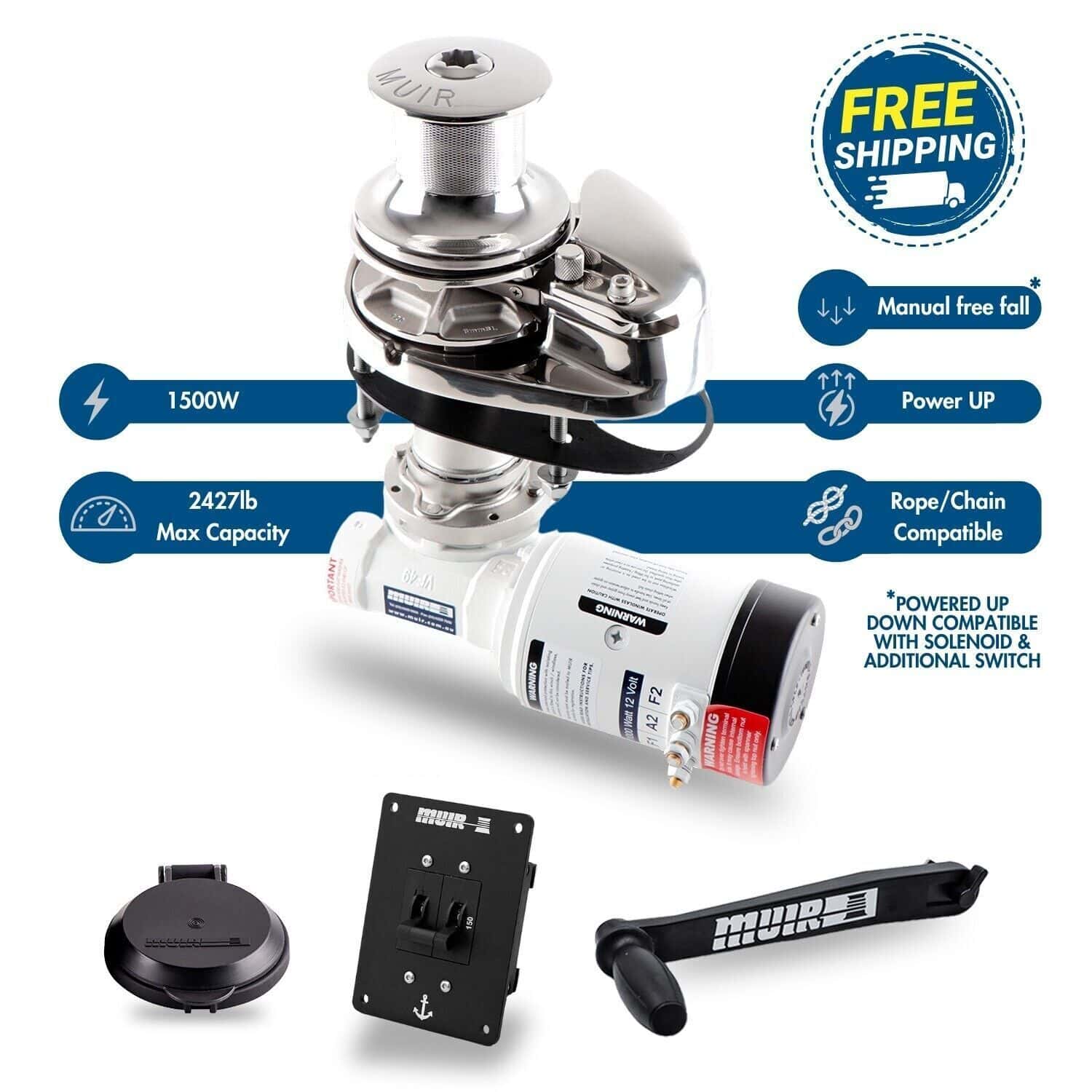
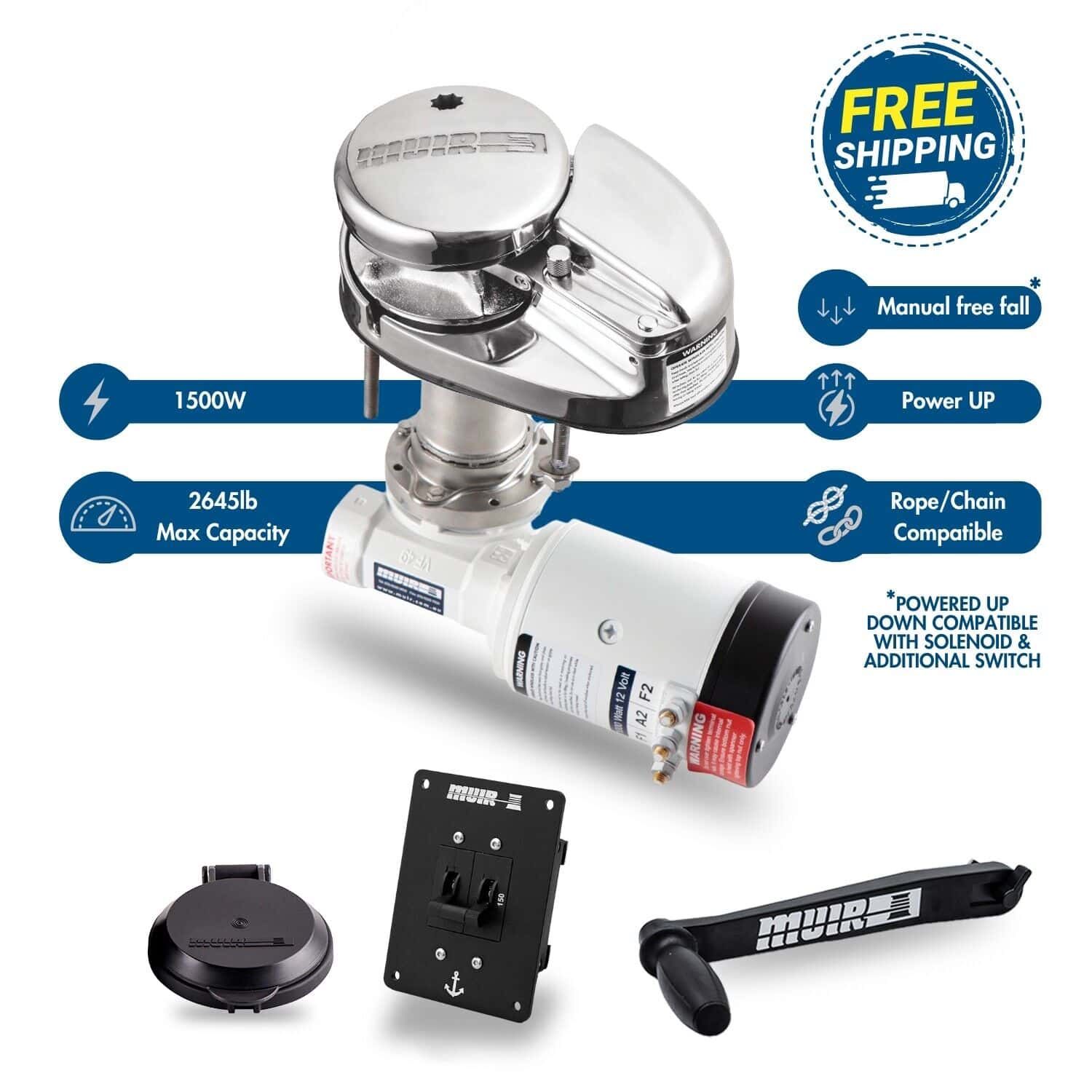
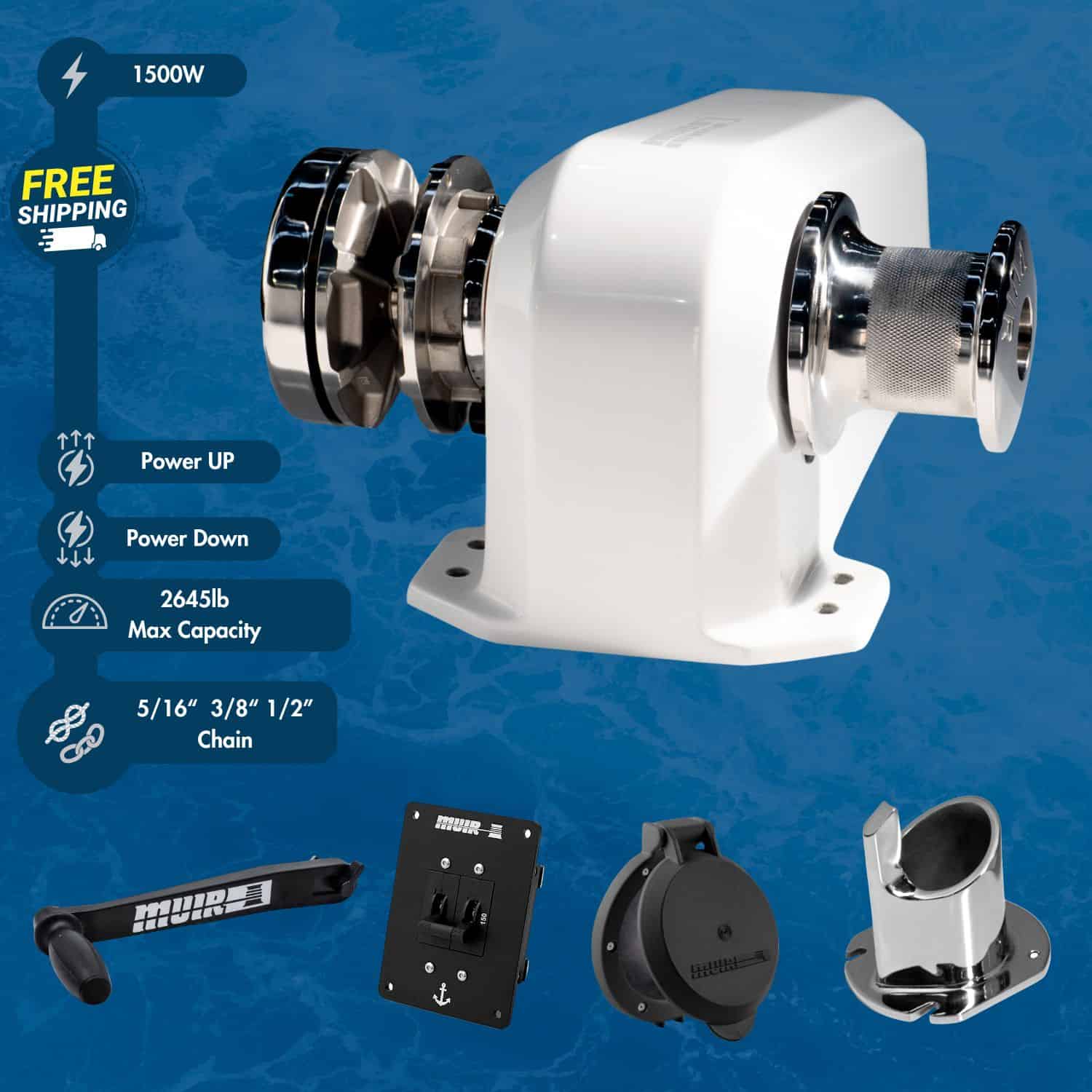
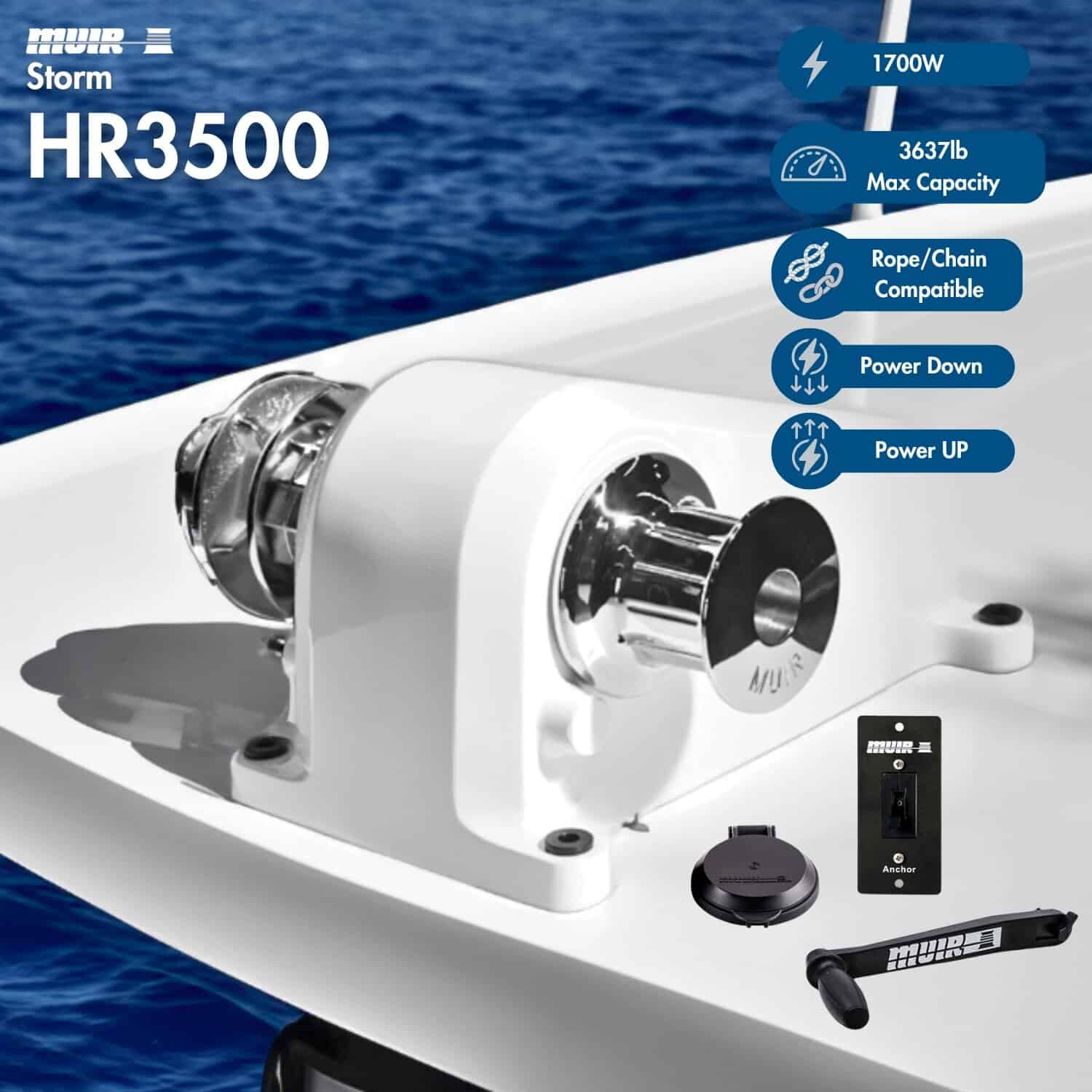
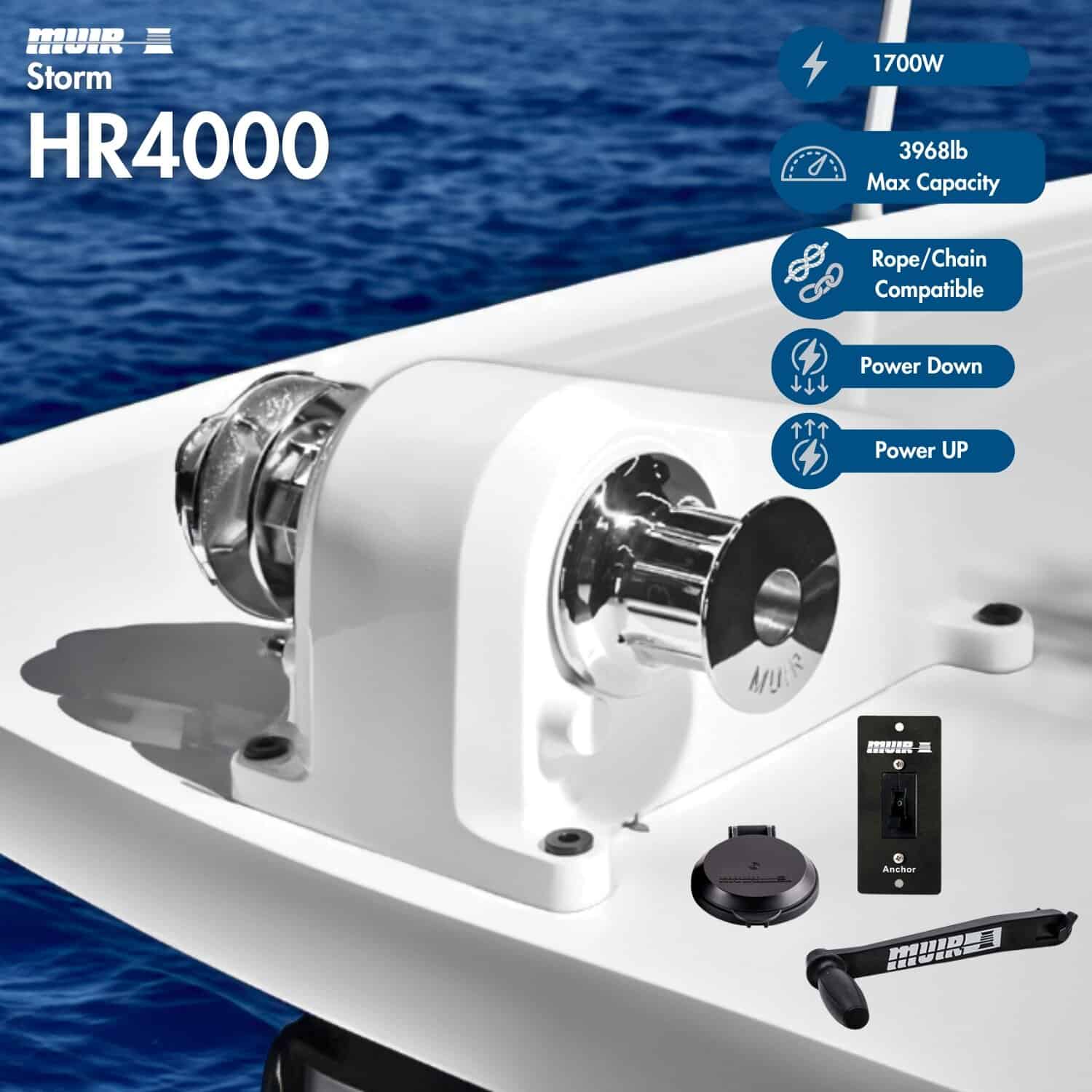
| 1500 W | 150 A | 100 A | DW 15, Storm VR3500, HR3500, HR4000 |
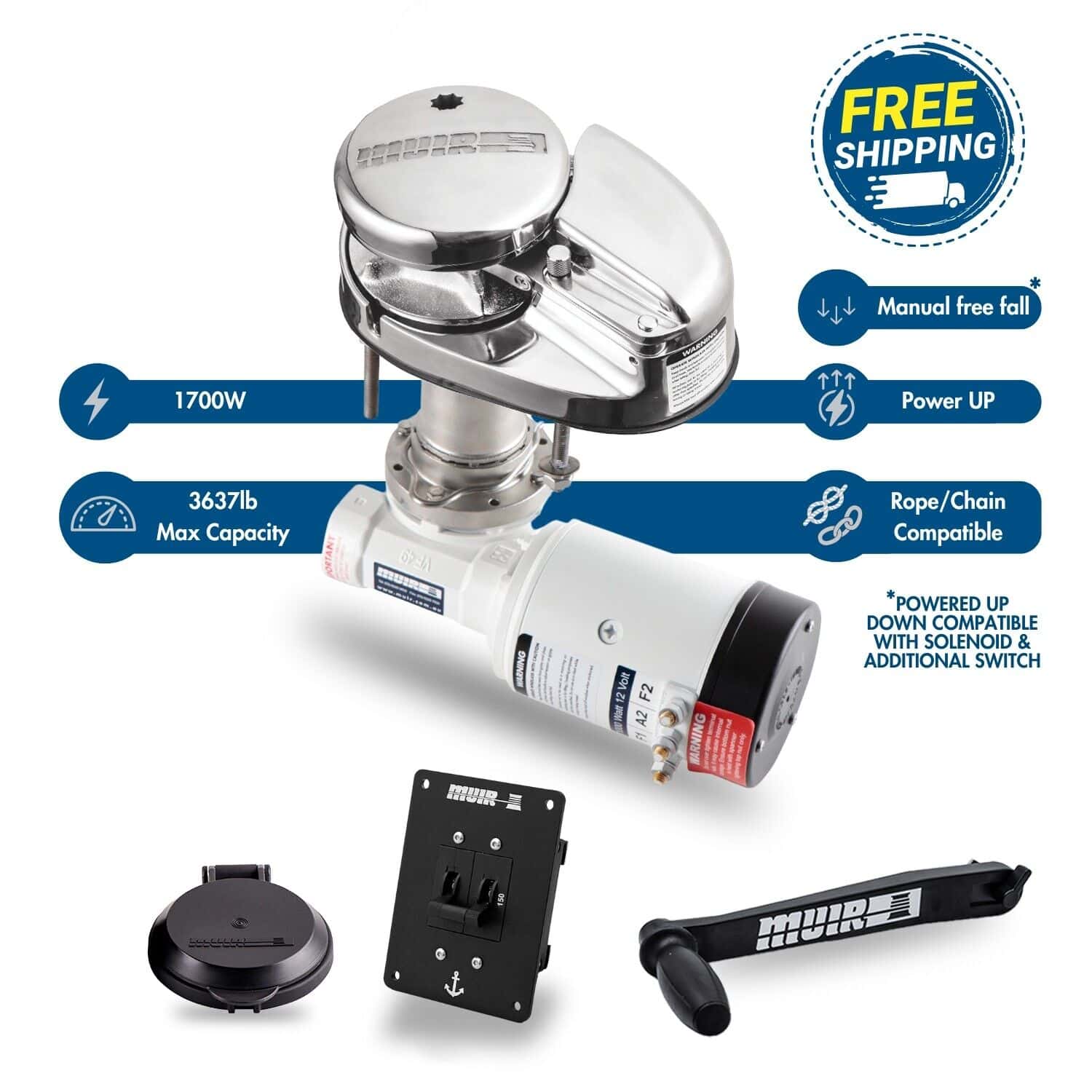
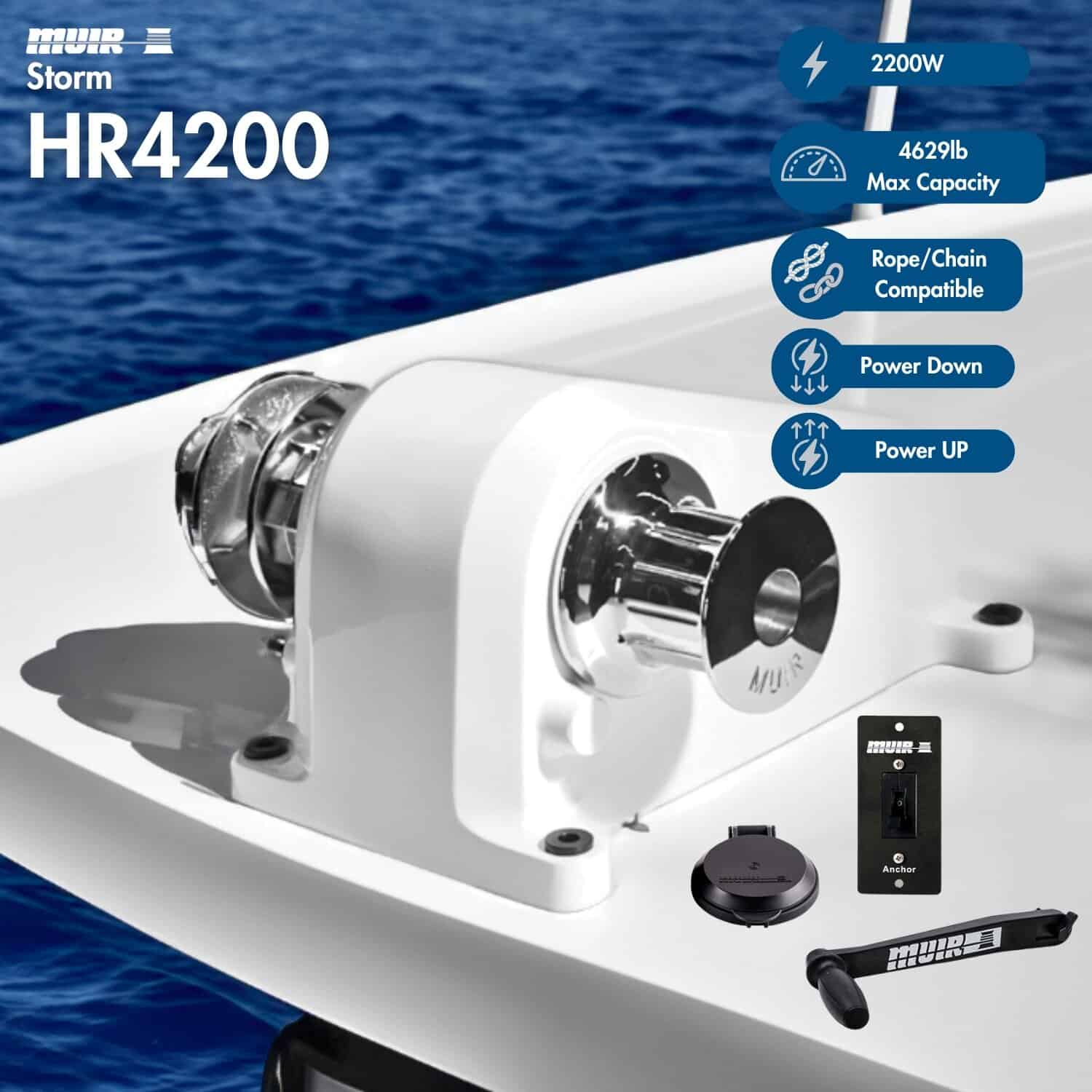
| 2000 W | — | 150 A | Storm VR4000, HR4200 |
Breaker ratings are the ones Muir supplies in the kit. The 2000 W machines are 24 V and 48 V only.
Notice how flat the table is. A 400 W DW 06 and a 600 W Storm VR850 get the same 80 A breaker, because the kit uses common parts across several machines rather than a bespoke breaker per model. The supplied breaker is often larger than the motor strictly needs.
That is not a problem, but it comes with a condition attached: the breaker protects the cable, so the cable has to be rated for the breaker, not for the motor. If your machine ships with an 80 A breaker, you need cable that can carry 80 A, even on a small winch that would never draw it.
Running the same motor at 24 V halves the current, which is why the right-hand column steps down on the bigger machines.
The cable: the only part you buy
Cable is where windlass installations actually go wrong. Undersized cable drops voltage, the motor compensates by drawing more current, and the whole circuit runs hot while the winch pulls badly. Muir put it plainly: small diameter cables drop voltage considerably.
These are Muir’s own figures, from the manuals that ship with the machines. Distance is battery to motor.
| Model | Run length | Cable |
|---|---|---|
| Storm VR600, VRC600, VFF600 | to 23 ft (7 m) | 25 mm² · 4 AWG |
| 30–55 ft (9–17 m) | 70 mm² · 1/0 | |
| DW and DFF 06, 08, 10 | to 26 ft (8 m) | 54 mm² · 1/0 |
| 29–39 ft (9–12 m) | 85 mm² · 3/0 | |
| 42–60 ft (13–18 m) | 125 mm² | |
| DW and DFF 12, 15 | to 23 ft (7 m) | 85 mm² · 3/0 |
| 30–55 ft (9–17 m) | 186 mm² |
Above 4/0, US suppliers usually quote these sizes in MCM rather than AWG. Between two rows, take the larger. Your installer and ABYC ampacity rules have the final say.
Why a drum winch appears to want heavier cable
Compare the two tables and the drums look thirsty: 54 mm² at 26 ft against 25 mm² at 23 ft for a Storm 600, even though a DW 08 and a VR600 have the same 600 W motor.
The reason is that Muir groups the DW 06, 08 and 10 in one table, so the figures are sized for the largest of them, the 1000 W DW 10. A DW 06 on a short run is being specified cable meant for a machine two and a half times its power. That is conservative rather than wrong, and going heavier never hurts, but it explains the apparent mismatch.
Shorten the run if you can. Muir’s advice is that batteries are best located as close to the winch as possible, and the table shows why: on a DW 12 or DW 15, going from a 23 ft run to a 55 ft run takes you from 85 mm² to 186 mm². That is more than double the copper, and copper is priced by weight.
The solenoid, and where to put it
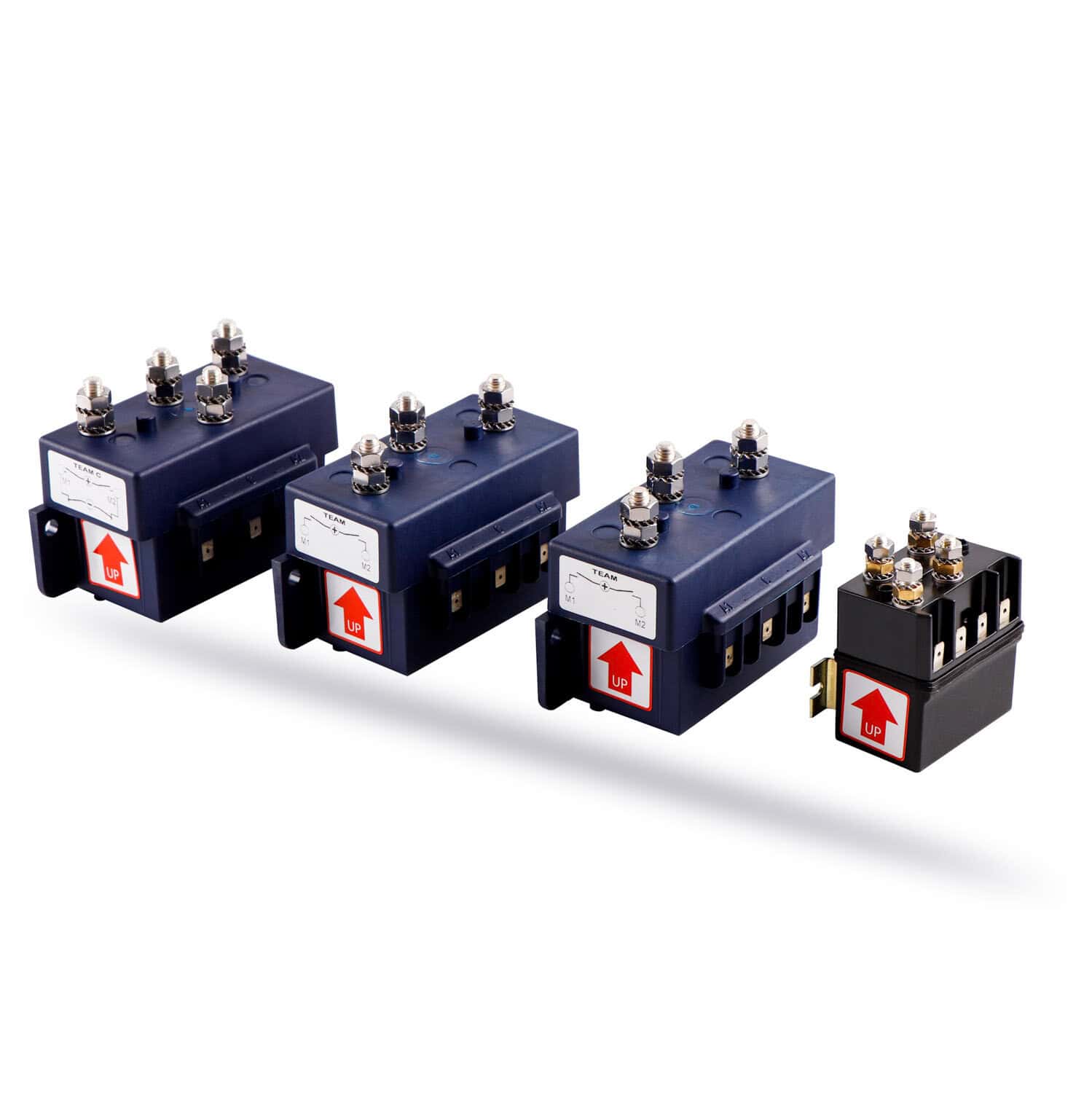
The solenoid is a heavy-duty relay. The helm switch tells it what to do; it does the switching. Reversing the motor to pay out is the same mechanism working the other way, which is why it is sometimes called a reversing solenoid.
Pole count follows the motor: two-pole up to 600 W, three-pole from 1000 W to 1500 W, four-pole on the 2000 W machines. It comes with the winch, so this only matters when you are replacing one.
Muir is specific about placement, and it is worth following: install it upright, close to the motor, and out of the way of sea water. On the drum manual there is one line worth repeating exactly, because people get it wrong: do not install it in the anchor locker unless it is in a waterproof box.
An isolating switch is a separate thing again. Fit one somewhere accessible, ideally near the battery, and do not confuse it with the breaker.
12 volts or 24
Where you have the choice, 24 V halves the current for the same power. That means a smaller breaker, thinner cable and less voltage drop over a long run. On a 1200 W machine the breaker goes from 150 A at 12 V to 100 A at 24 V.
Two constraints decide it for you rather than preference. The DW 06 is 12 V only. The 2000 W machines, the Storm VR4000 and HR4200, are 24 V and 48 V only. Everything between those ends can be ordered either way, and on this site both voltages are the same price.
The deciding factor is usually the boat. If your house bank is 12 V, a 24 V windlass means a dedicated bank or a converter, and that costs more than the cable you save.
What we sell, and what we do not
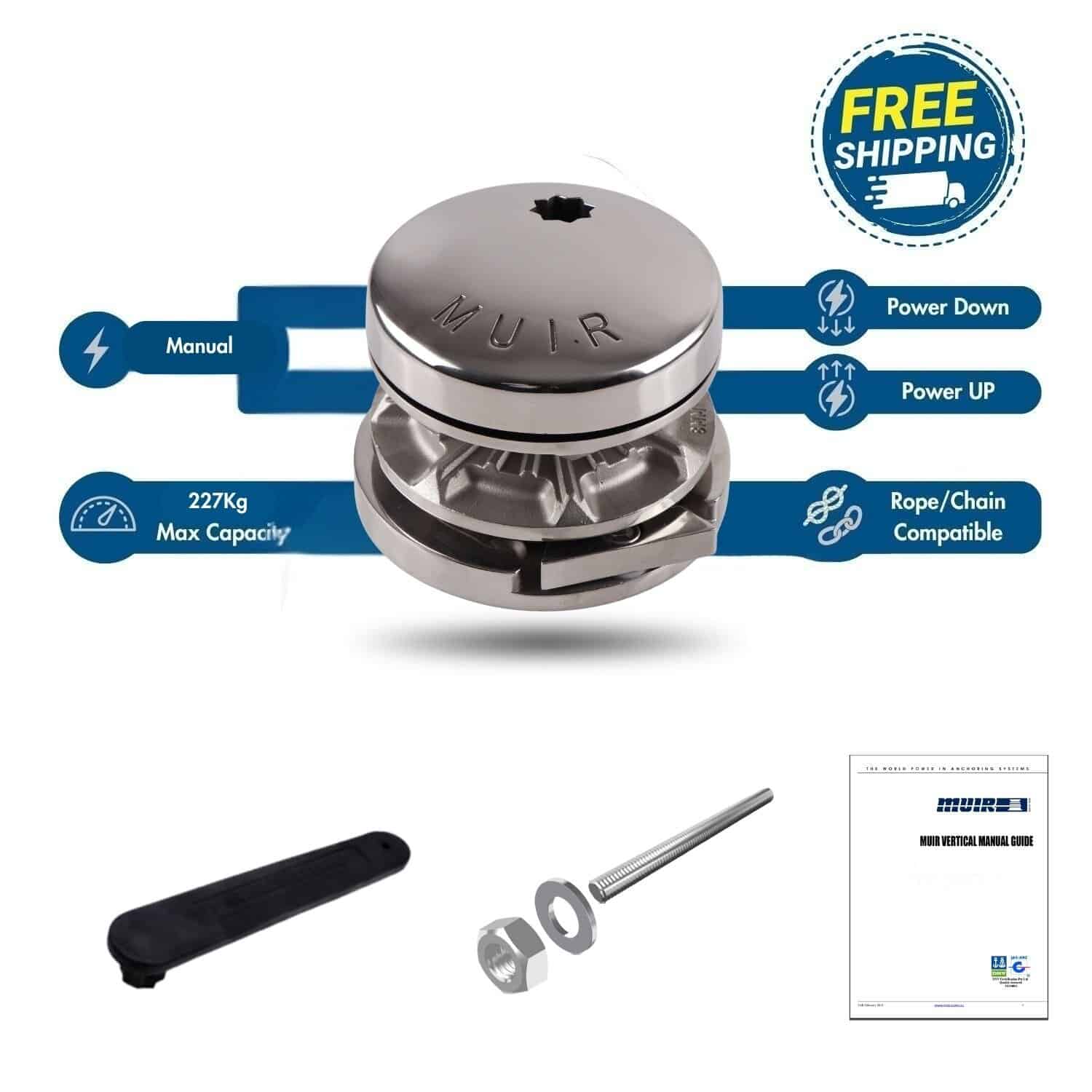
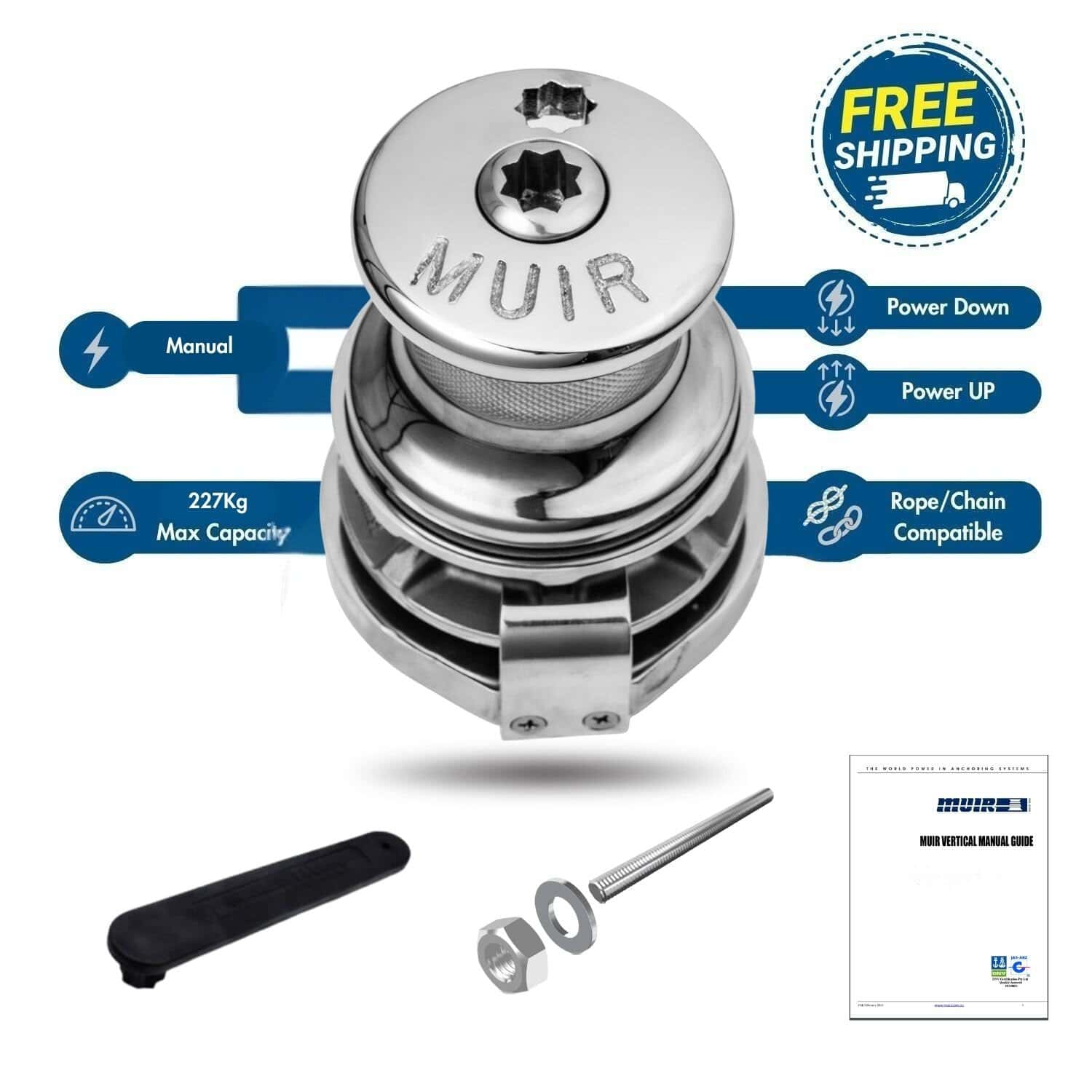
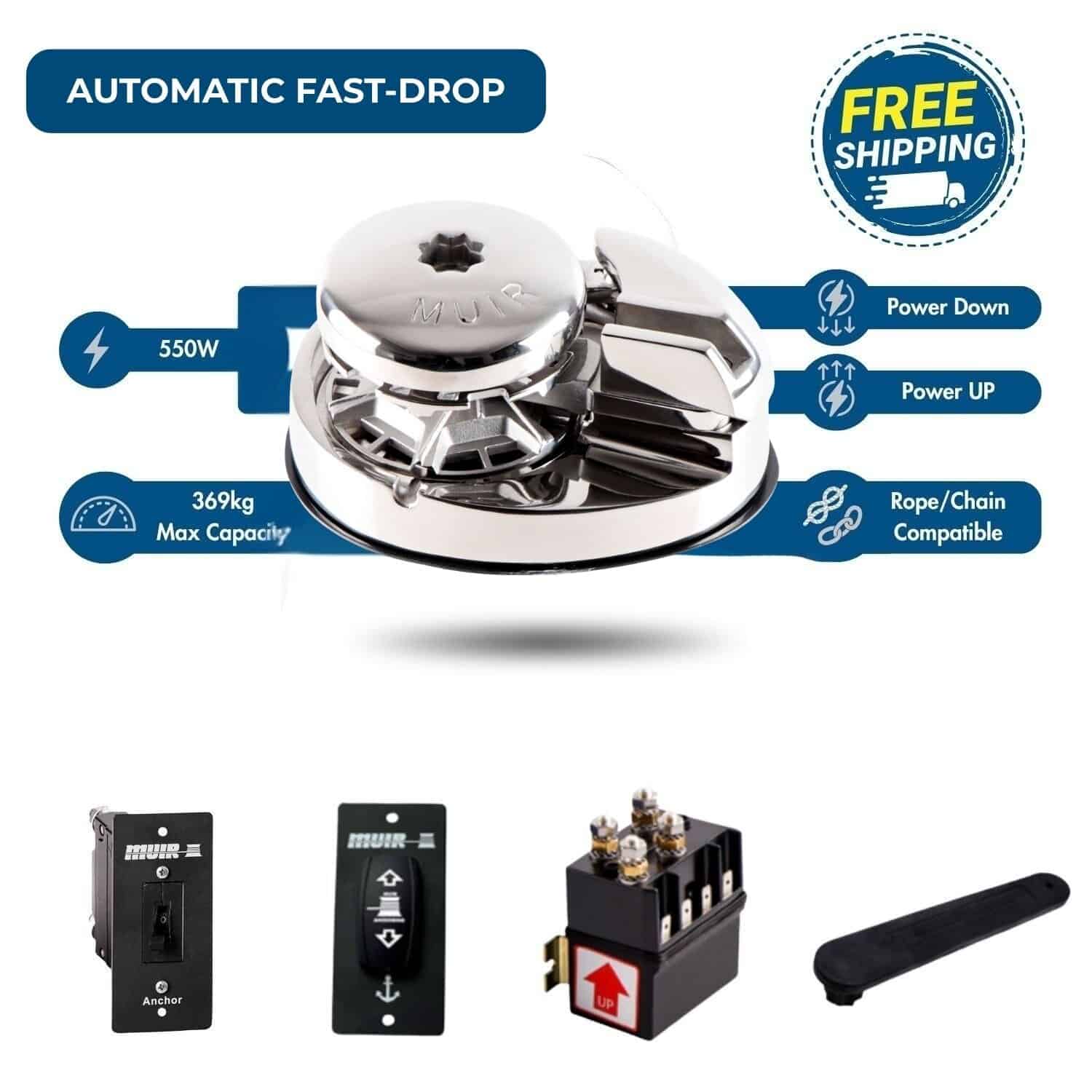
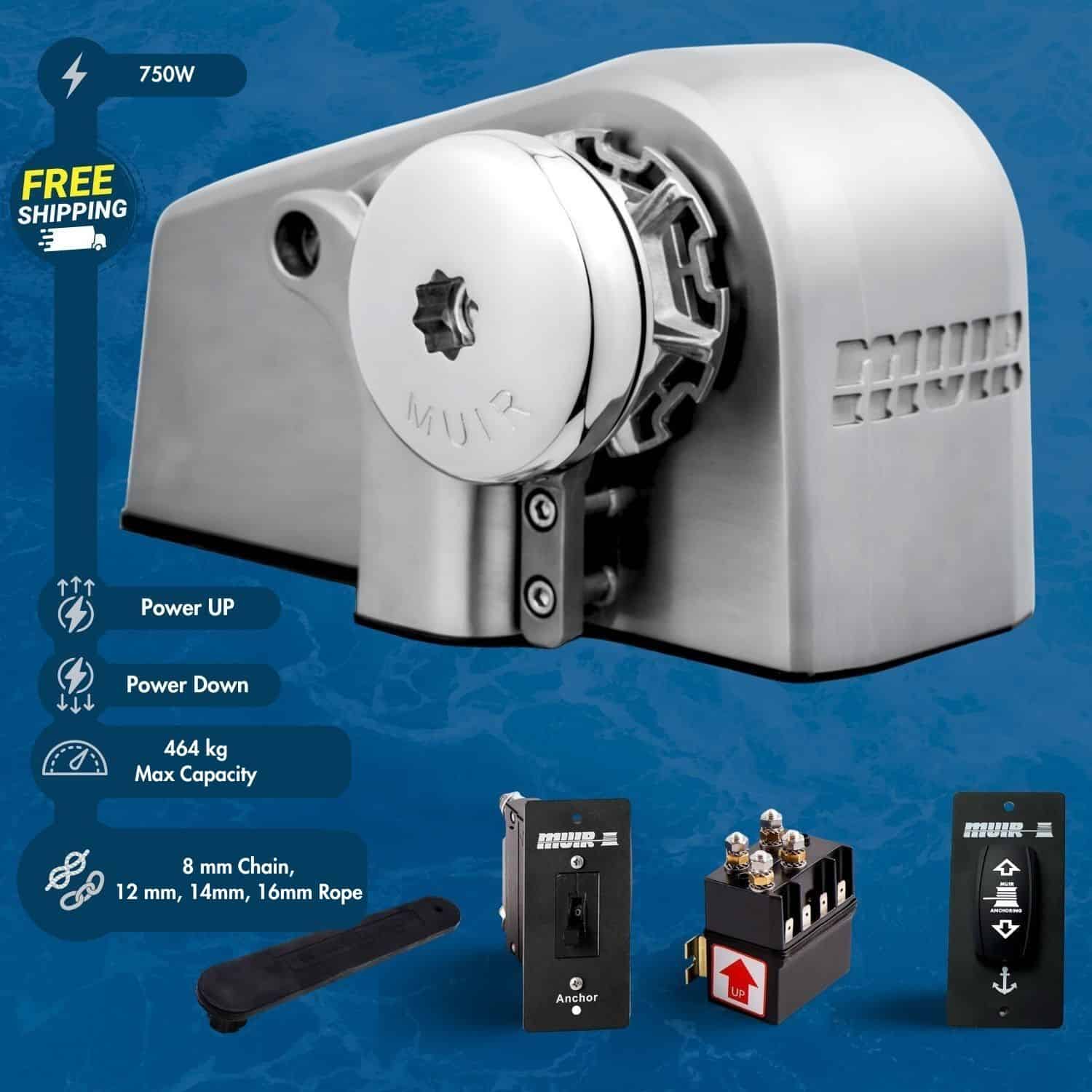
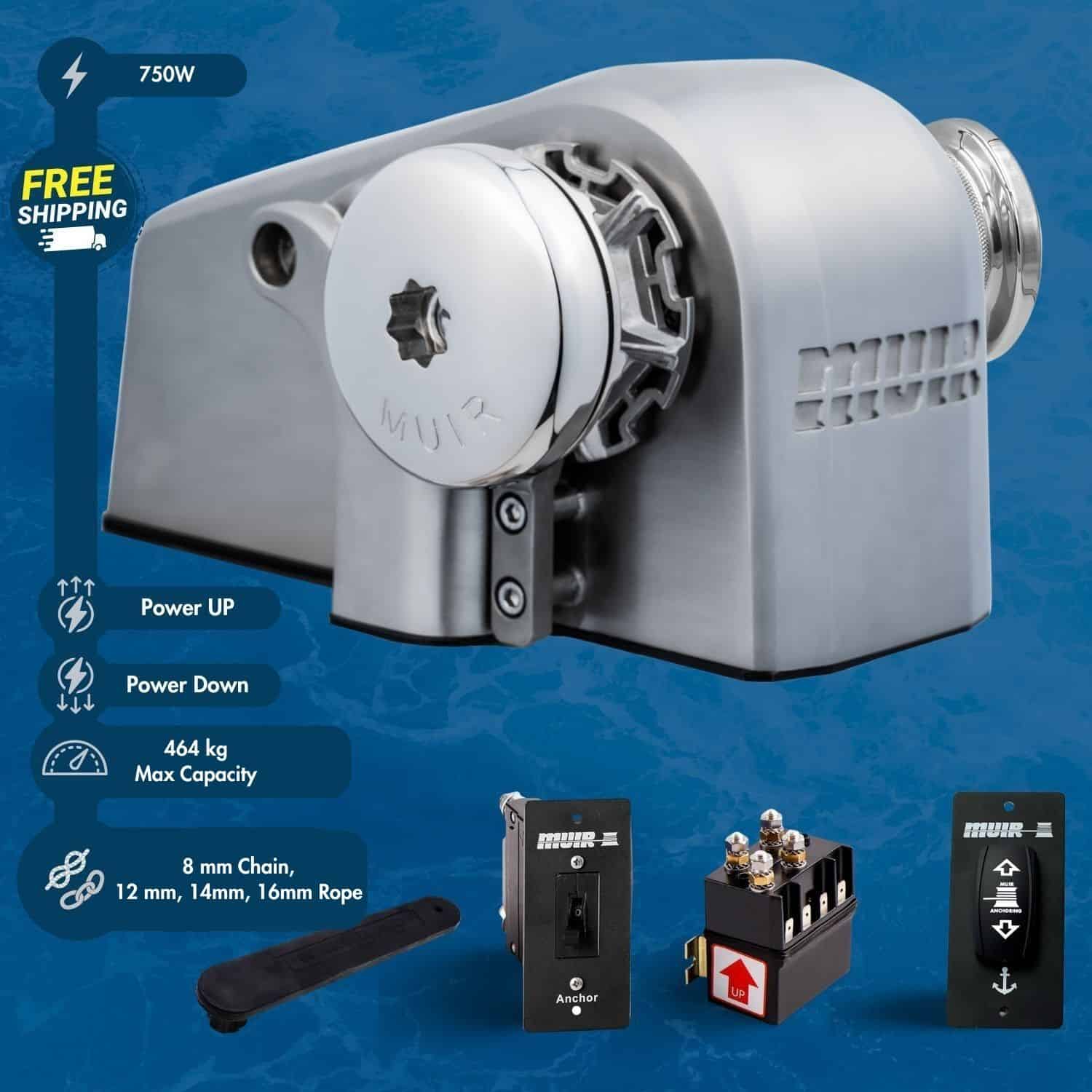
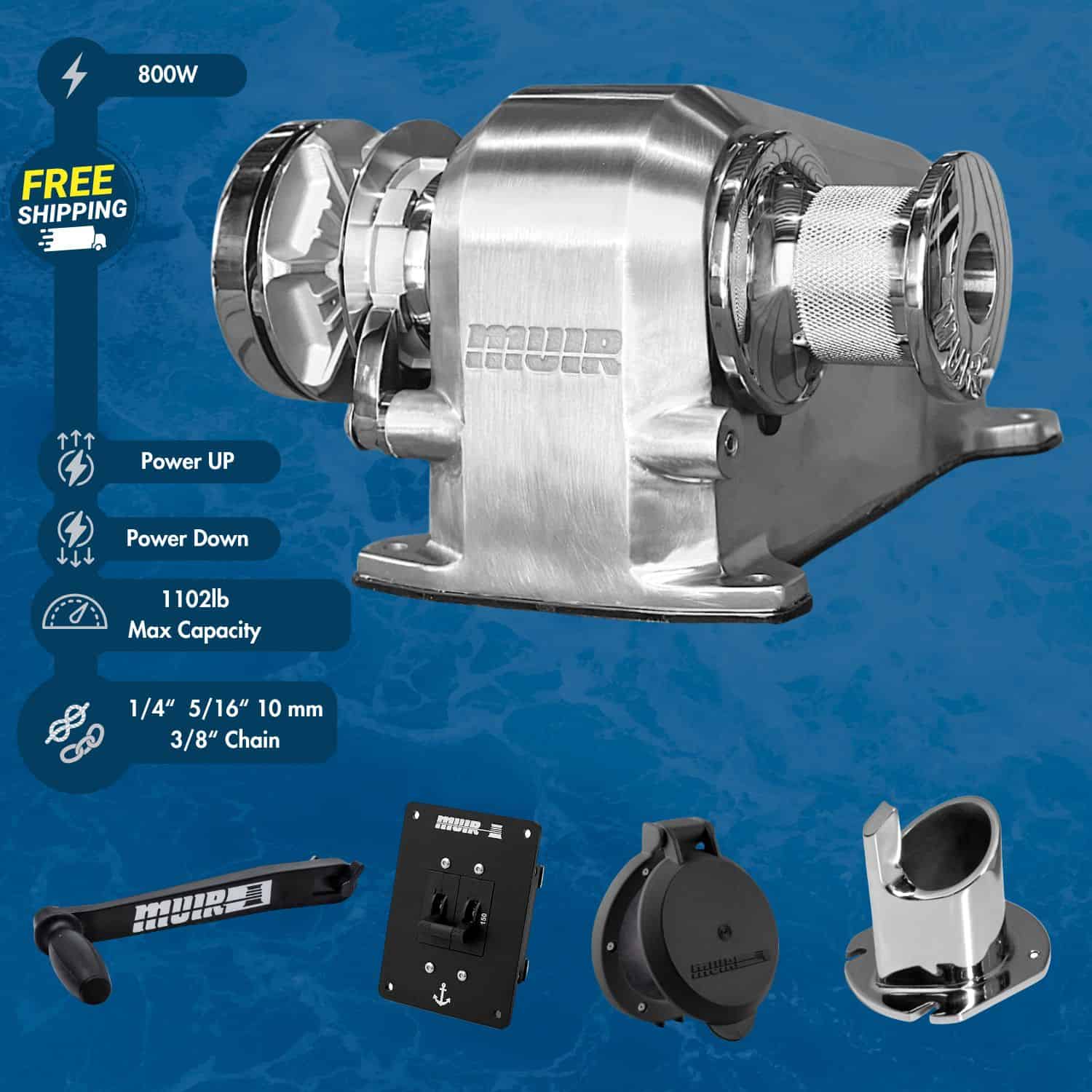
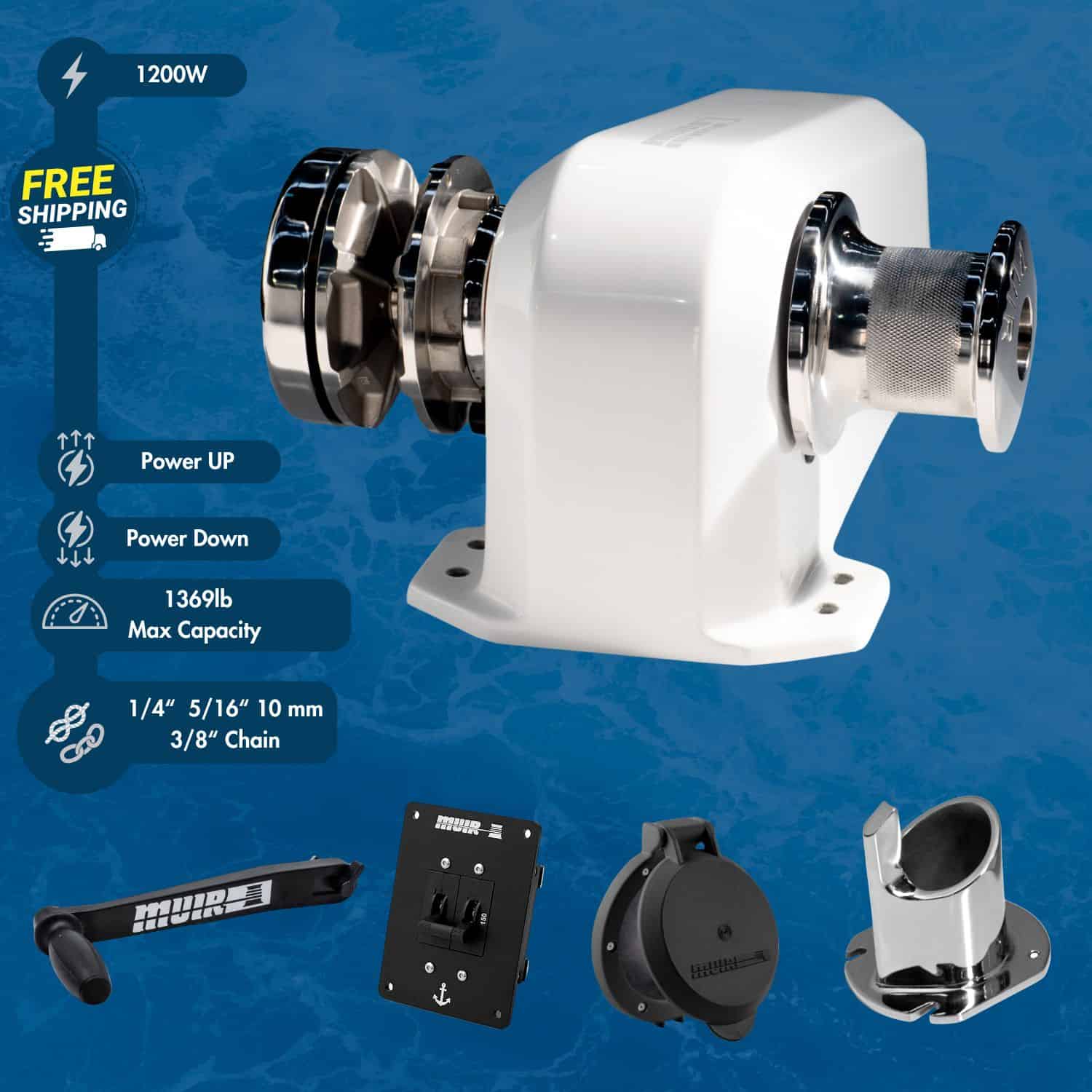
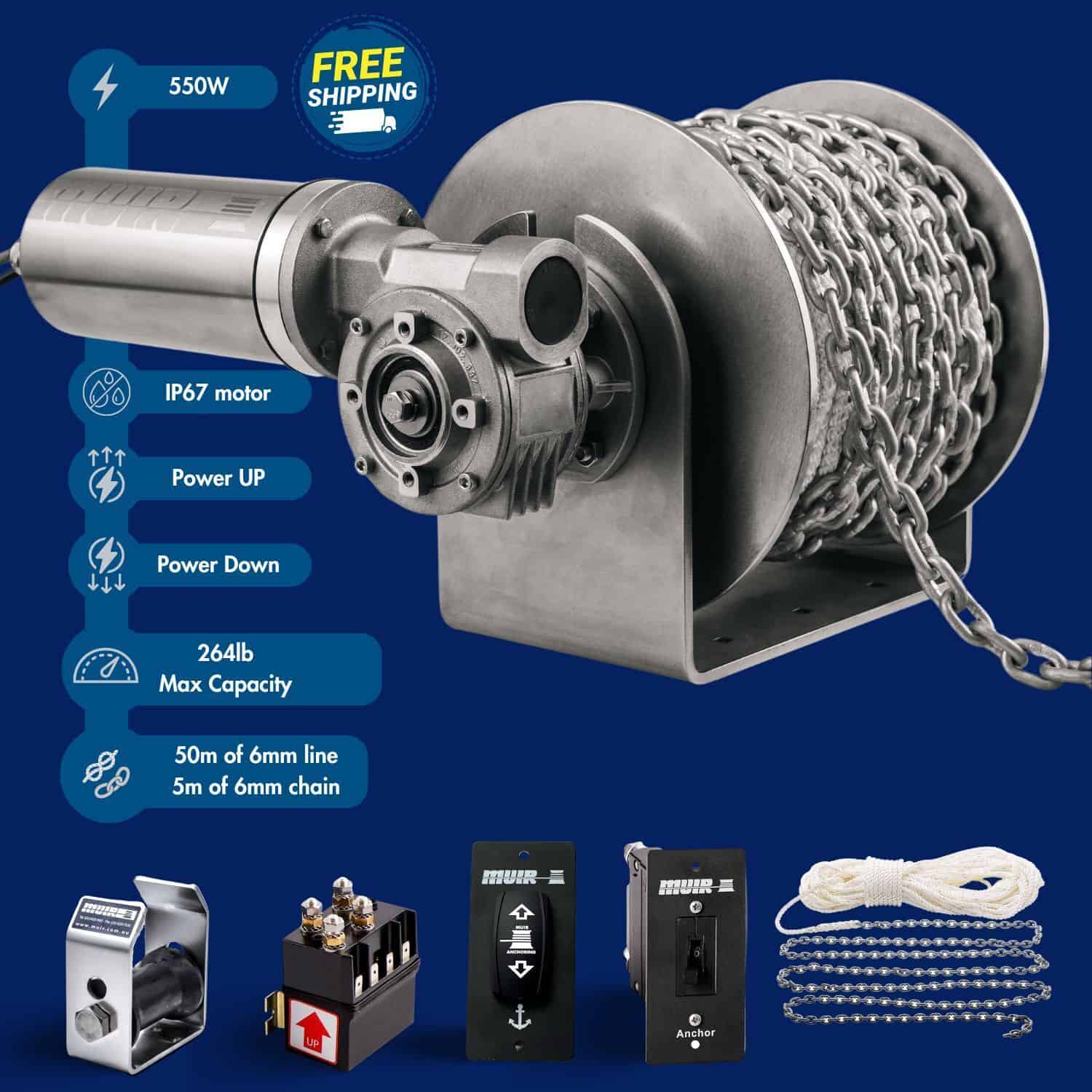
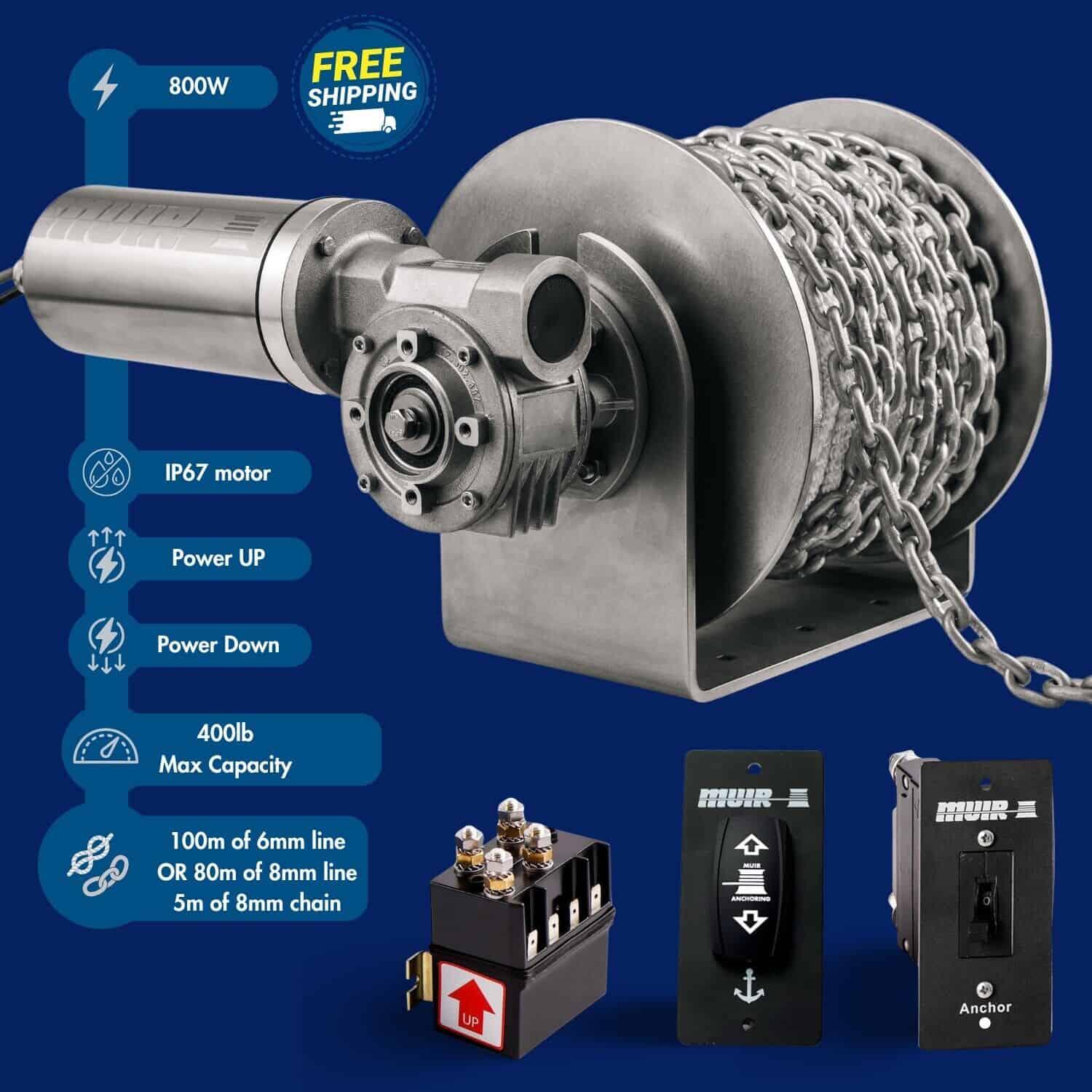
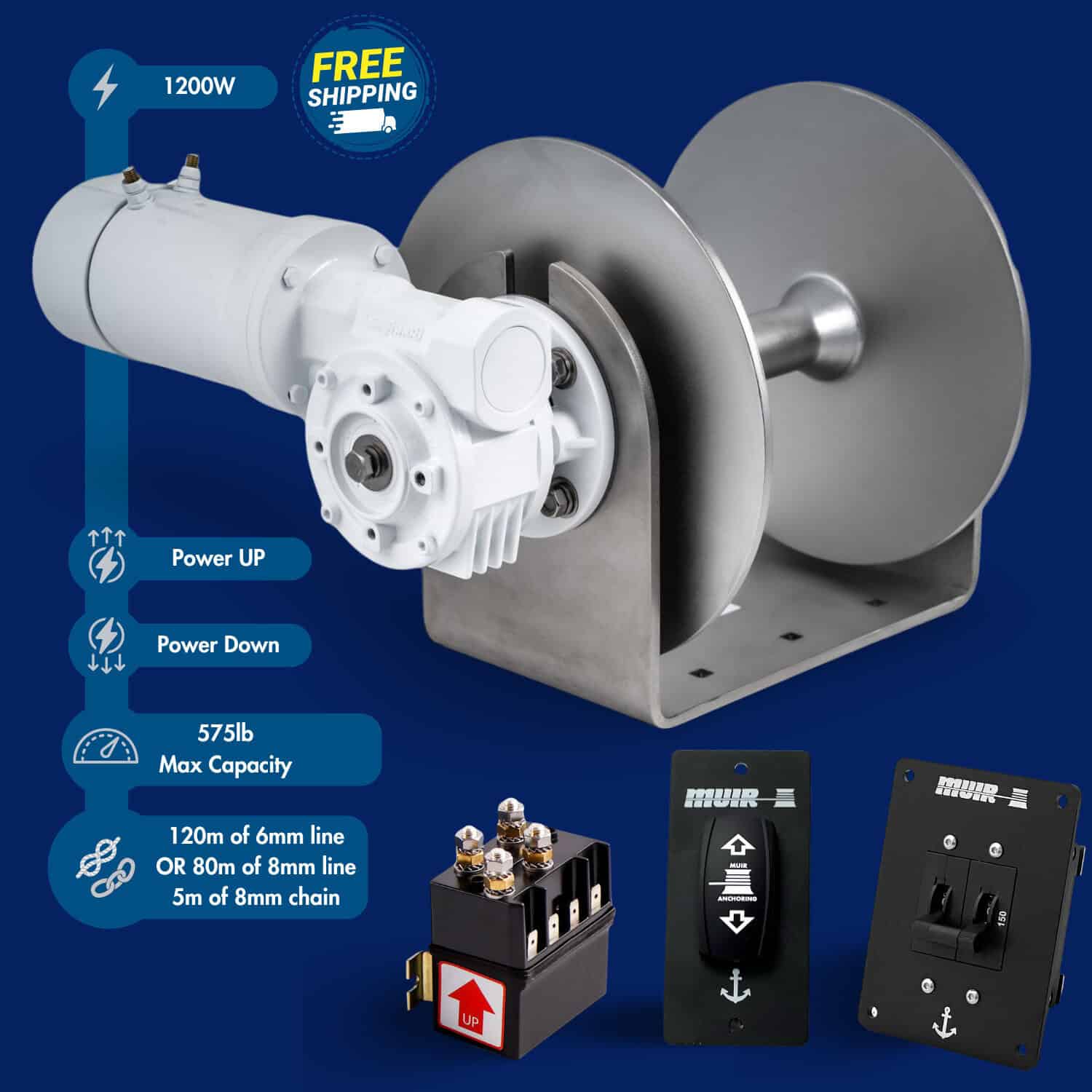
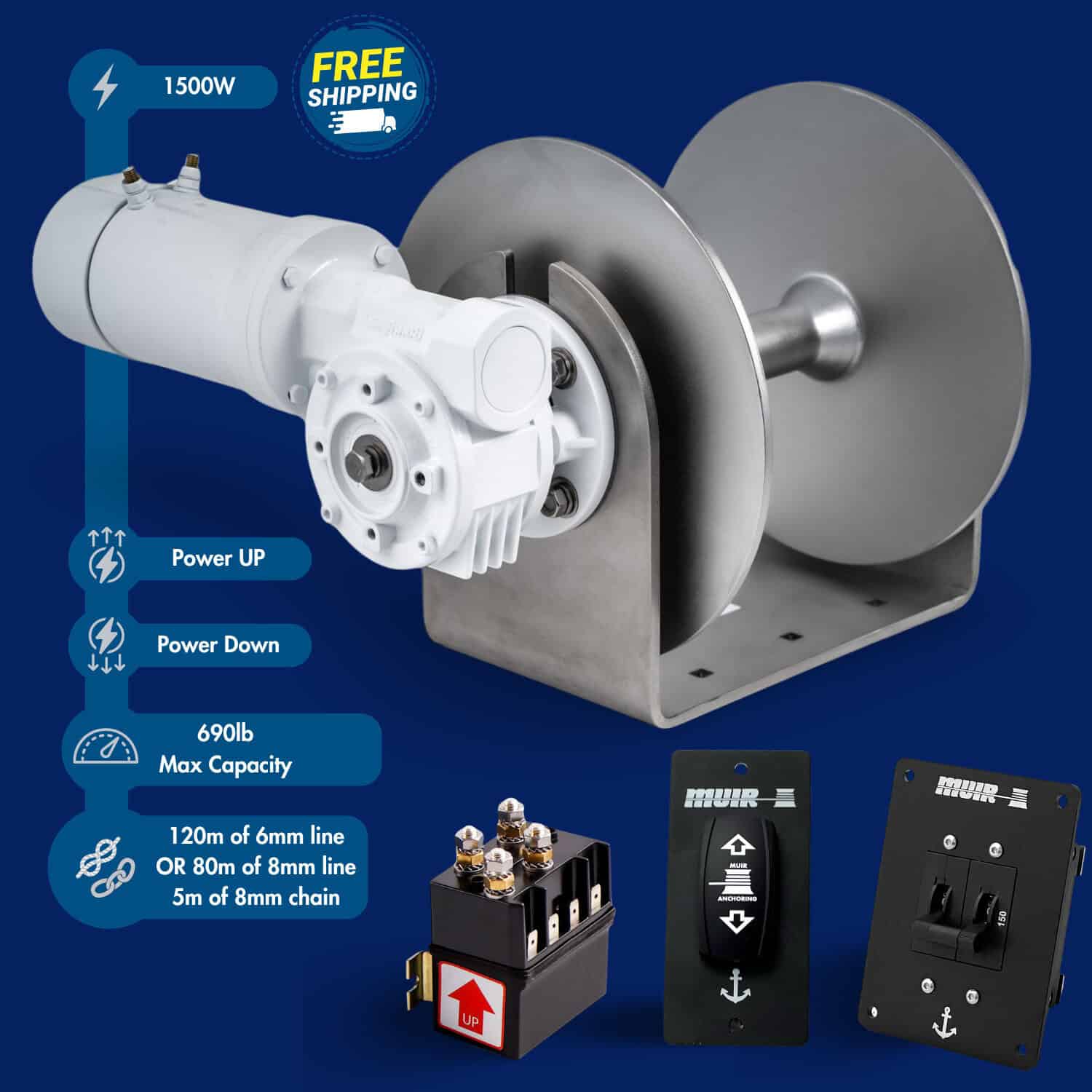
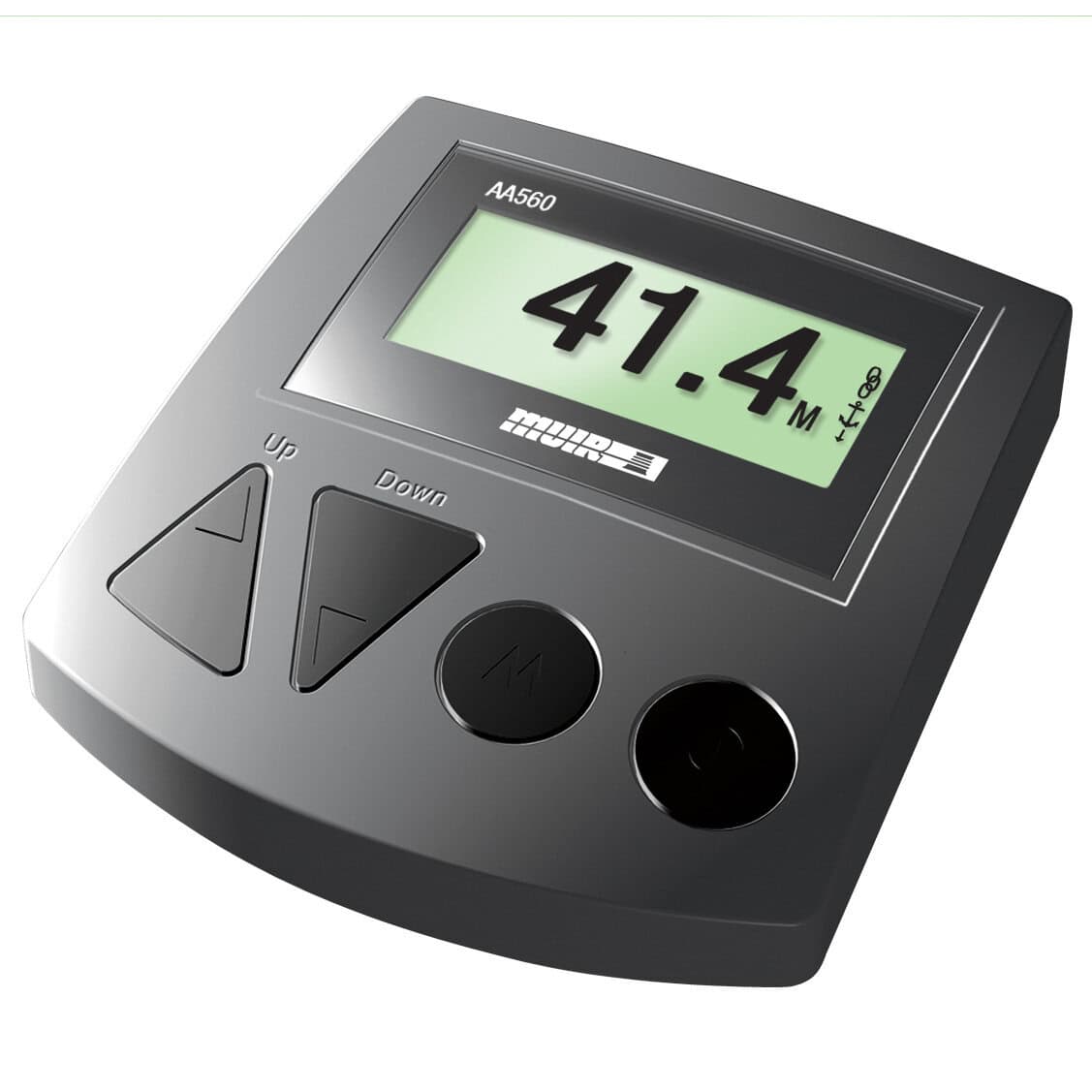
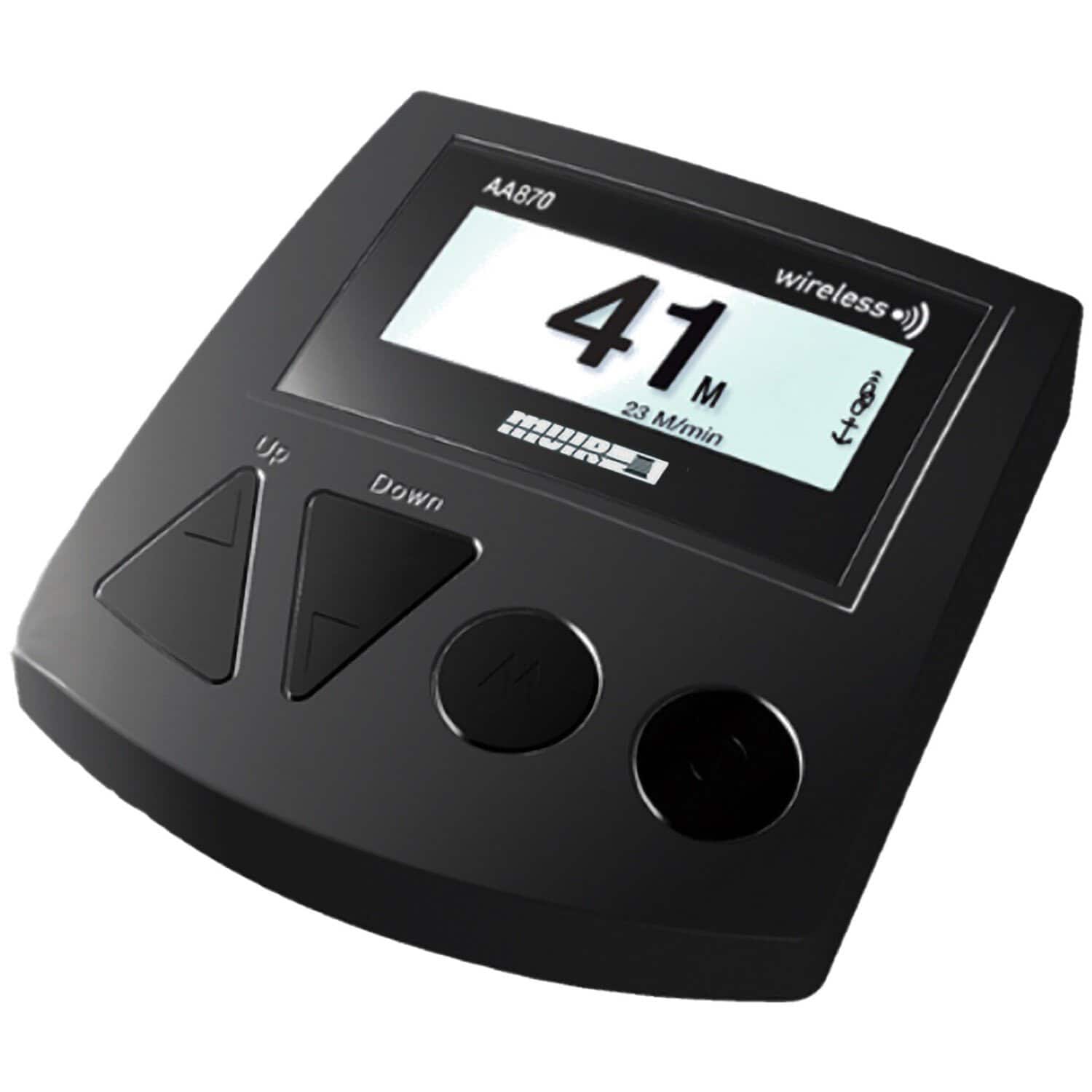
Every windlass and drum winch here ships with its breaker, its helm switch and its solenoid. Deck fasteners come with the drum packages too.
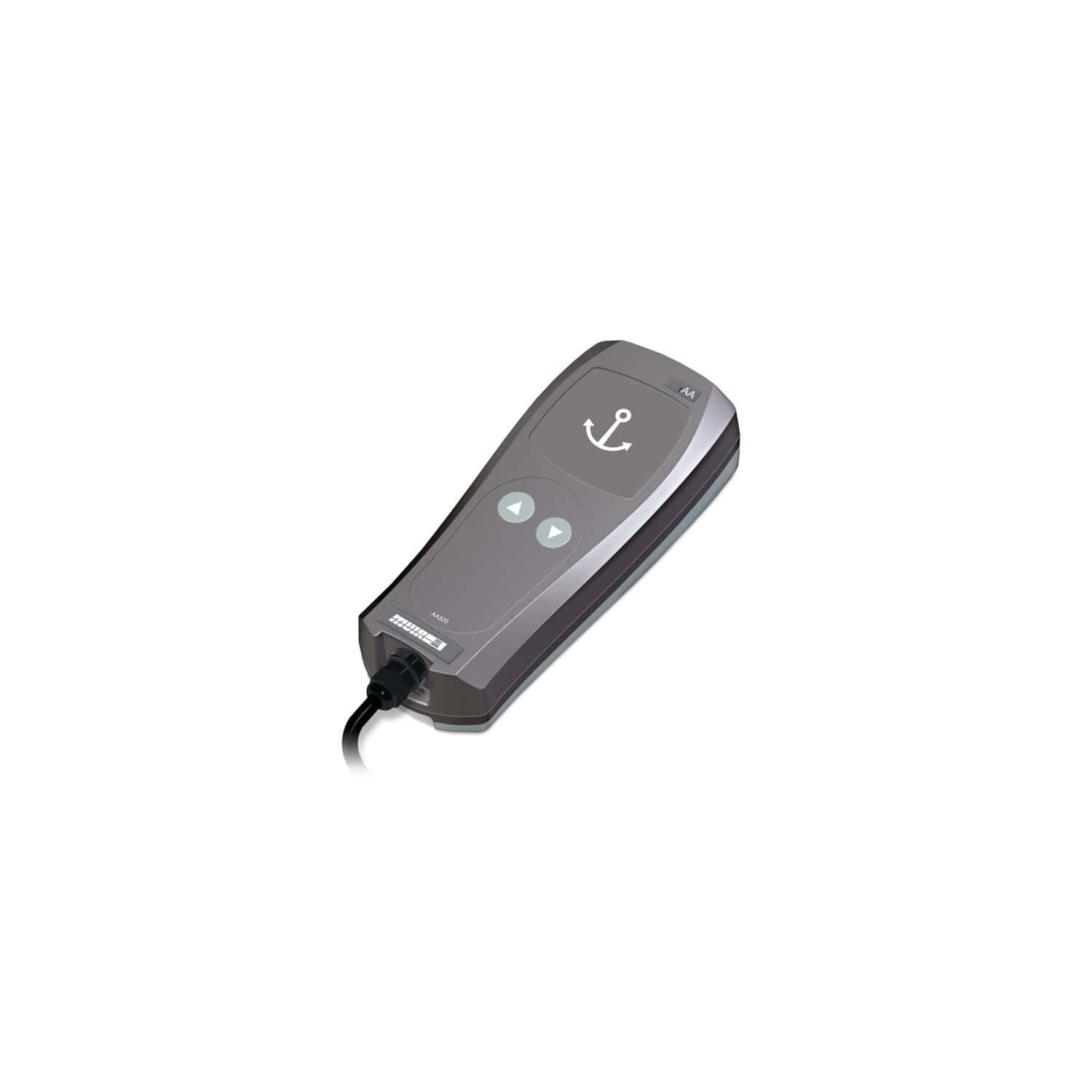
For replacements and spares we stock the pieces individually: breaker and deck switch kits from $79.00, dual direction solenoids from $195.00, reversing switch kits from $244.00, breaker and isolator panels from $59.00 and foot switches from $29.00.
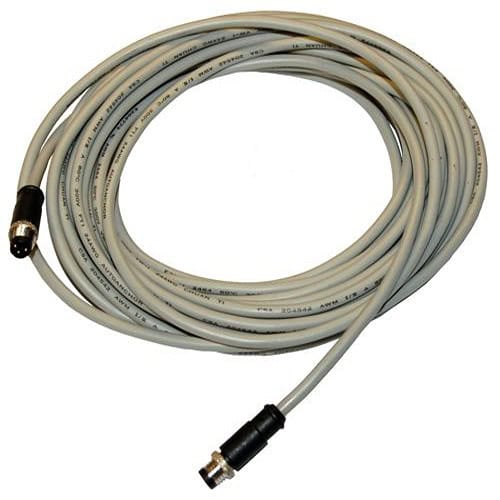
We do not sell battery cable. There is no wiring kit to add to your order, and we are not going to pretend otherwise. Cable is sized to your boat’s run length, it is heavy, and shipping copper across an ocean makes no sense when a local chandlery or auto-electrical supplier will cut it to length and crimp the lugs while you wait. Take the size out of the table above and buy it near home.
Where installations go wrong
- Sizing cable to the motor instead of the breaker. The breaker protects the cable. Rate the cable for the breaker that is fitted.
- Measuring the run one way. Current goes out and comes back. Voltage drop is calculated on the round trip, which is why Muir’s distances look short relative to the cable sizes.
- Using the isolator as a breaker. They are different devices doing different jobs, and the manuals say so explicitly.
- Putting the solenoid in the anchor locker. It is the wettest box on the boat. If it has to go there, it goes in a waterproof enclosure.
- Skipping the breaker to save $79. It voids the warranty on a machine that cost between $1,106.75 and $7,595.25.
Frequently asked questions
What size circuit breaker does my windlass need?
It depends on the motor, not the model. A 400 W or 600 W machine takes 80 A, 1000 W takes 100 A at 12 V, and 1200 W or 1500 W takes 150 A at 12 V. Muir supplies the correct breaker with the winch.
What size cable do I need for my windlass?
Muir publishes this by model and run length. A Storm 600 takes 25 mm² (4 AWG) up to 23 ft and 70 mm² (1/0) out to 55 ft. A DW or DFF 06 to 10 takes 54 mm² (1/0) up to 26 ft, rising to 125 mm² at 60 ft. Measure battery to motor, and if you fall between sizes go up.
Does a windlass come with wiring?
It comes with the circuit breaker, the helm switch and the solenoid. It does not come with battery cable, and no manufacturer supplies that, because the length and gauge depend on your boat.
Do you sell a windlass wiring kit?
No. We sell the breaker kits, solenoids, switch kits and isolator panels individually, but we do not sell battery cable and there is no complete wiring kit. Buy the cable locally from the sizes Muir publishes.
Is the circuit breaker really required?
Yes. Muir’s manuals state that the circuit breaker must be fitted to ensure the warranty. It also protects the cable and motor if the winch stalls, which is the situation it exists for.
Can I use the isolator switch instead of a breaker?
No. They do different jobs. The isolator disconnects the circuit for safety and maintenance; the breaker trips automatically on overload. Muir’s manuals say plainly that the isolating switch is not a circuit breaker.
Where should the solenoid go?
Upright, close to the motor, and away from sea water. Muir specifically warns against fitting it in the anchor locker unless it is inside a waterproof box.
Is 24 V better than 12 V for a windlass?
Electrically, yes: half the current, a smaller breaker and thinner cable for the same power. Practically it depends on your boat, because a 24 V windlass on a 12 V boat needs its own bank or a converter. Both voltages cost the same here.
Related guides

Stay Updated
Get the latest guides, tips, and product updates delivered to your inbox.