






Rope-to-Chain Splice Guide: Why Kits Come Pre-Spliced
The 30-second answer
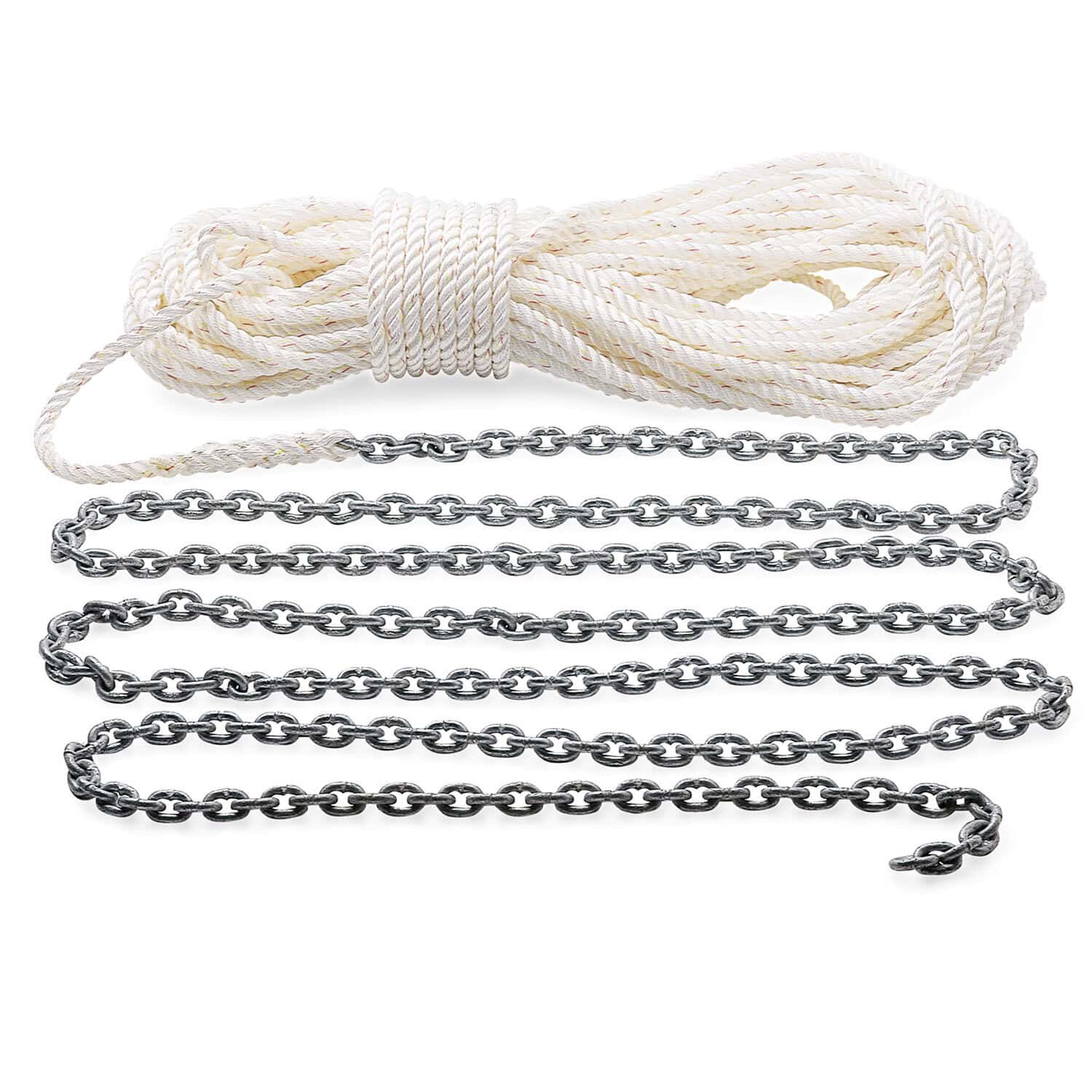
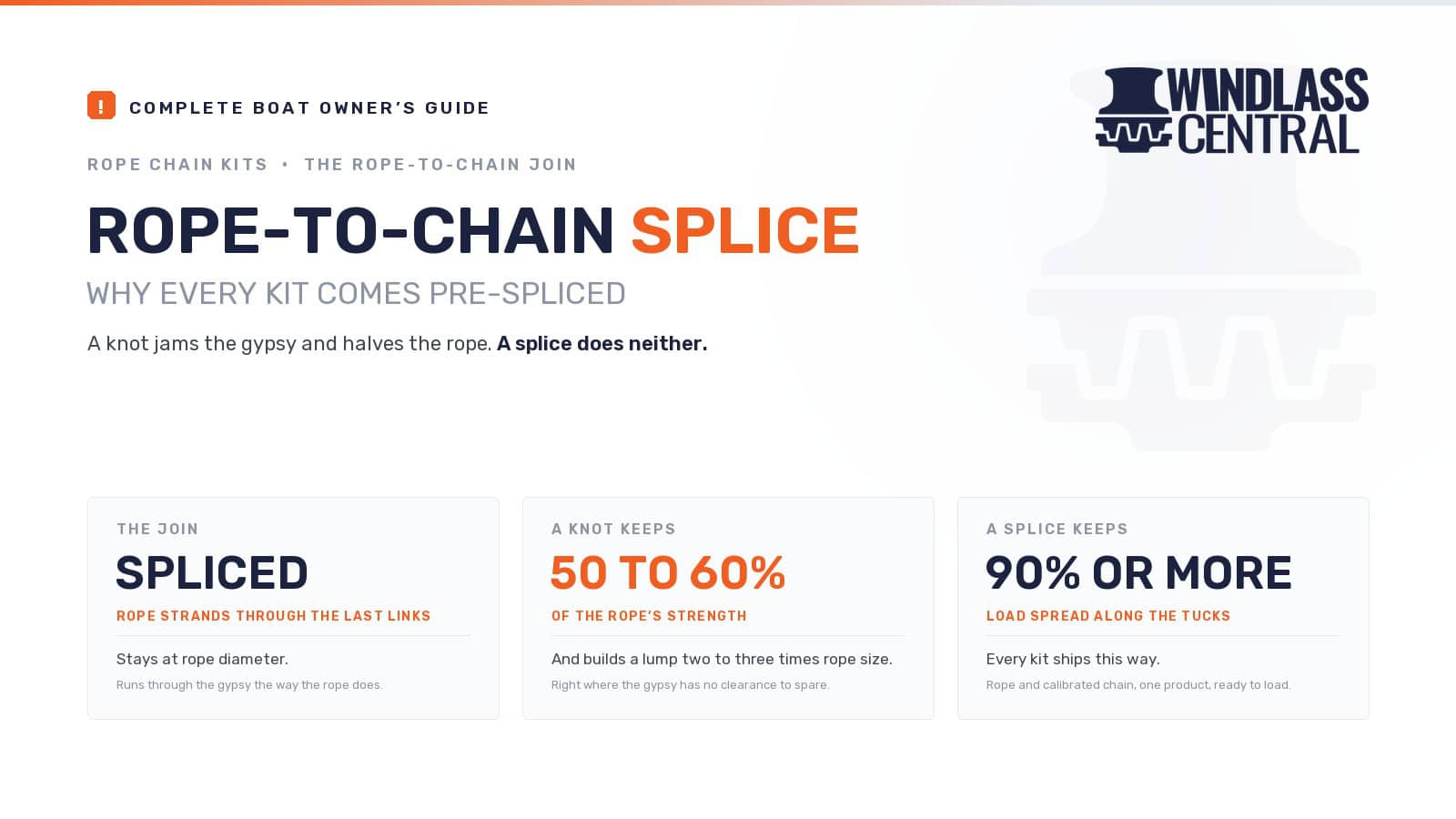
Rope joins chain with a splice, not a knot, because a knot forms a lump that jams in the gypsy. A splice threads the rope’s own strands through the last few links so the join stays close to the rope’s own diameter and runs through the gypsy the same way the rope does. Every rope chain kit we sell comes this way already: rope and calibrated chain, spliced together as one product, ready to load into the locker. No shackle, no swivel, nothing else needed at that join.
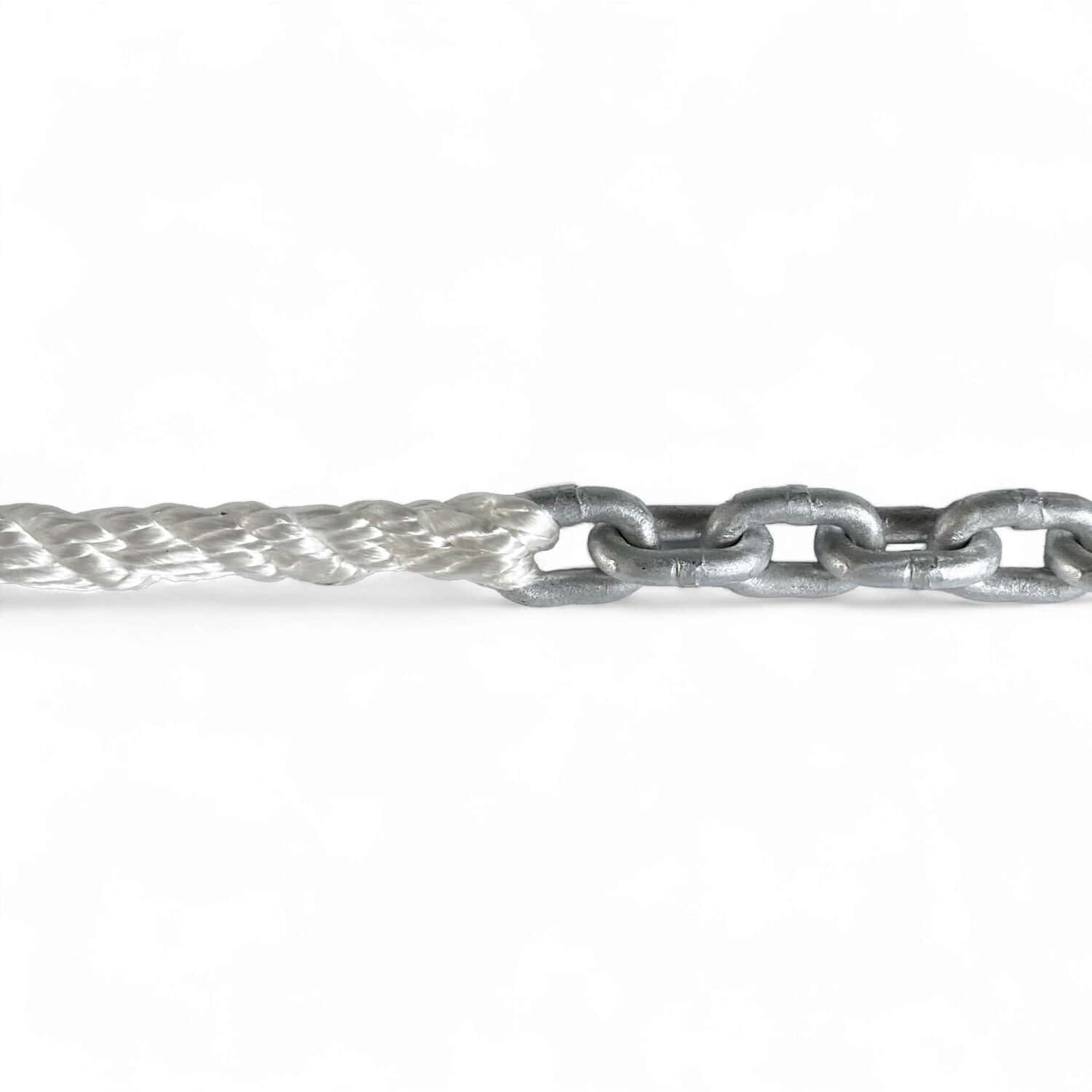
If you’ve never bought a rope-chain rode before, the question that actually stops most people at checkout isn’t rope diameter or chain grade. It’s simpler: how does the rope attach to the chain, will that join run through my windlass, and could I just splice it myself and save the labour? All three come back to the same six inches of rope and chain where the two meet.
How a rope-to-chain splice actually works
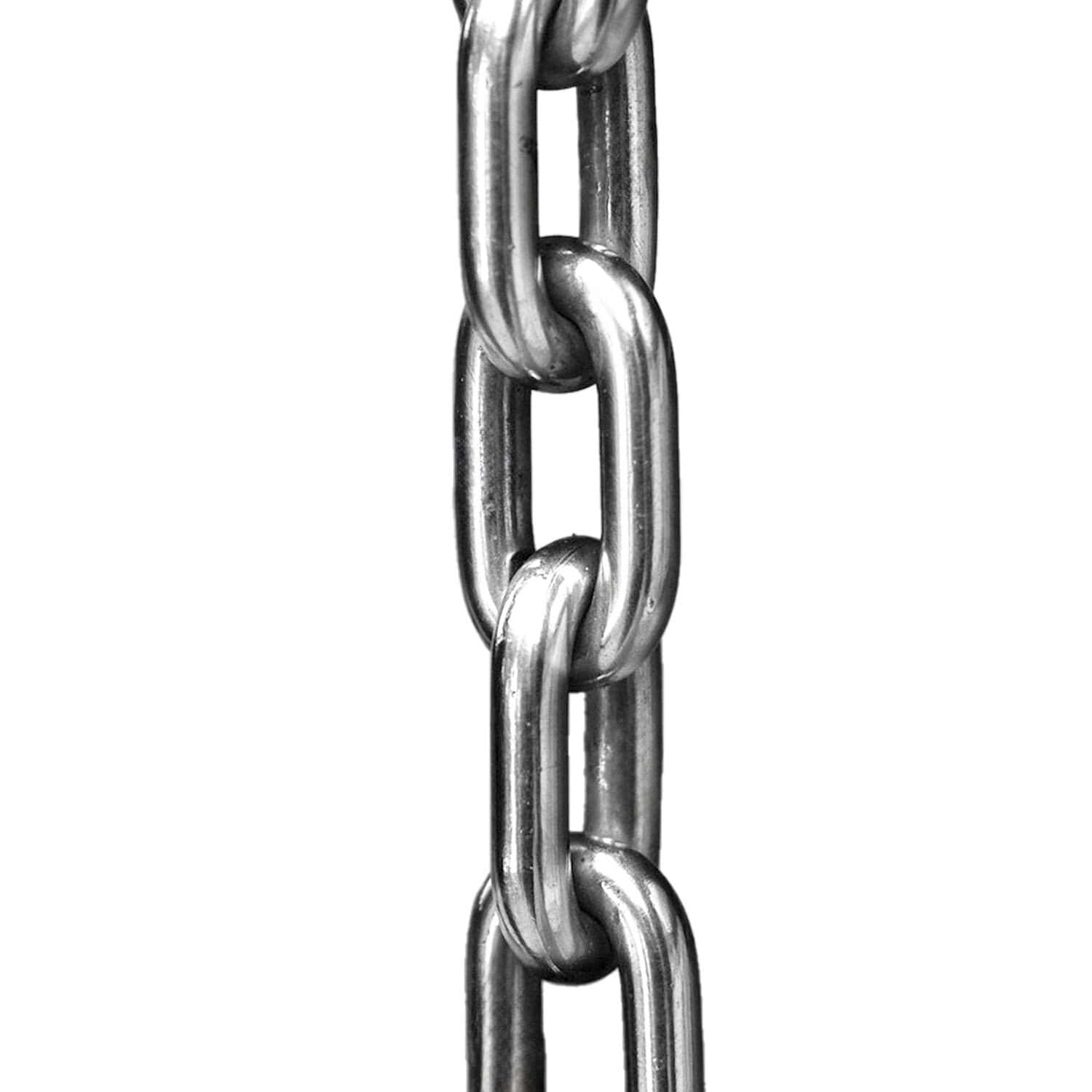
A rope-to-chain splice takes the last section of the rope, unlays its three strands, and threads them back through the final two or three links of the chain, tucking each strand through the link and back into the rope’s own lay so it locks under load rather than pulling free. Done properly, the rope and chain become one continuous line. There’s no shackle, no pin, no separate connector doing the work — the rope’s own fibres grip the link from the inside.
This is a different, longer splice than the eye you’d tie in a dock line. Riggers sometimes call it a Class II splice: it needs more strand length and more tucks than a decorative eye, because it has to hold cyclic anchoring loads for years, not sit as a loop on a cleat. Every kit we sell is spliced this way, in three-strand nylon, before it ships.
Why it has to be a splice, not a knot
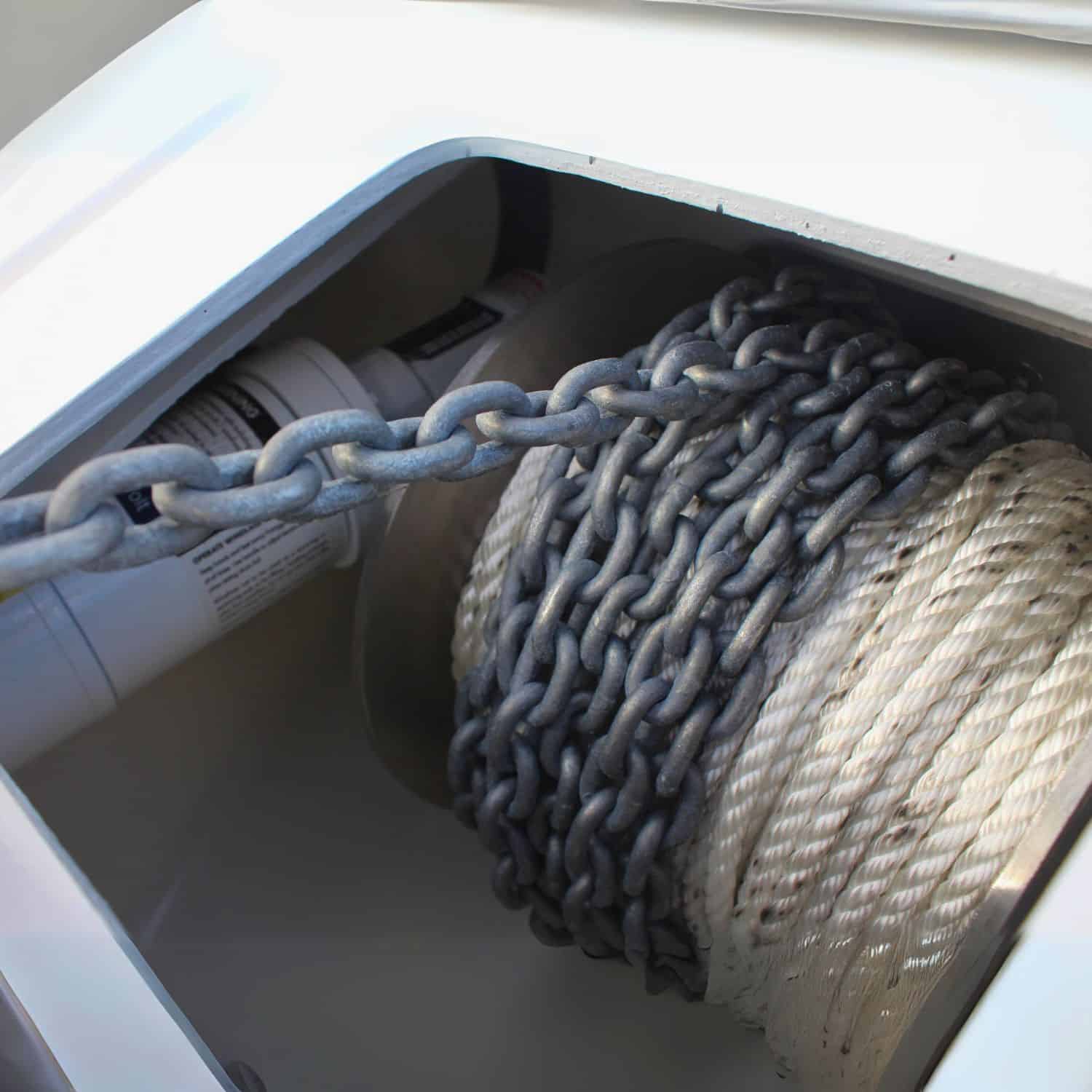
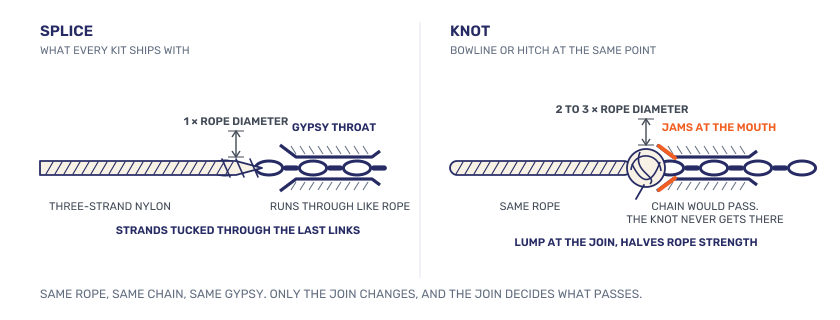
A windlass gypsy is machined for one job: pull rope through a V-shaped groove, then hand off cleanly into chain pockets shaped for a specific link size. That handoff has almost no spare clearance, because clearance is exactly what lets a rode slip or a chain jump.
A knot doesn’t fit inside that clearance. Tie a bowline or a hitch between rope and chain and you’ve built a lump two to three times the rope’s own diameter right at the point the gypsy needs the rode to be most consistent. At best that jams the gypsy mid-retrieve. At worst it does that with the anchor still down and a lee shore behind you.
There’s a strength cost too, and it’s the bigger one. The tight bends inside a knot concentrate load on the outer fibres of the rope, and a knot in nylon can cut its breaking strength by close to half. A correctly buried splice keeps most of the rope’s rated strength intact, because the load is spread gradually along the tucks rather than pinched around one bend.
| Join type | Passes a windlass gypsy | Rope strength retained |
|---|---|---|
| Splice (what every kit ships with) | Yes — stays close to rope diameter | Roughly 90%+ |
| Knot (bowline, hitch, etc.) | No — jams at the handoff | Roughly 50–60% |
| Shackle between rope and chain | No — won’t clear the gypsy profile | Full rope strength, irrelevant if it jams |
Will it feed through my windlass?
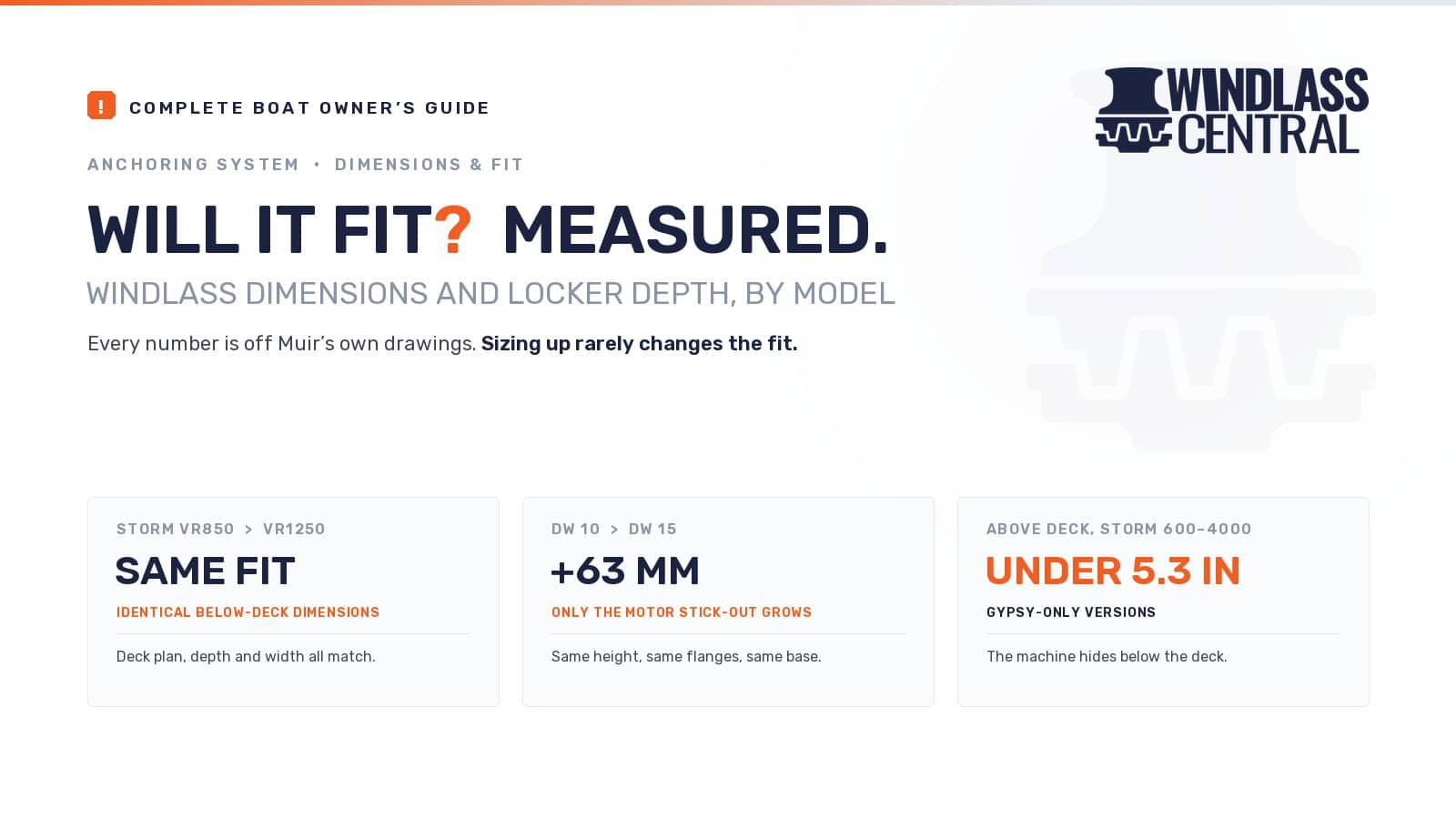
Yes, provided the rope diameter, chain diameter and splice all sit inside what your gypsy is cut for. That’s the real compatibility question, and it has nothing to do with brand — a Muir gypsy, a Lewmar gypsy, or any other rope-chain gypsy is sized to one rope construction and one chain link size, and the splice needs to run inside that tolerance the same as the rope does either side of it.
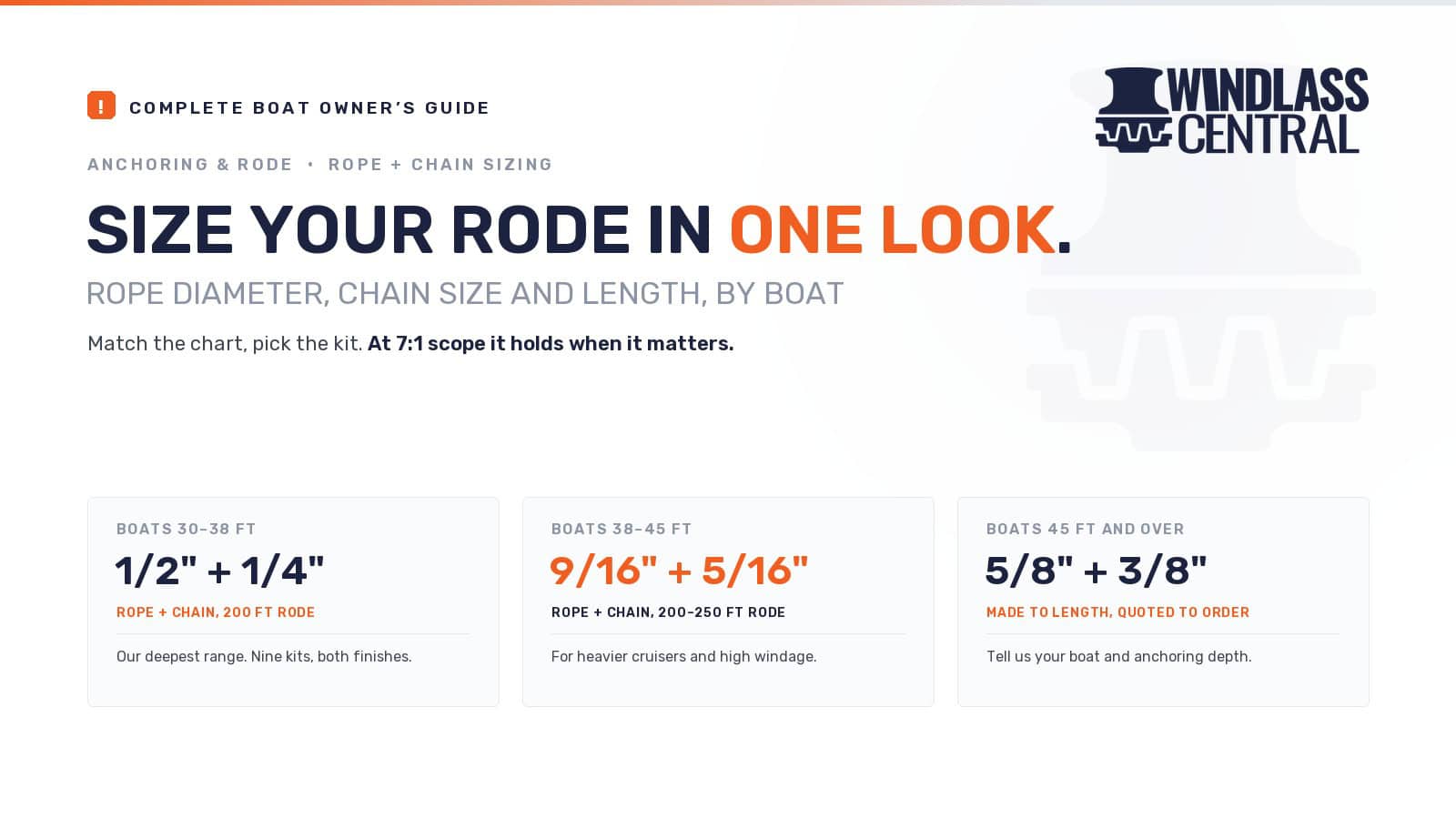
Check your windlass manual or the gypsy markings before ordering, and match the kit to that spec rather than guessing from boat length alone. Our Anchor Rope & Chain Sizing Guide lines up rope diameter, chain size and rode length against boat length in one chart if you’re starting from scratch, and our guide to choosing a windlass covers gypsy matching in more depth if you’re still selecting the machine itself.
Can I splice it myself?
You can. It’s a documented technique, riggers do it every day, and if you’re already comfortable with three-strand splicing it’s learnable with the right fid and some practice on scrap rope first.
What it isn’t is forgiving. Short the tuck count, miss a strand, or bury it unevenly, and the splice can slip under load — or pass the gypsy fine on day one and work loose two seasons later at anchor in a blow, which is the worst possible time to find out. It’s also not a five-minute job the first few times, and a bad attempt means re-cutting rope you’ve already paid for.
| DIY splice | Pre-spliced kit | |
|---|---|---|
| Tools needed | Fid, whipping twine, practice rope | None — arrives ready |
| Time | Hours, more on a first attempt | None |
| Risk if done poorly | Splice slips or jams under load | Covered by the kit’s 3-year warranty |
| Best for | Experienced riggers, replacing a worn splice on rode you already own | Everyone buying rope and chain new |
For most owners, that risk sitting on the one join holding the anchor end of the rode is exactly why buying it pre-spliced makes sense.
Pre-made kit vs buying rope and chain separately
Buy rope and chain from two different places and you’re matching diameters yourself, then either splicing it yourself or finding someone who will. A kit removes both steps: the rope and the calibrated chain are sold and spliced as one product, ready to load straight into the anchor locker on arrival.
Every kit includes the rope and the chain, spliced together into a single ready-to-deploy rode — that’s the whole kit. There’s no separate shackle or swivel bundled in, because the splice itself is the connection at that join; nothing extra is needed there. A shackle still has its place further down the rode, between chain and anchor, but not at the rope-to-chain join.
Here’s what that looks like in the most common size, 1/2 in rope with 1/4 in chain, for boats around 30 to 38 ft:
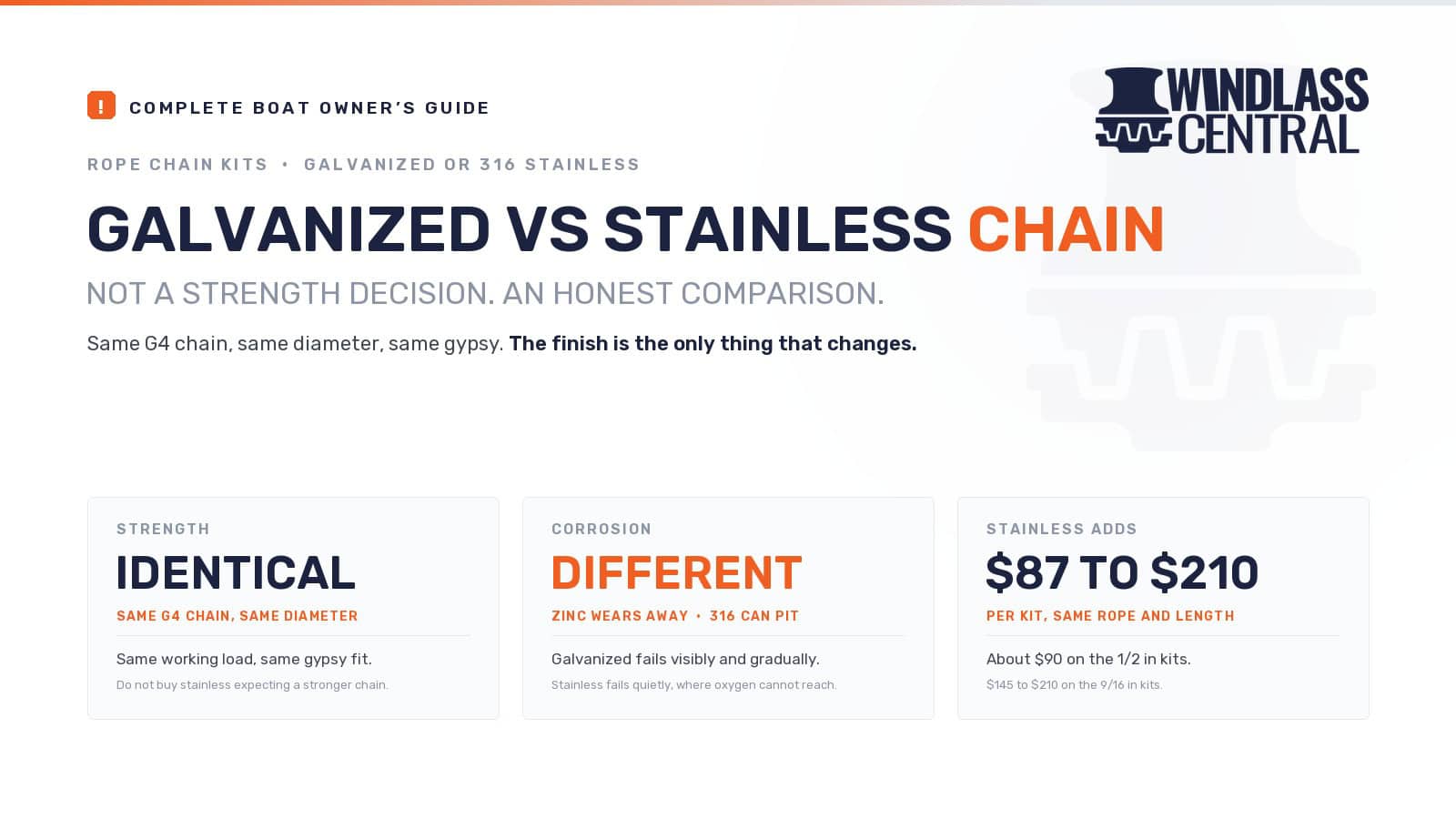
| Rode length | Galvanized chain | 316 stainless chain |
|---|---|---|
| 100 ft | $166.09 | $252.79 |
| 150 ft | $191.93 | $285.34 |
| 200 ft | $221.17 | $309.00 |
Every listing states rope length, chain length and both diameters in the title, so you’re matching the kit to your gypsy in one line rather than cross-checking two separate spec sheets. The full range across 1/2 in and 9/16 in, in both finishes, is in the sizing guide.
Frequently asked questions
Can I use a shackle to join rope to chain instead of a splice?
Not through a windlass gypsy. A shackle is too bulky and the wrong shape to pass the rope-to-chain handoff, and it will jam. Shackles belong elsewhere on the rode, such as between chain and anchor, not at the rope-to-chain join.
How long does a rope-to-chain splice last?
In good three-strand nylon, roughly as long as the rope itself — several seasons of regular anchoring — provided the rope isn’t chafed or UV-damaged elsewhere. Check it along with the rest of the rode each season.
Does buying a kit cost more than buying rope and chain separately?
You’re paying for matched components and the splice already done, not a markup on top of separate parts. The convenience is not sourcing, matching and joining it yourself.
Do your kits include a shackle or swivel?
No. Each kit is the rope and the chain, spliced together as one product. The splice is the connection between rope and chain, so nothing else is needed there. A shackle is still used separately between the chain and your anchor.
Does the splice affect what rope or chain size I need?
No. Size the rope and chain to your windlass gypsy and boat first — see our sizing guide — and the splice is built to whatever diameters you land on.
Can I re-splice a kit myself if the original splice wears out?
Yes, if you’re comfortable with three-strand splicing. It’s the same technique used to make the original join, just applied to a rode you already own rather than new rope and chain.
Will a machine splice and a hand splice both pass the gypsy?
Yes, provided both are made to the same rope and chain diameter as your gypsy. What matters to the gypsy is the finished diameter of the join, not whether it was made by hand or machine.
Skip the splice entirely
Every kit ships pre-spliced, sized to rope and chain diameter, ready for your windlass.
Related guides

Stay Updated
Get the latest guides, tips, and product updates delivered to your inbox.