

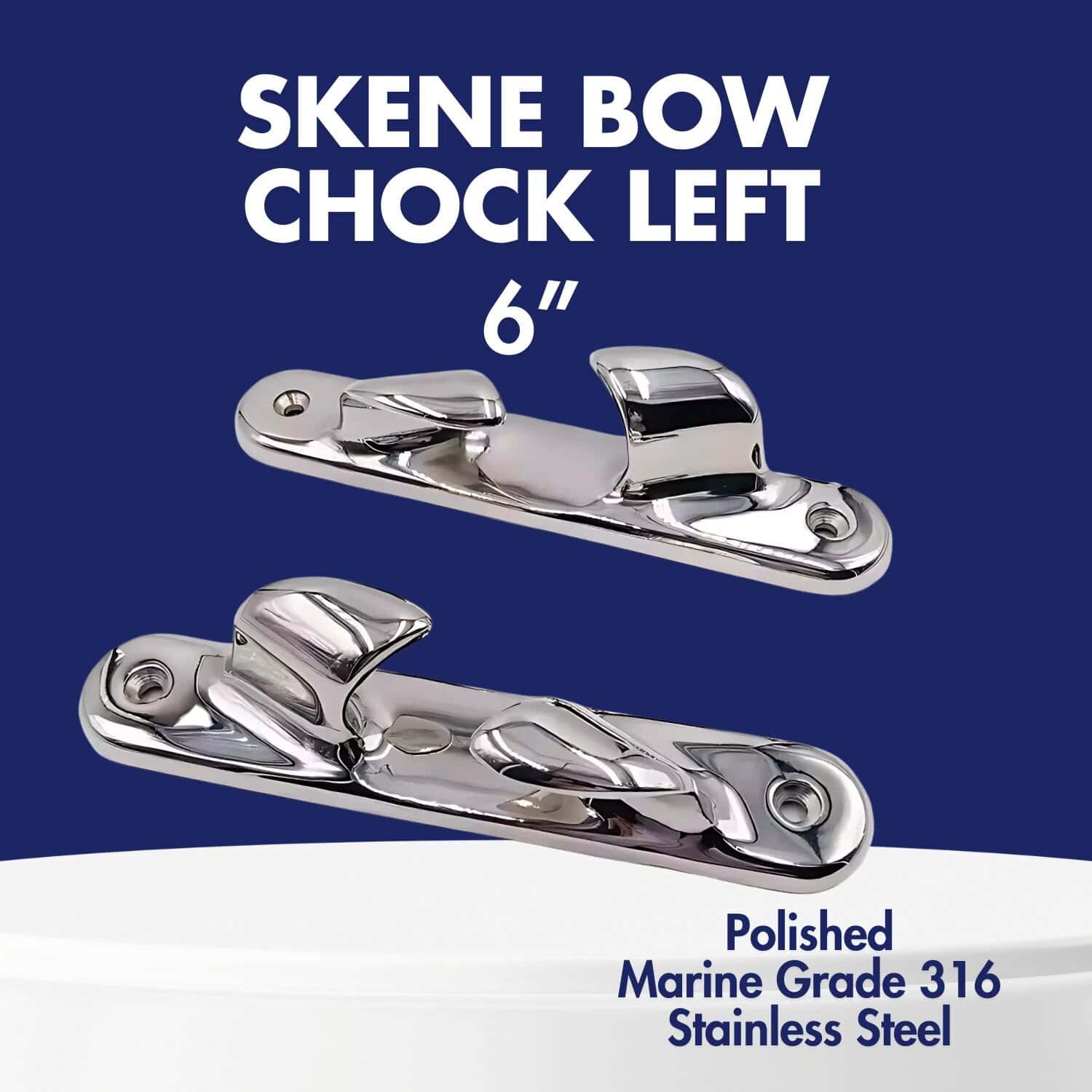
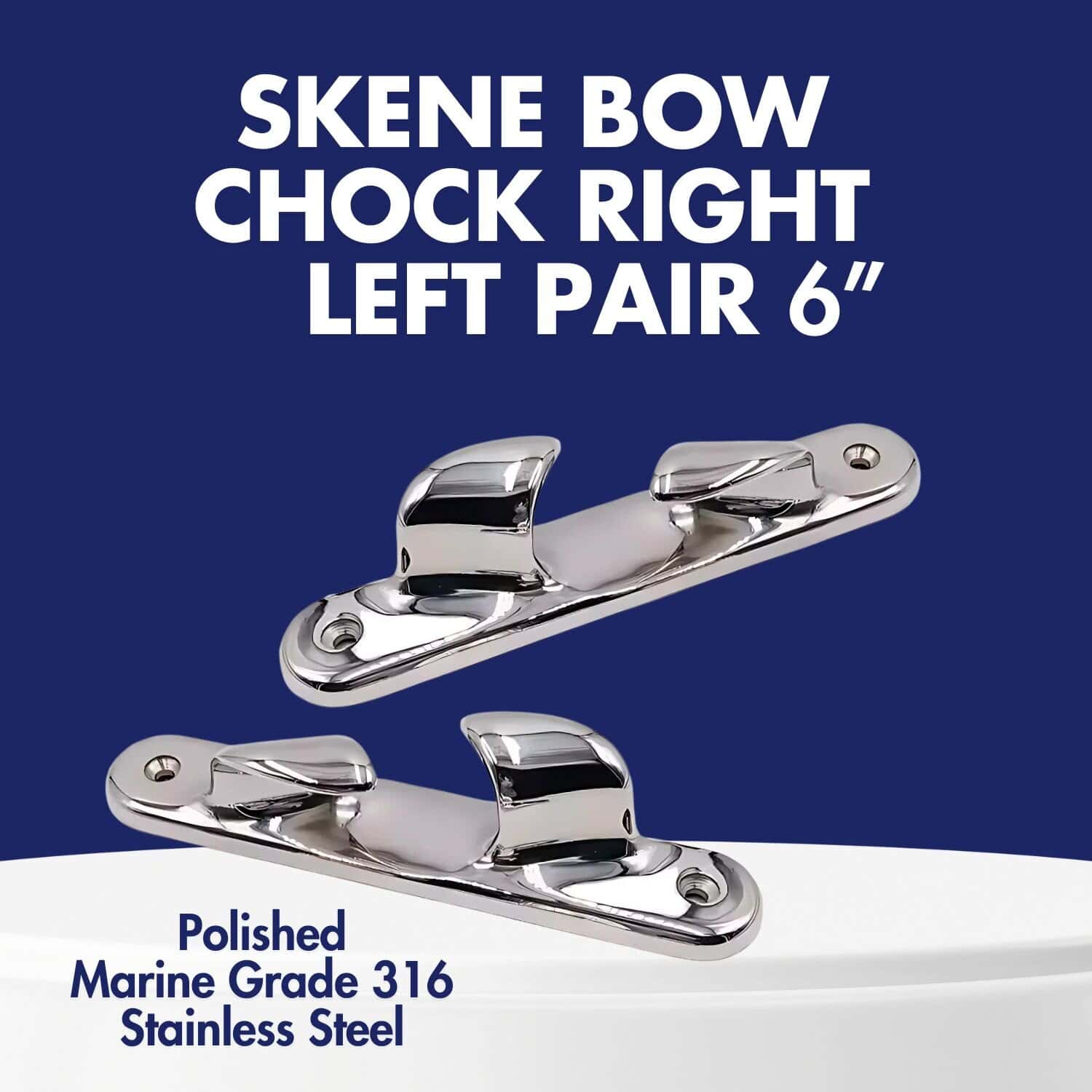
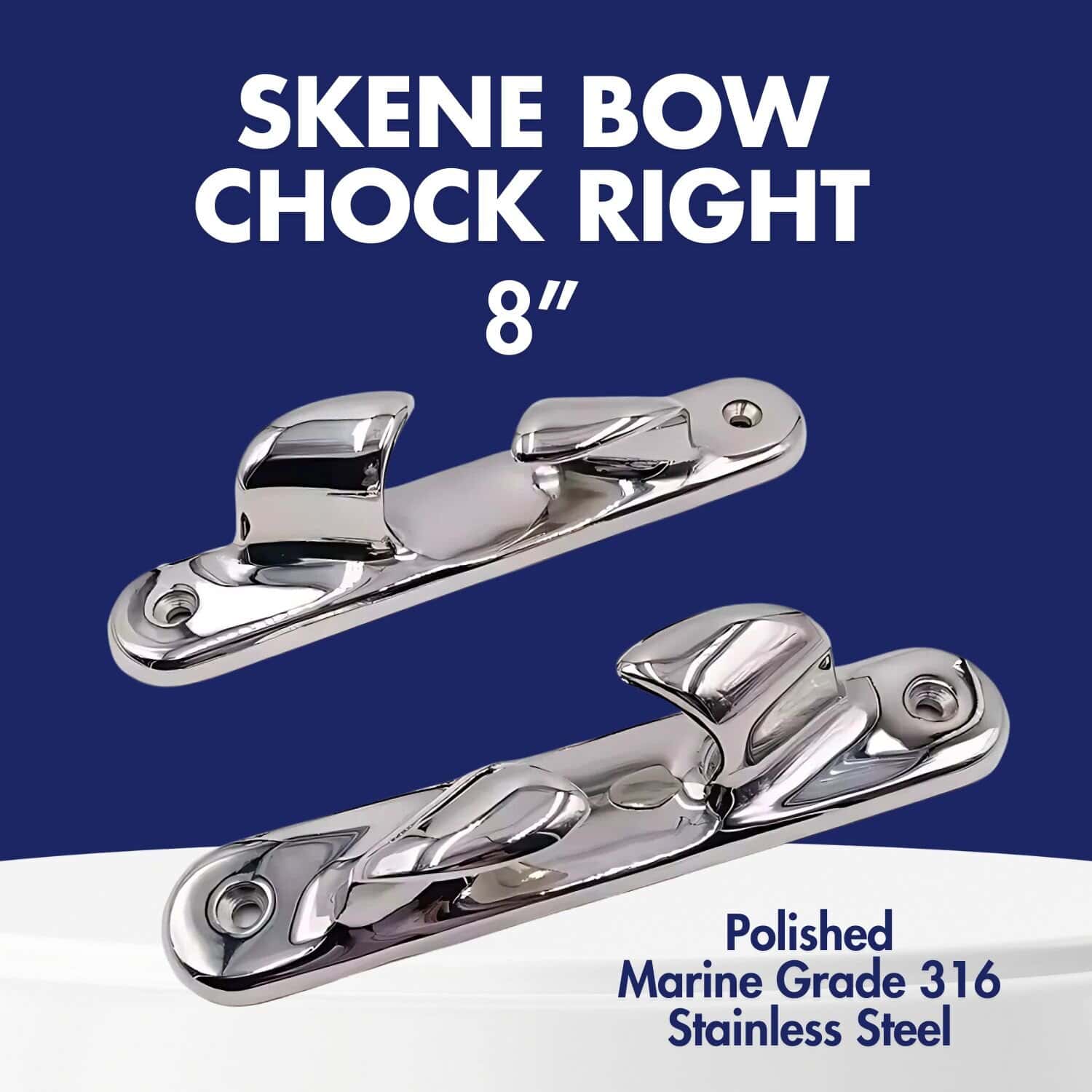
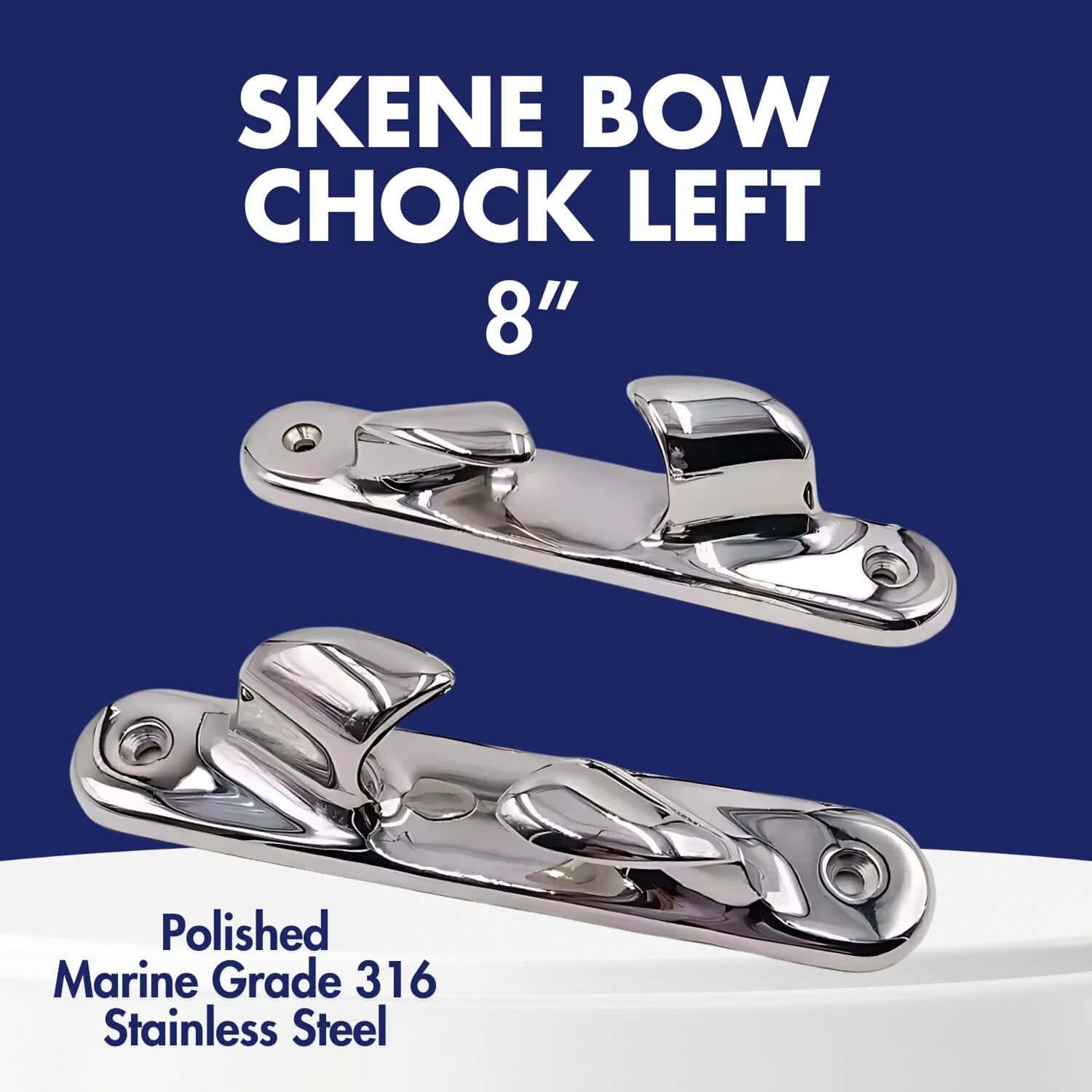

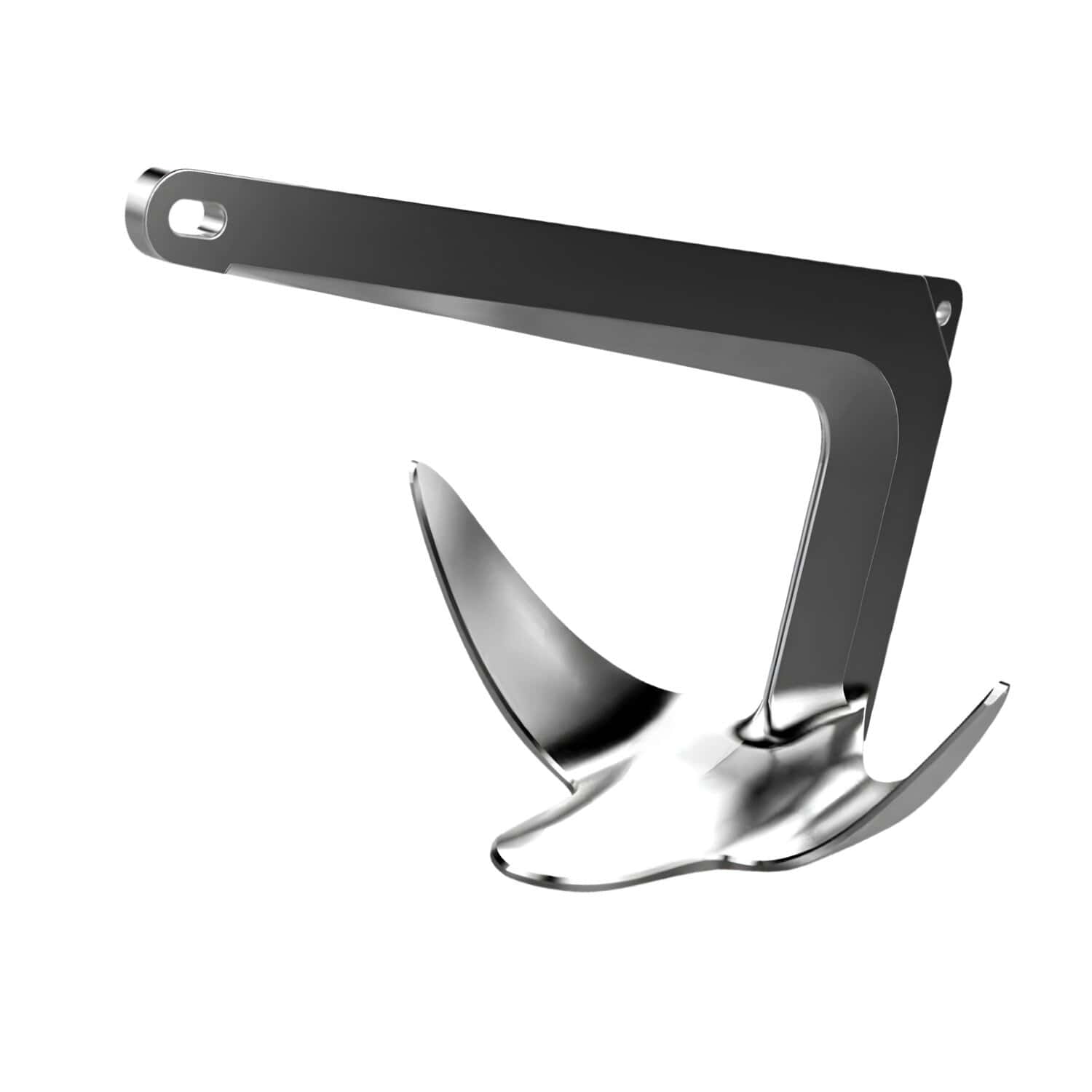
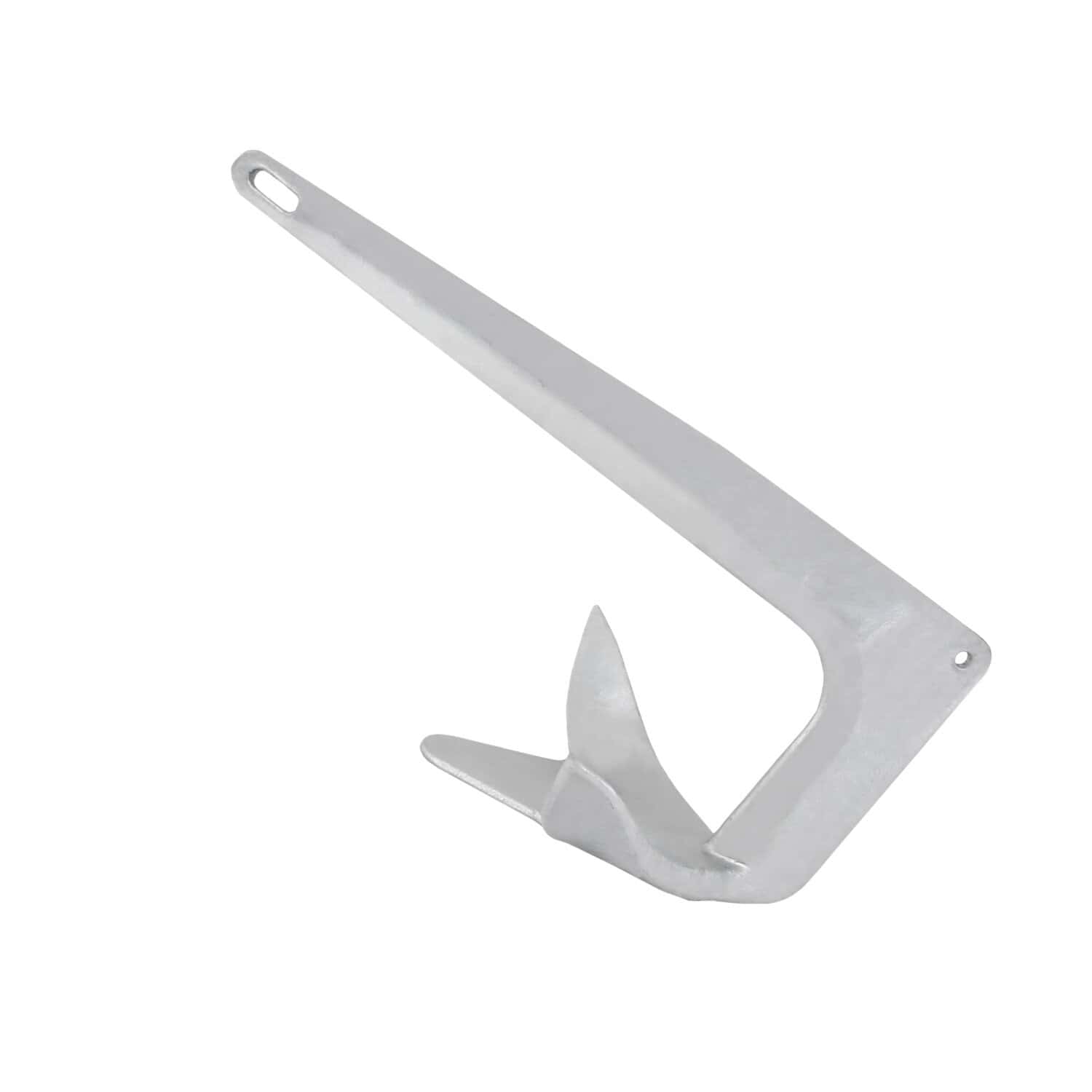
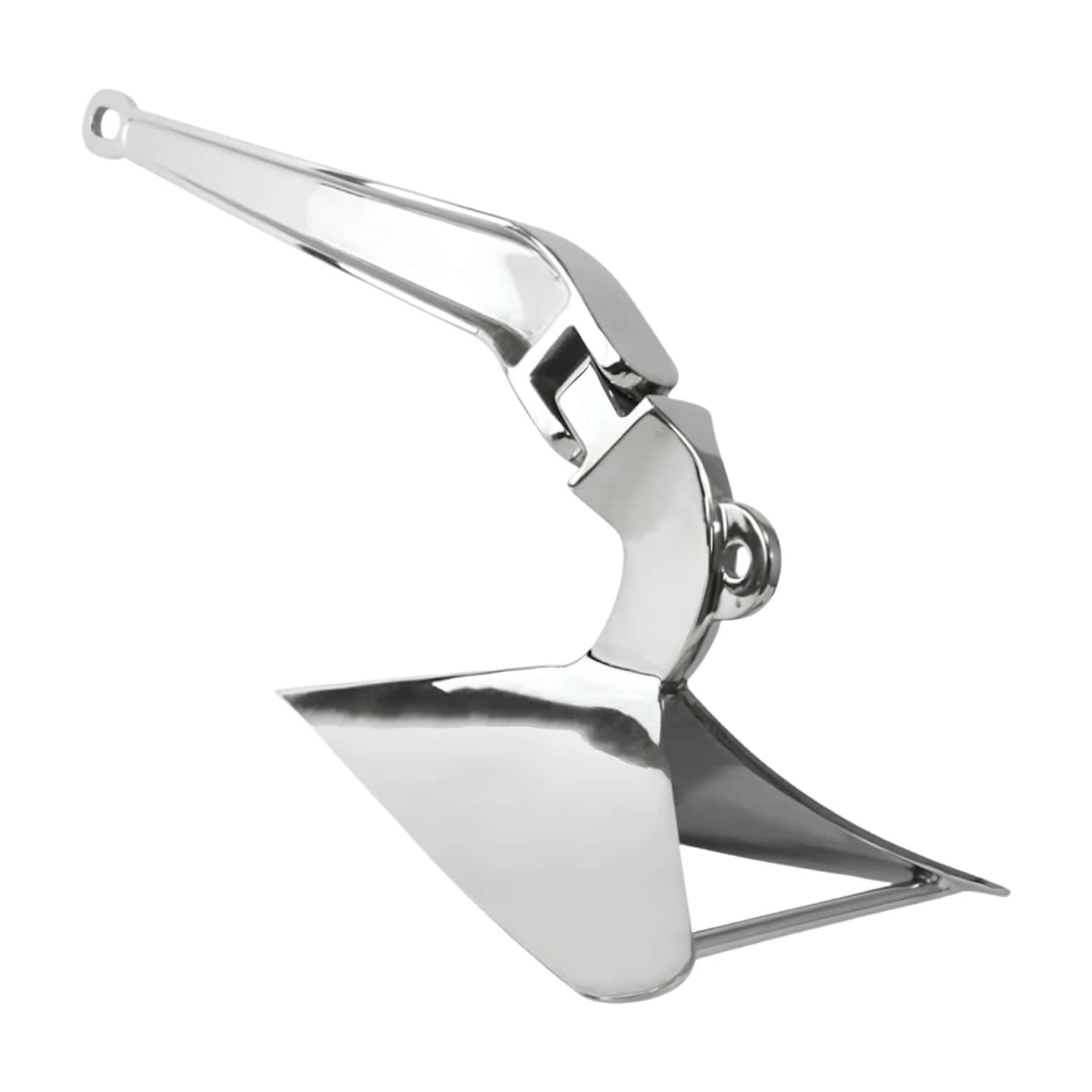


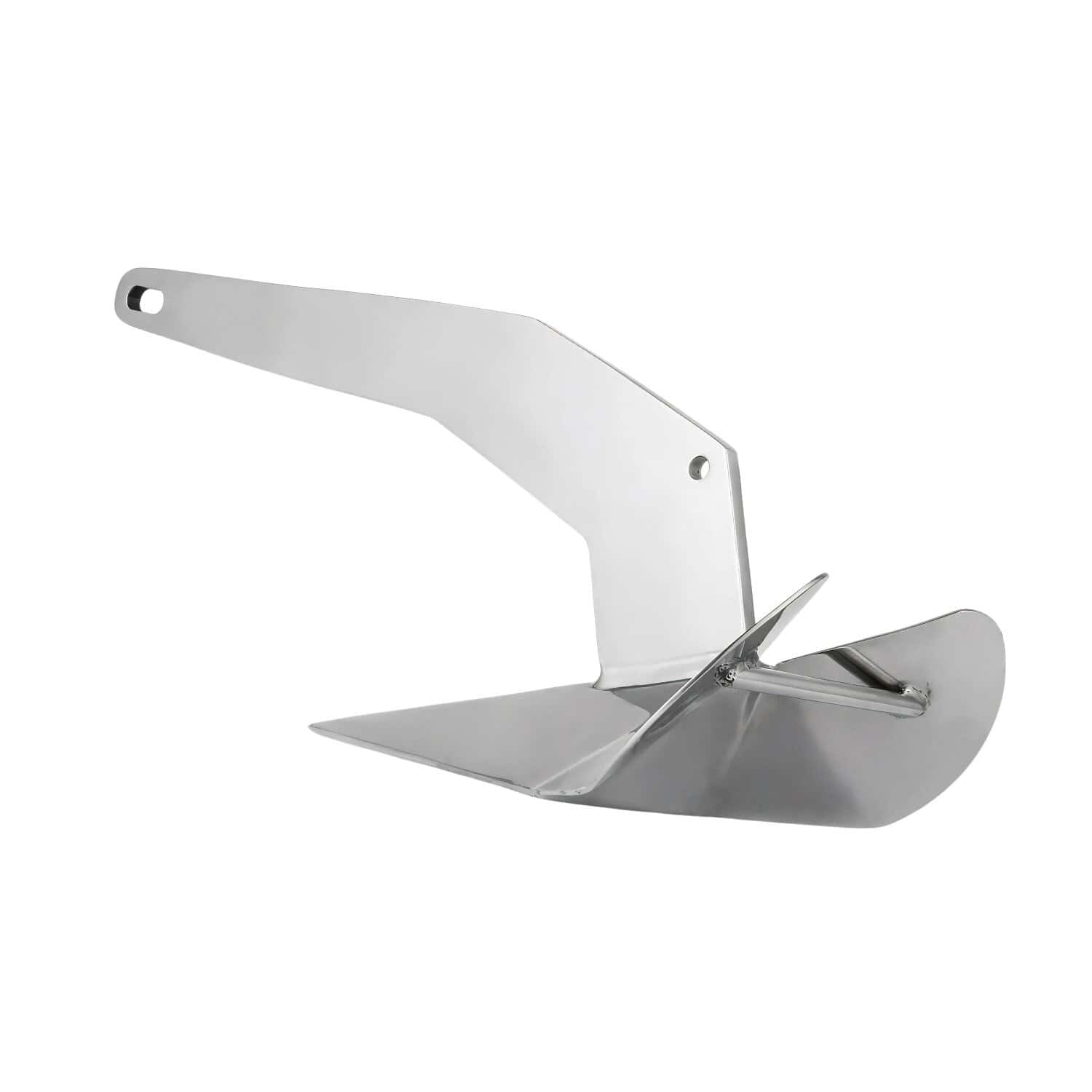
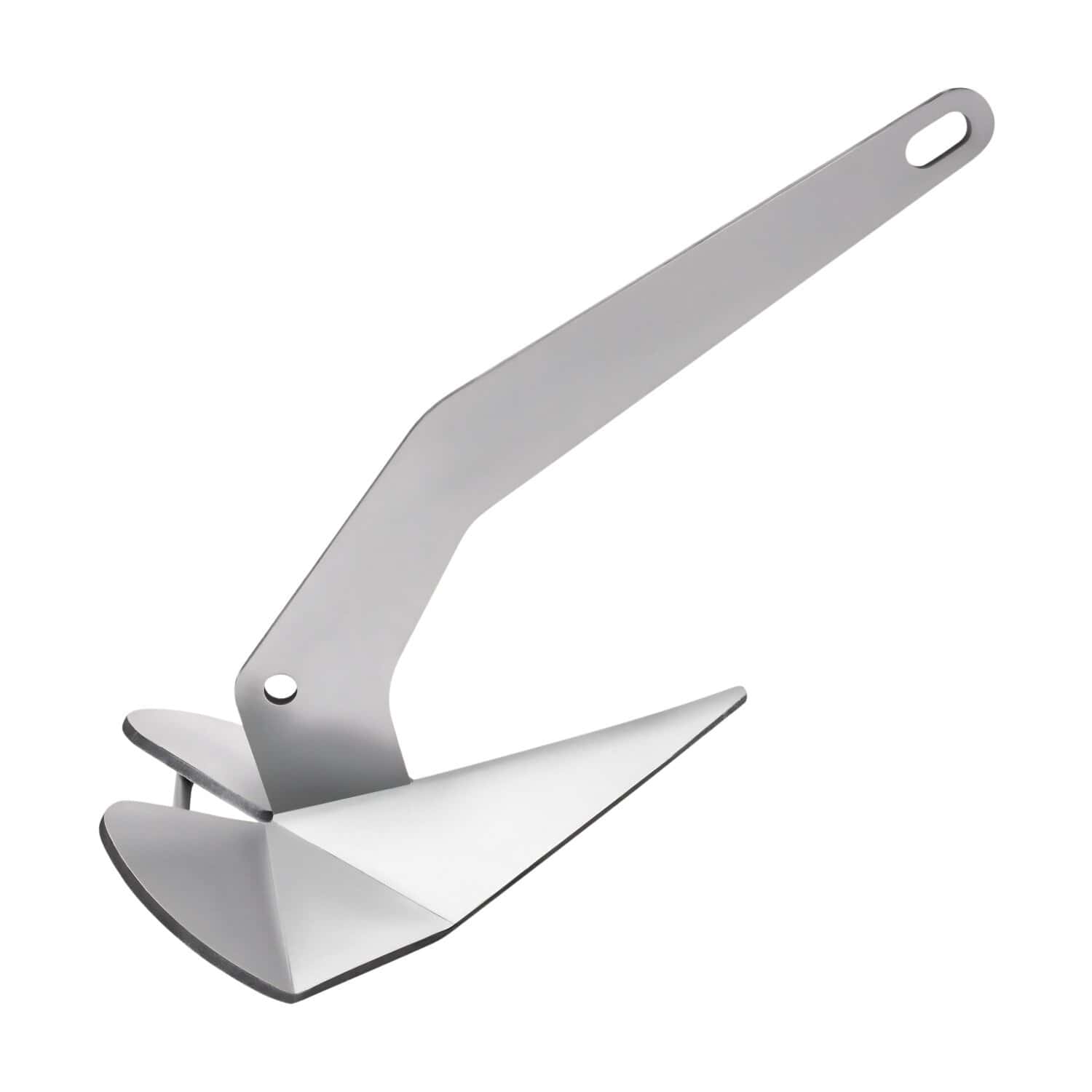
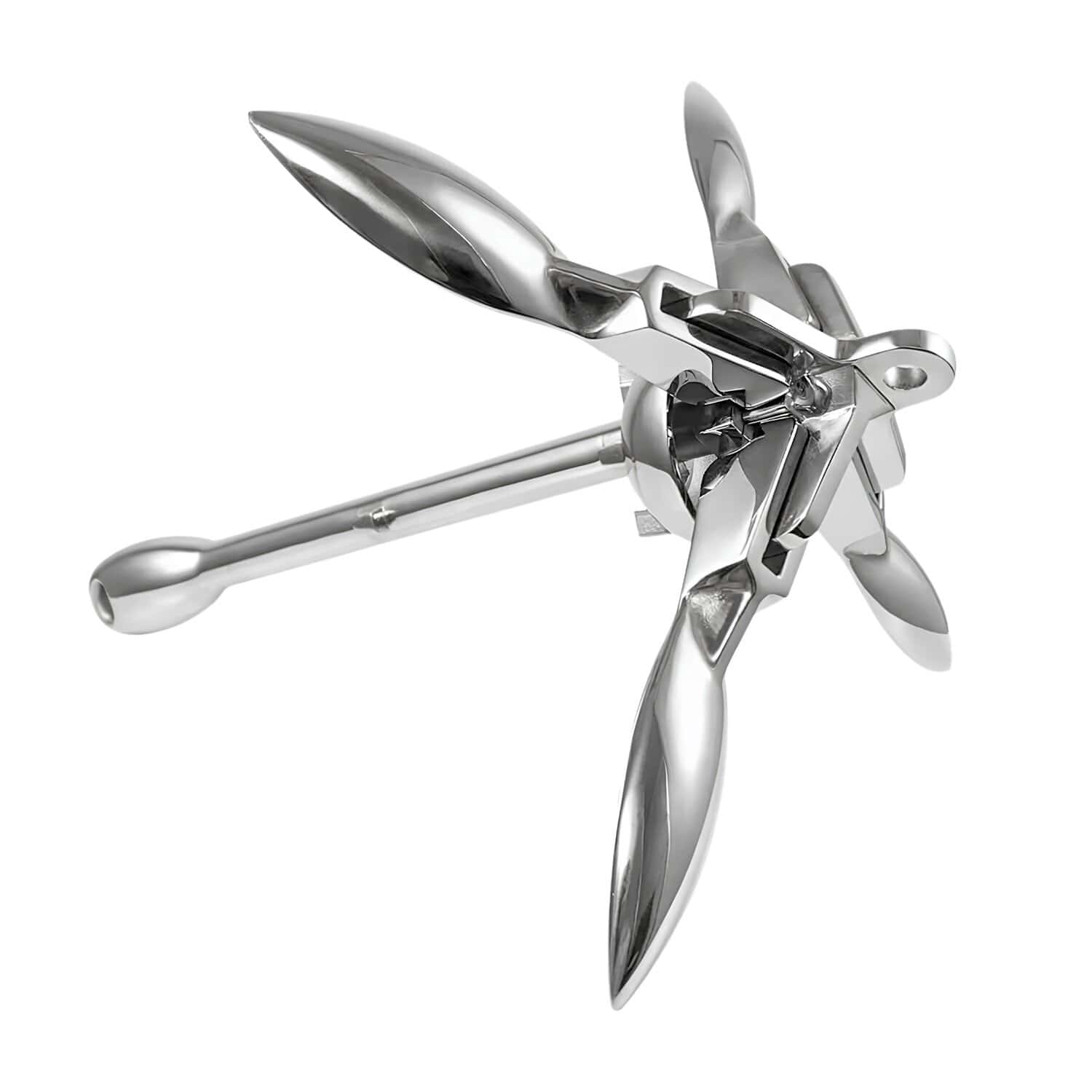
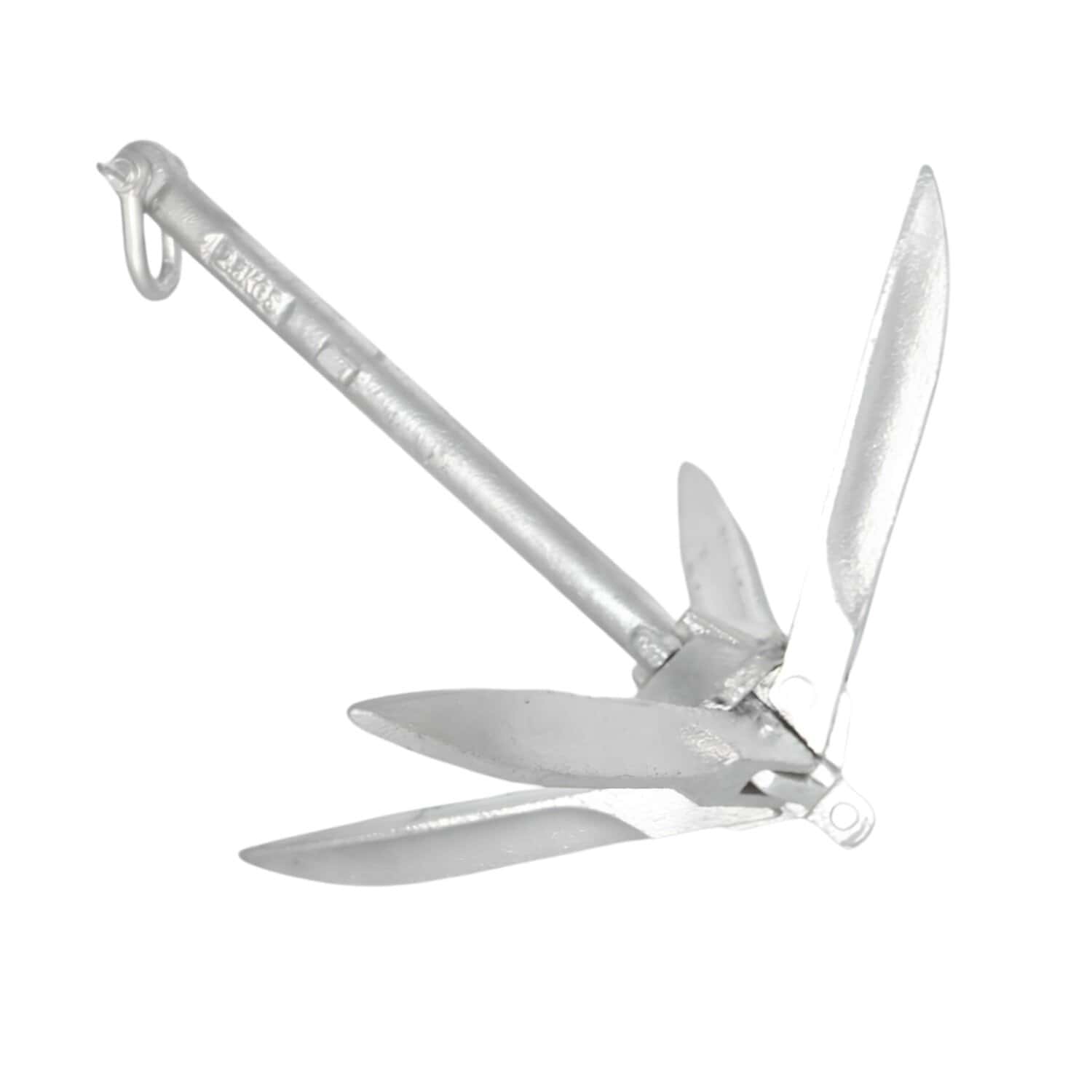
Danforth Anchor
Size guide
What size anchor does your boat need?
Set your boat's overall length. We show the size to start from in each pattern, the chain to match, and what it costs in each finish.
| Anchor size | Bruce (claw) | Delta | Plough | Danforth | Chain |
|---|---|---|---|---|---|
| 5 kg 11 lb | to 7 m 23 ft SS | to 7 m 23 ft SS + galv | to 5.5 m 18 ft SS | to 8 m 26 ft SS + galv | 6 mm |
| 10 kg 22 lb | to 10 m 33 ft SS + galv | to 11 m 36 ft SS + galv | to 9 m 30 ft SS | to 11 m 36 ft SS + galv | 8 mm |
| 20 kg 44 lb | to 13 m 43 ft SS + galv | to 15.5 m 51 ft SS + galv | to 12.5 m 41 ft SS | to 14 m 46 ft SS + galv | 10 mm |
| 30 kg 44 lb | to 15.5 m 43 ft SS + galv | to 18 m 59 ft SS | to 17 m 56 ft SS + galv | 10 mm | |
| 35 kg 77 lb | to 17 m 56 ft SS | 10 mm | |||
| 50 kg 110 lb | to 19.5 m 64 ft SS + galv | to 23.5 m 77 ft SS + galv | to 21 m 69 ft SS | to 20 m 66 ft SS + galv | 12 mm |
| 70 kg 154 lb | to 23 m 75 ft SS | 12 mm | |||
| 80 kg 176 lb | to 25 m 82 ft SS + galv | to 28 m 92 ft SS | to 25 m 82 ft galv | 12 mm | |
| 100 kg 220 lb | to 32 m 105 ft SS | to 27 m 89 ft SS | 12 mm |
How to read it: “to 13 m” means that size is a sound starting point for boats up to 13 m overall length in average conditions. Size up one for heavy or high-sided boats, multihulls and exposed anchorages. Sizes are listed for 316 stainless (SS) and hot dip galvanised (galv) where each is offered.
Seabed guide
Which anchor pattern for which bottom
Patterns are listed for the seabeds in their specification. Weed and grass slow any anchor down, so size up if that is where you anchor.
| Pattern | Sand | Mud | Gravel | Rock | Weed | Coral | Mixed | Role |
|---|---|---|---|---|---|---|---|---|
| Bruce claw | Primary anchor. Lands the right way up, fits standard bow rollers. | |||||||
| Plough | Primary anchor for cruising boats that take whatever the anchorage offers. | |||||||
| Delta one piece plough | Primary anchor. Self-launches over a bow roller, no moving parts. | |||||||
| Danforth fluke | Soft ground specialist. Stows flat, so it makes the ideal second anchor. | |||||||
| Grapnel folding | Tenders, dinghies and kayaks. Short stops, not overnight. |
One anchor is not enough
Primary, secondary, and one for the tender
Carry two patterns that suit different seabeds, so you always have a second option when the first will not set.
 Primary
 Secondary
Your back-up and stern anchor
A different pattern from your primary, so you are covered on a seabed the primary dislikes. The Danforth digs hardest into sand and mud and stows flat on deck or in a locker.
Size: one size smaller than your primary Tender
, dinghy and kayak
The folding grapnel grips rock, weed and coral and folds flat to stow. Use it for short stops and lunch hooks, not overnight.
0.7 kg for kayaks and canoes, 1.5 kg for tenders to about 3 mChoose your finish
316 stainless or hot dip galvanised?
Holding power comes from the shape, so the same pattern holds the same in either finish. The difference is the look, the price, and how the steel is protected from salt water.
316 stainless steel
The polished bow anchor
Complete the system
From the seabed to the switch
An anchor is one link in the system. Match it with the chain, roller, stopper and windlass that bring it home.
Anchor
Pick the pattern for your seabed and the weight for your boat.
Chain and rope
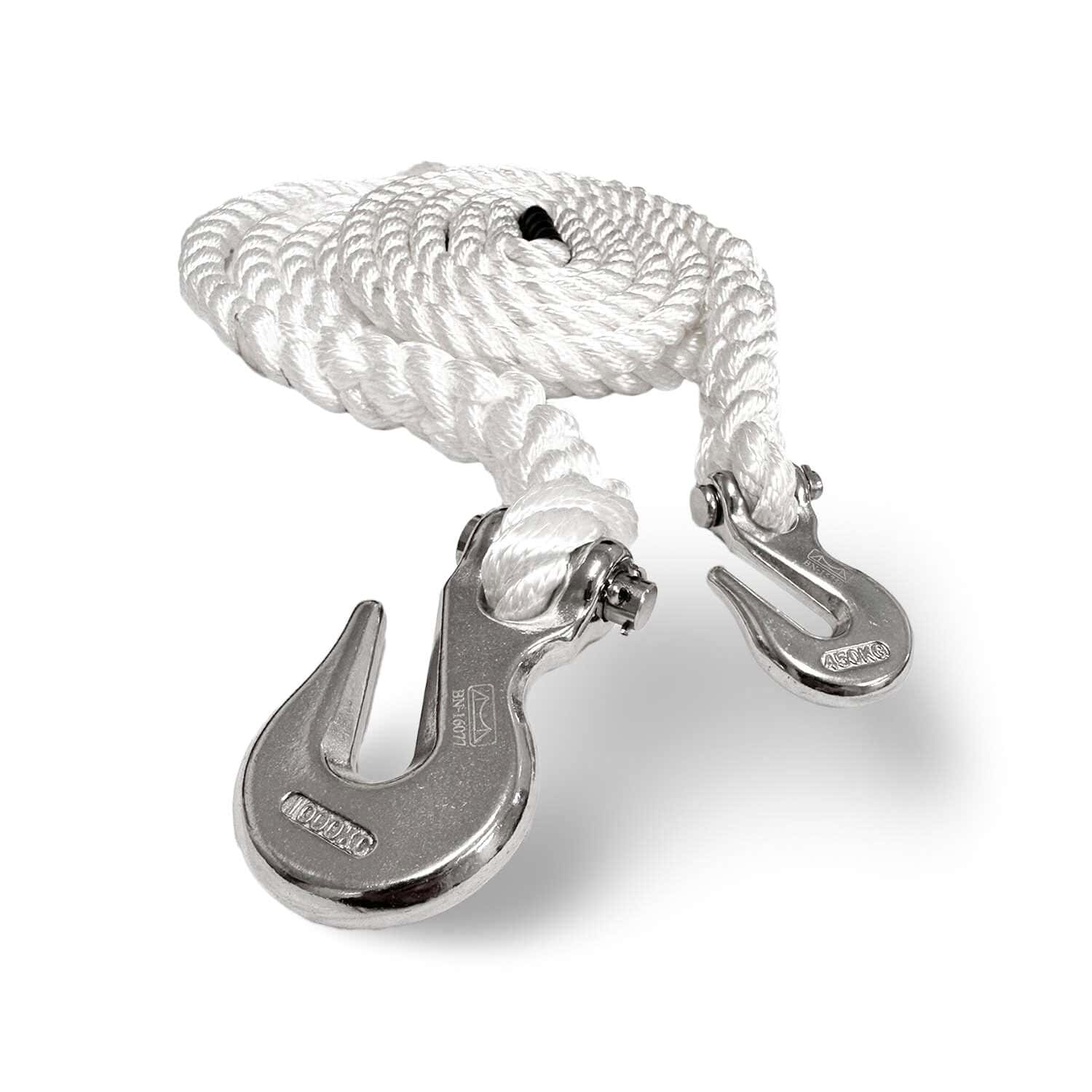
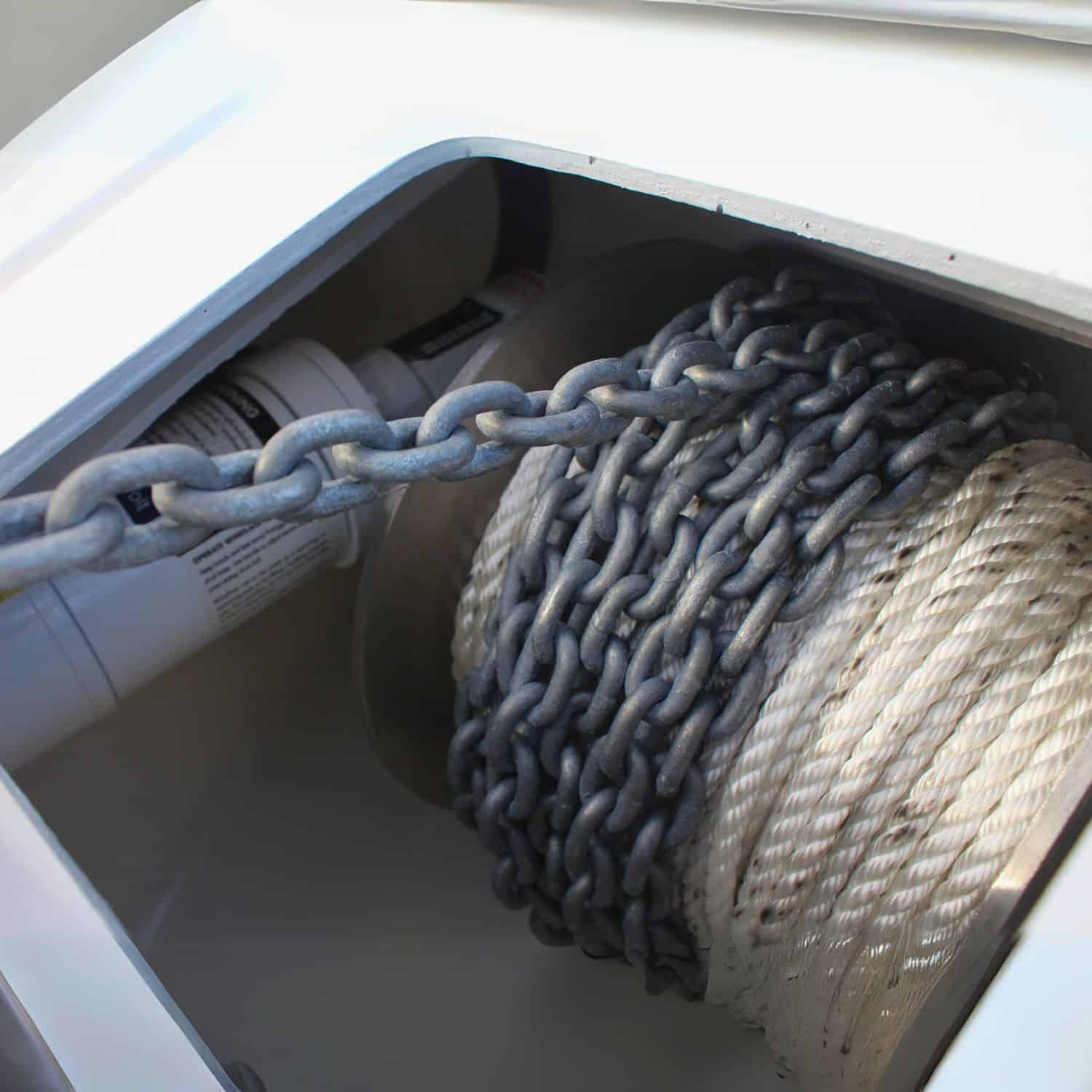
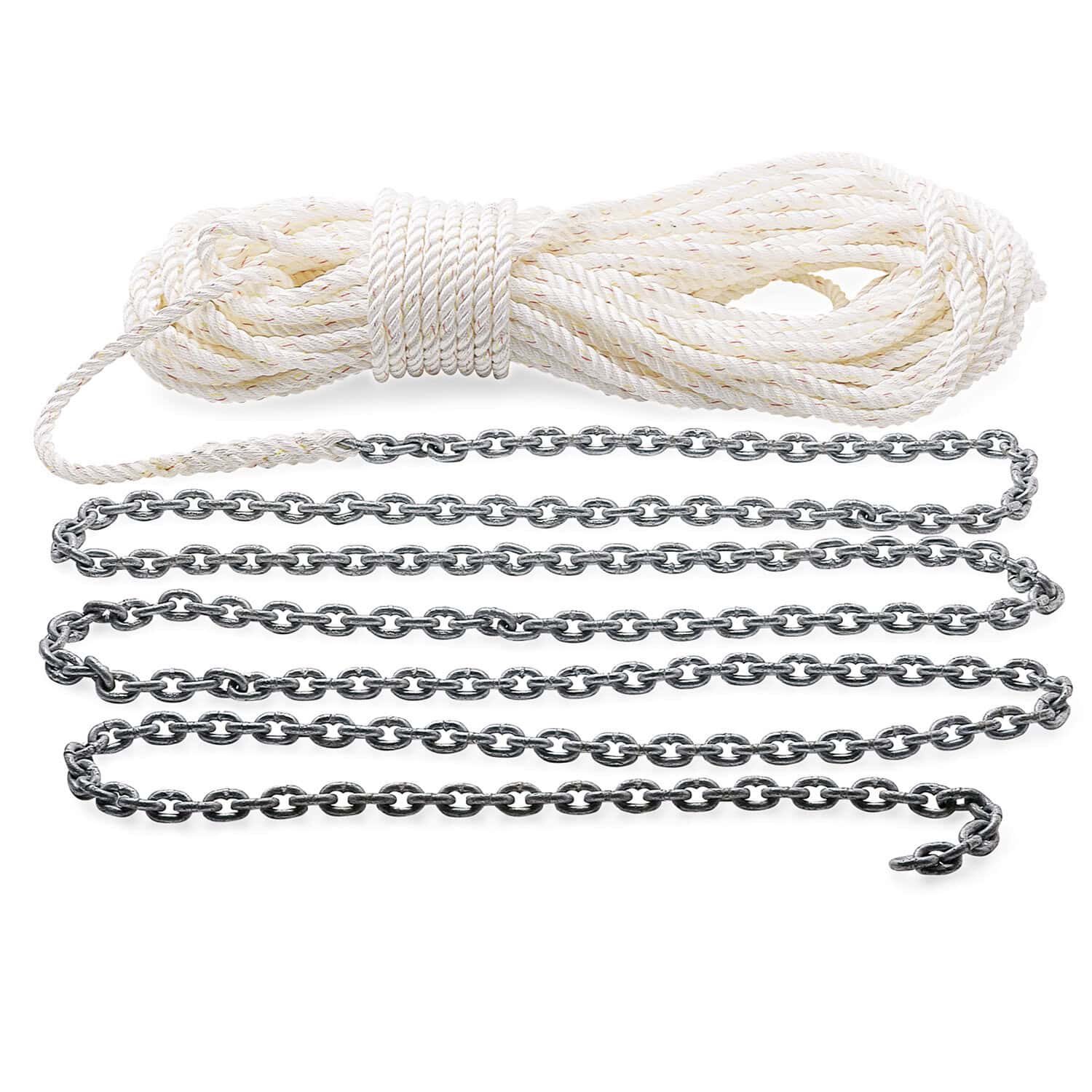
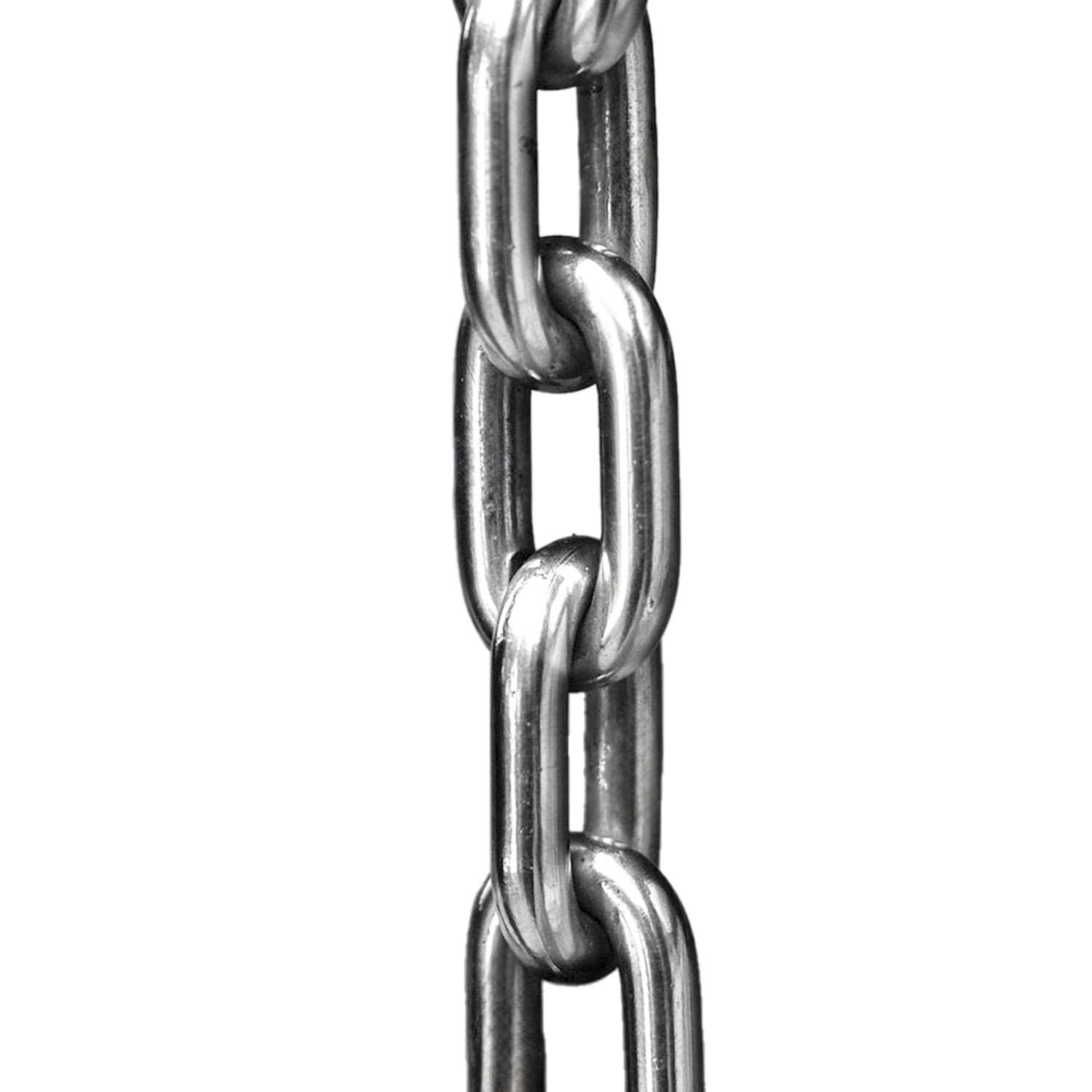
Windlass rope chain kits and galvanised short link chain.
Bow roller
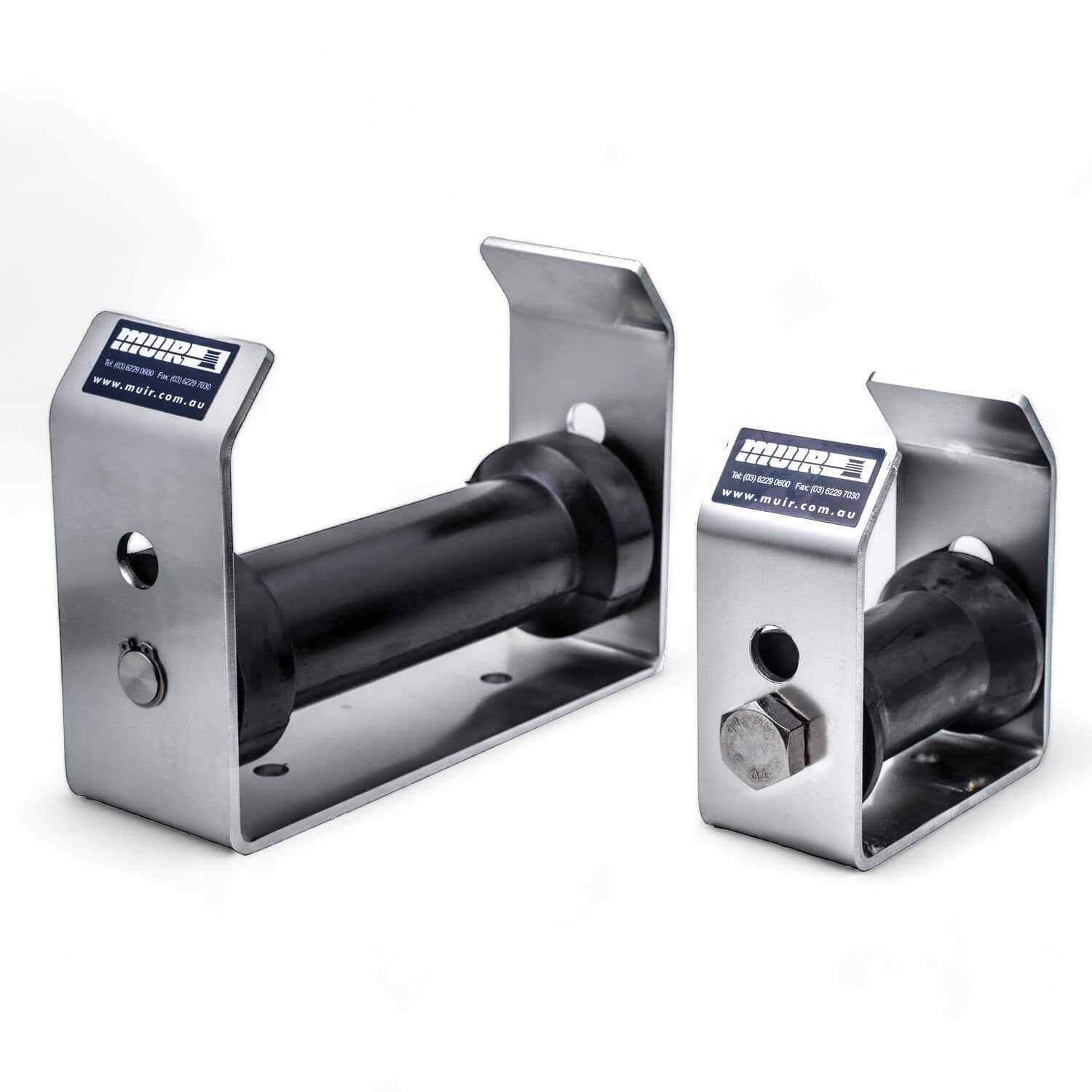
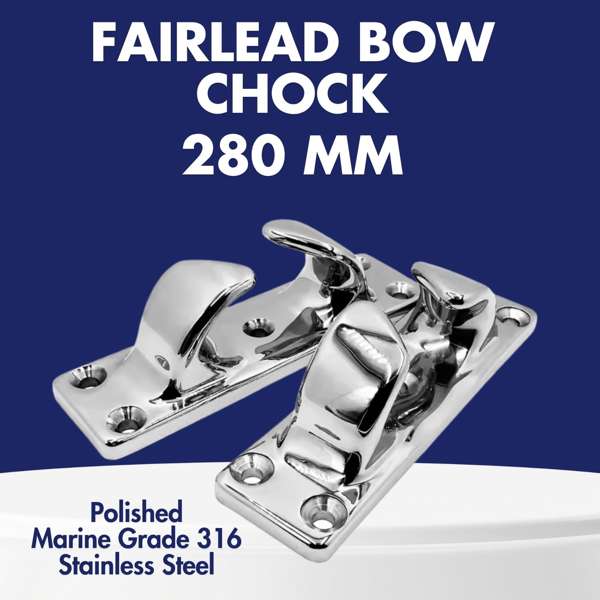
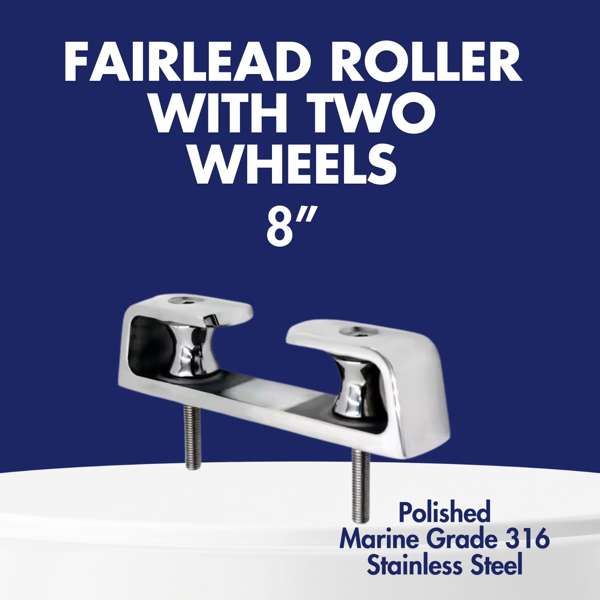
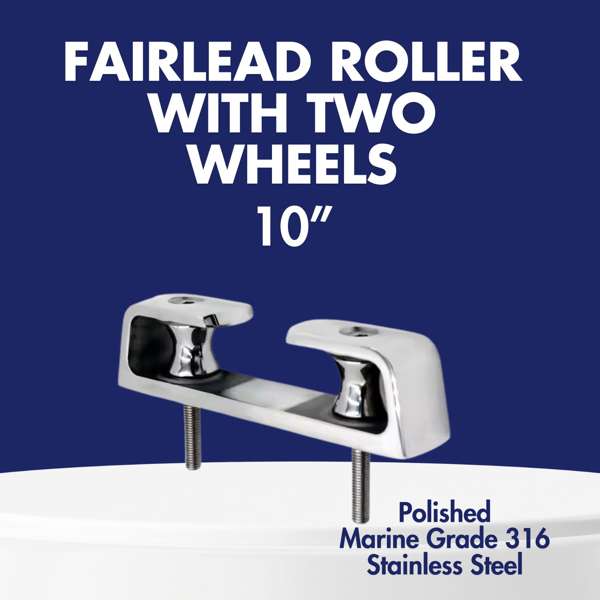
Twin wheel 316 stainless fairlead rollers in 8in and 10in.
Chain stopper
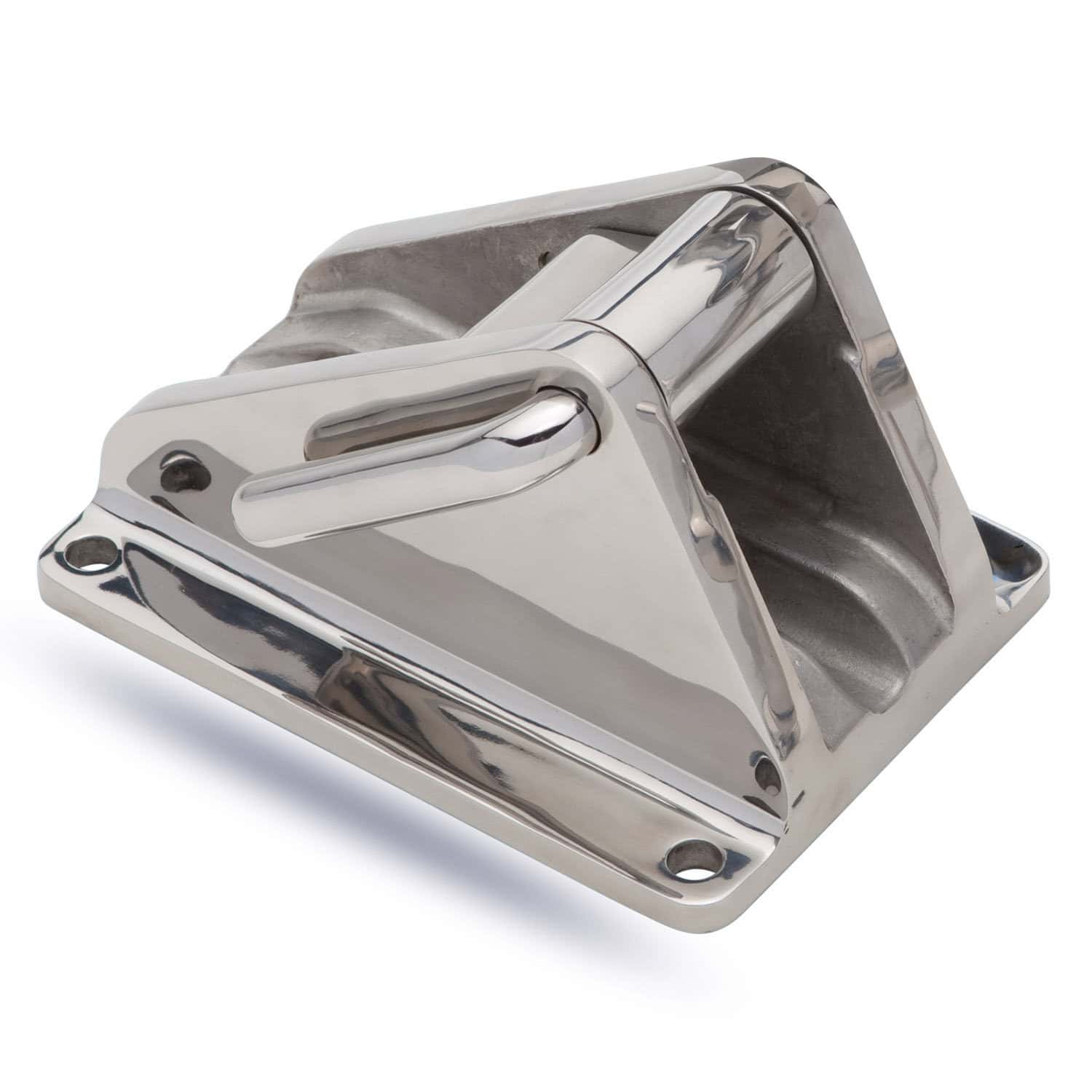
A stopper with locking arm and devil claw to take the load off the windlass.
Windlass
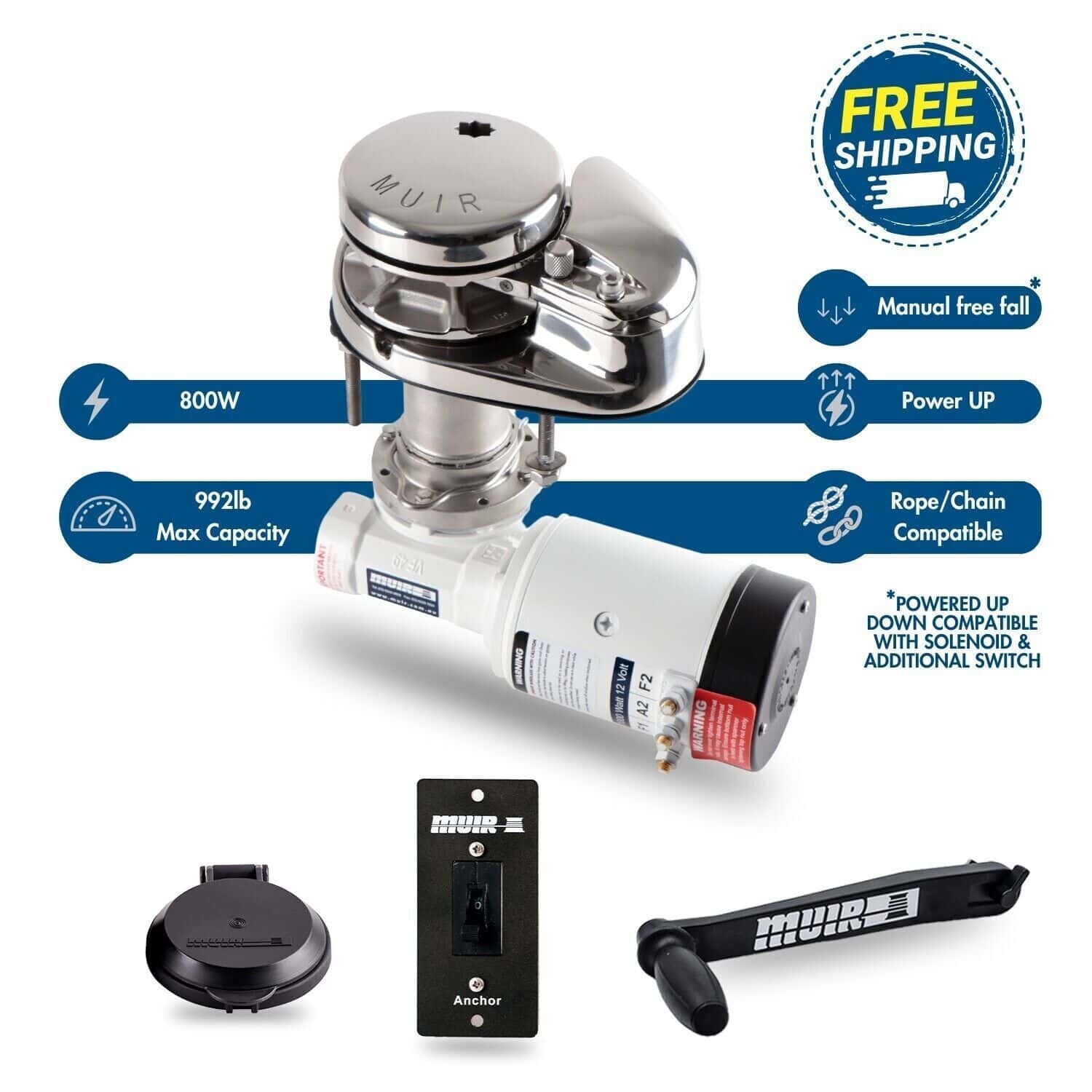
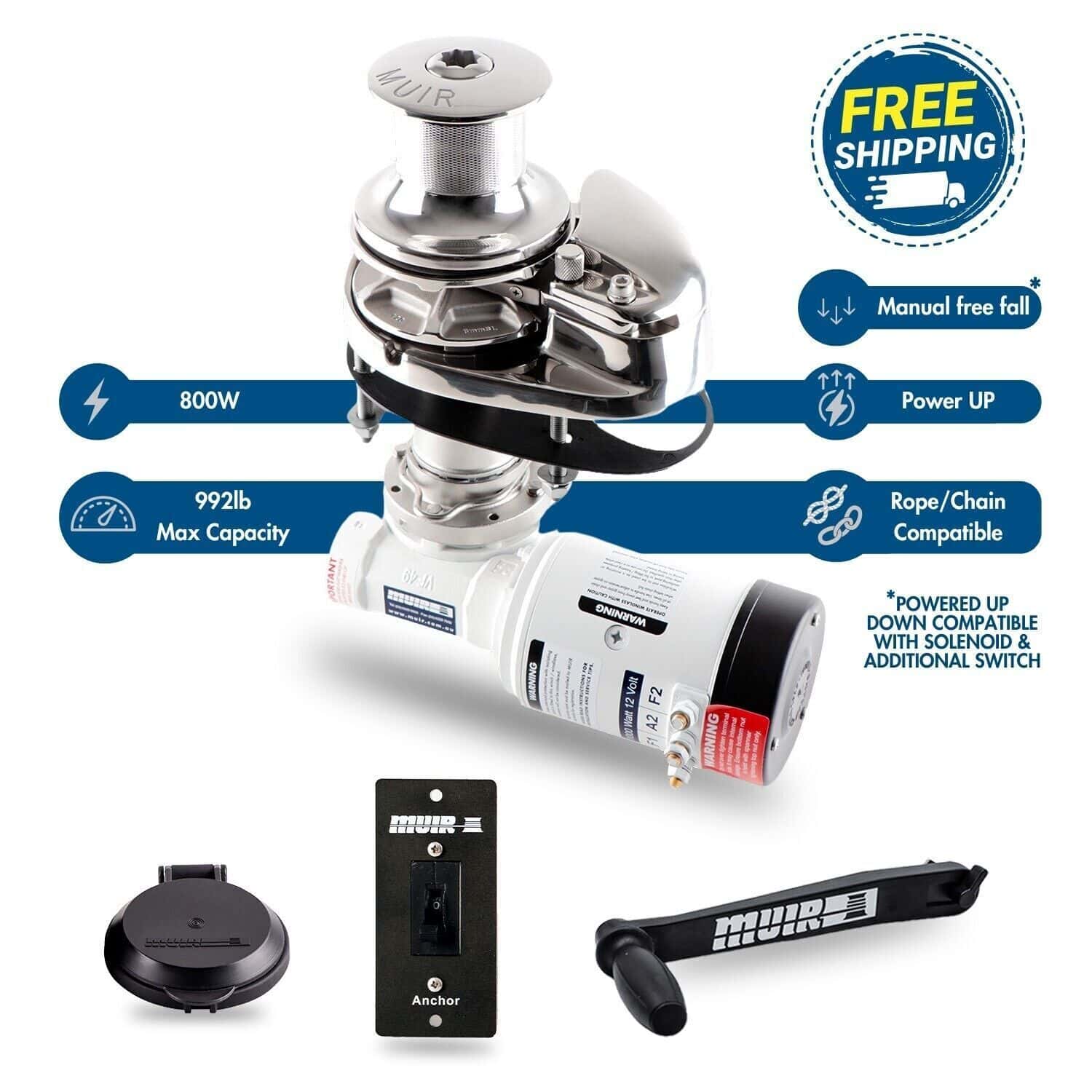
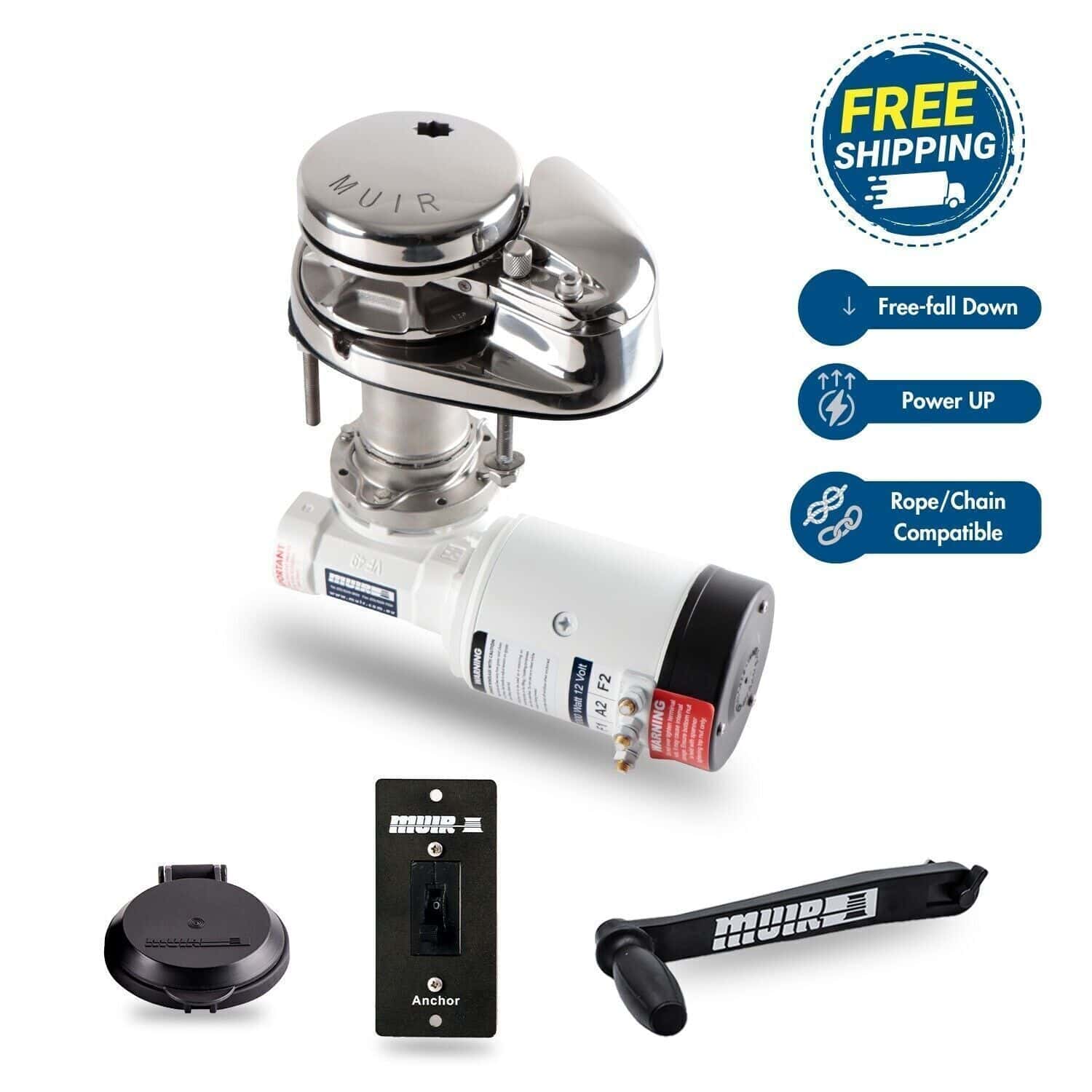
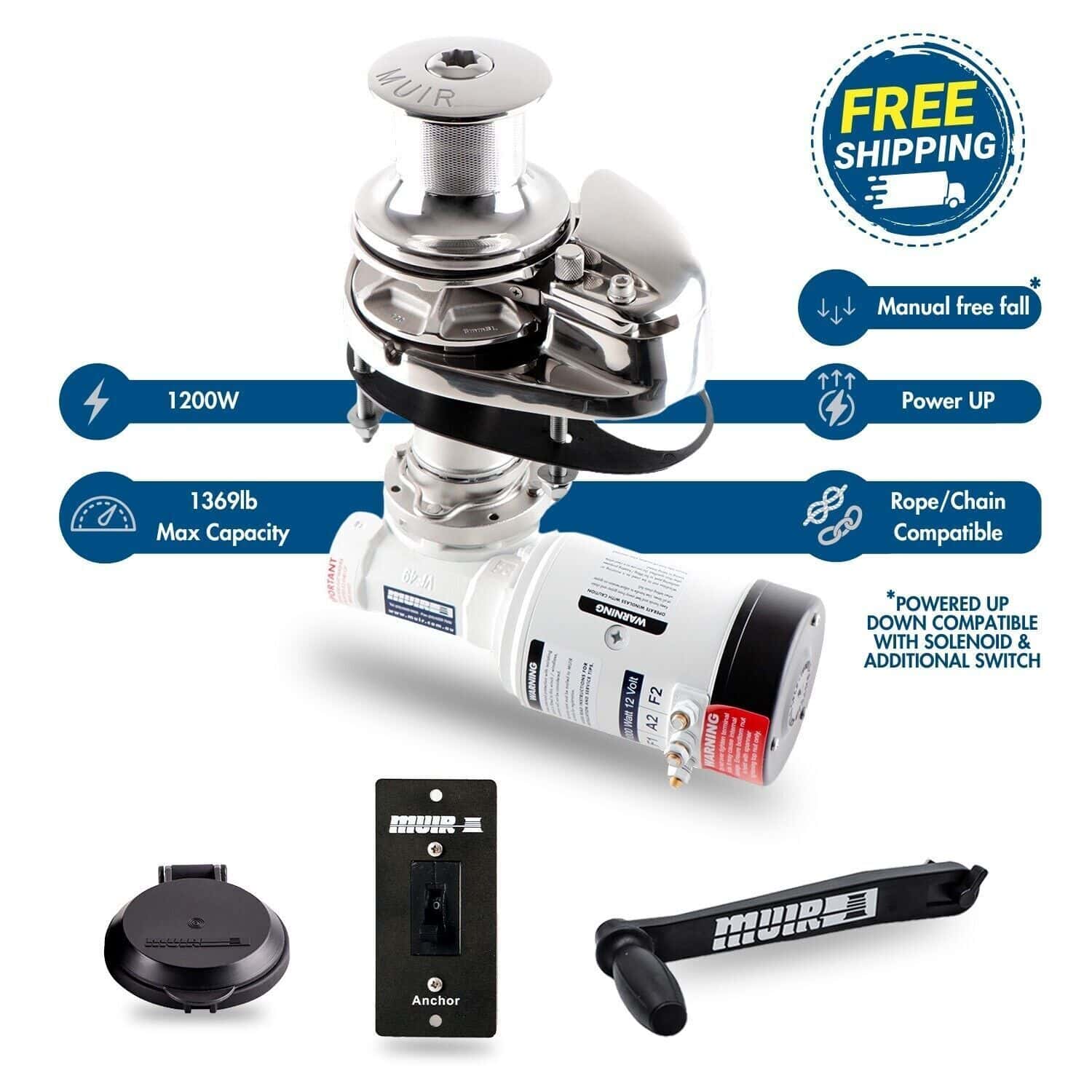
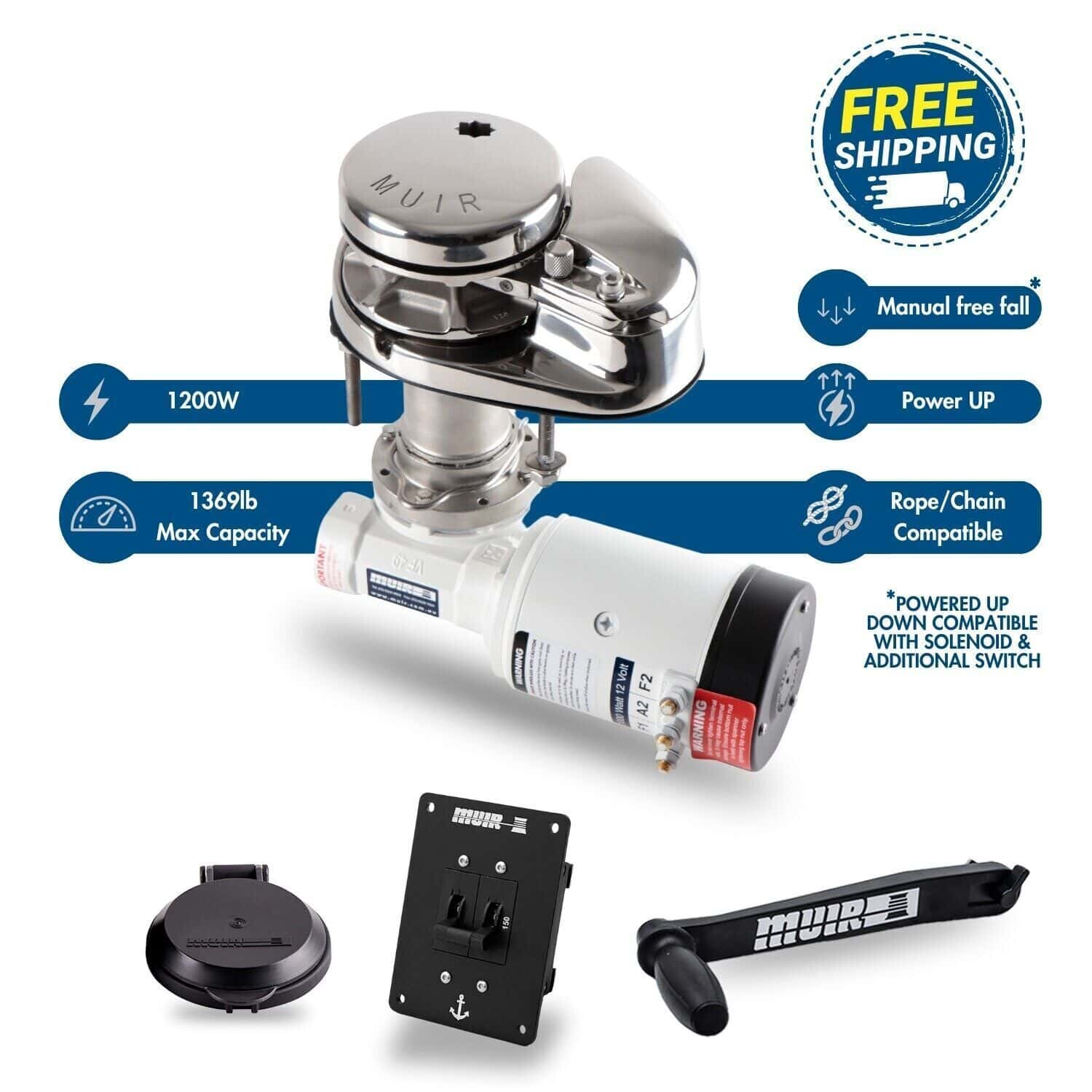
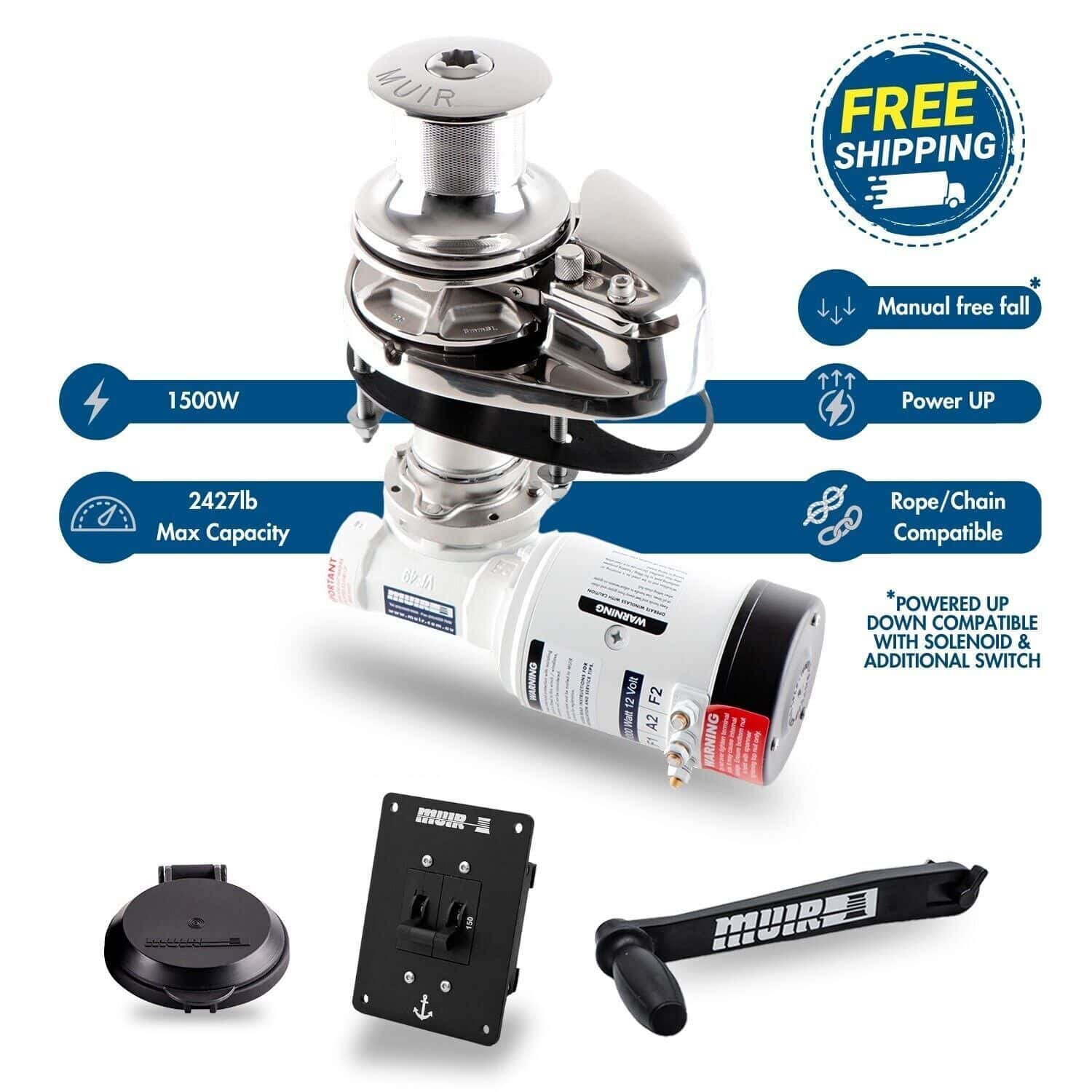
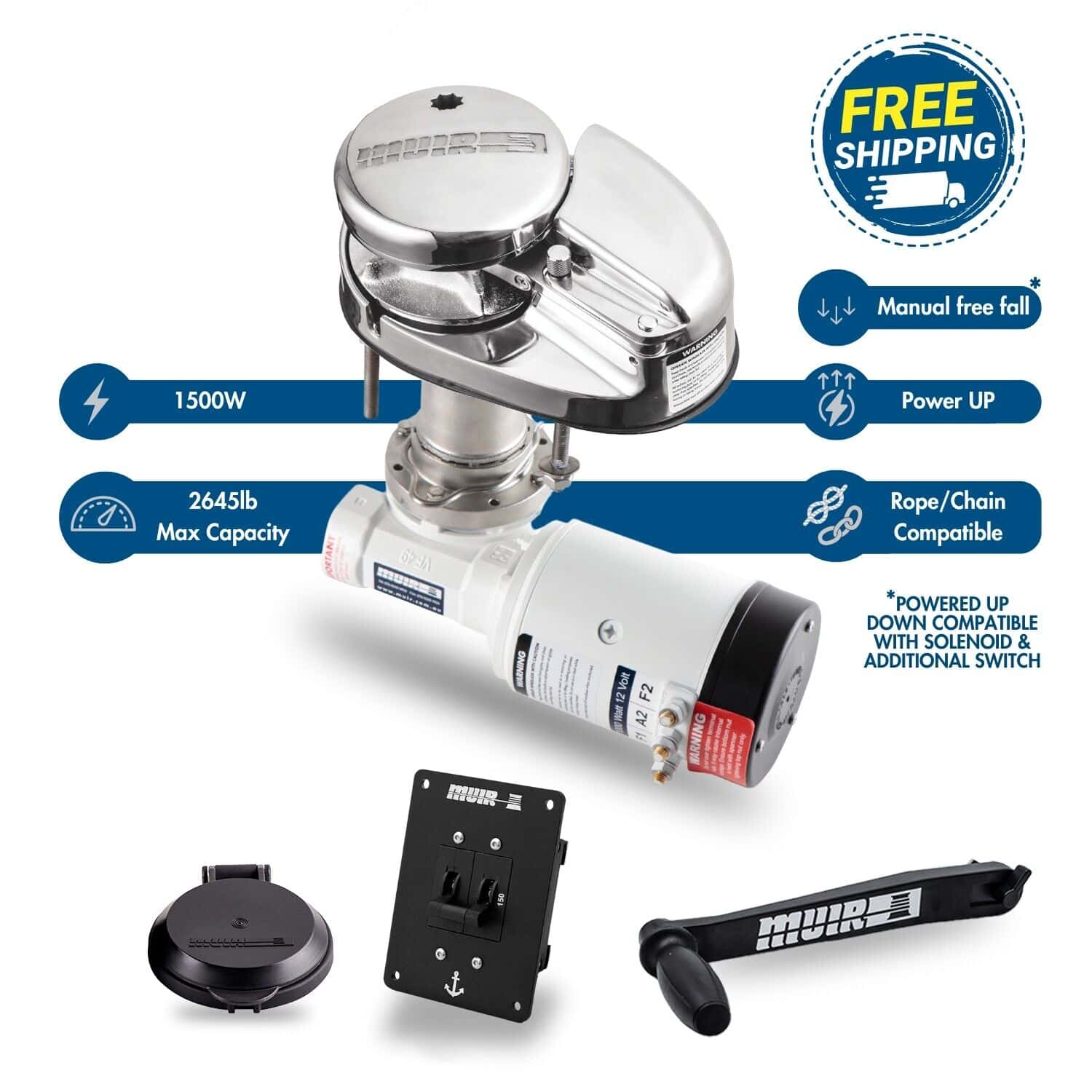
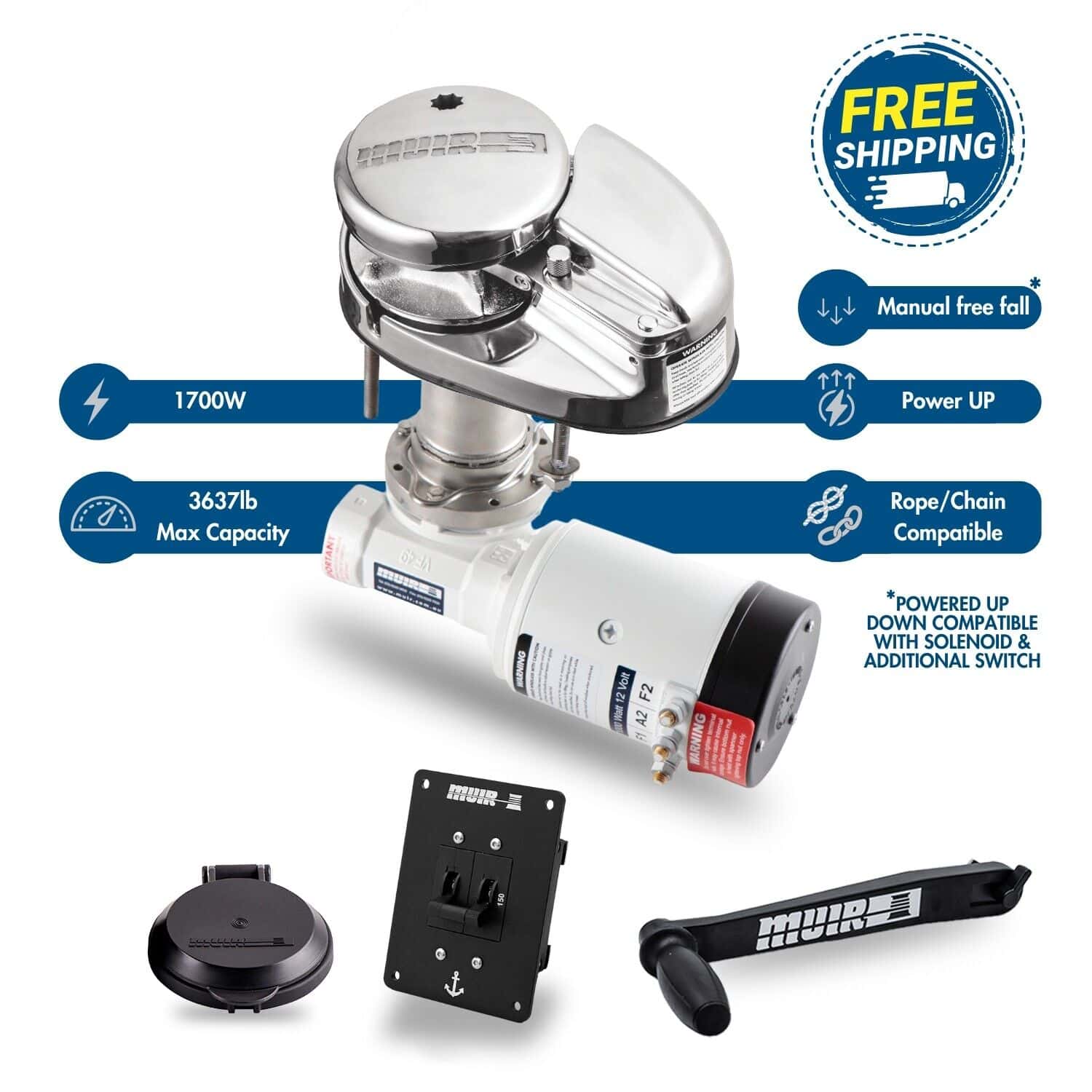
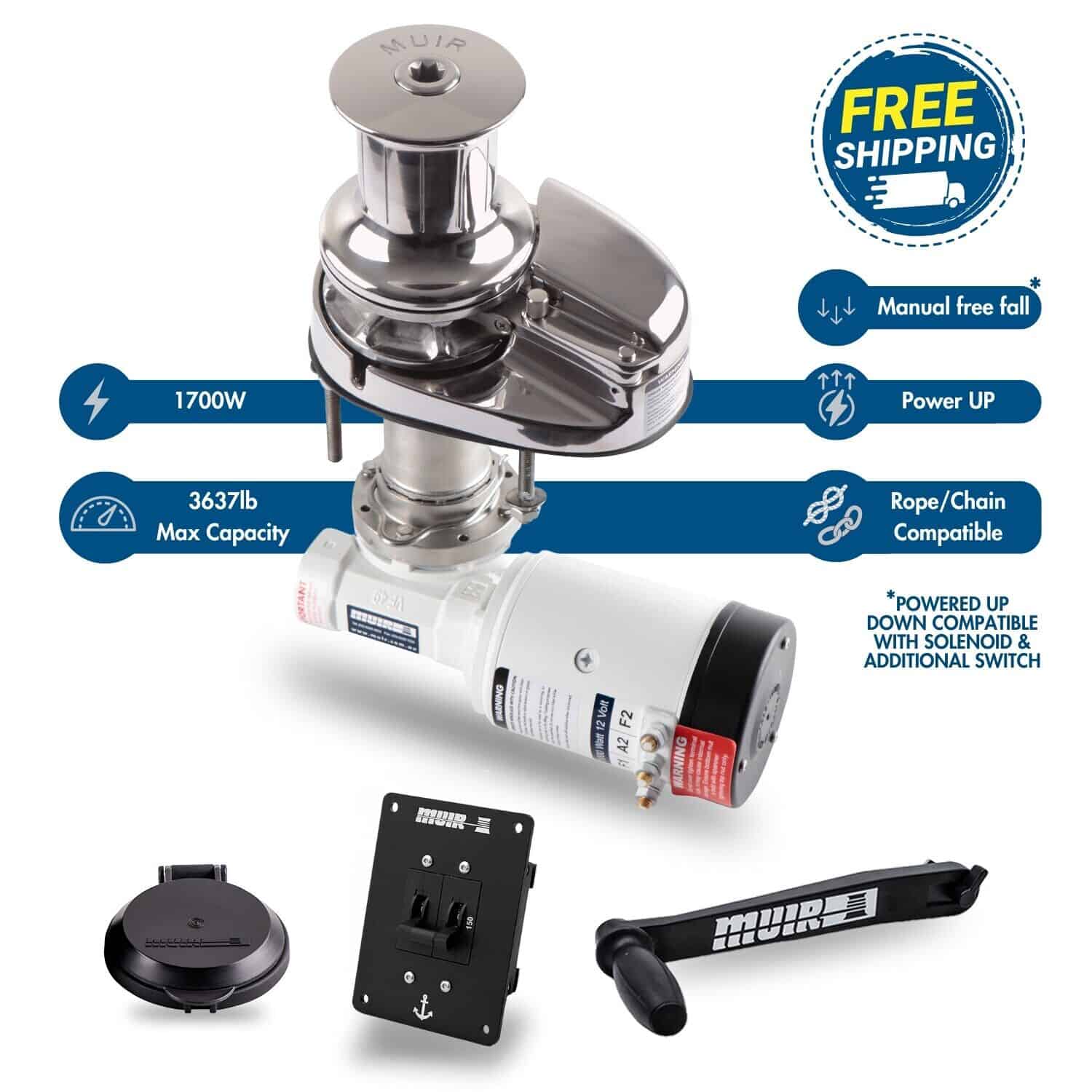
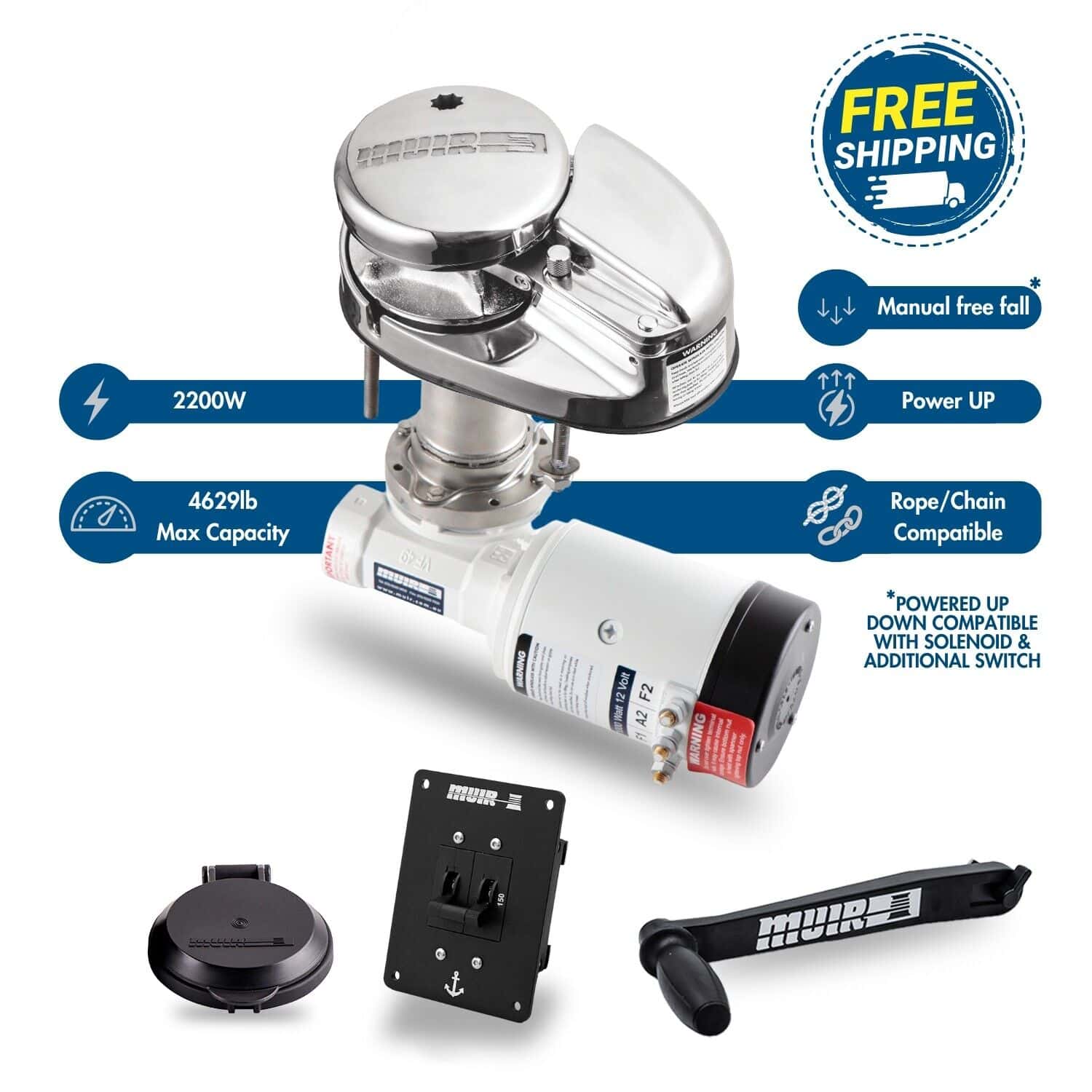
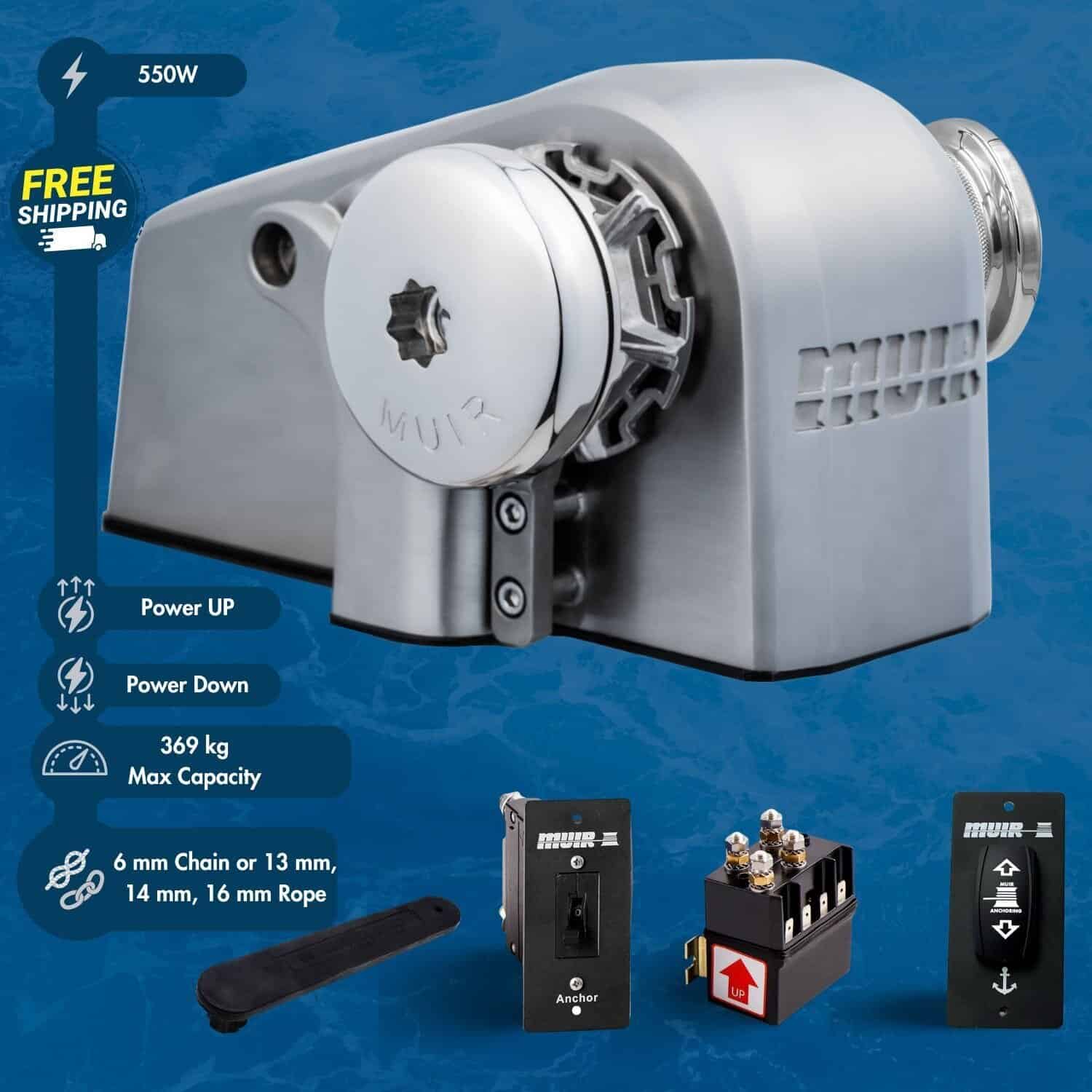
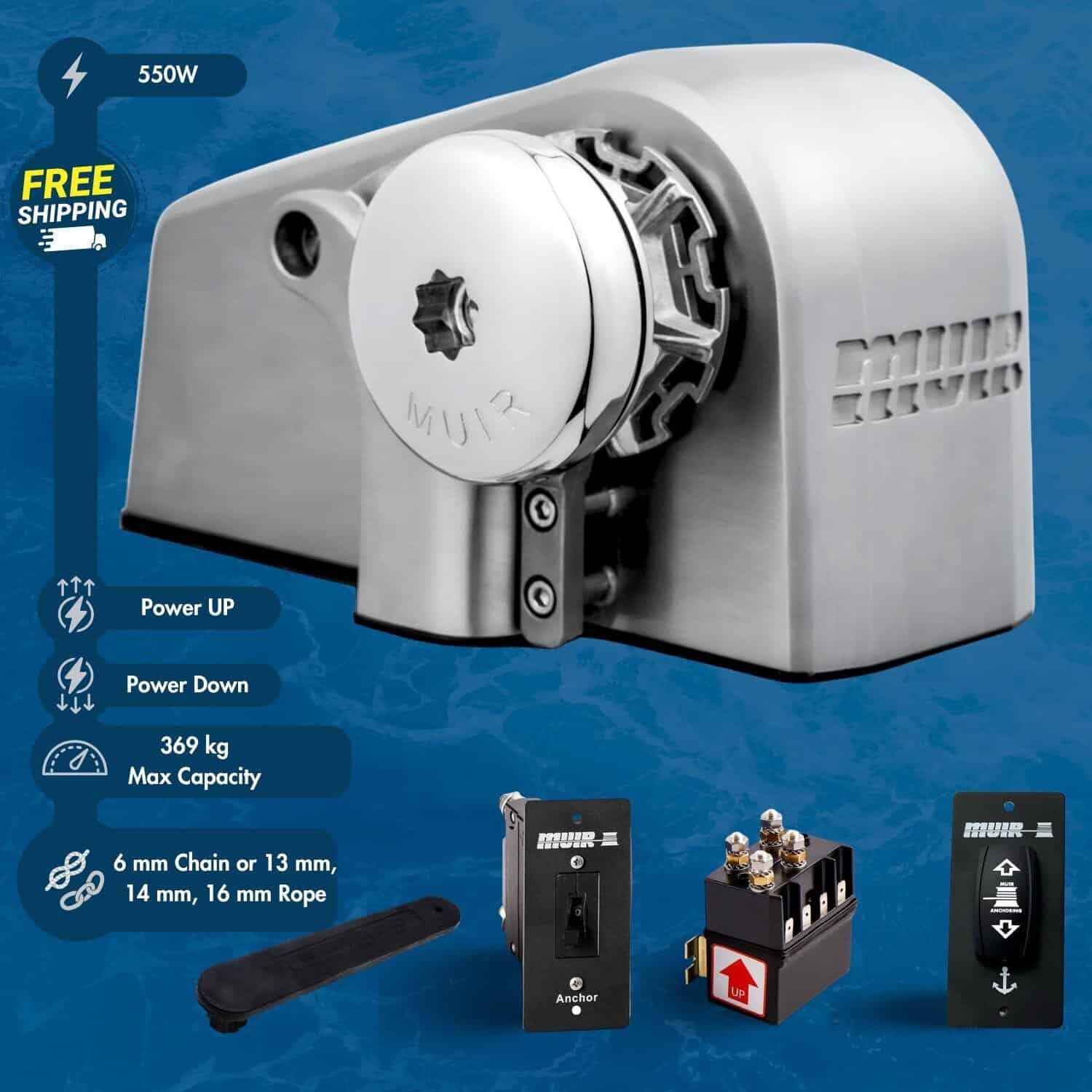
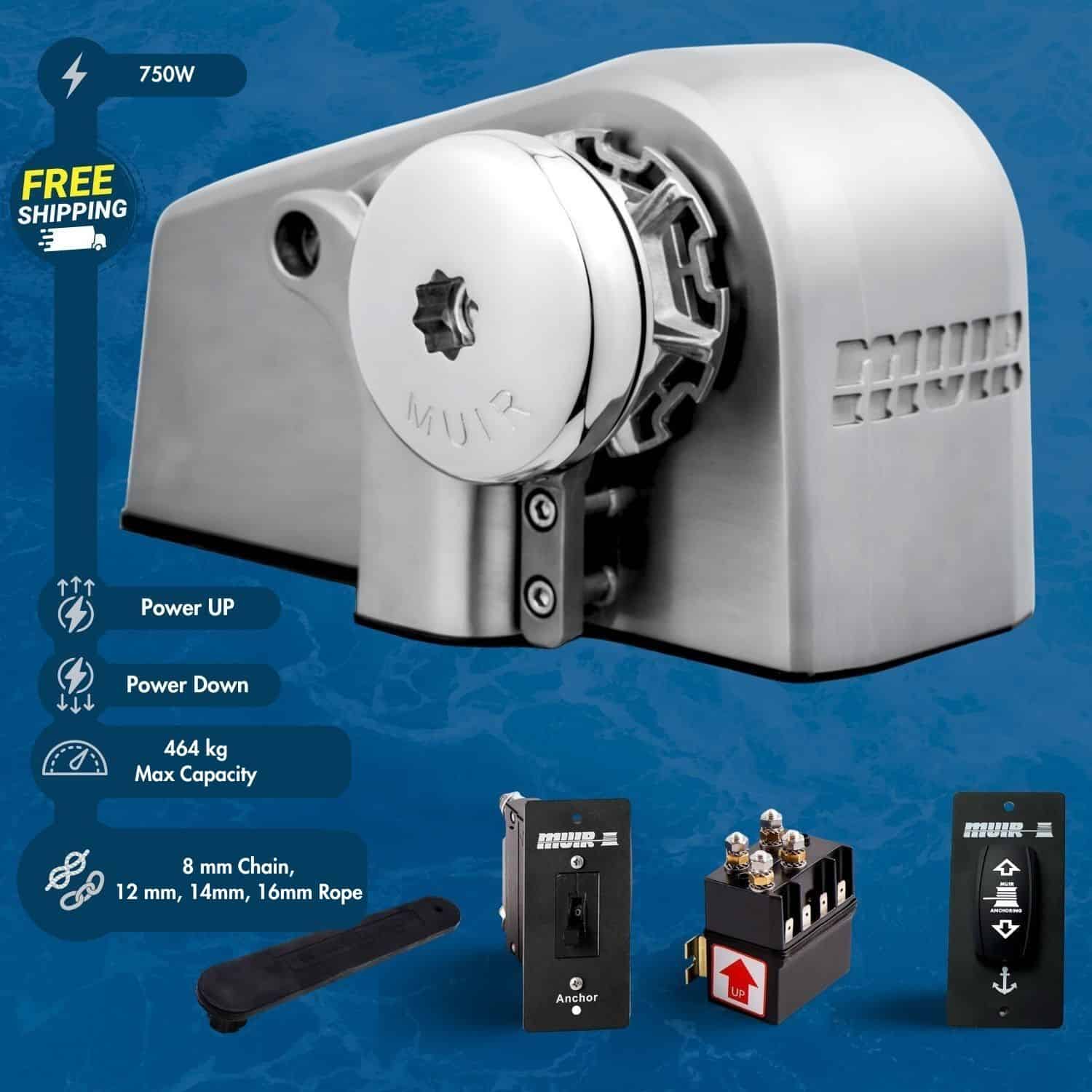
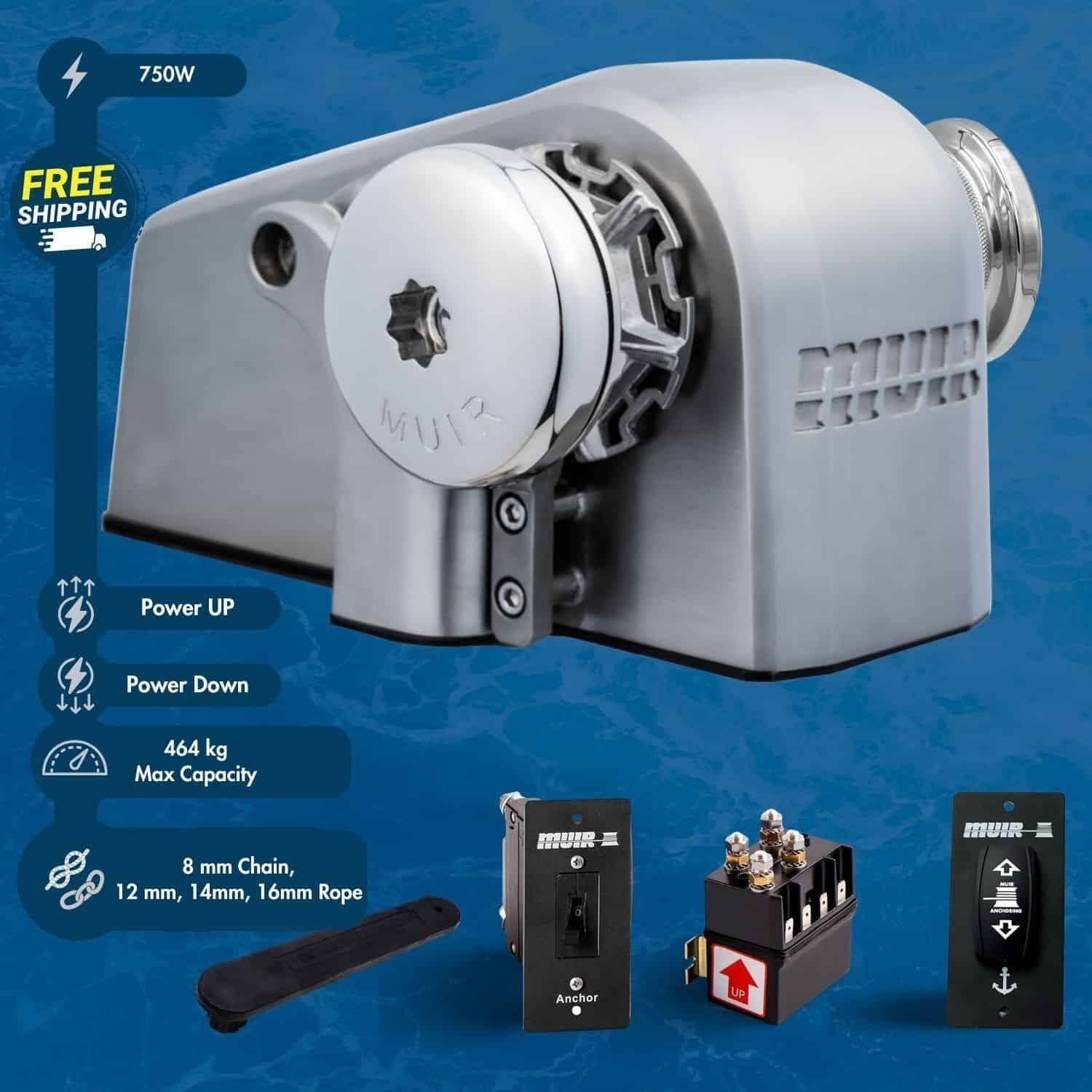
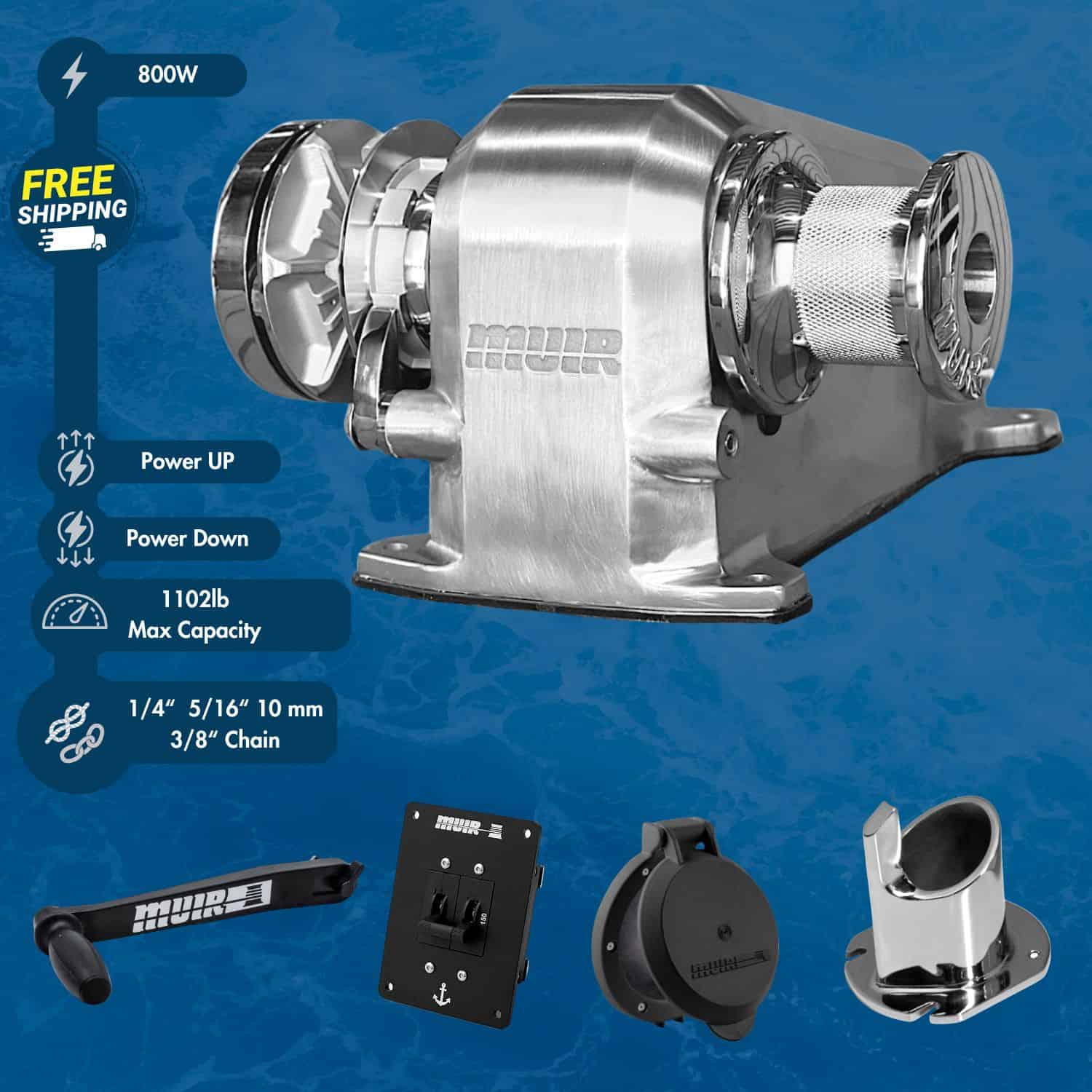
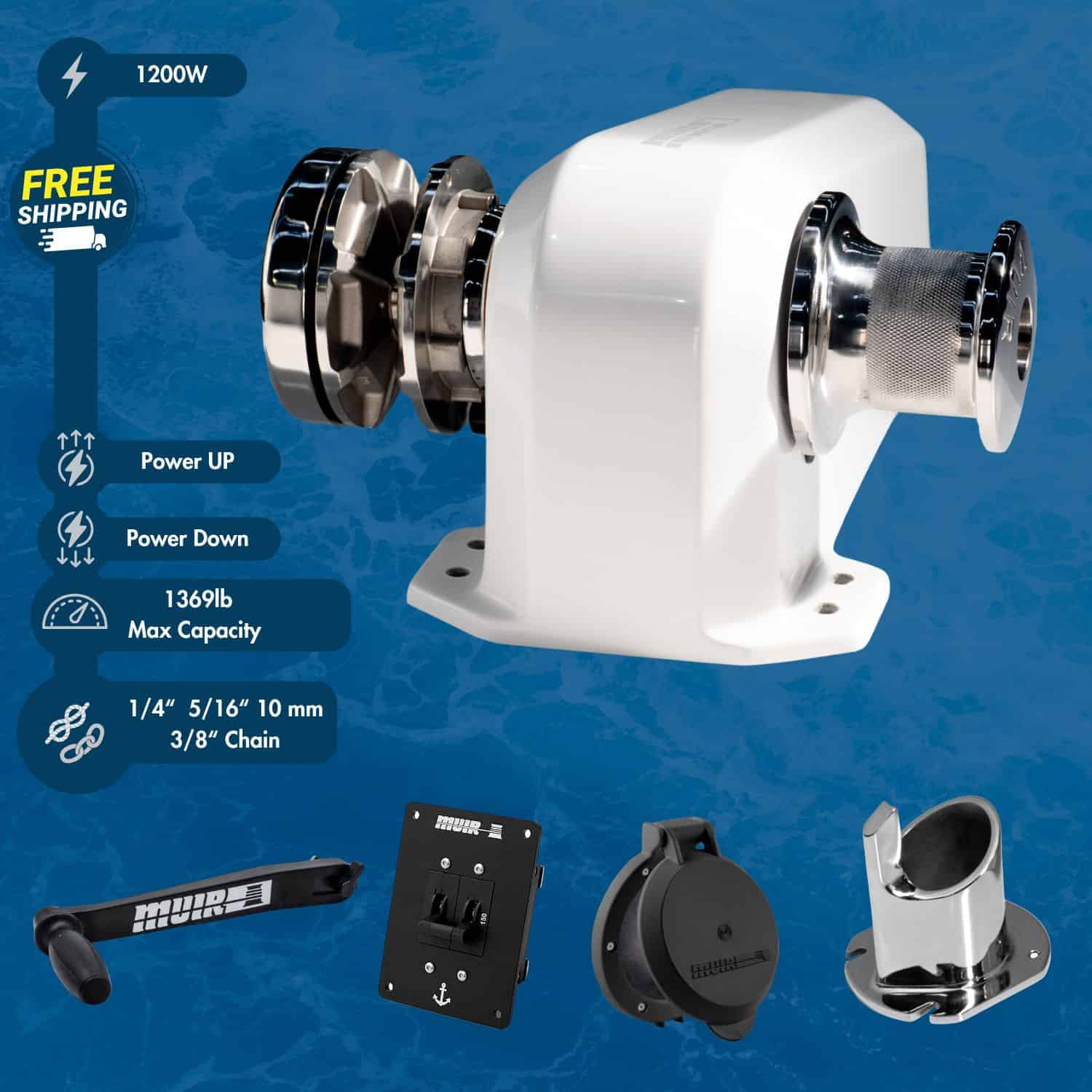
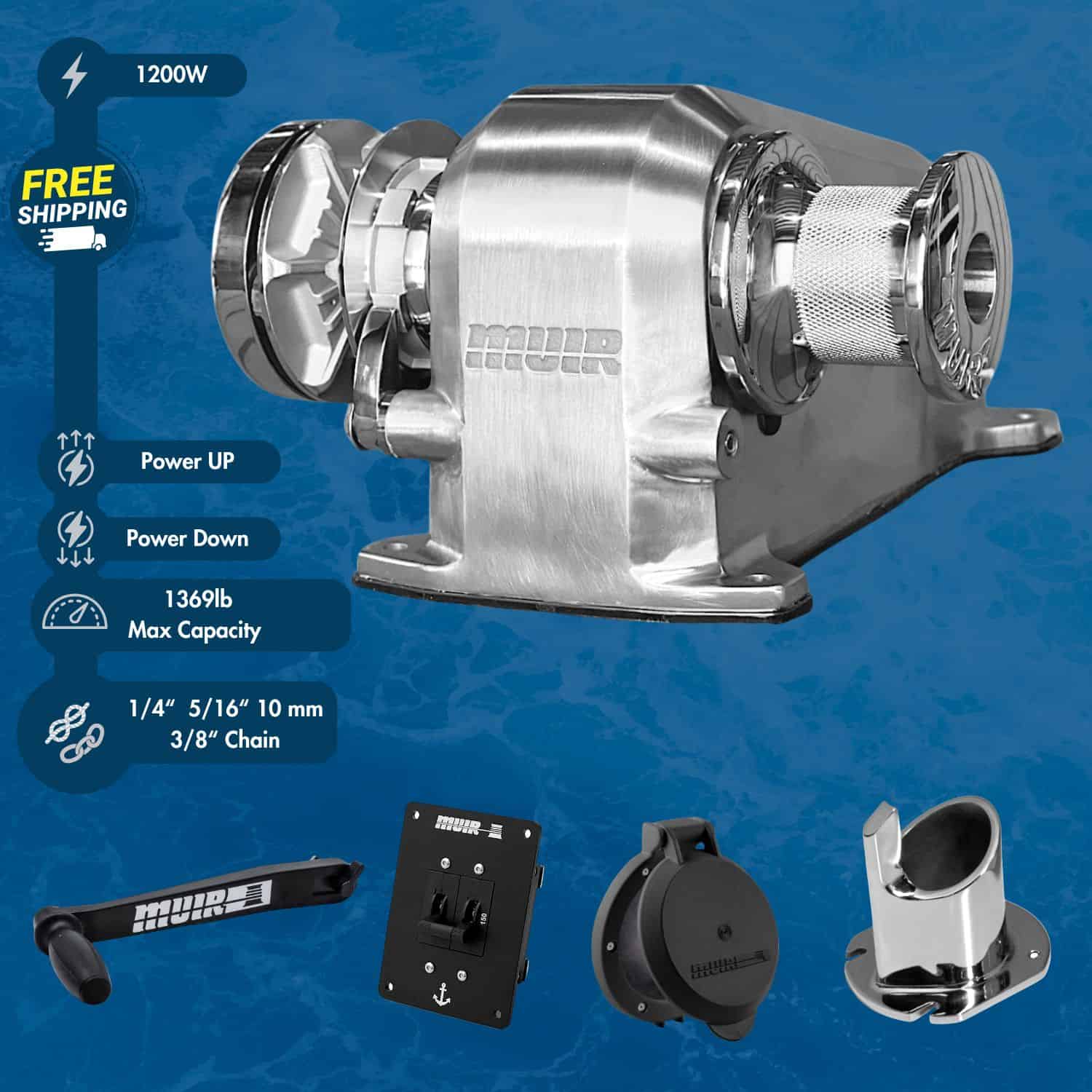
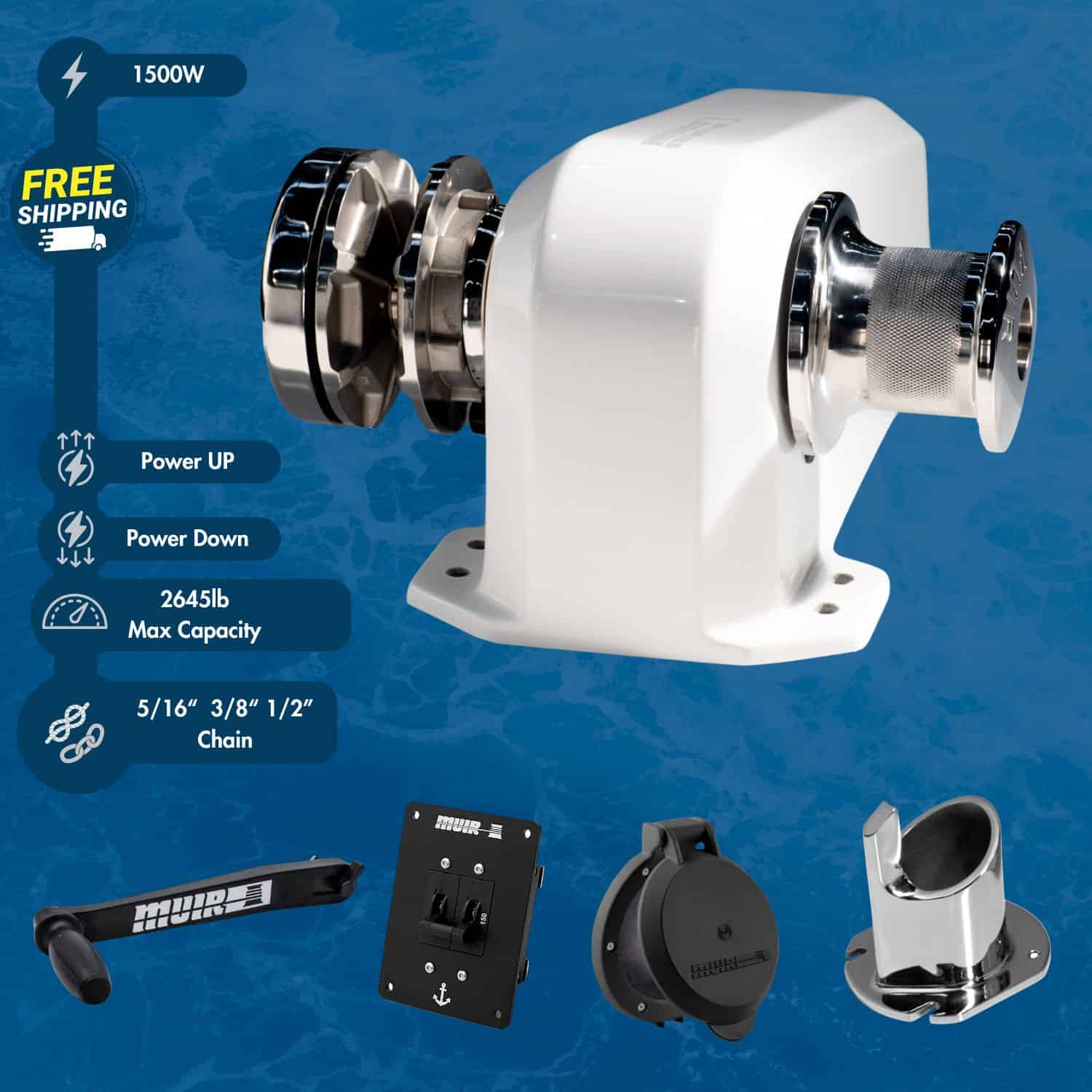
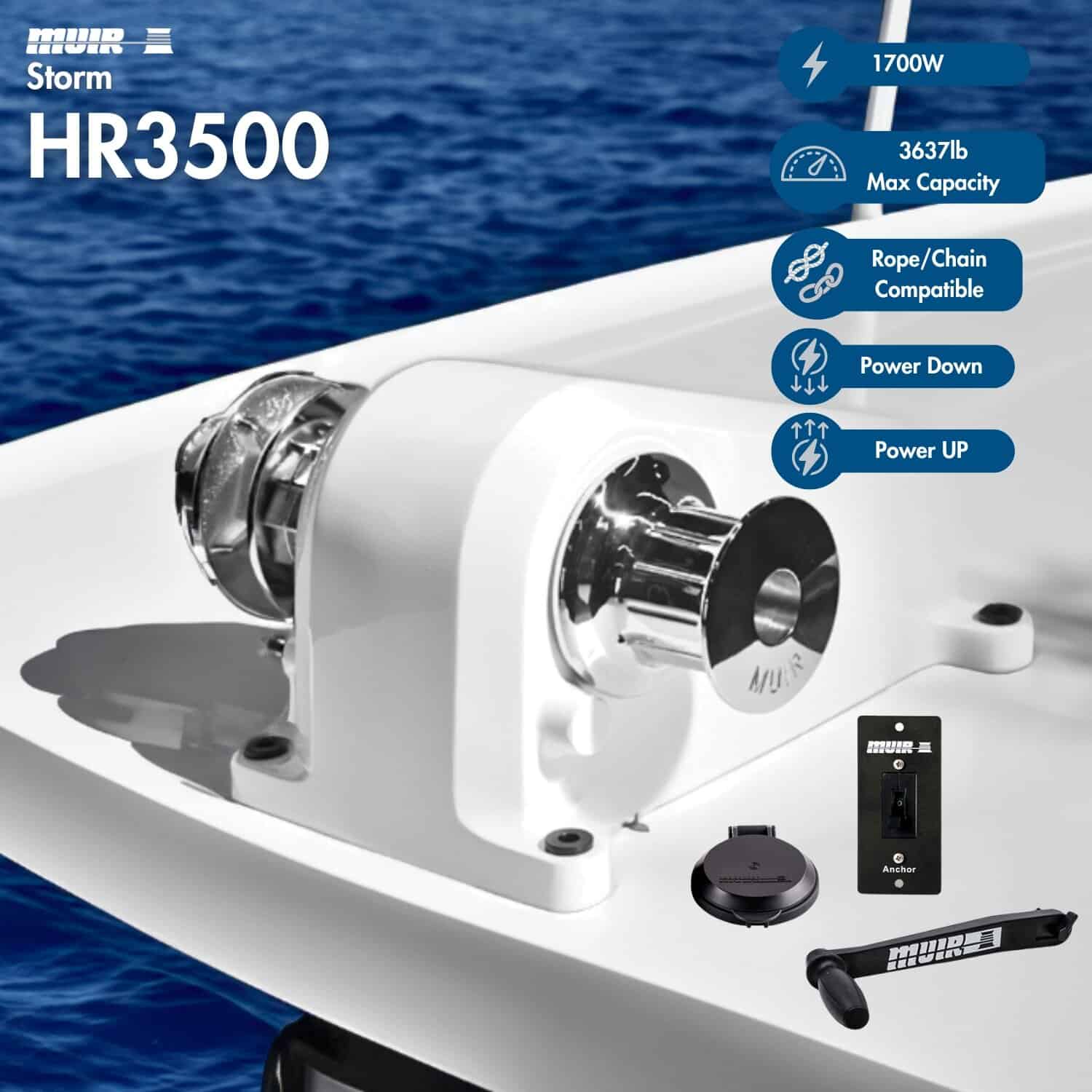
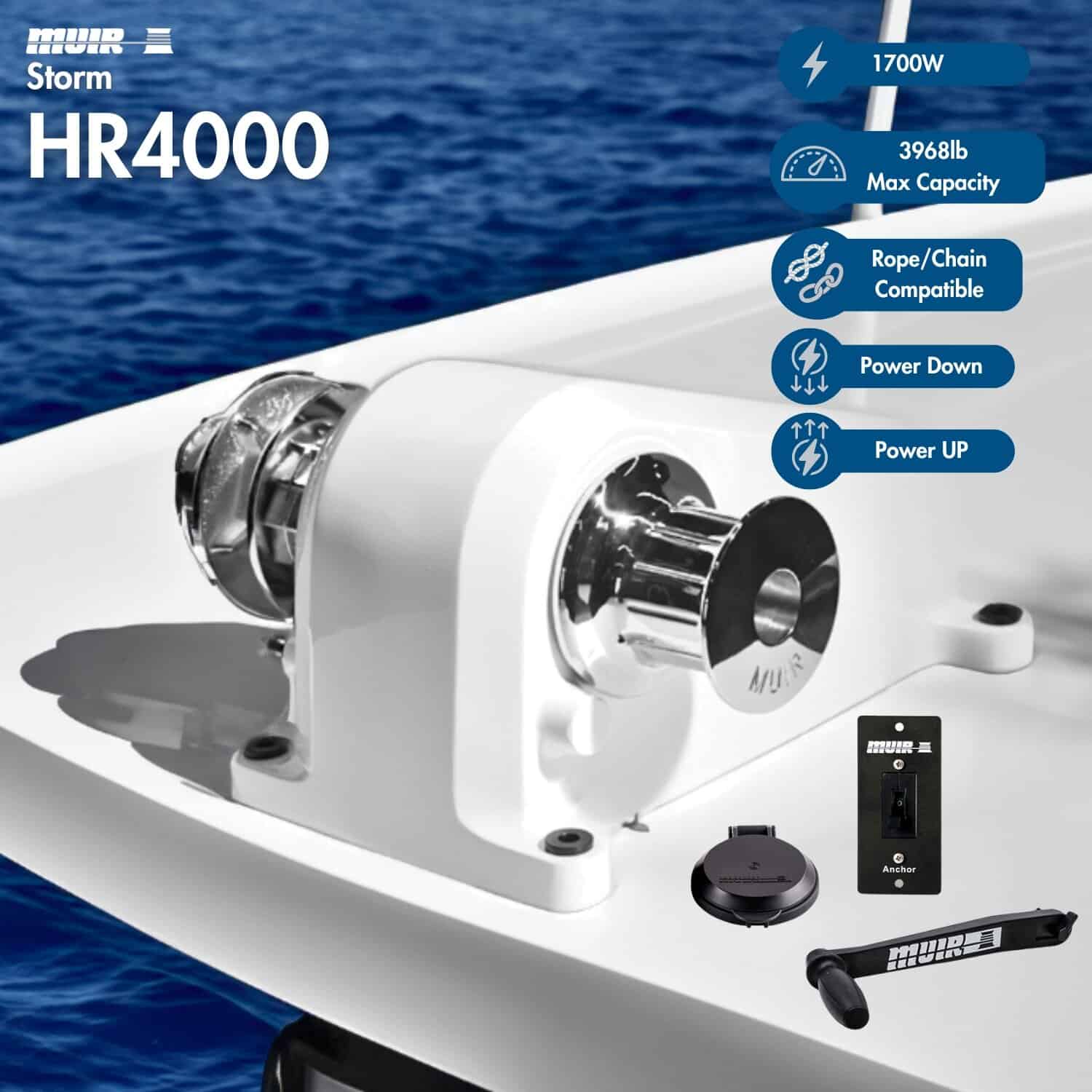
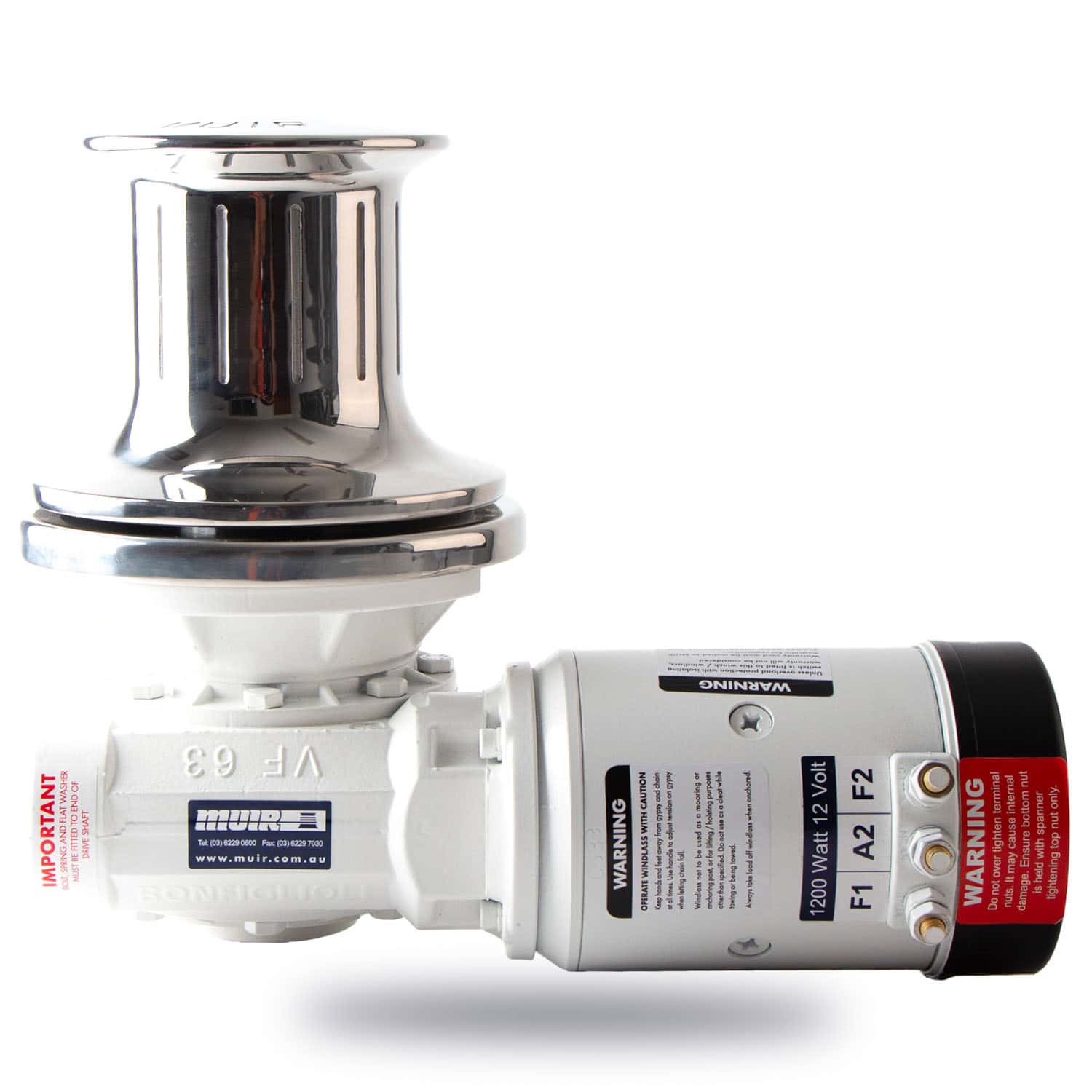
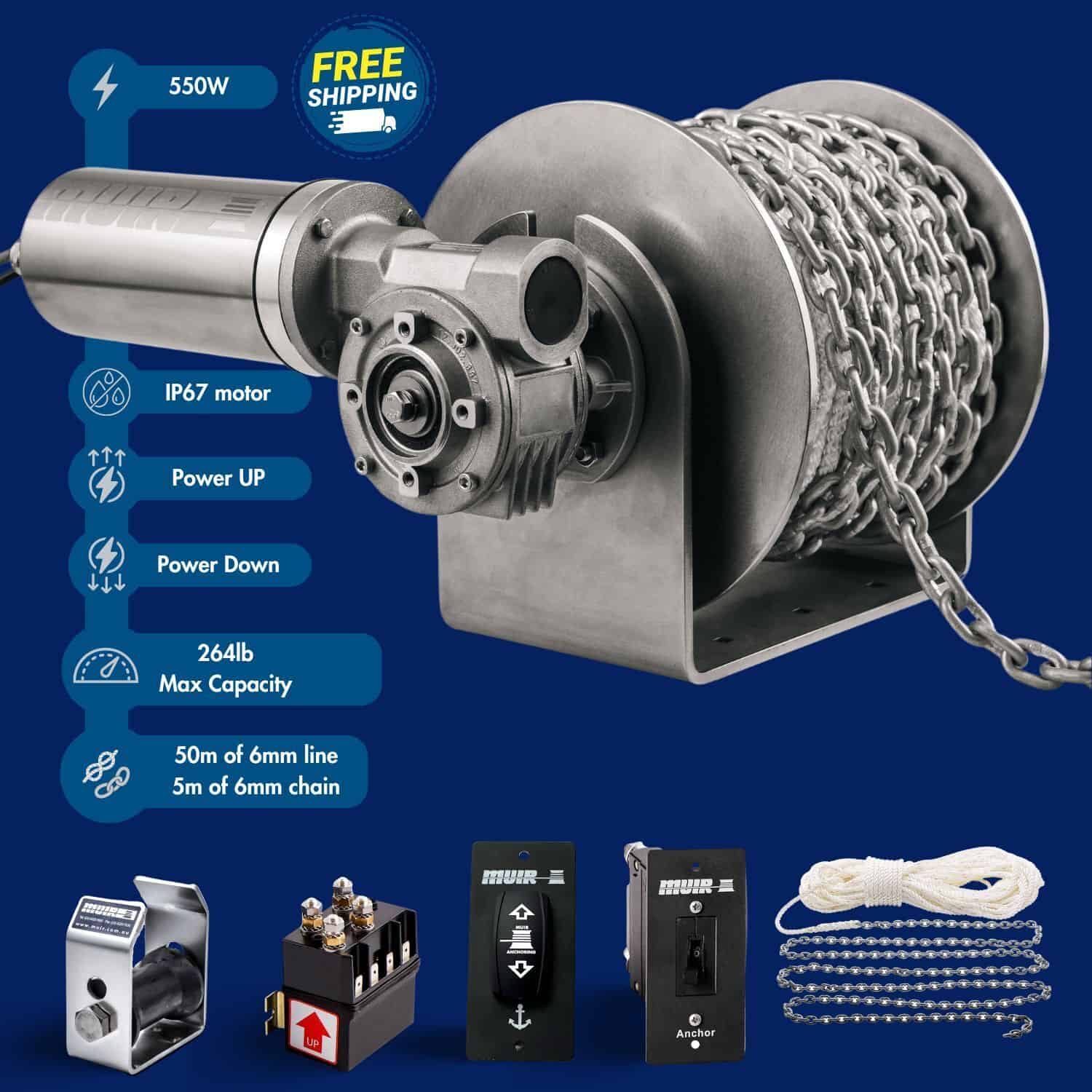
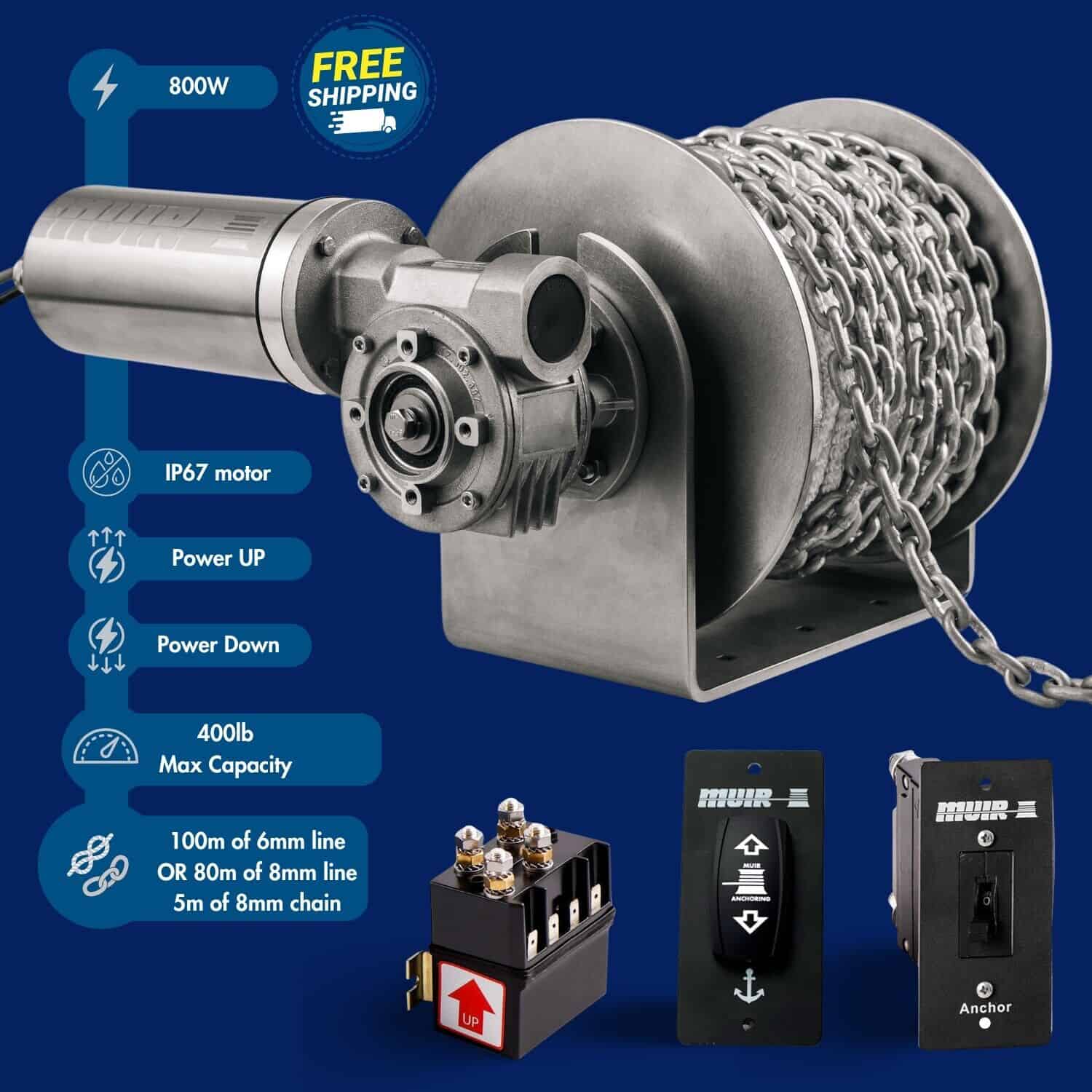
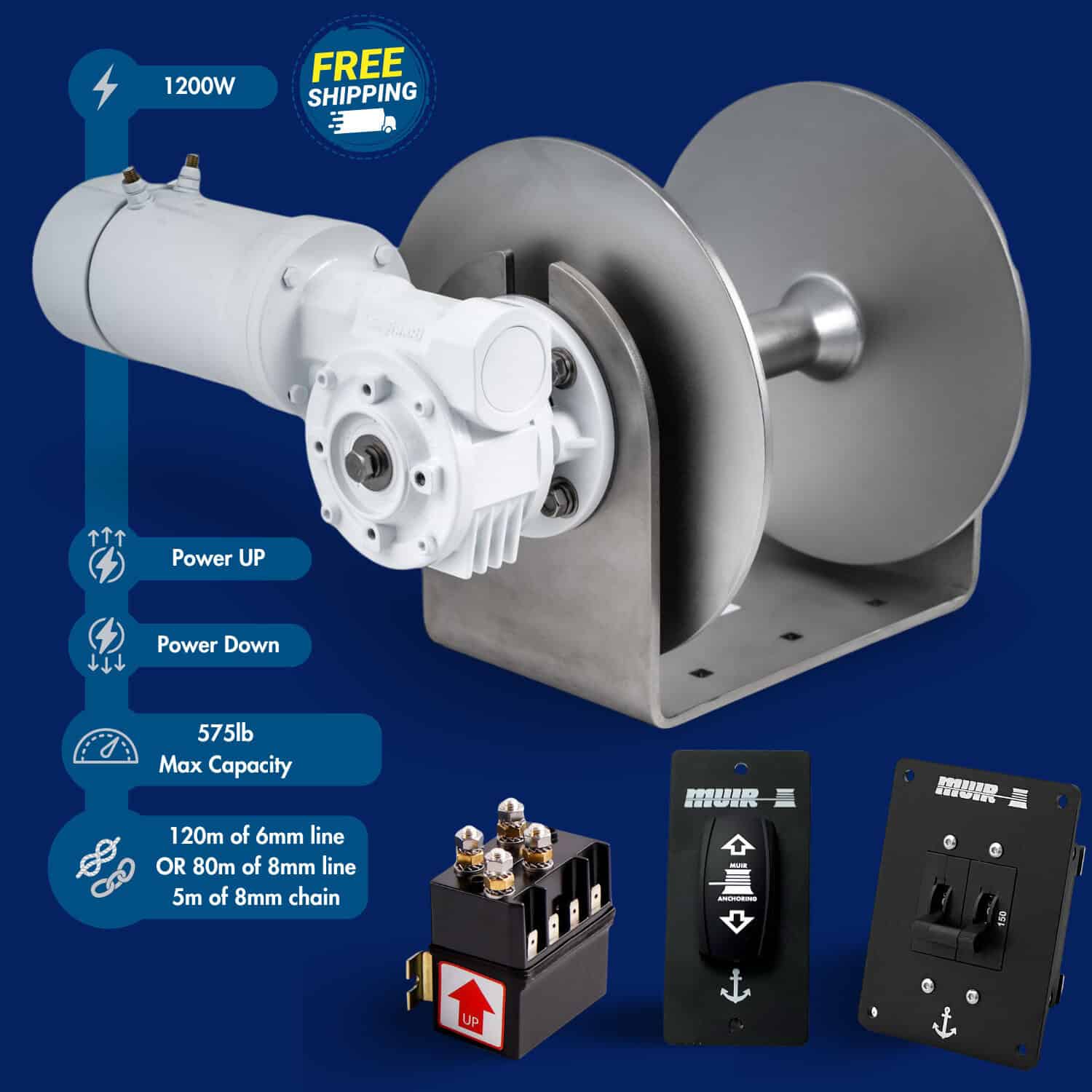
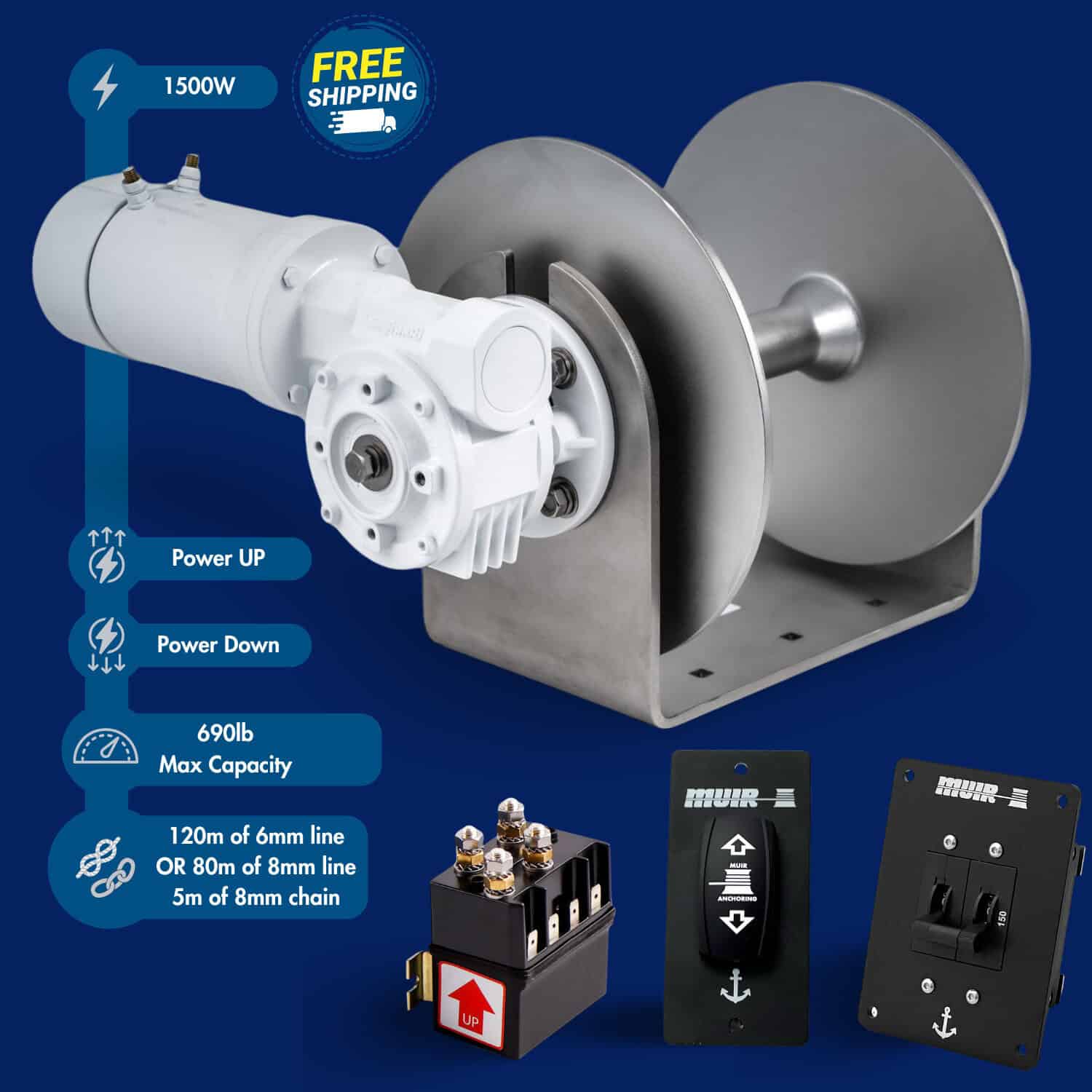
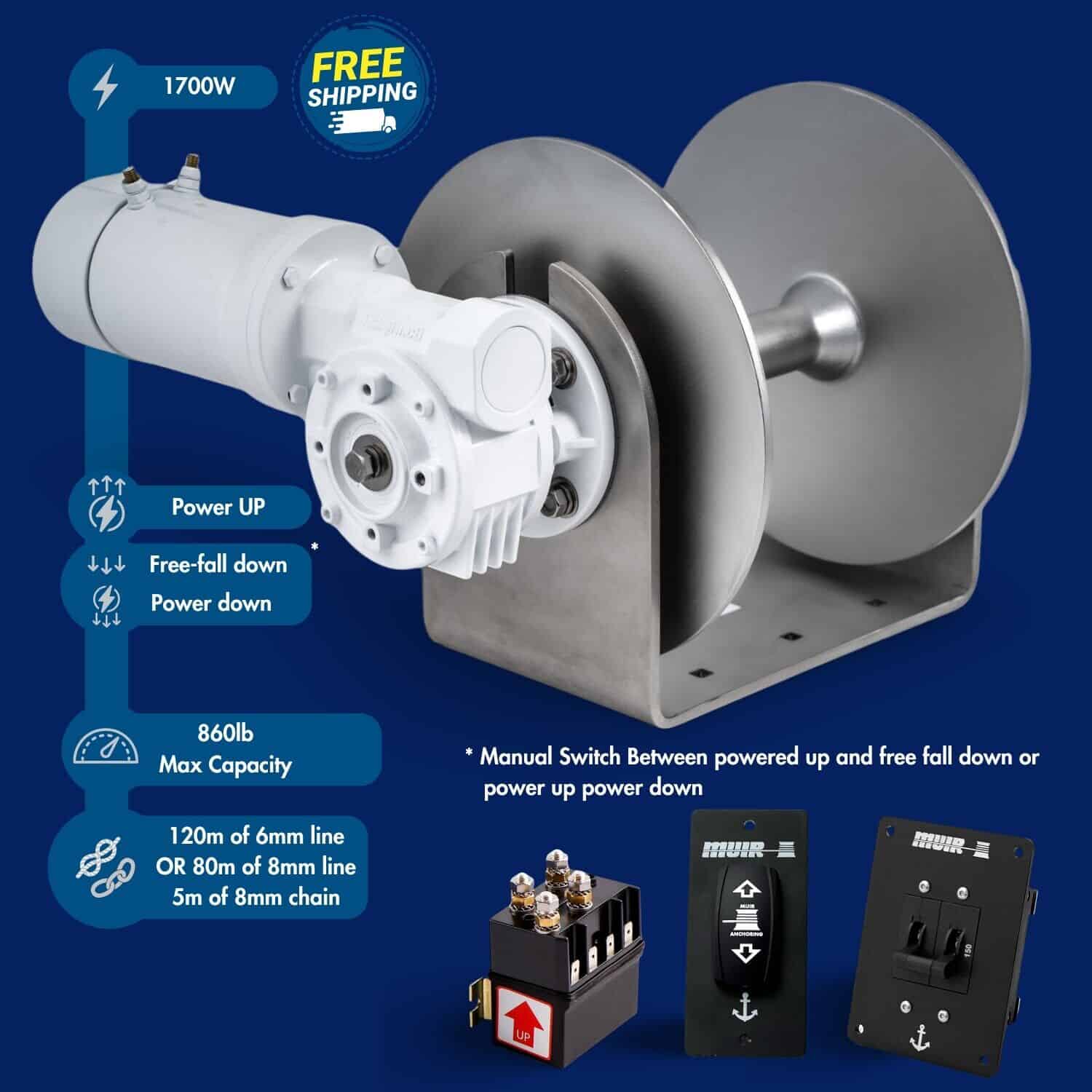
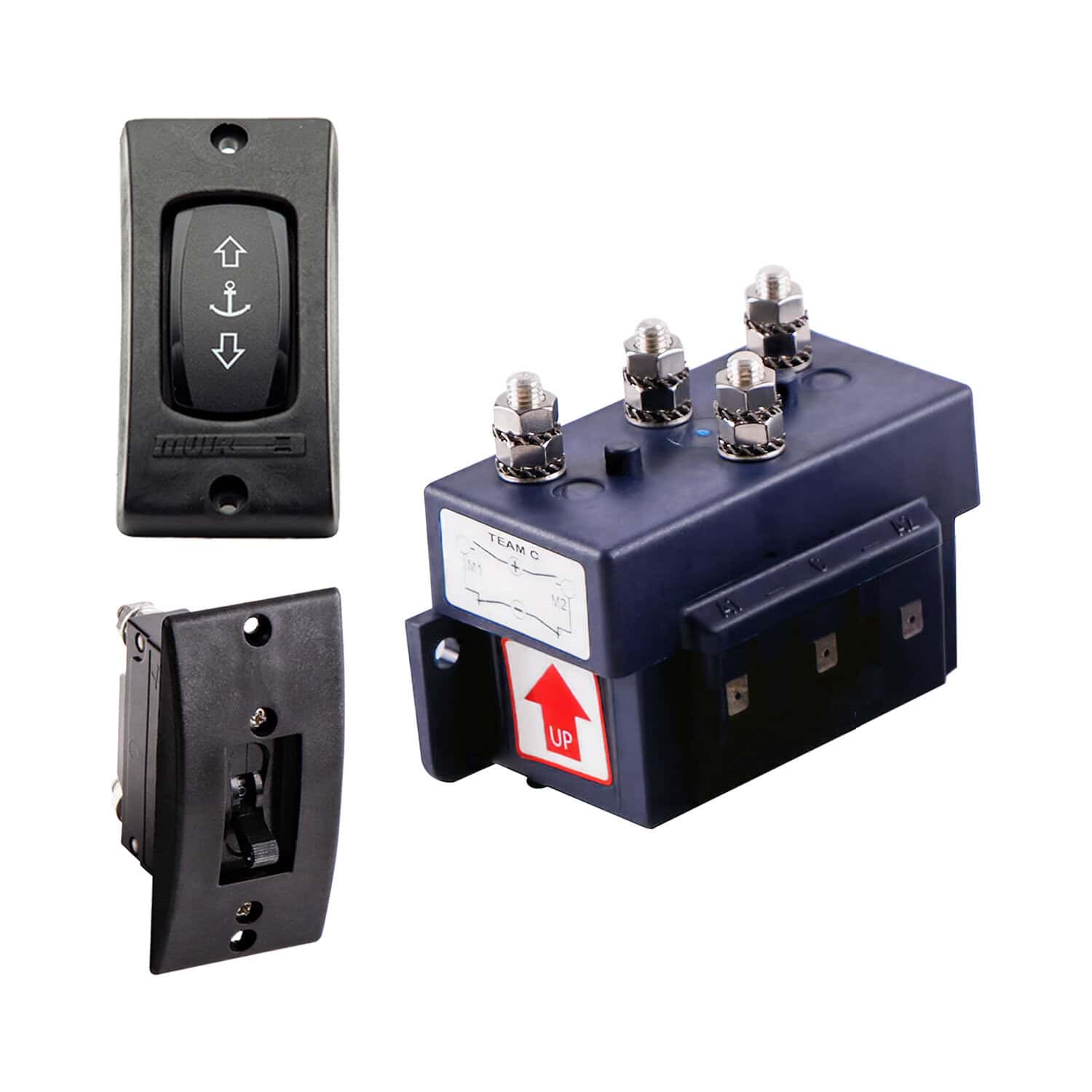
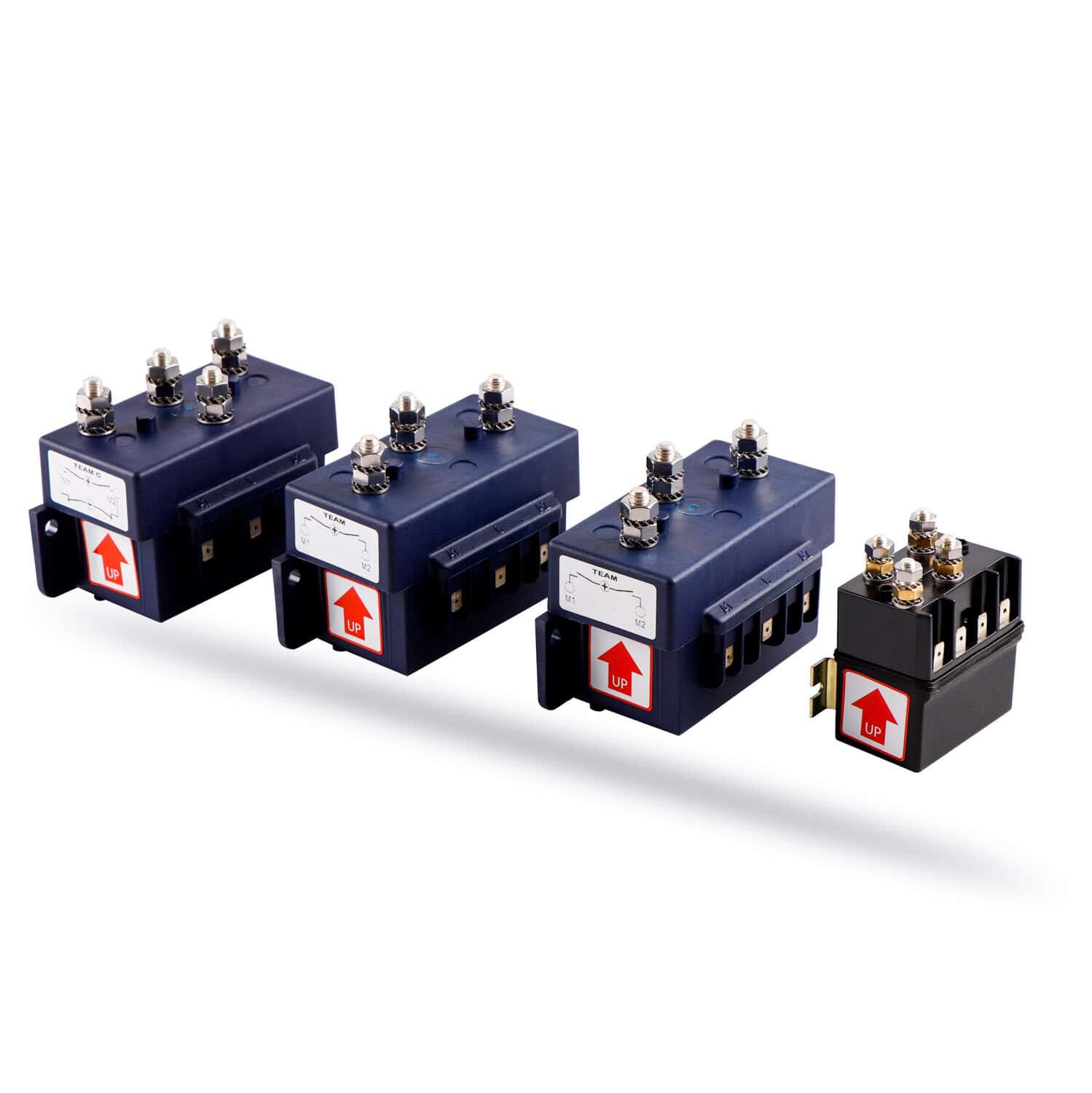
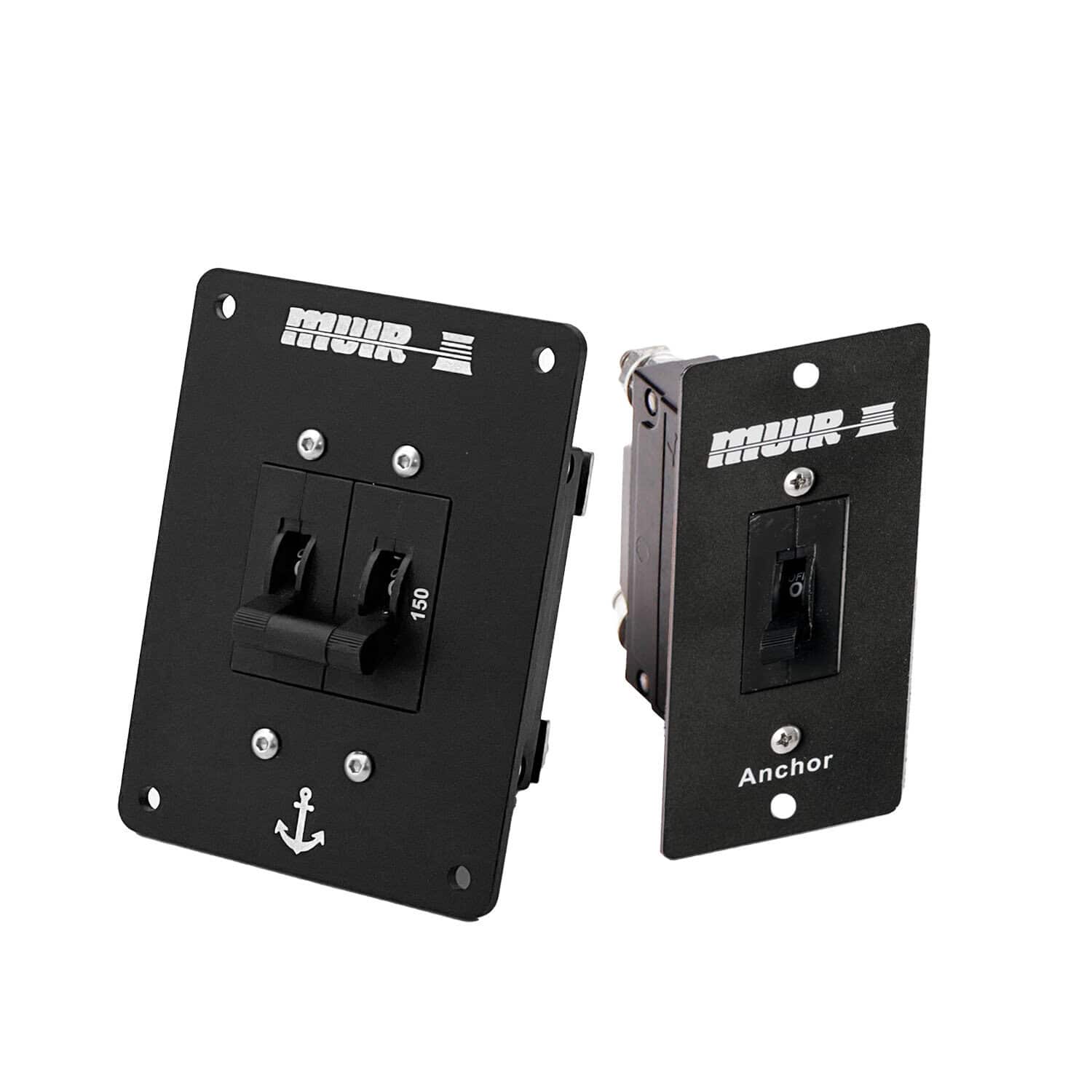
Muir vertical and horizontal windlasses, drum winches and capstans.
Scope
5:1 to 7:1
Rode length to depth: 5:1 in a sheltered anchorage, 7:1 overnight or in exposed water. Measure depth from the bow roller, not the sounder.
Minimum chain
1 boat length
Run at least one boat length of chain before the rope, and match the chain to the anchor size in the table above. With a windlass, the chain must match the gypsy exactly.
Over reef and rock
All chain
Rope chafes through on coral and rock. Anchor on an all-chain rode there, and use a trip line if you may need to pull the anchor out backwards.
Why Windlass Central
Anchors from the anchoring specialists
Anchoring is our core range, so the anchor you choose is backed by people who fit out the whole bow.
In stock in Melbourne
Every size listed is held in stock and ships from Melbourne, Australia.
No surprise customs fees
Import duties and local taxes are included at checkout for major destinations.
3 year warranty
Comprehensive coverage and peace of mind on every anchor.
Dimensions you can check
Product pages carry a dimension drawing and millimetre table, so you can check bow roller and locker fit before you order.
Anchor questions
Choosing a boat anchor
What size anchor do I need?
Start from the size guide above: your boat’s overall length picks the size to start from in each pattern. Then move up one size if the boat is heavy for its length, high sided, a multihull, or you anchor in exposed water. If in doubt, go up a size. The extra weight on the bow costs little; an anchor that drags costs a lot.
Which anchor is best for sand and mud?
Bruce, Plough, Danforth and Delta anchors are all listed for sand and mud. If you anchor almost entirely in soft ground, the Danforth is built for it: wide flat flukes dig deep for high holding power relative to weight, and it stows flat on deck or in a locker.
Which anchor works on rock, weed or coral?
The Bruce claw is listed for rock and gravel as well as sand and mud. The Delta is listed for weed and mixed ground. The folding Grapnel grips rock, weed and coral where a fluke anchor would skate, but it is sized for tenders, dinghies and kayaks and suits short stops rather than overnight anchoring. Over reef and rock, anchor on chain rather than rope.
Do I need a second anchor?
Yes, if you anchor overnight or away from home waters. Carry two different patterns so one covers a seabed the other dislikes, and keep the second one size smaller than your primary. The Danforth is the usual choice because it stows flat and holds hardest in sand and mud.
What chain should I run, and how much?
Match the chain to the anchor: 6 mm for 5 kg anchors, 8 mm for 10 kg, 10 mm for 20 to 35 kg, and 12 mm from 50 kg up. Run at least one boat length of chain before the rope, and all chain over reef or rock. If you have a windlass, the chain must match its gypsy exactly, so check the windlass first.
What is the difference between stainless and galvanised anchors?
Both use the same patterns, so they hold the same. 316 stainless keeps its polished finish in salt water. Hot dip galvanised carbon steel costs much less, and its zinc coating corrodes in place of the steel underneath. Choose galvanised when cost matters more than appearance.
Which anchors self-launch from a bow roller?
The Delta is a one piece plough with no moving parts that self-launches over a bow roller. The Bruce claw is shaped to fit standard bow rollers. Check the dimension drawing on the product page against your roller before ordering.
How much scope should I let out?
Scope is the ratio of rode let out to the depth from your bow roller to the seabed, so add your freeboard to the sounder reading. Use 5:1 in a sheltered anchorage and 7:1 overnight or in exposed water, then set the anchor by backing down on it before you turn the engine off.